Artwork
Untitled
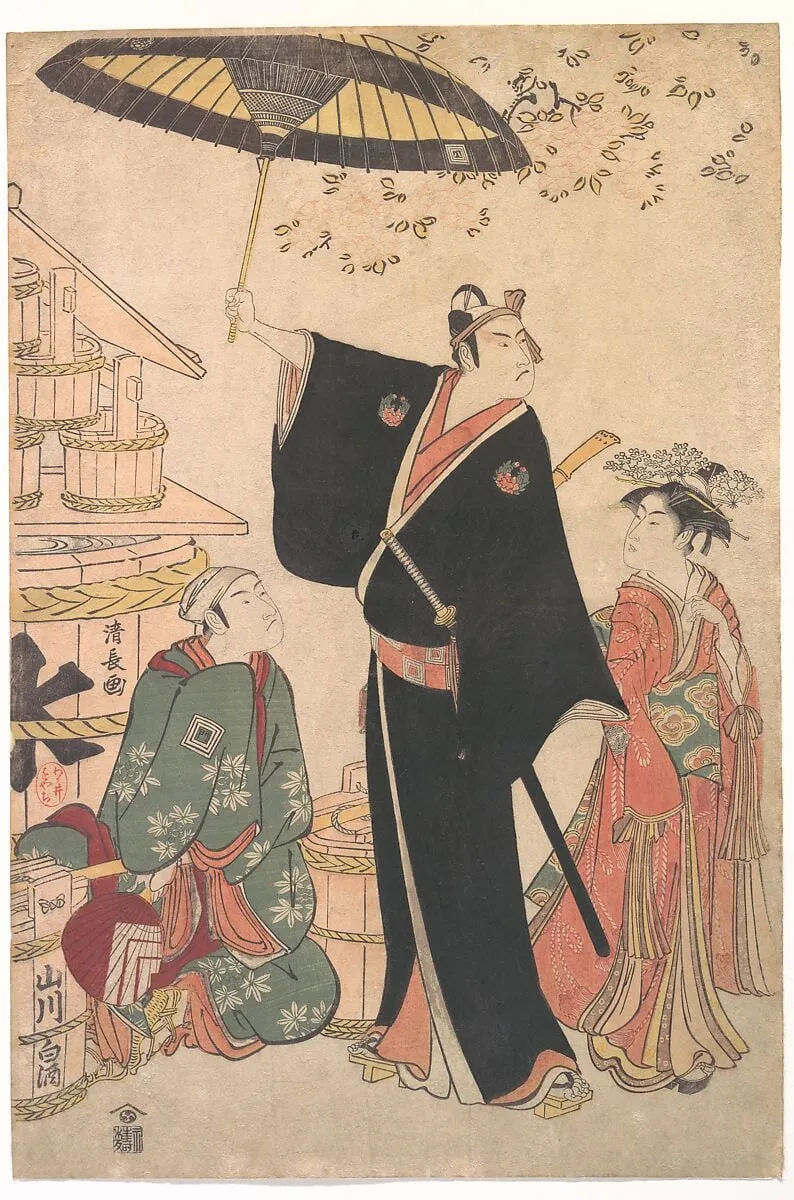
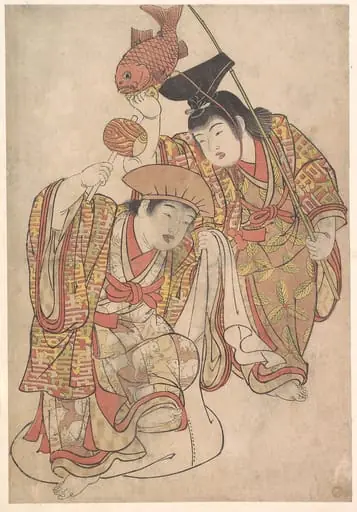
Untitled is an ink print by the Romanticist artist Torii Kiyonaga. It dates from 1784 and is held in the collection of the Metropolitan Museum of Art.
About this work
Overview
Its formal structure and decorative detail reflect the conventions of theatrical and urban genre scenes popular in Edo-period printmaking.
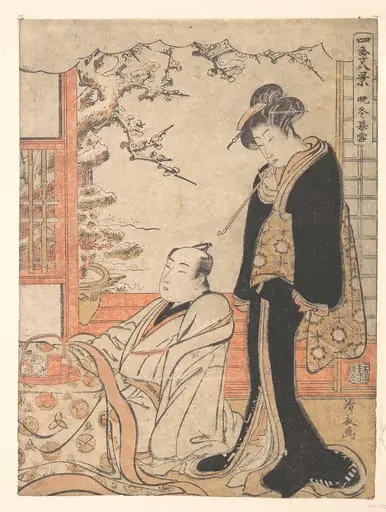
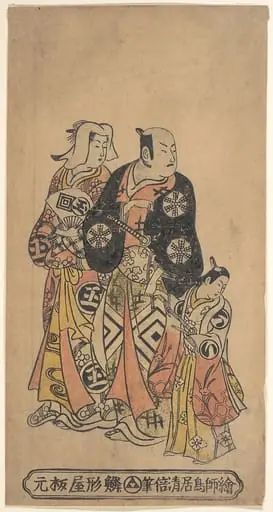
This woodblock print, dated 1784, is attributed to Torii Kiyonaga and resides in The Metropolitan Museum of Art’s collection. Executed in ink and color on paper, it exemplifies the ukiyo-e tradition of late 18th-century Japan. The composition features three figures arranged in a static yet dynamic grouping, set against an architectural backdrop. Its formal structure and decorative detail reflect the conventions of theatrical and urban genre scenes popular in Edo-period printmaking.
Subject & Meaning
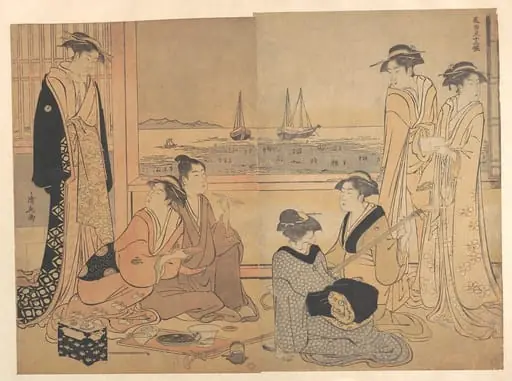
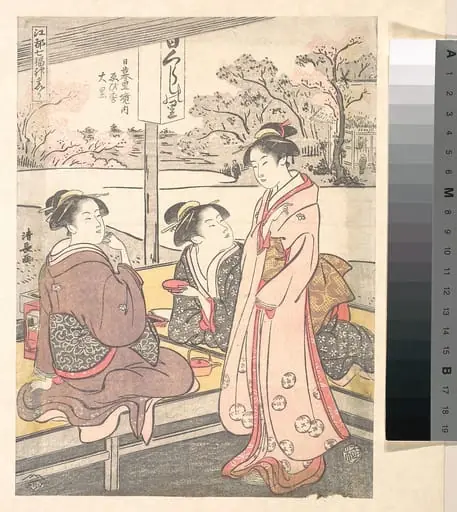
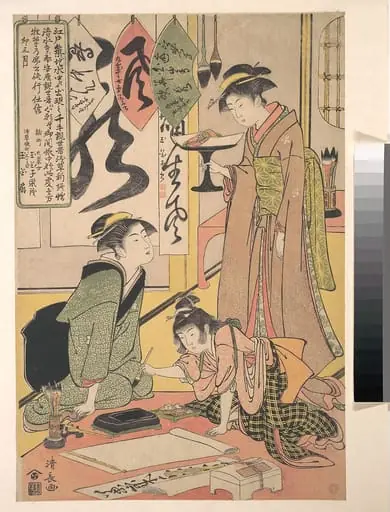
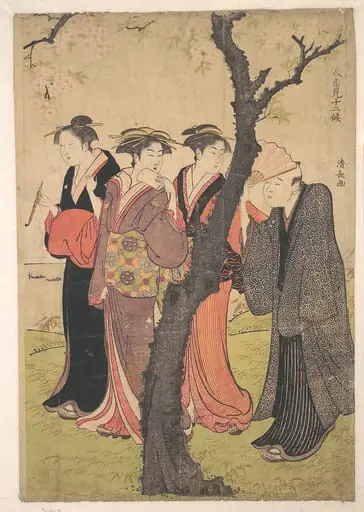
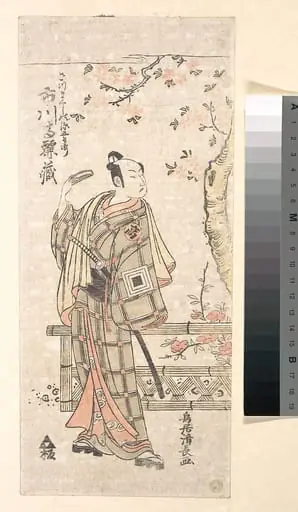
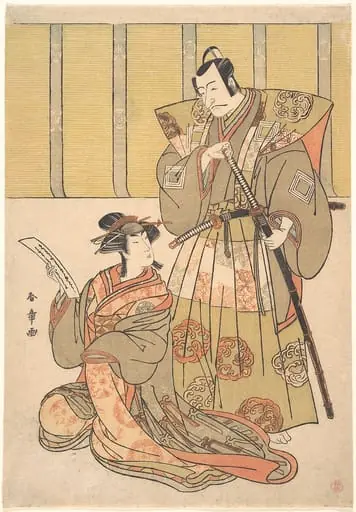
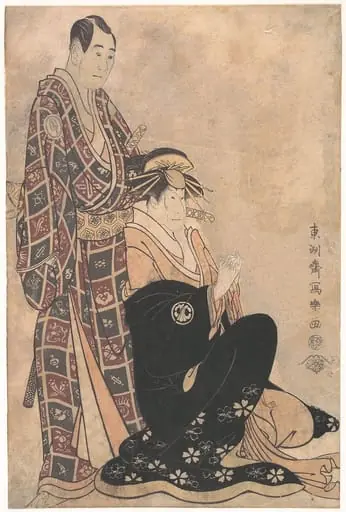
The scene depicts a man in a black robe with red sashes, a sword at his hip, and a fan in hand, flanked by two women in vividly patterned attire. Their postures and attire suggest a moment of ceremonial or social significance, possibly linked to theater or elite gatherings. The presence of Japanese text and a pagoda-roofed structure implies a specific location or event, though the exact narrative remains ambiguous. The figures’ stylized presence evokes a sense of ritualized elegance rather than spontaneous action.
Technique & Style
Kiyonaga employed bold, clean outlines and flat areas of color typical of ukiyo-e woodblock printing. The garments are rendered with intricate patterns—fan designs, floral hairpins, and textile motifs—each carefully carved and printed to enhance visual richness. Despite the use of multiple colors, the palette remains restrained, emphasizing harmony over contrast. The background architecture is simplified yet precise, contributing to a composed, almost theatrical atmosphere.
History & Provenance
Created in 1784 during the height of Kiyonaga’s career, the print was likely produced for the Edo market, where ukiyo-e prints were widely collected. It entered The Metropolitan Museum of Art’s collection through documented acquisitions of Japanese prints in the early 20th century. Its preservation in good condition reflects careful handling and the enduring interest in Edo-period graphic arts among Western institutions.
Context
Kiyonaga worked within the Torii school, known for its association with kabuki theater and depictions of urban life. This print aligns with his focus on elegant, full-figure compositions of courtesans and actors, often set against architectural backdrops. The era saw a flourishing of print culture, with demand driven by a growing merchant class. Such images served both as entertainment and as records of contemporary fashion and social rituals.
Legacy
Kiyonaga’s work helped define the aesthetic of late ukiyo-e, influencing later artists in both Japan and the West. His emphasis on balanced composition and refined detail contributed to the evolution of the genre beyond its earlier, more dynamic forms. This print, though unsigned in common usage, is recognized as representative of his mature style and remains a reference point in studies of Edo-period visual culture.
Artist & collection

 Untitled
 Untitled
 Untitled
 Untitled
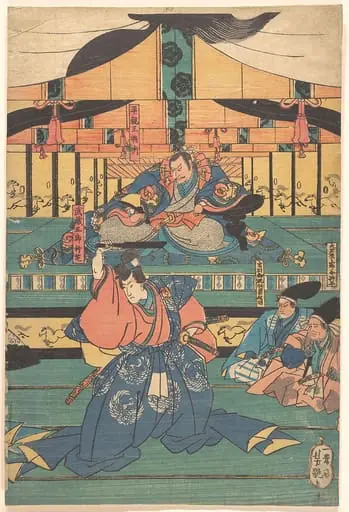 Untitled
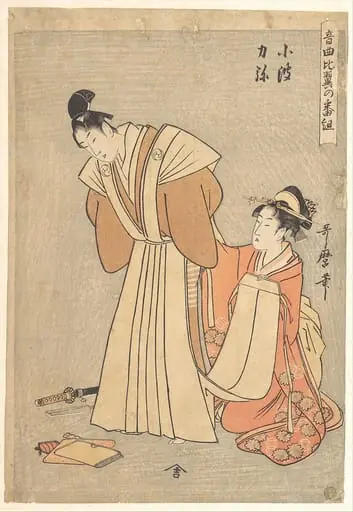 音曲比翼の番組 小波 力弥|Rikiya and Konami, from the series A Program with Music about Loving Couples (Ongyoku hiyoku no bangumi)
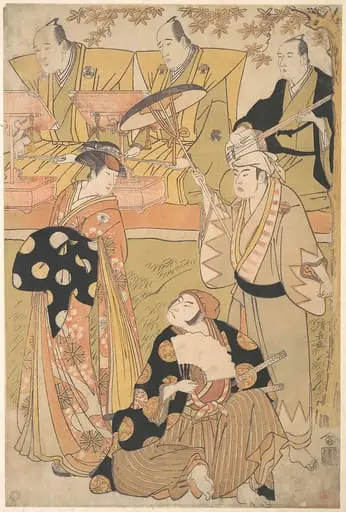 Untitled
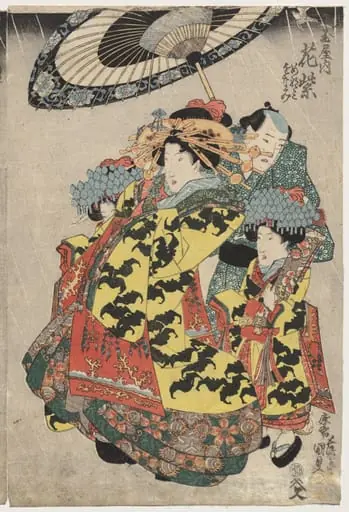 The Courtesans Hanamurasaki and Koshikibu of the Tamaya Promenading in the Rain
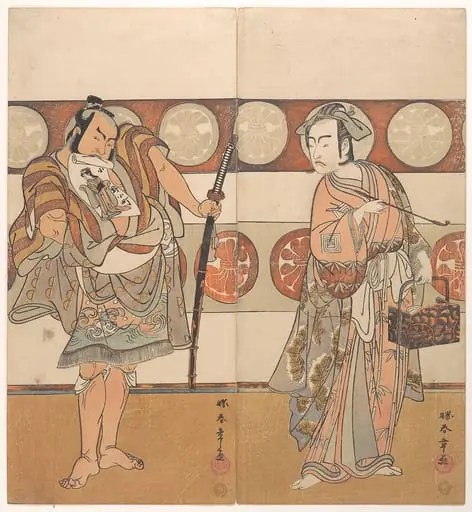 Untitled
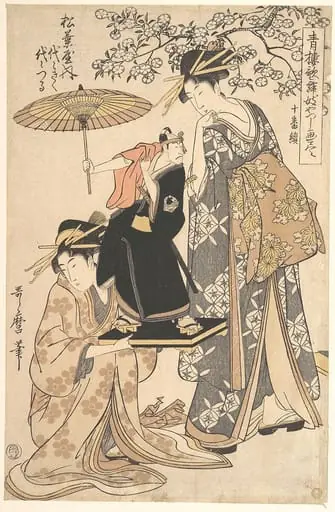 青楼歌舞妓やつし画尽 十番続|The Oiran Yoyogiku of Matsubaya Standing under a Cherry Tree
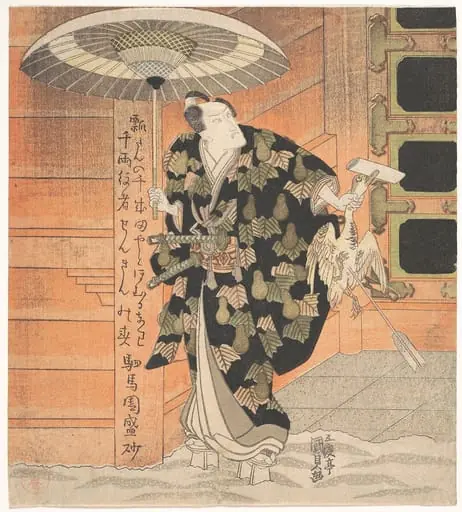 Untitled
 Untitled