Artwork
花魁と梅盆栽|Courtesan and her Child Attendant with a Potted Plum Tree
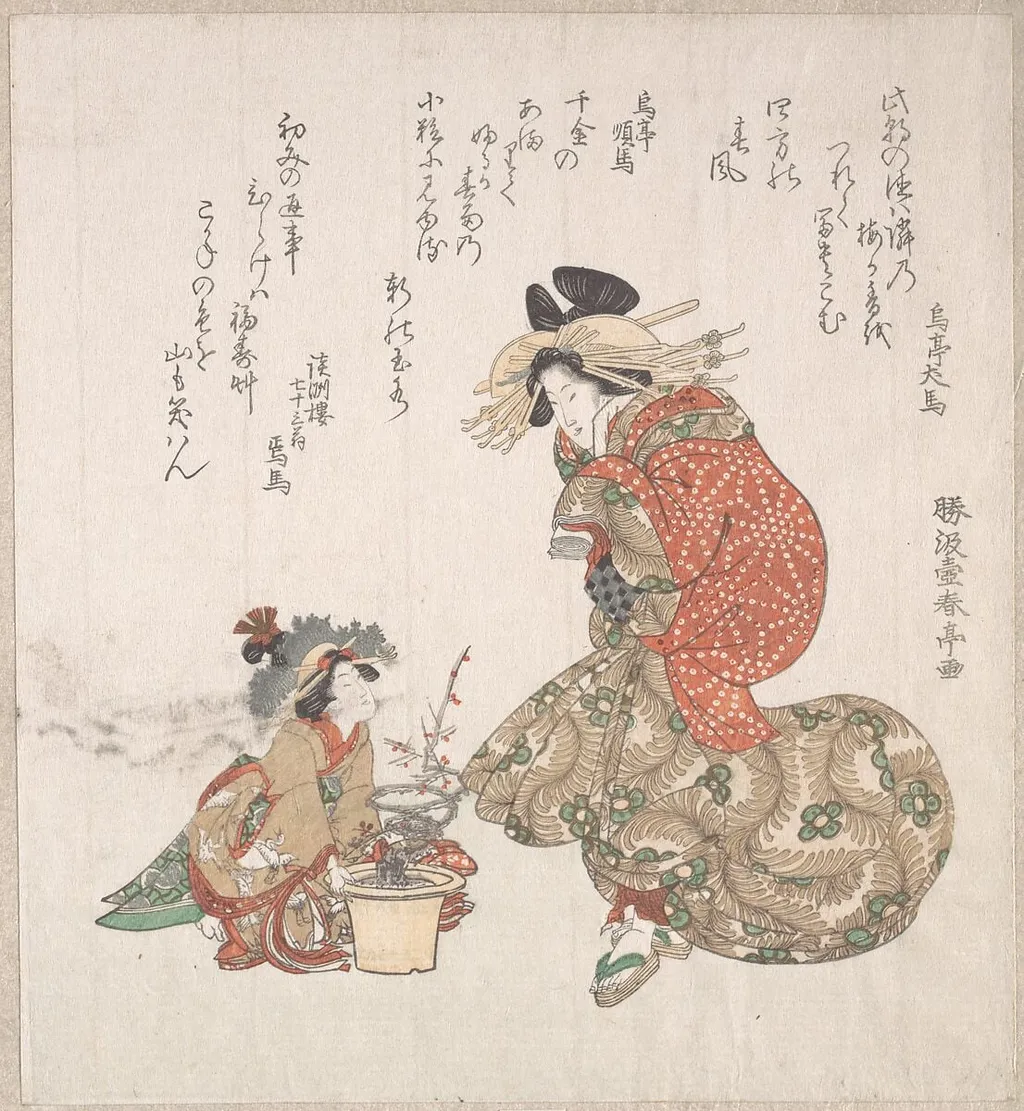
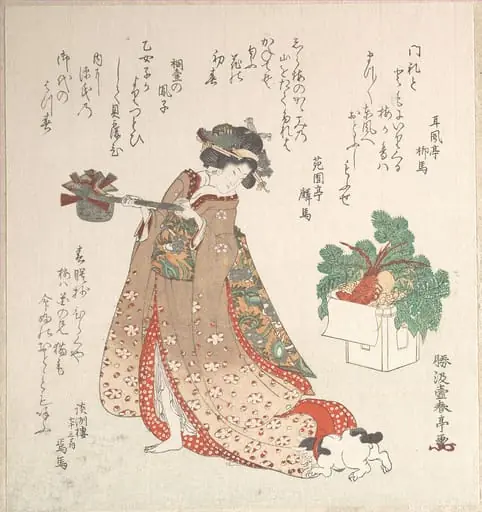
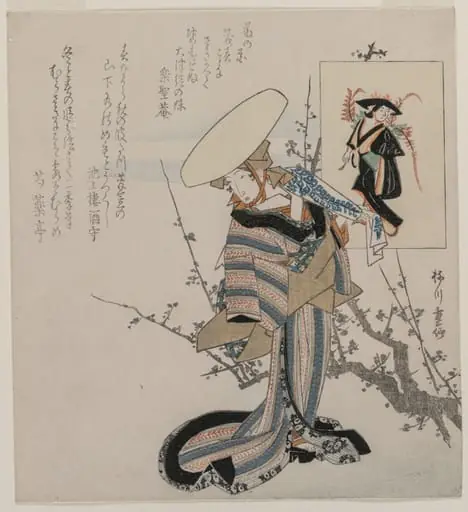
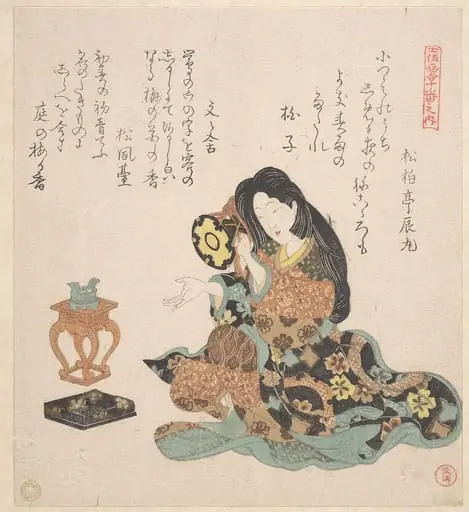
花魁と梅盆栽|Courtesan and her Child Attendant with a Potted Plum Tree is an ink print by the Romanticist artist Katsukawa Shuntei. It dates from 1815 and is held in the collection of the Metropolitan Museum of Art.
About this work
Overview
This woodblock print, created around 1815 by Katsukawa Shuntei, belongs to a small-format album known as surimono, produced for private, celebratory occasions.
This woodblock print, created around 1815 by Katsukawa Shuntei, belongs to a small-format album known as surimono, produced for private, celebratory occasions. Executed in ink and color on paper, it depicts two figures in elaborate attire against a minimalist background. The work is part of The Metropolitan Museum of Art’s collection, representing the refined aesthetic of early 19th-century Japanese printmaking aimed at discerning patrons rather than the general public.
Subject & Meaning
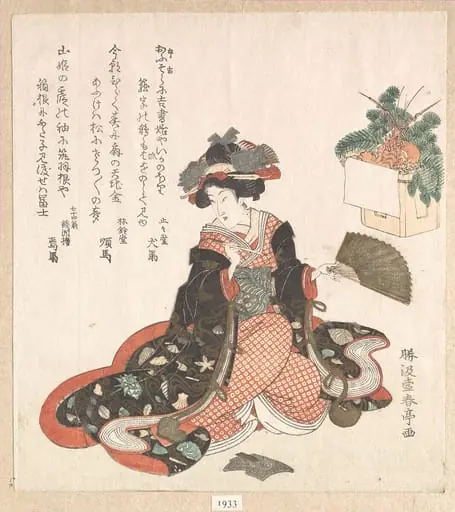
The image portrays a courtesan standing with a fan, attended by a younger girl who kneels beside a potted plum tree in bloom. The plum, a symbol of resilience and the arrival of spring, subtly references renewal and seasonal transition. The interaction between the two women suggests a quiet intimacy, reinforcing themes of care and hierarchy within the pleasure quarters. The composition avoids overt spectacle, favoring restrained elegance and symbolic nuance.
Technique & Style
Shuntei employed fine linework and layered color to render the intricate patterns of the figures’ robes, using bold reds and greens with swirling floral motifs. The background remains unadorned, directing focus to the figures and the delicate plum tree. Surimono prints like this often featured metallic pigments and embossing, though this example relies on subtle color gradations and precise carving to achieve its refined effect, typical of high-quality private commissions.
History & Provenance
Created circa 1815, the print was likely commissioned for a seasonal celebration or literary gathering among urban elites. As a surimono, it was not mass-produced but printed in limited quantities for a select audience. It entered The Metropolitan Museum of Art’s collection through documented acquisitions of Japanese prints in the early 20th century, preserving its original condition and context within a curated album format.
Context
Surimono prints emerged in the late 18th century as luxury items, often linked to poetry clubs or New Year’s greetings. Unlike commercial ukiyo-e, they prioritized artistic experimentation and personal expression. Shuntei, trained in the Katsukawa school, specialized in portraits of courtesans and actors, blending traditional themes with subtle naturalism. This print reflects the cultural preference for understated symbolism and seasonal motifs among educated urban audiences.
Legacy
Though less widely known than major ukiyo-e artists, Shuntei’s surimono contribute to the understanding of printmaking’s diversity in Edo-period Japan. This work exemplifies how private commissions allowed for greater artistic freedom and thematic depth. Today, such prints are valued for their craftsmanship and insight into the intimate social rituals of the time, offering a counterpoint to the more public-facing imagery of the era.
Artist & collection