Artwork
Untitled
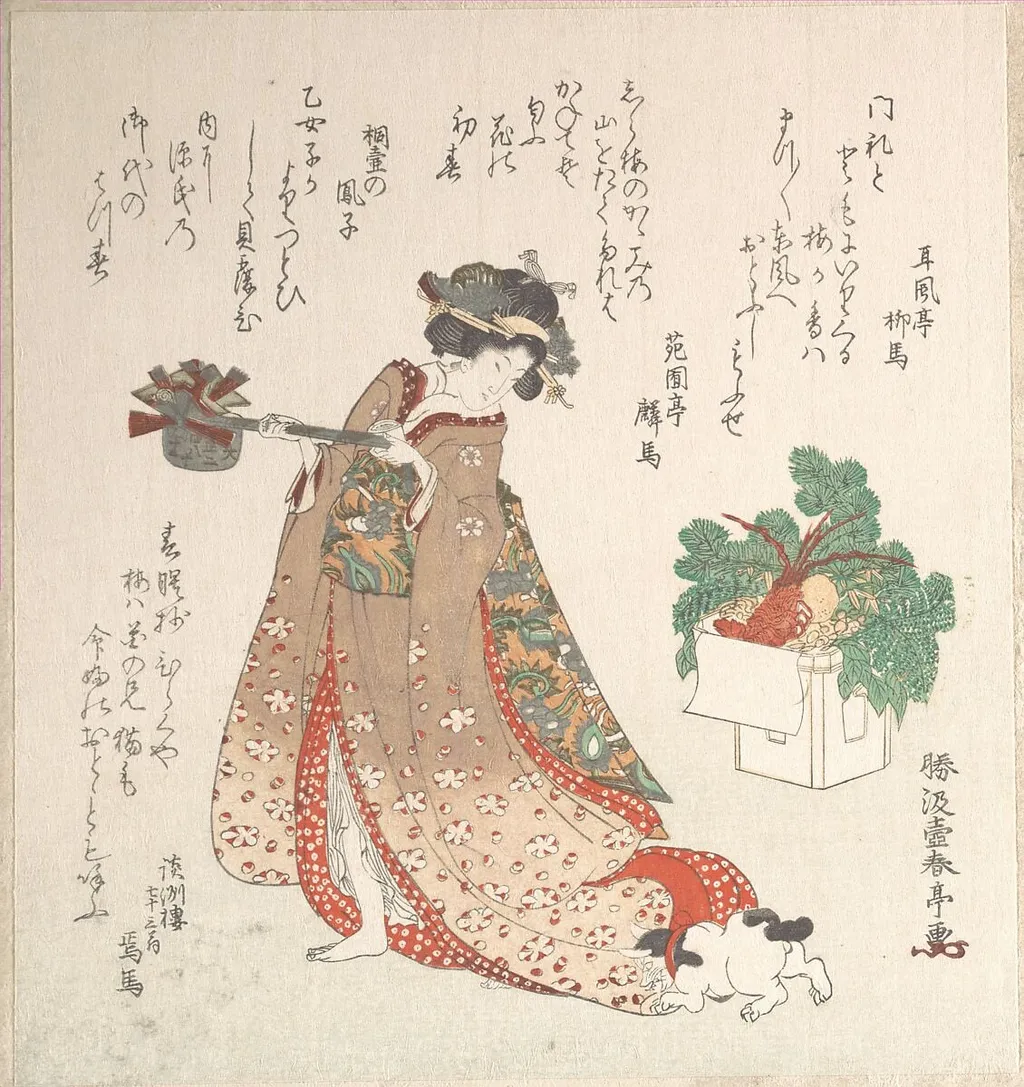
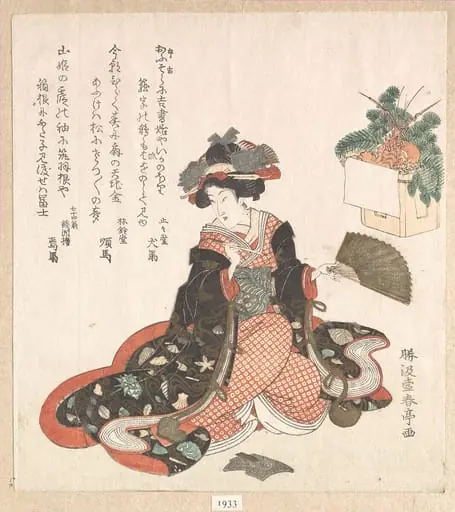
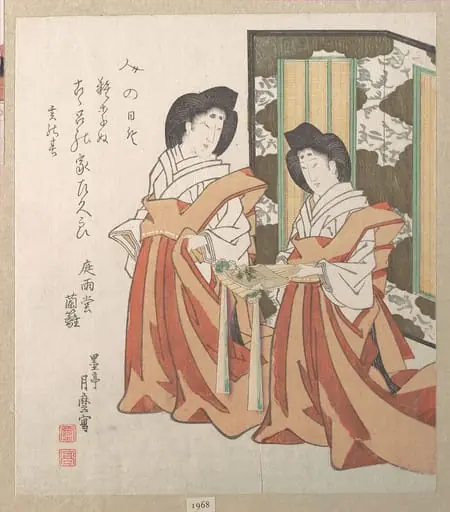
Untitled is an ink print by the Romanticist artist Katsukawa Shuntei. It dates from 1815 and is held in the collection of the Metropolitan Museum of Art.
About this work
The woman's kimono is decorated with a floral pattern, and she wears her hair in an updo.
This Japanese woodblock print features a woman in a kimono, holding a large fan. She is surrounded by Japanese characters and a small dog.
The woman's kimono is decorated with a floral pattern, and she wears her hair in an updo. The fan she holds is adorned with a ribbon. The dog at her feet is white with black ears. A box of plants sits to her right.
The print is a beautiful example of Japanese art from the early 19th century. To learn more about this style, explore the Romanticism movement.
Overview
Created around 1815 by the Japanese artist Katsukawa Shuntei, this surimono woodblock print measures a modest size and is executed in ink and color on paper. The work is part of the collection of the Metropolitan Museum of Art, where it is catalogued under the title Untitled.
Subject & Meaning
The composition depicts a woman dressed in a kimono with a floral motif, her hair arranged in an updo, holding a large fan edged with a ribbon. At her feet lies a small white dog with black ears, and a modest pot of plants rests to her right. Japanese characters frame the scene, suggesting a poetic or celebratory context typical of surimono.
Technique & Style
As a surimono, the print was likely produced for a private audience, allowing for finer carving and richer pigments than commercial ukiyo-e. Shuntei employed multiple woodblocks to apply distinct colors, achieving delicate shading on the kimono’s pattern and the dog’s fur. The ink work retains the crisp line quality characteristic of early 19th‑century Edo printing.
History & Provenance
The print entered the Metropolitan Museum of Art’s holdings through acquisition in the early 20th century, though the precise path from its original private circulation to the museum remains undocumented. Its attribution to Katsukawa Shuntei aligns with the artist’s known activity in the late Edo period, when surimono were popular among literary and artistic societies.
Artist & collection


 Untitled
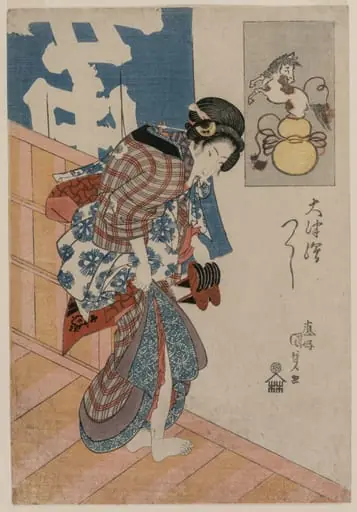 Woman Leaving a Bath House (from the series Pictures from Otsu)
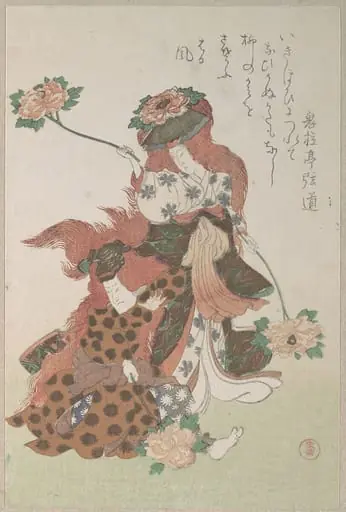 石橋物|Two Dancers Performing a “Shakkyōmono” Kabuki Dance, from Spring Rain Surimono Album (Harusame surimono-jō), vol. 3
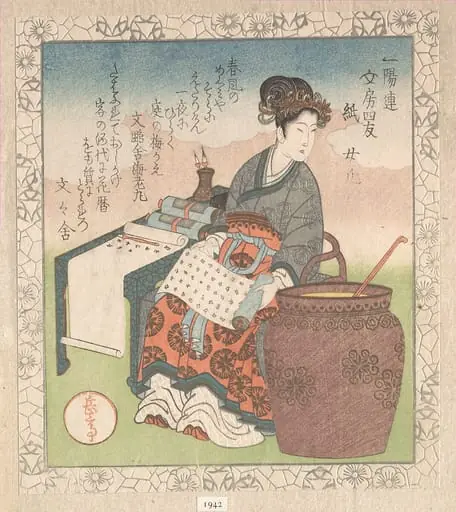 「一陽連文房四友 紙 女凢」『春雨集』 摺物帖 |Nuji (Japanese: Joki; female attendant who compiled writings by Daoist sages); “Paper” (Kami), from Four Friends of the Writing Table for the Ichiyō Poetry Circle (Ichiyō-ren Bunbō shiyū)From the Spring Rain Collection (Harusame shū), vol. 1
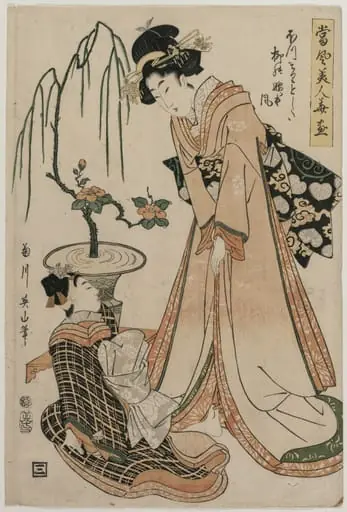 A Lady-in-Waiting with Waist as Slender as a Willow from the series Flowers and Modern Beauties
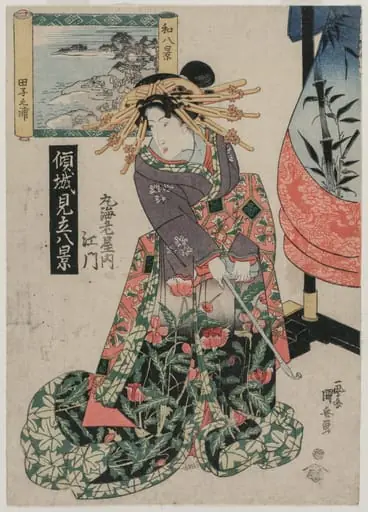 The Courtesan Emon of Maruebiya with a View of Tago Bay (form the series Courtesans with a Playful Group of Eight Views)
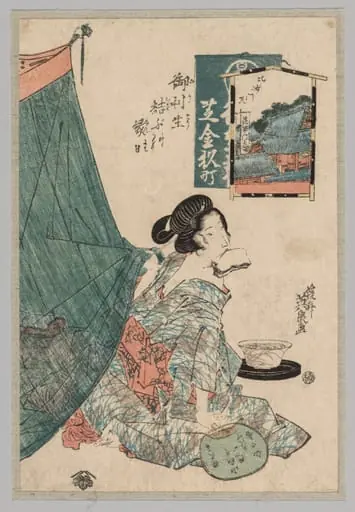 Woman with Papers in Mouth and Fan in Hand
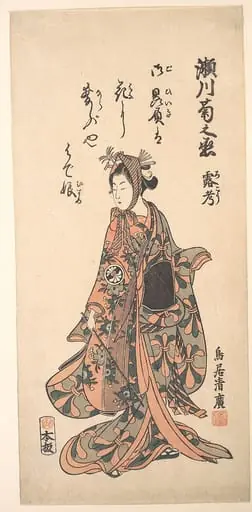 Untitled
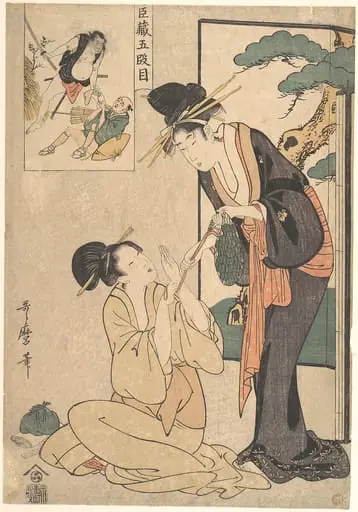 忠臣蔵五段目|A Woman Snatching a Bag of Sweetmeats from Her MotHer
 Untitled