Artwork
Untitled
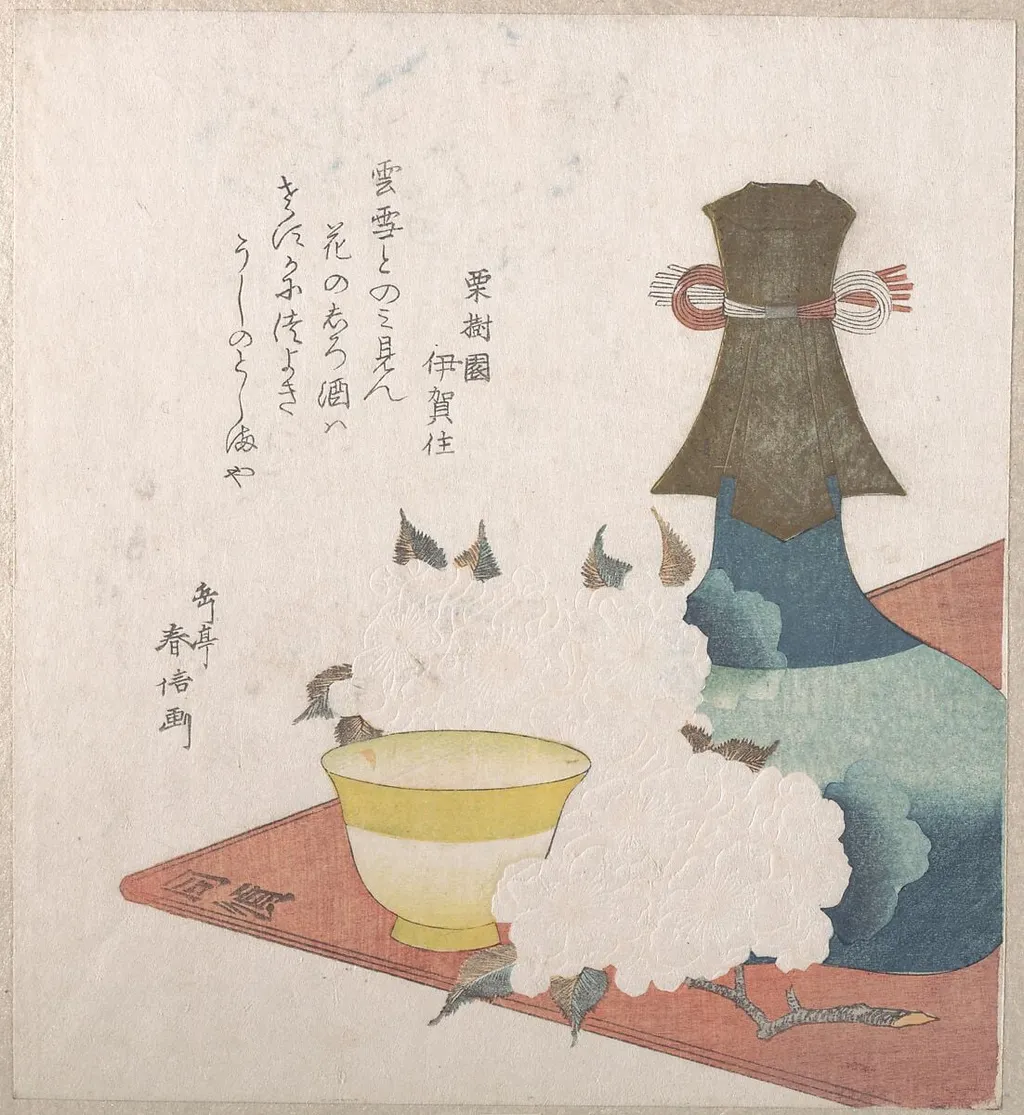
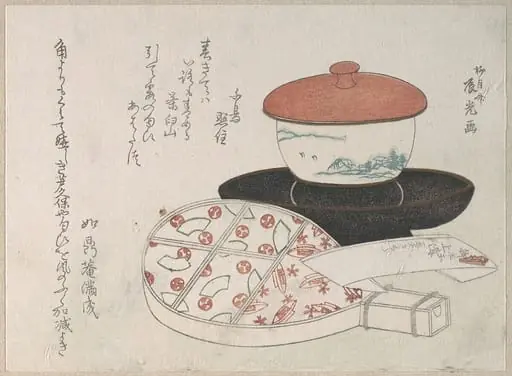
Untitled is an ink print by the Romanticist artist Yashima Gakutei. It dates from 1817 and is held in the collection of the Metropolitan Museum of Art. This print is one of several in a private album of surimono, a luxury genre of Japanese woodblock prints produced for special occasions.
About this work
Overview
Created around 1817 by Yashima Gakutei, it combines ink and subtle color on paper, reflecting the refined taste of its intended audience.
This print is one of several in a private album of surimono, a luxury genre of Japanese woodblock prints produced for special occasions. Created around 1817 by Yashima Gakutei, it combines ink and subtle color on paper, reflecting the refined taste of its intended audience. Unlike mass-produced prints, surimono emphasized poetic expression and meticulous craftsmanship, often commissioned by literary circles.
Subject & Meaning
A woman in a dark, hooded robe sits quietly on a low stool, cradling a steaming yellow bowl. Three birds rest nearby, their presence suggesting stillness rather than movement. The scene evokes a solitary, contemplative moment—perhaps a ritual of warmth or healing. The accompanying poem, written in Japanese, deepens the mood without explaining it, inviting quiet reflection rather than narrative clarity.
Technique & Style
Gakutei employed fine, controlled lines and restrained color to achieve a sense of calm intimacy. The ink outlines are precise yet fluid, while the palette—soft blues, muted reds, and pale yellows—enhances the quiet atmosphere. The cloud-like background and minimal ground plane reduce distraction, focusing attention on the figure and the steam rising from the bowl, a detail rendered with delicate gradation.
History & Provenance
The print was produced as part of a limited surimono album, likely commissioned by a poetry group in Edo. These albums were circulated among patrons and artists, often celebrating seasonal themes or literary achievements. Gakutei, trained under Hokkei and Hokusai, was known for his collaborations with kyōka poets, and this work reflects the close relationship between visual art and verse in early 19th-century Edo culture.
Context
Surimono emerged in the late Edo period as an elite art form, distinct from popular ukiyo-e. They were printed in small batches using high-quality materials and often included hand-applied pigments and metallic inks. This print belongs to a tradition where visual art and poetry were inseparable, serving as intimate objects of cultural exchange among educated urban elites rather than public displays.
Legacy
Gakutei’s work contributed to the elevation of surimono as a vehicle for poetic and aesthetic refinement. Though less widely known than his mentors, his prints are valued for their subtlety and emotional restraint. This piece exemplifies how everyday moments, rendered with precision and silence, could carry profound cultural weight within the literary-artistic circles of Edo-period Japan.
Artist & collection
Artist
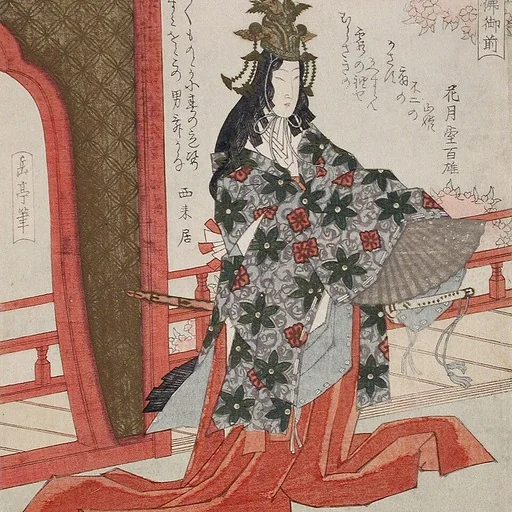
Yashima Gakutei (Japanese: 八島岳亭; c. 1786 – 1868) was a Japanese artist and poet who was a pupil of both Totoya Hokkei and Hokusai. Gakutei is best known for his kyōka poetry and surimono works.

 Untitled
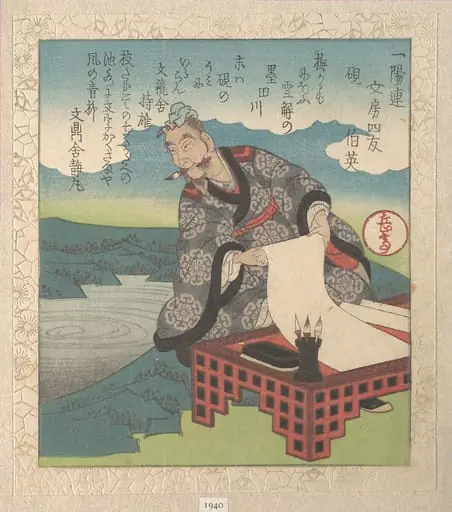 「一陽連文房四友 硯 伯英」『春雨集』 摺物帖|The Chinese Calligrapher Boying (Japanese: Hakuei; also known as the “Sage of Cursive Script”); “Inkstone” (Suzuri), from Four Friends of the Writing Table for the Ichiyō Poetry Circle (Ichiyō-ren Bunbō shiyū) From the Spring Rain Collection (Harusame shū), vol. 1
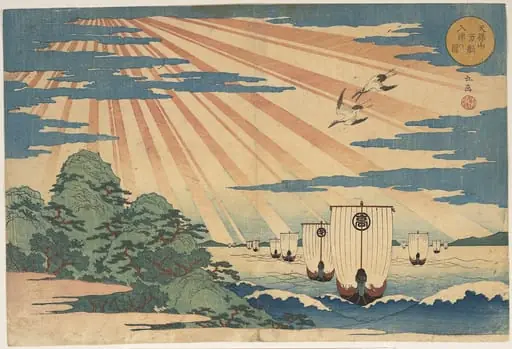 Untitled
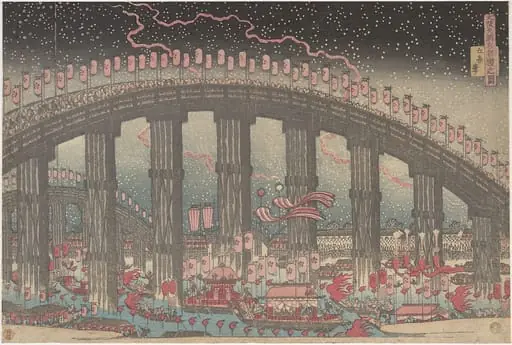 Osaka Tenmangu sairei no zu|The Tenmangu Festival at Osaka
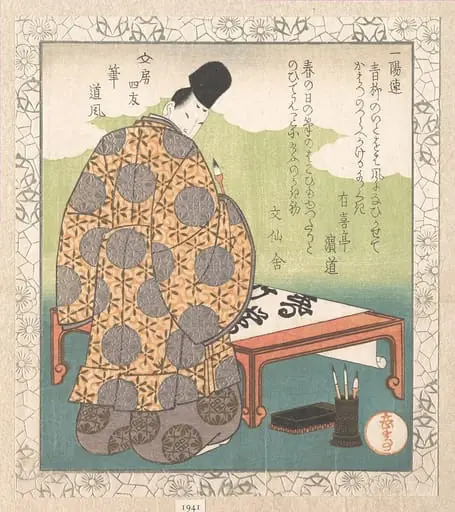 「一陽連文房四友 筆 道風」『春雨集』 摺物帖|The Heian Court Calligrapher Ono no Tōfū (894–966); “Calligraphy Brush” (Fude), from Four Friends of the Writing Table for the Ichiyō Poetry Circle (Ichiyō-ren Bunbō shiyū)From the Spring Rain Collection (Harusame shū), vol. 1
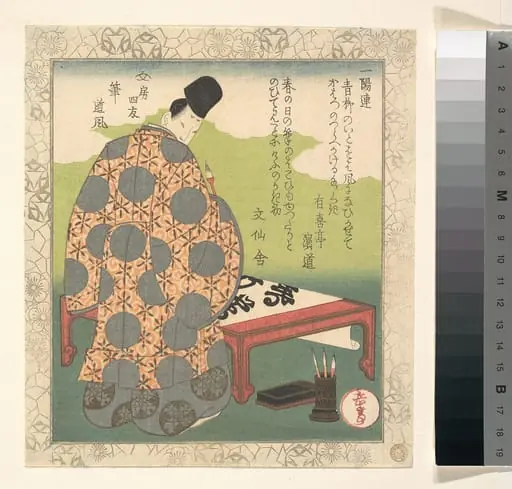 Untitled
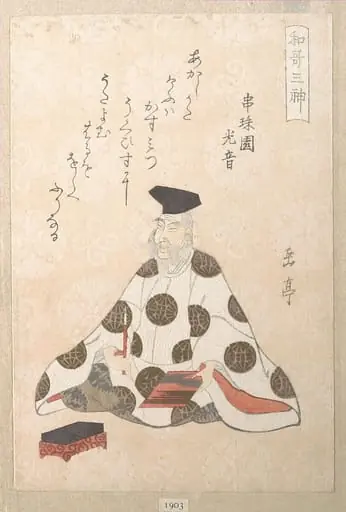 『和歌三神』 柿本人麻呂|Kakinomoto no Hitomaro (ca. 662–710), One of the Three Gods of PoetryFrom the Spring Rain Collection (Harusame shū), vol. 1
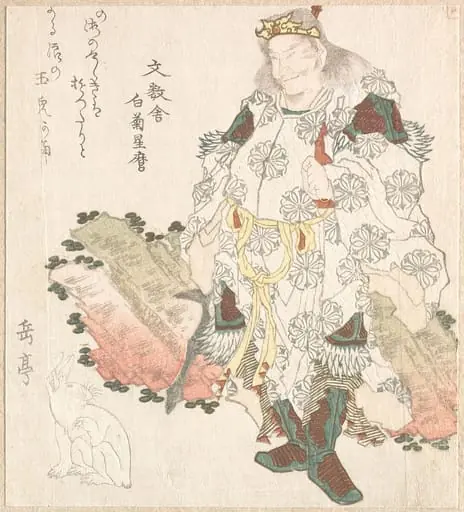 Untitled
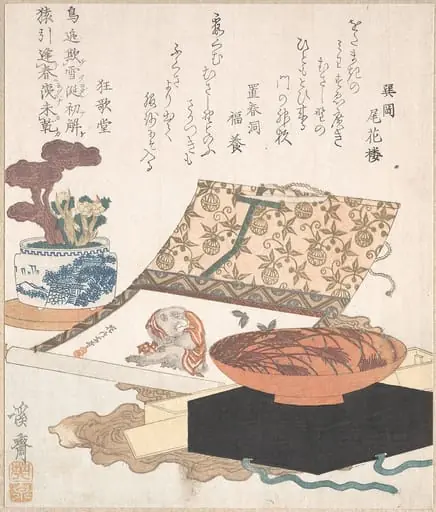 Untitled
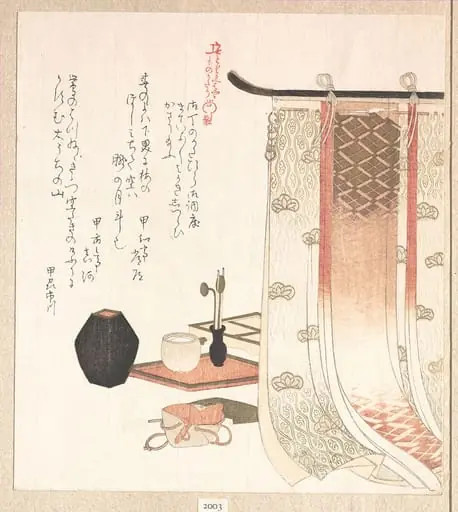 Untitled
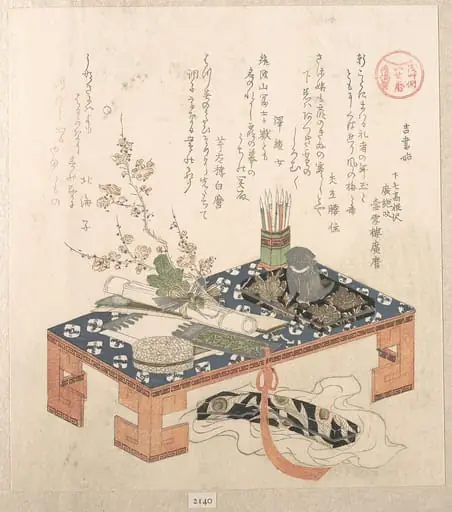 『浅草側いせ暦』 文房具と梅熨斗『春雨集』 摺物帖 |“Desk with Writing Set and Plum Flowers,” from the series Ise Calendars for the Asakusa Group (Asakusa-gawa Ise goyomi)From the Spring Rain Collection (Harusame shū), vol. 2
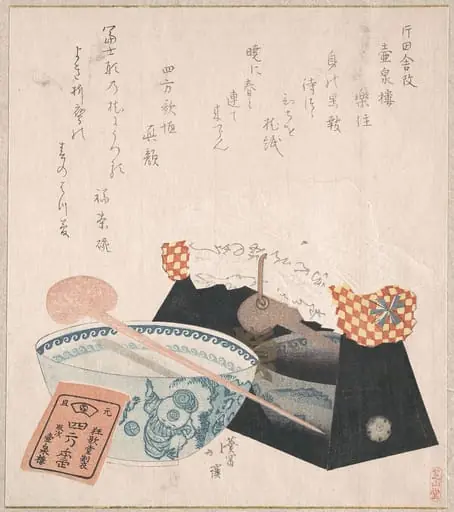 Untitled
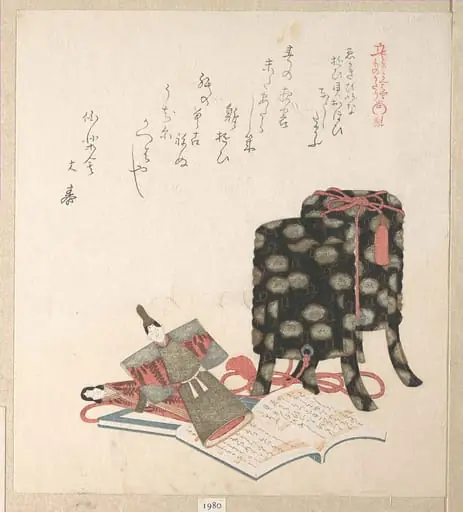 Untitled
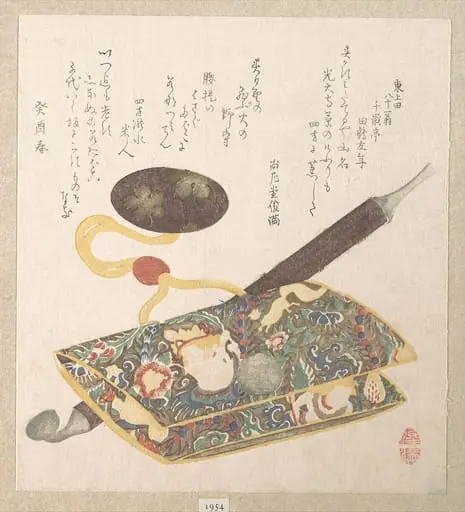 Untitled
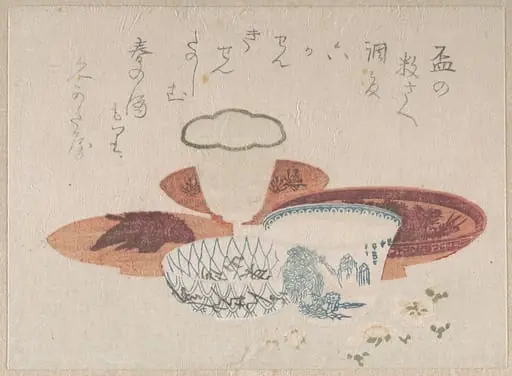 Untitled
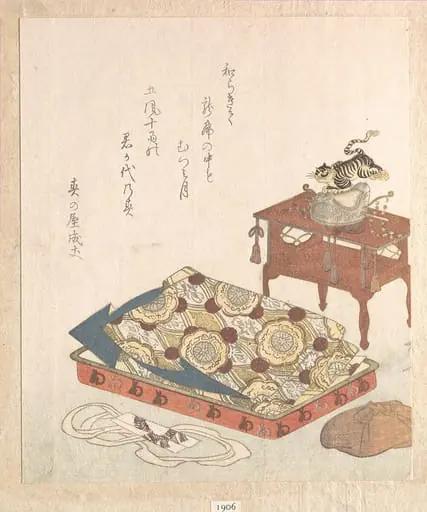 舞楽衣装『春雨集』 摺物帖|Costume for Bugaku Court DanceFrom the Spring Rain Collection (Harusame shū), vol. 1
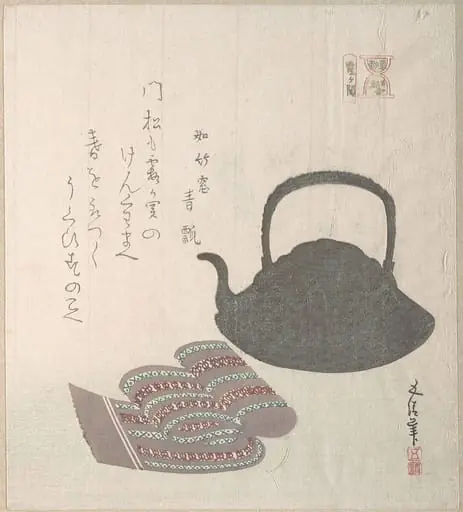 Untitled
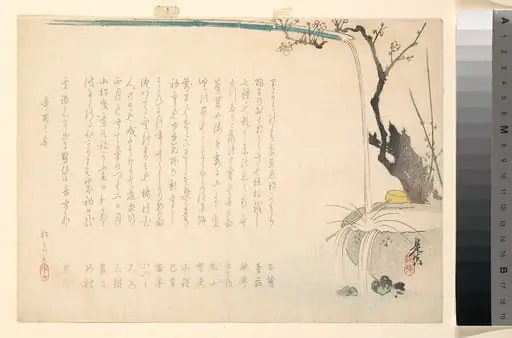 Untitled
 Untitled
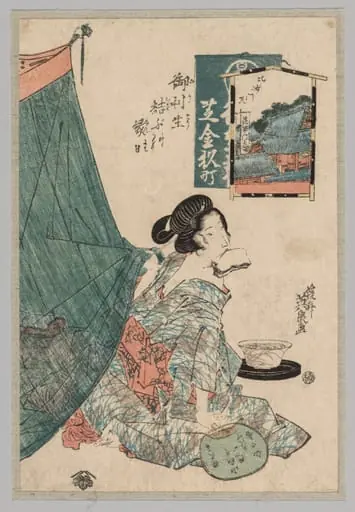 Woman with Papers in Mouth and Fan in Hand