Artwork
衣食住|Attire
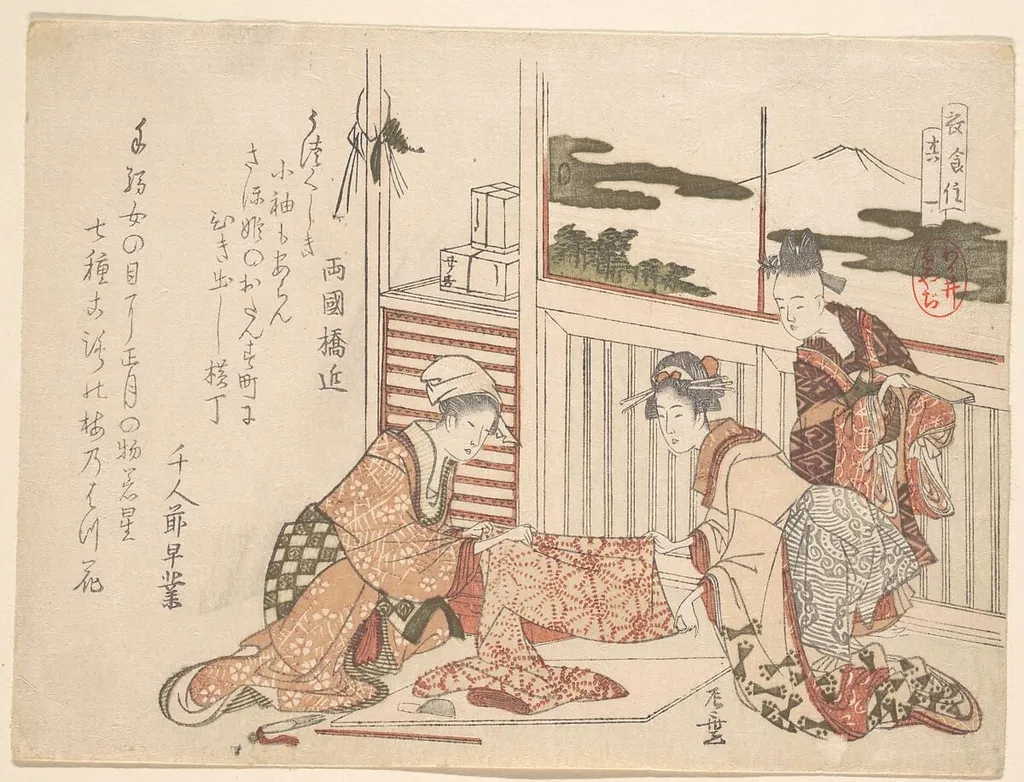
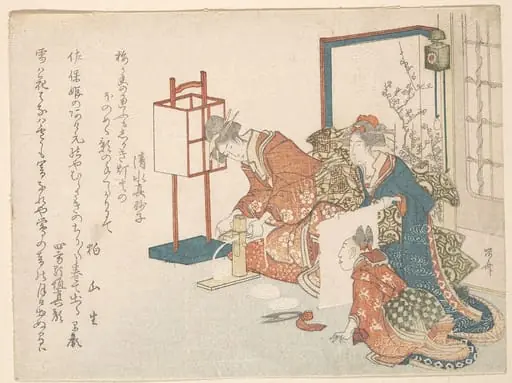
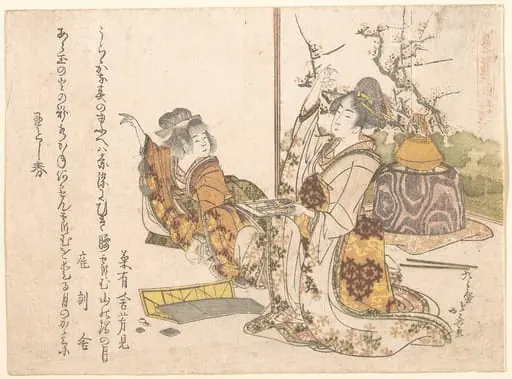
衣食住|Attire is an ink print by the Japonisme artist Katsushika Hokusai. It dates from 1804 and is held in the collection of the Metropolitan Museum of Art.
About this work
Overview
Created in 1804 by Katsushika Hokusai, this surimono woodblock print depicts a quiet interior scene of three women engaged in textile-related tasks.
Created in 1804 by Katsushika Hokusai, this surimono woodblock print depicts a quiet interior scene of three women engaged in textile-related tasks. Rendered in ink and color on paper, it belongs to a small category of privately commissioned prints valued for their refined detail and poetic tone. The work is part of the collection at The Metropolitan Museum of Art, where it exemplifies Hokusai’s interest in domestic life beyond his more famous landscapes.
Subject & Meaning
The title 'Attire' suggests the women are involved in the preparation or handling of clothing, a domestic activity often associated with diligence and quiet ritual in Edo-period Japan. Two women kneel, one folding a red fabric, the other holding a patterned textile, while a third gazes toward the window, her posture implying contemplation. The scene evokes the rhythm of daily labor, subtly connecting personal routine with the broader natural world visible beyond the frame.
Technique & Style
Hokusai employed precise linework and flat areas of color typical of surimono prints, emphasizing clarity over atmospheric depth. The figures are rendered with restrained elegance, their forms defined by clean contours. The window’s view of distant mountains and clouds is rendered with minimal detail, contrasting the sharpness of the interior. Subtle use of color—particularly the red cloth—draws the eye without overwhelming the composition’s calm balance.
History & Provenance
This print was produced as a surimono, a luxury woodblock print commissioned by poetry circles or private patrons for special occasions. Unlike mass-produced ukiyo-e, surimono were limited in number and often featured intricate printing techniques. The work entered The Metropolitan Museum of Art’s collection through documented acquisitions, preserving its origin as a refined, non-commercial object from early 19th-century Japan.
Context
In early 1800s Edo, domestic scenes like this reflected growing interest in the private lives of women, particularly in urban middle-class households. Textile work was both a practical necessity and a cultural symbol of feminine virtue. Hokusai’s focus on such moments aligns with broader trends in ukiyo-e that elevated everyday rituals, offering viewers a quiet, contemplative alternative to theatrical or heroic subjects.
Legacy
Though less widely known than Hokusai’s landscapes, this print contributes to understanding his versatility and sensitivity to intimate moments. Its preservation in a major Western collection underscores its significance in bridging Japanese aesthetic traditions with global art historical discourse. The work continues to inform studies on gender, labor, and the representation of domestic space in pre-modern Japanese art.
Artist & collection

Artist
Katsushika Hokusai spent his life in Edo, now Tokyo, where he drew and carved prints for a living.

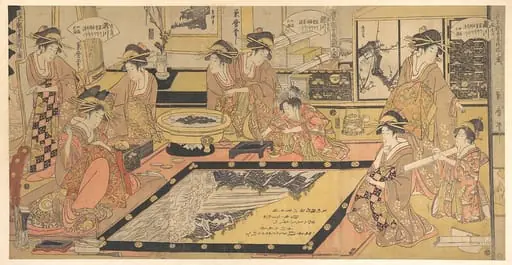 『浅草観音奉掛額之 図』 「扇屋内滝川 富川、粂川、玉川、津川、歌川、清川 め浪、お浪」|A Votive Picture to Be Donated to the Kannon of Asakusa (Asakusa Kannon hō kakegaku no zu), by Takigawa of the Ōgiya, Kamuro Menami and Onami, with Tomikawa, Kumegawa, Tamagawa, Tsugawa, Utagawa, and Kiyokawa
 Untitled
 Untitled
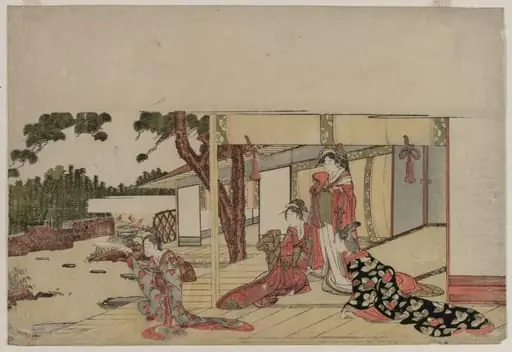 Women on a Veranda
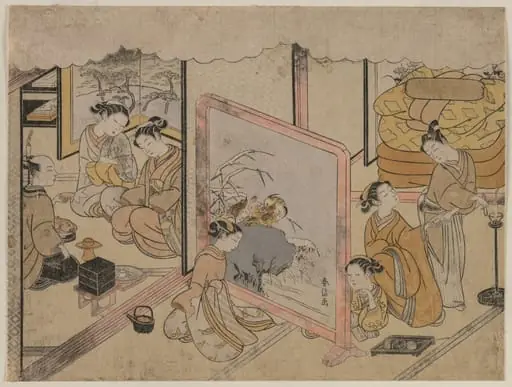 Drinking a Cup of Wine Before Retiring for Bed (From an Untitled Series)
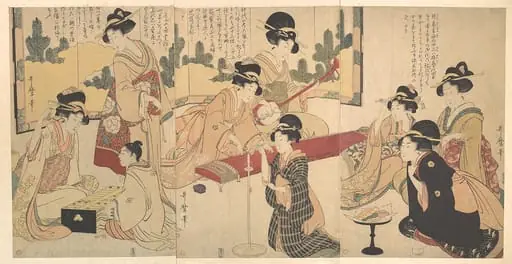 Untitled
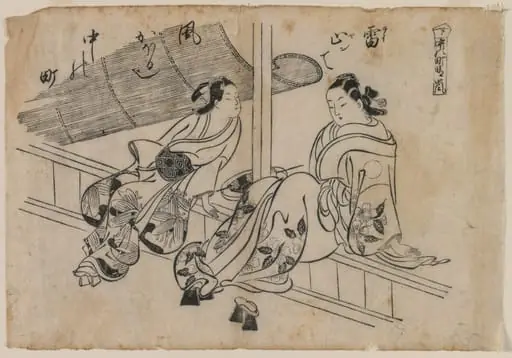 Twilight at Nakanocho
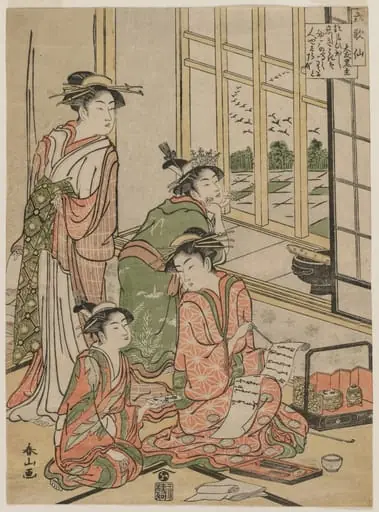 Courtesans at Leisure from the series The Six Immortal Poets
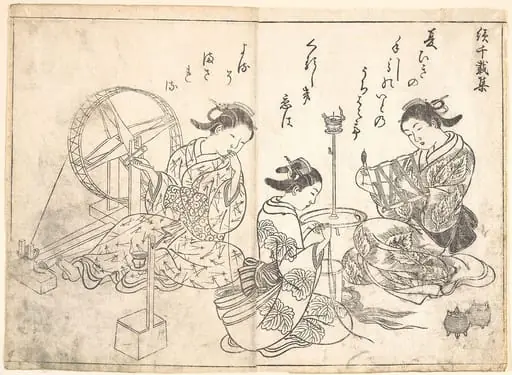 Untitled
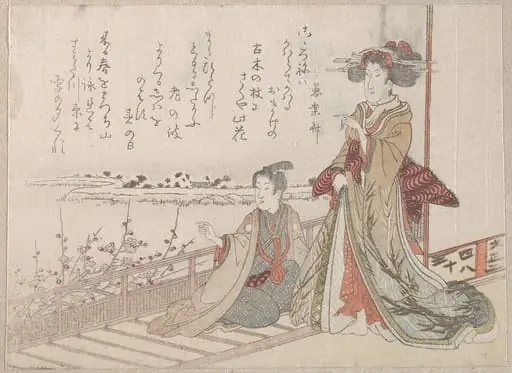 Untitled
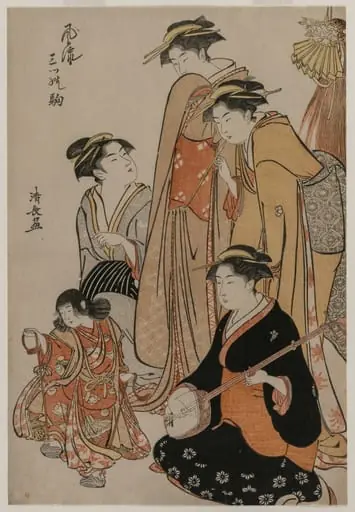 Women Watching a Girl Dance on Shells (From the series Fashionable Presentations of Three Horses)
 Untitled