Artwork
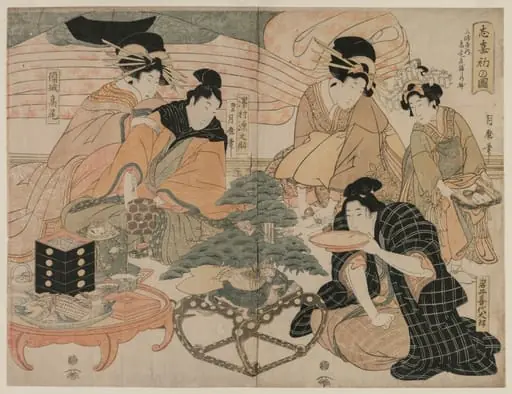
『浅草観音奉掛額之 図』 「扇屋内滝川 富川、粂川、玉川、津川、歌川、清川 め浪、お浪」|A Votive Picture to Be Donated to the Kannon of Asakusa (Asakusa Kannon hō kakegaku no zu), by Takigawa of the Ōgiya, Kamuro Menami and Onami, with Tomikawa, Kumegawa, Tamagawa, Tsugawa, Utagawa, and Kiyokawa
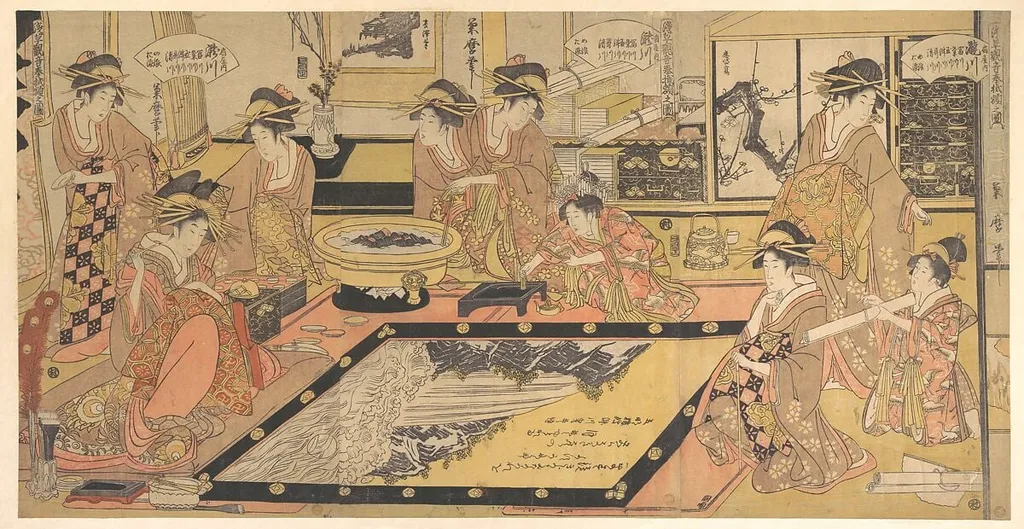
『浅草観音奉掛額之 図』 「扇屋内滝川 富川、粂川、玉川、津川、歌川、清川 め浪、お浪」|A Votive Picture to Be Donated to the Kannon of Asakusa (Asakusa Kannon hō kakegaku no zu), by Takigawa of the Ōgiya, Kamuro Menami and Onami, with Tomikawa, Kumegawa, Tamagawa, Tsugawa, Utagawa, and Kiyokawa is an ink print by the Romanticist artist Kitagawa Kikumaro. It dates from 1800 and is held in the collection of the Metropolitan Museum of Art. This triptych woodblock print, dated around 1800, depicts a domestic interior associated with the Ōgiya teahouse in Edo.
About this work
Overview
The scene is rendered in ink and color on paper, typical of ukiyo-e production, and was likely intended as a votive offering to the Kannon temple at Asakusa.
This triptych woodblock print, dated around 1800, depicts a domestic interior associated with the Ōgiya teahouse in Edo. It presents six women, identified by their professional names, engaged in quiet preparation within a furnished room. The scene is rendered in ink and color on paper, typical of ukiyo-e production, and was likely intended as a votive offering to the Kannon temple at Asakusa. The composition captures an intimate, unidealized moment of daily life among entertainers.
Subject & Meaning
The figures are courtesans and attendants from the Ōgiya, identified by their art names: Takigawa, Tomikawa, Kumegawa, Tamagawa, Tsugawa, Utagawa, and Kiyokawa, along with the maidservants Menami and Onami. They gather around a table laden with offerings—scrolls, food, and ritual objects—suggesting preparations for a religious donation. The presence of a child and the arranged items imply a ceremonial act, blending domestic routine with devotional practice, reflecting the intersection of pleasure quarters and spiritual life in Edo society.
Technique & Style
The print employs fine linework and layered color to define textures of silk robes, wooden shelves, and woven mats. Details like the black hats, folded fans, and calligraphic inscriptions on the walls are rendered with precision. The composition is tightly packed, using overlapping figures and furniture to convey spatial depth without linear perspective. The subdued palette and intimate scale distinguish it from grander ukiyo-e subjects, emphasizing quiet realism over theatricality.
History & Provenance
Created by Kitagawa Kikumaro, the print was likely commissioned as a votive offering to Asakusa Kannon, a popular pilgrimage site. Such images were donated by patrons to express gratitude or seek blessings. The inclusion of named courtesans suggests the Ōgiya’s involvement in temple patronage, a common practice among urban elites. The work entered The Metropolitan Museum of Art’s collection through documented acquisitions in the 20th century, preserving its connection to Edo’s cultural and religious customs.
Context
In early 19th-century Edo, teahouse entertainers often participated in religious rituals as part of their social role. Votive pictures like this one served both spiritual and reputational functions, affirming the donor’s piety and status. The depiction of a private interior, rather than a temple setting, reflects the blending of secular and sacred spheres. Similar works reveal how pleasure quarters maintained ties to Buddhist institutions, reinforcing community bonds through shared ritual.
Legacy
This print stands as a rare visual record of women from the pleasure quarters engaged in devotional acts, countering the more common portrayals of them as objects of spectacle. Its quiet realism offers insight into the daily lives of courtesans beyond performance. As a surviving example of votive ukiyo-e, it contributes to understanding how art functioned in personal and communal religious practice, rather than merely as commercial commodity.
Artist & collection

 Untitled
 Untitled
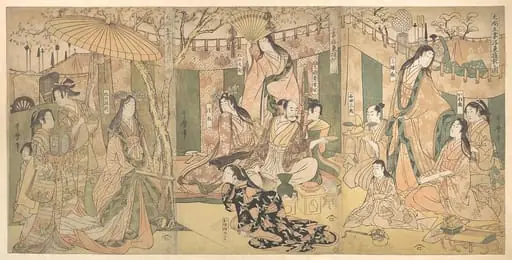 太閤五妻洛東遊観之図|A View of the Pleasures of the Taiko and His Five Wives at Rakutō
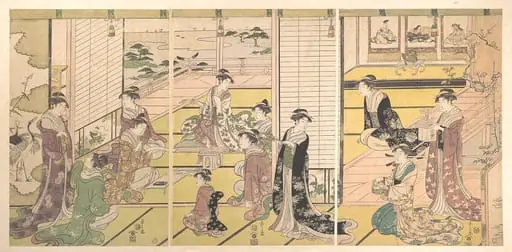 鳥文斎栄之画 和歌三神図|Honoring the Three Gods of Poetry: Women Composing Poems
 Untitled
 Untitled
 Untitled
 衣食住|Attire
 「風流やつし源氏 朝顔」|Bellflowers (Asagao), from the series Genji in Fashionable Modern Guise (Fūryū yatsushi Genji: Asagao)