Artwork
Untitled
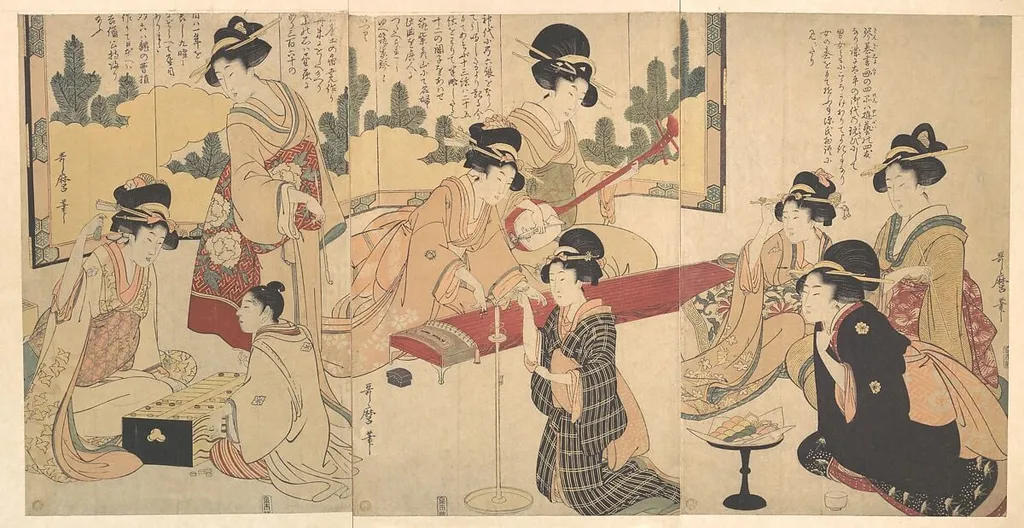
Untitled is an ink print by the Romanticist artist Kitagawa Utamaro. It dates from 1805 and is held in the collection of the Metropolitan Museum of Art.
About this work
Overview
It is part of the collection at The Metropolitan Museum of Art, where it exemplifies the ukiyo-e tradition’s focus on everyday elegance.
This triptych, created around 1805, consists of three woodblock prints on paper, each depicting a quiet moment in the life of a woman in early 19th-century Japan. Executed in ink and subtle color, the work presents a sequence of domestic scenes rather than a single narrative. It is part of the collection at The Metropolitan Museum of Art, where it exemplifies the ukiyo-e tradition’s focus on everyday elegance.
Subject & Meaning
The three panels portray women engaged in routine activities: playing a stringed instrument, resting with a fan, and holding a brush or fan. These moments suggest introspection and leisure, common themes in ukiyo-e depictions of women. The absence of dramatic action or narrative tension emphasizes the dignity of ordinary life, reflecting cultural ideals of quiet refinement and personal composure among urban elites.
Technique & Style
The prints employ fine linework and delicate color gradations, typical of Utamaro’s mature style. Soft hues of pale green, pink, and earth tones are applied with precision, enhancing the sense of stillness. Backgrounds suggest garden spaces through minimal brushwork, while the figures are rendered with graceful contours and layered garments that convey texture without detail. Each panel is framed by a small table with modest objects, grounding the scenes in domestic reality.
History & Provenance
Created circa 1805, the triptych emerged during the height of Utamaro’s career, when he was renowned for his portrayals of women. It was likely produced for the commercial print market, intended for private homes rather than public display. The work entered The Metropolitan Museum of Art’s collection through established channels of early 20th-century Japanese art acquisition, preserving its original format and condition.
Context
In early 1800s Edo, woodblock prints were widely circulated among the merchant class, who valued imagery of urban life. Utamaro’s focus on women’s private moments aligned with a growing interest in personal, intimate subjects over traditional heroic or theatrical themes. The tall black hats and layered robes reflect contemporary fashion among women of the pleasure quarters and educated classes, capturing a specific social moment in Edo-period culture.
Legacy
This triptych contributes to the broader recognition of Utamaro as a master of psychological nuance in ukiyo-e. Its quiet composition influenced later artists interested in domestic realism and the poetic potential of everyday gestures. While not widely exhibited, it remains a representative example of how Japanese printmakers elevated ordinary life into enduring visual form.
Artist & collection


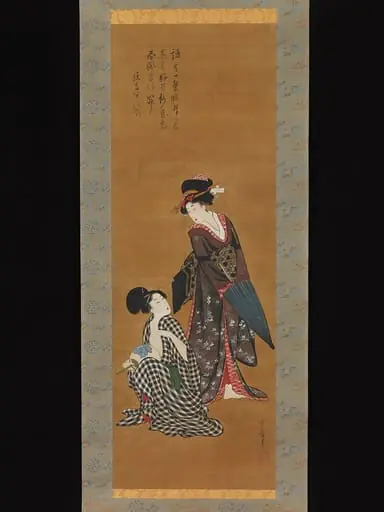 Untitled
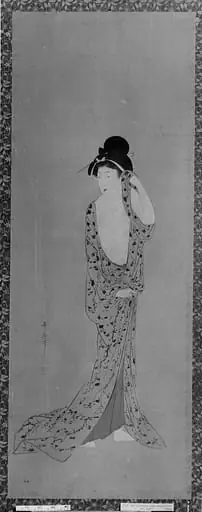 Untitled
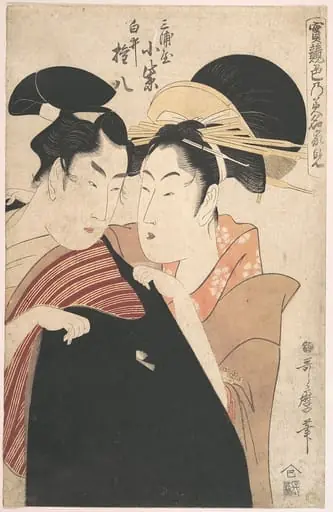 実競色乃美名家見 三浦屋小紫 白井権八|The Lovers Miura-ya Komurasaki and Shirai Gonpachi.
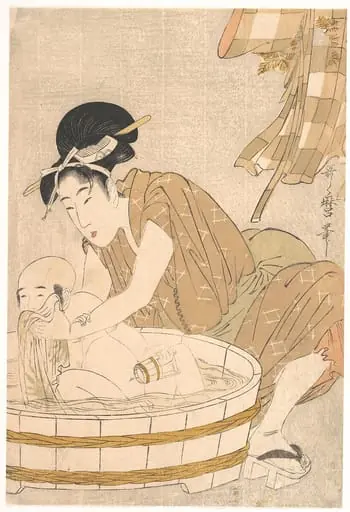 行水|Bathtime (Gyōzui)
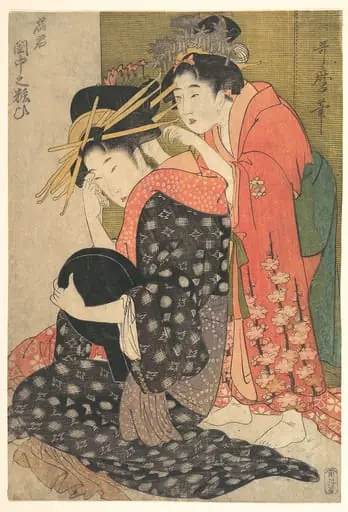 名君 閨中の粧ひ|The Oiran Yoso-oi Seated at Her Toilet
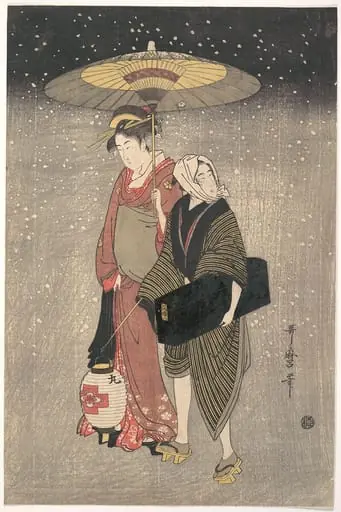 Untitled
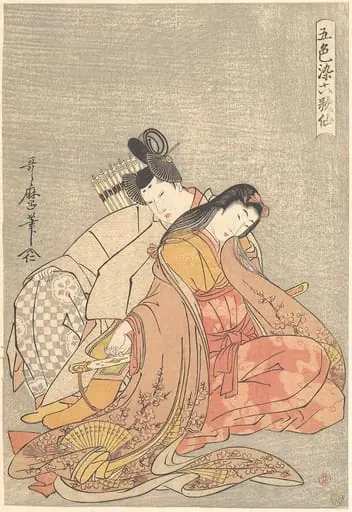 『五色染六歌仙』 在原業平と小野小町|“The Poet Ariwara no Narihira (825–880) and Ono no Komachi,” from the series Five Colors of Love for the Six Poetic Immortals (Goshiki-zome rokkasen)
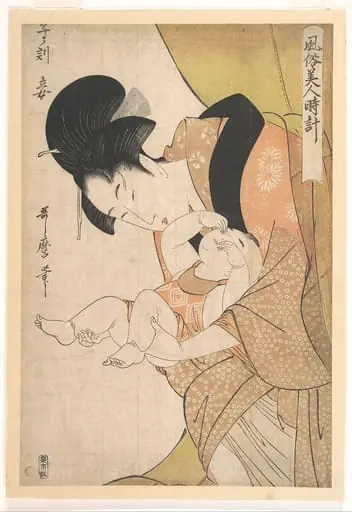 風俗美人時計 子ノ刻 妾|Midnight: Mother and Sleepy Child
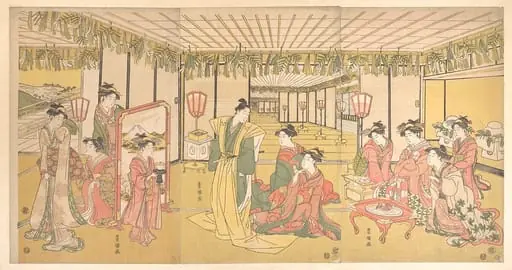 Untitled
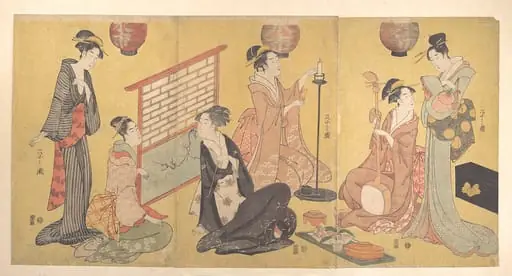 Untitled
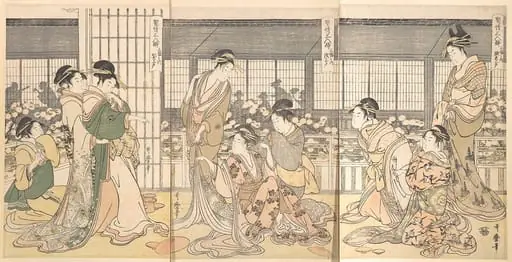 契情三人酔 三幅之内 腹立上戸 泣上戸 笑上戸|Three Intoxicated Courtesans
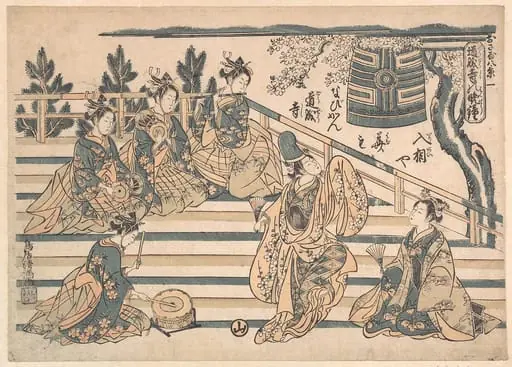 Untitled
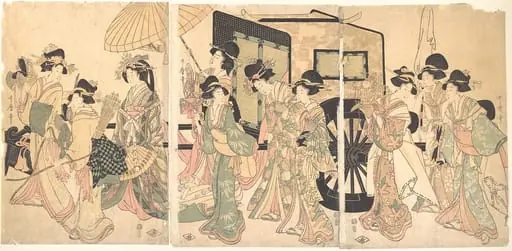 Untitled
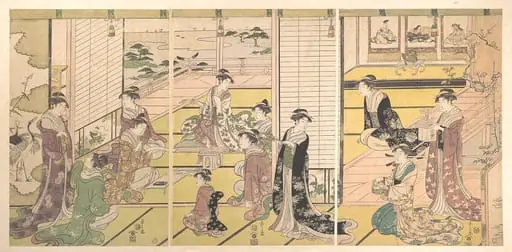 鳥文斎栄之画 和歌三神図|Honoring the Three Gods of Poetry: Women Composing Poems
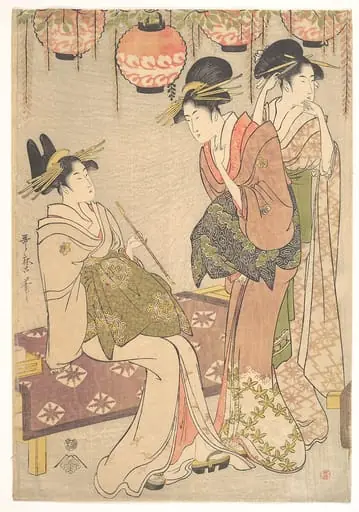 Untitled
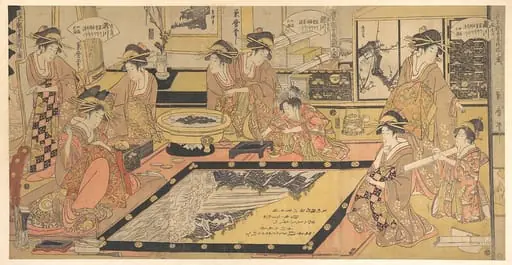 『浅草観音奉掛額之 図』 「扇屋内滝川 富川、粂川、玉川、津川、歌川、清川 め浪、お浪」|A Votive Picture to Be Donated to the Kannon of Asakusa (Asakusa Kannon hō kakegaku no zu), by Takigawa of the Ōgiya, Kamuro Menami and Onami, with Tomikawa, Kumegawa, Tamagawa, Tsugawa, Utagawa, and Kiyokawa
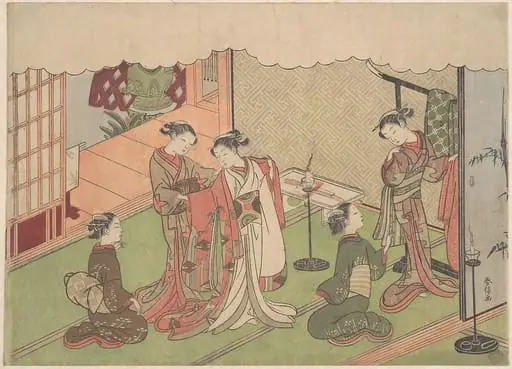 Untitled
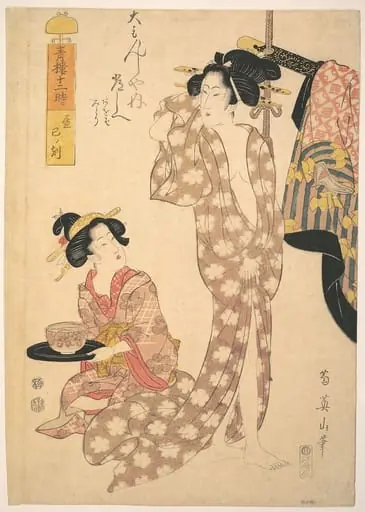 Untitled
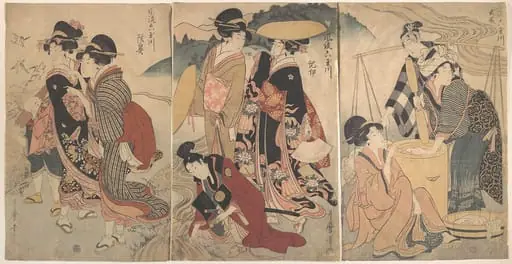 風流六玉川 武蔵 紀伊 陸奥|Women and a Man in the Country; Some pageant(?)
![南四季 夏景|The Four Seasons in Southern Edo: A Summer Scene (Minami shiki; Natsu [no] kei), by Utagawa Toyokuni I](https://artifactworldgallery.com/img/utagawa-toyokuni-i--the-four-seasons-in-southern-edo-a-summer-scene-minami-shiki--de8110e8ab2ddcb5-w320.webp) 南四季 夏景|The Four Seasons in Southern Edo: A Summer Scene (Minami shiki; Natsu [no] kei)
南四季 夏景|The Four Seasons in Southern Edo: A Summer Scene (Minami shiki; Natsu [no] kei)