Artwork
Moon, Pine and Maple
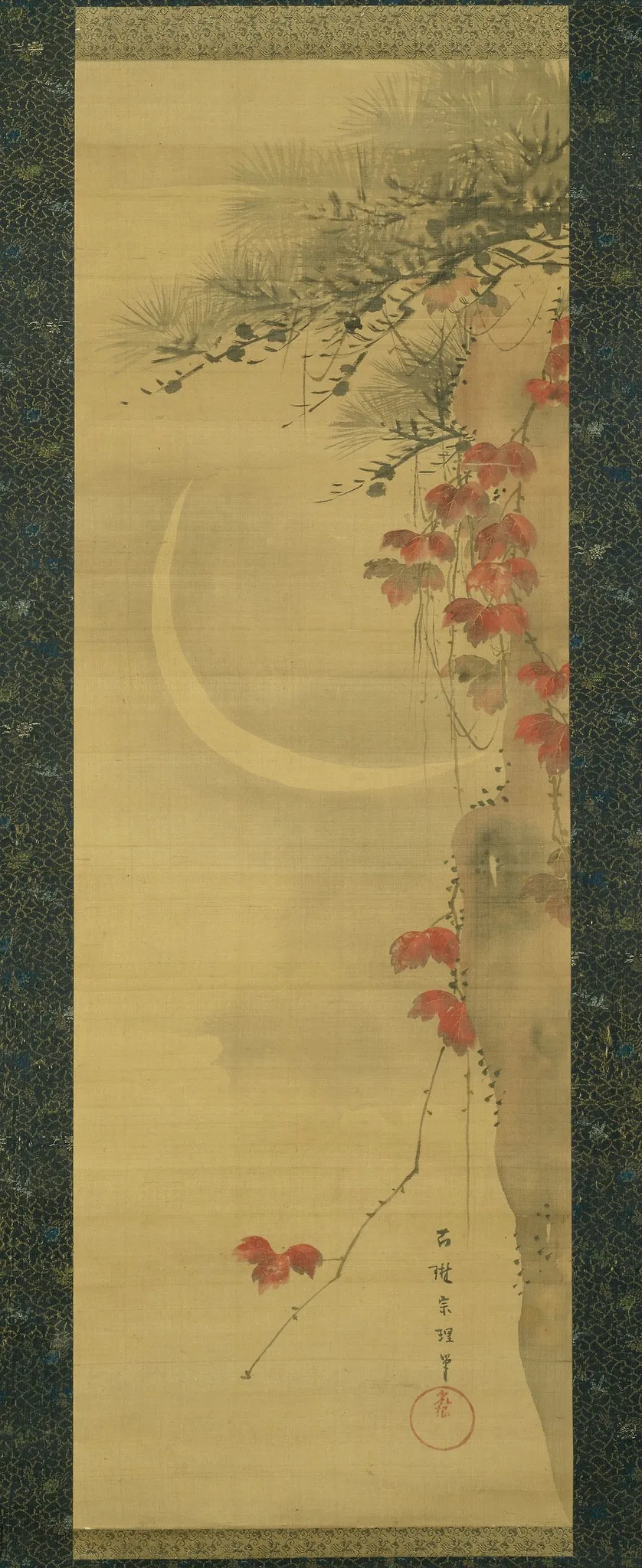
Moon, Pine and Maple is an unspecified painting by the Ukiyo-e artist Katsushika Hokusai. It dates from 1810 and is held in the collection of the Art Institute of Chicago.
About this work
Overview
Moon, Pine and Maple is a landscape painting attributed to Katsushika Hokusai, dated around 1810. Though often associated with his later woodblock prints, this work reflects his early engagement with ink and color on paper. It is part of the collection at the Art Institute of Chicago, where it is displayed as an example of Edo-period Japanese painting.
Subject & Meaning
Together, they form a quiet meditation on nature’s cycles, typical of literati-inspired themes in early 19th-century Japan.
The composition centers on three natural elements: the moon, a pine tree, and a maple. These are not merely botanical subjects but carry symbolic weight in East Asian tradition—the pine signifies endurance, the maple evokes seasonal change, and the moon represents stillness and contemplation. Together, they form a quiet meditation on nature’s cycles, typical of literati-inspired themes in early 19th-century Japan.
Technique & Style
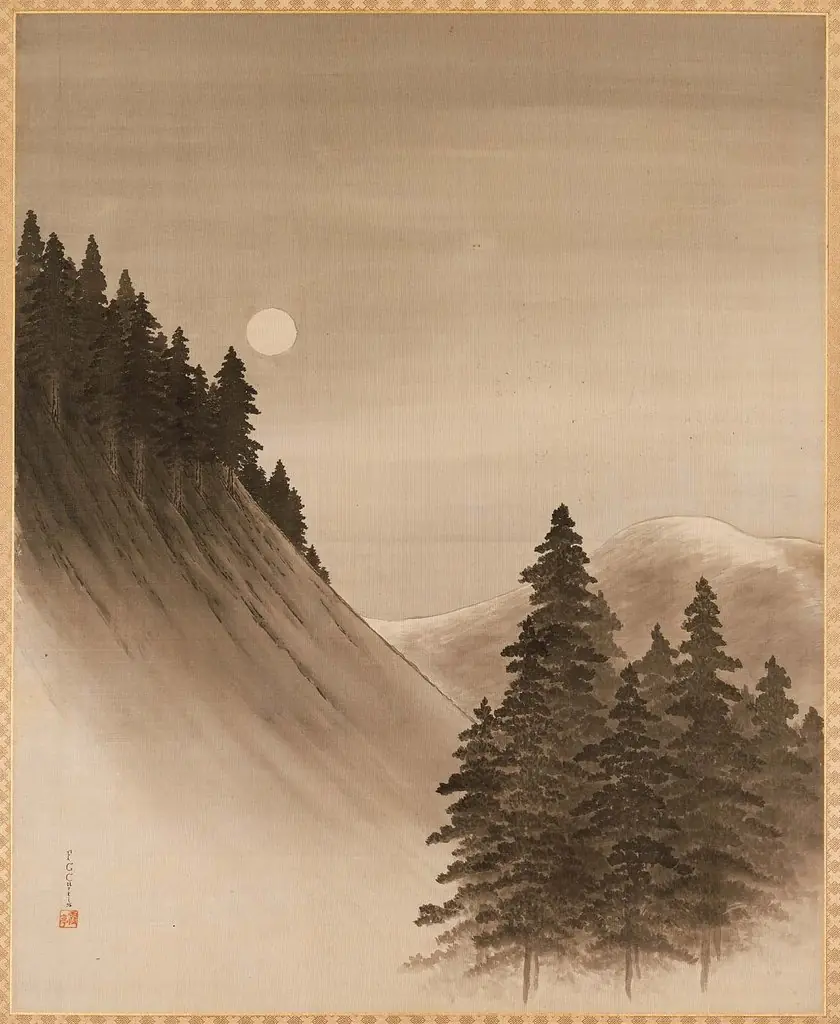
Hokusai employed ink wash with subtle mineral pigments to create depth and texture. The brushwork is precise yet fluid, blending Chinese ink traditions with Japanese aesthetic sensibilities. The moon is rendered as a pale disc against a muted sky, while the trees are suggested with minimal strokes, emphasizing economy of form. The composition avoids perspective, favoring a flattened, poetic space.
History & Provenance
The painting entered the Art Institute of Chicago’s collection in the early 20th century, likely through private acquisition or donation from a collector of Japanese art. Its provenance before that is undocumented, but its style aligns with works produced during Hokusai’s middle period, before his fame as a printmaker peaked. It remains one of the few surviving ink paintings from this phase of his career.
Context
Created during the Bunka era, when urban culture flourished in Edo, this painting reflects the growing interest among artists in nature as a subject beyond decorative use. While Hokusai would later gain renown for prints like The Great Wave, this work reveals his grounding in scholarly painting traditions, where nature was studied as a moral and aesthetic ideal.
Legacy
Moon, Pine and Maple illustrates Hokusai’s versatility beyond mass-produced prints. It contributes to understanding his artistic development and the broader Edo-period shift toward personal, nature-centered expression. Though less known than his ukiyo-e works, this painting remains a quiet testament to his command of ink and his engagement with classical Japanese and Chinese artistic ideals.
Artist & collection

Artist
Katsushika Hokusai spent his life in Edo, now Tokyo, where he drew and carved prints for a living.

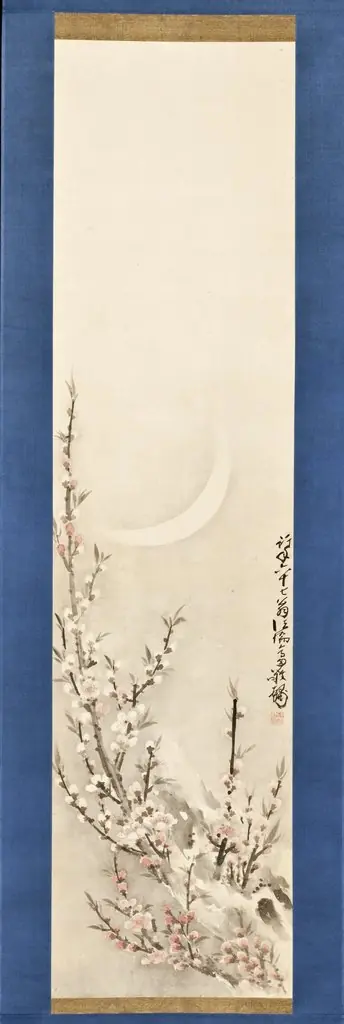 Plum Blossoms under a Crescent Moon
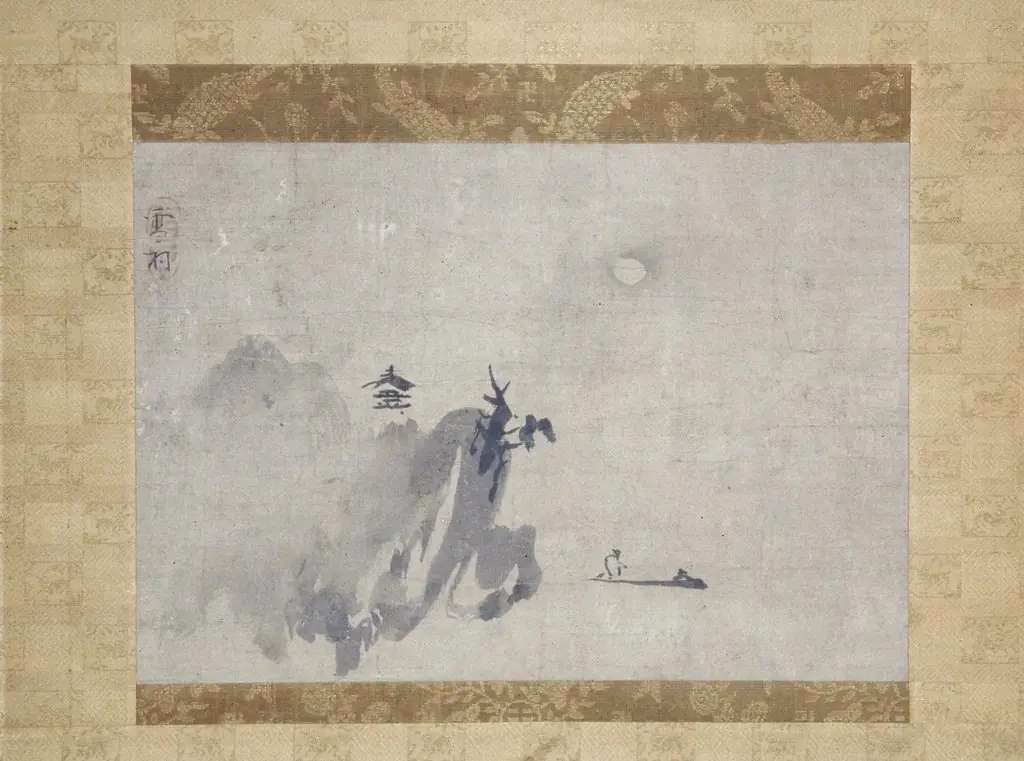 Landscape in Moonlight
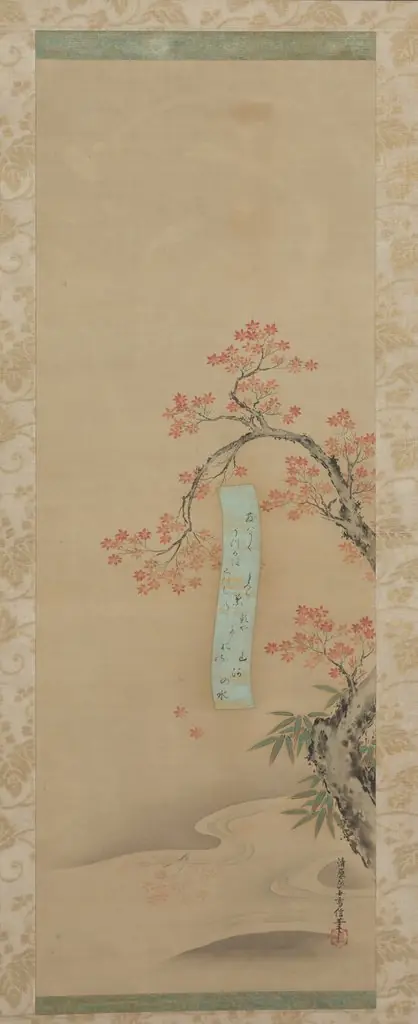 Autumn in Takao
 Untitled
 Flowers of Autumn and Winter
 Bamboo
 Untitled
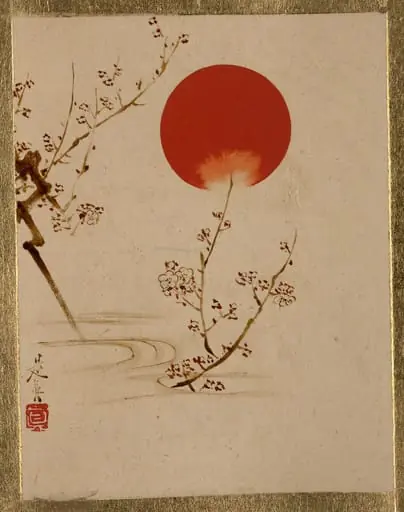 Untitled
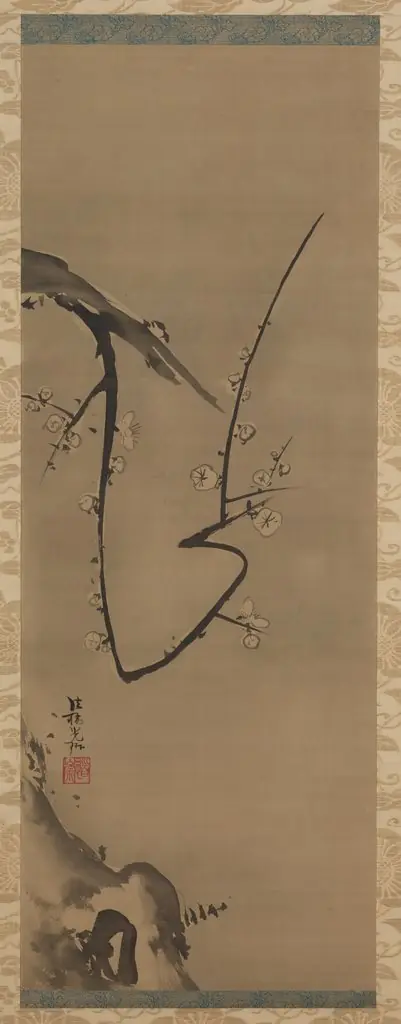 Plum Tree
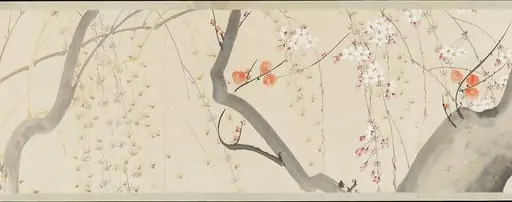 Untitled
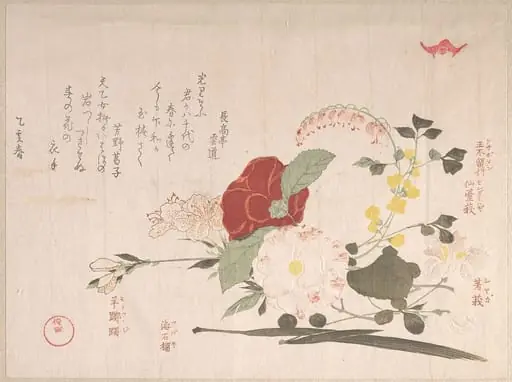 『春雨集』 摺物帖窪俊満画 クサボタン、萩、シャ ガ、ツバキ、モチツバキ|Spring Rain Collection (Harusame shū), vol. 2: Cut Flowers: Clematis, Bush Clover, Iris, Camellia, and Azalea
 Landscape with Pines and Moon