Artwork
百人一首 うはかゑとき 菅家|Poem by Kanke (Sugawara Michizane), from the series One Hundred Poems Explained by the Nurse (Hyakunin isshu uba ga etoki)
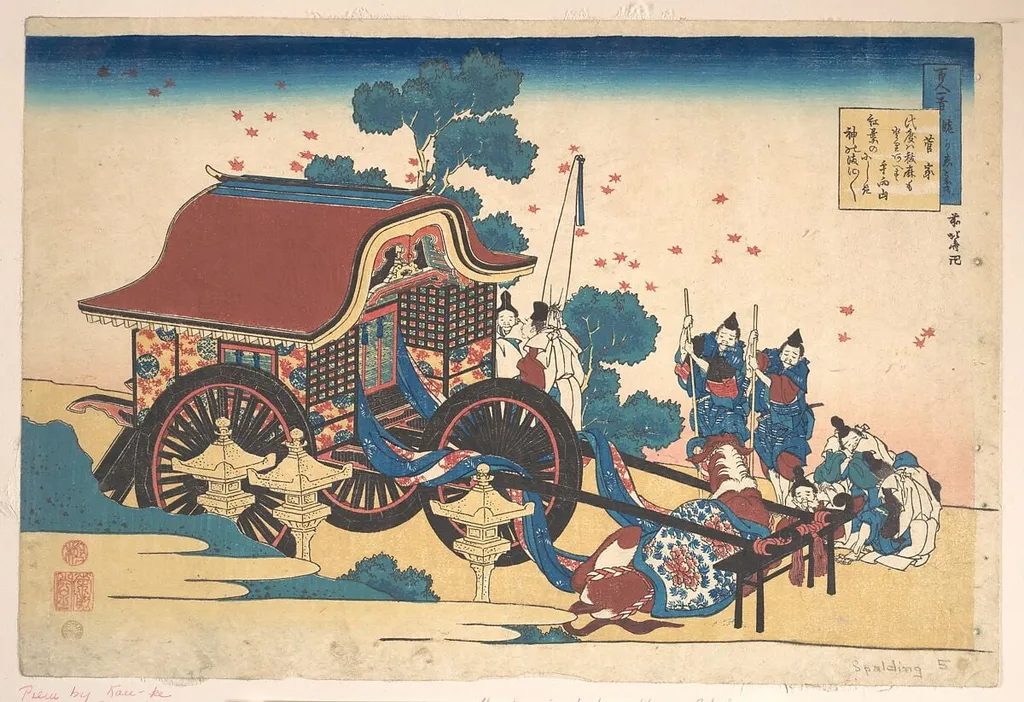
百人一首 うはかゑとき 菅家|Poem by Kanke (Sugawara Michizane), from the series One Hundred Poems Explained by the Nurse (Hyakunin isshu uba ga etoki) is an ink print by the Japonisme artist Katsushika Hokusai. It dates from 1839 and is held in the collection of the Metropolitan Museum of Art.
About this work
Overview
This woodblock print is part of Katsushika Hokusai’s series One Hundred Poems Explained by the Nurse, produced around 1839.
This woodblock print is part of Katsushika Hokusai’s series One Hundred Poems Explained by the Nurse, produced around 1839. It visually interprets a classical waka poem attributed to Sugawara Michizane. Rendered in ink and color on paper, the work exemplifies Hokusai’s mastery of ukiyo-e, blending literary reference with vivid natural imagery and dynamic composition. The print is held in the collection of The Metropolitan Museum of Art.
Subject & Meaning
The scene depicts a ceremonial carriage associated with Sugawara Michizane, a revered Heian-period scholar and poet. The procession, with attendants in rich robes and horses in motion, evokes his imperial procession to exile. Falling red leaves suggest autumn, a season tied to transience in classical poetry. The accompanying verse reflects themes of departure and melancholy, grounding the image in emotional and cultural memory.
Technique & Style
Hokusai employed bold outlines and flat areas of vivid color to convey movement and texture. The carriage’s gold trim and the horses’ glossy coats contrast with the muted forest and sky, directing the viewer’s eye. Delicate leaf patterns and precise architectural details reveal his attention to observational accuracy. The composition balances verticality and horizontal motion, characteristic of his mature print style.
History & Provenance
Created during Hokusai’s later years, this print belongs to a widely circulated series commissioned for popular audiences. The Nurse (uba) in the title refers to a traditional storyteller who recited poems to children, suggesting the series aimed to make classical literature accessible. The print entered The Metropolitan Museum of Art’s collection through documented acquisitions in the 20th century, preserving its place in the canon of Edo-period printmaking.
Context
The Hyakunin isshu anthology, compiled in the 13th century, was a staple of Japanese literary education. Hokusai’s series reimagined each poem through contemporary visual narratives, bridging courtly tradition with urban Edo culture. The inclusion of processional imagery reflects the enduring cultural reverence for Sugawara Michizane, who was later deified as a scholar-god, reinforcing the poem’s spiritual weight.
Legacy
Hokusai’s interpretation helped sustain interest in classical poetry among non-elite audiences during the 19th century. The series influenced later printmakers and contributed to the popularization of literary themes in visual art. Today, it remains a key example of how ukiyo-e transformed textual heritage into accessible, emotionally resonant imagery, bridging centuries of Japanese cultural expression.
Artist & collection

Artist
Katsushika Hokusai spent his life in Edo, now Tokyo, where he drew and carved prints for a living.

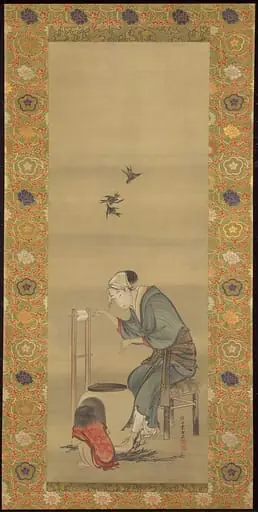
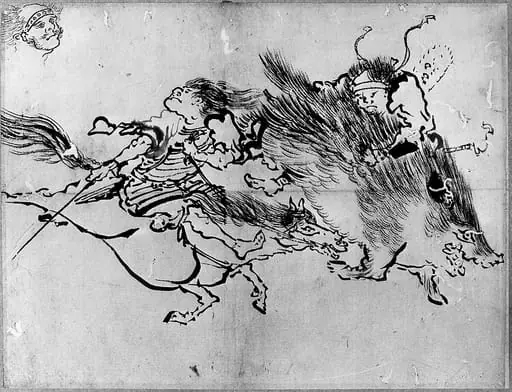
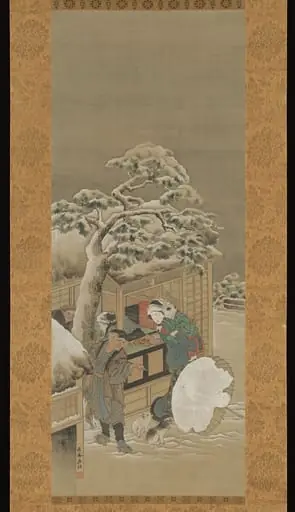
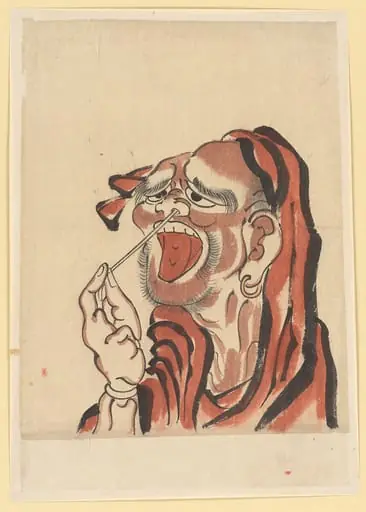
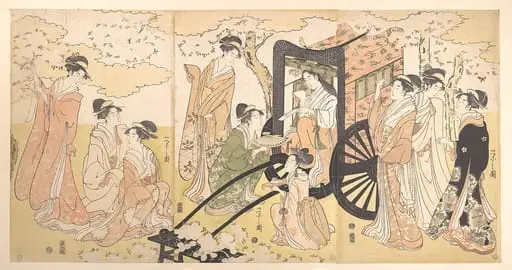 Untitled
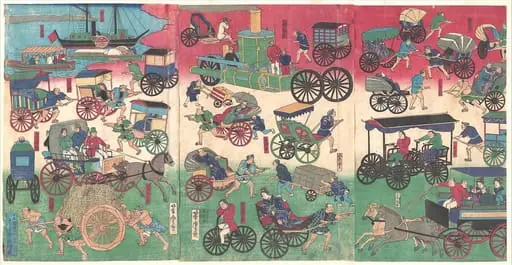 Untitled
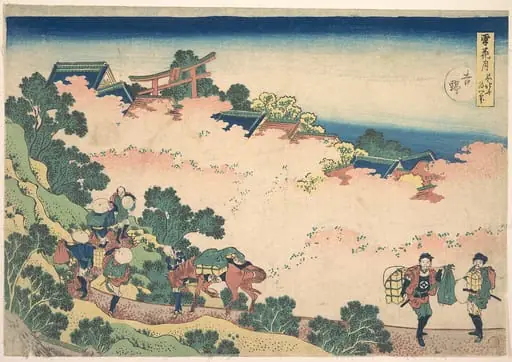 雪月花 吉野|Cherry Blossoms at Yoshino (Yoshino), from the series Snow, Moon, and Flowers (Setsugekka)
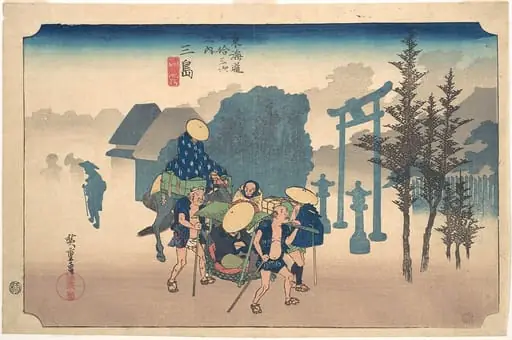 東海道五十三次 三島 朝霧|Morning Mist at Mishima
 People Fleeing from a Fire
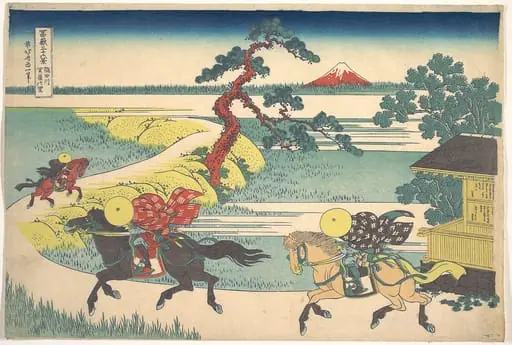 冨嶽三十六景 隅田川関屋の里|Sekiya Village on the Sumida River (Sumidagawa Sekiya no sato), from the series Thirty-six Views of Mount Fuji (Fugaku sanjūrokkei)
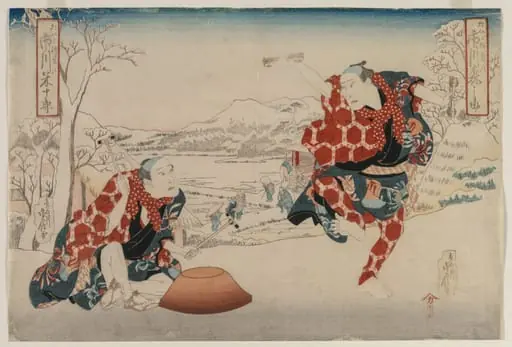 Ichikawa Norinosuke and Ichikawa Yonejuro as Morihachi and Yonehachi, Two Comedians
 People Fleeing from a Fire
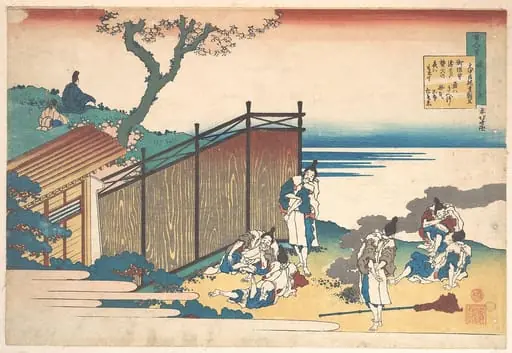 百人一首 姥か恵と起 大中臣能宣朝臣|Poem by Ōnakatomi no Yoshinobu Ason, from the series One Hundred Poems Explained by the Nurse (Hyakunin isshu uba ga etoki)