Artwork
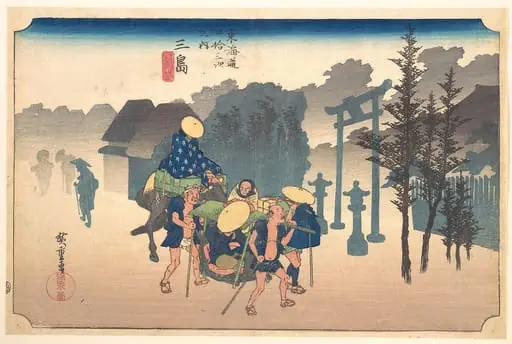
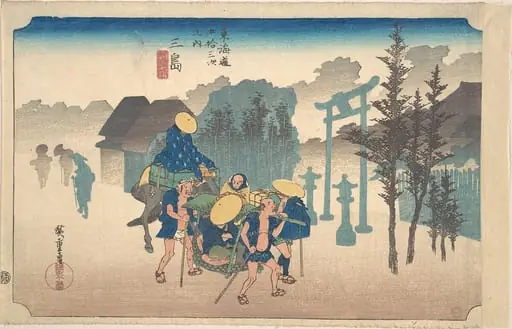
東海道五十三次 三島 朝霧|Morning Mist at Mishima
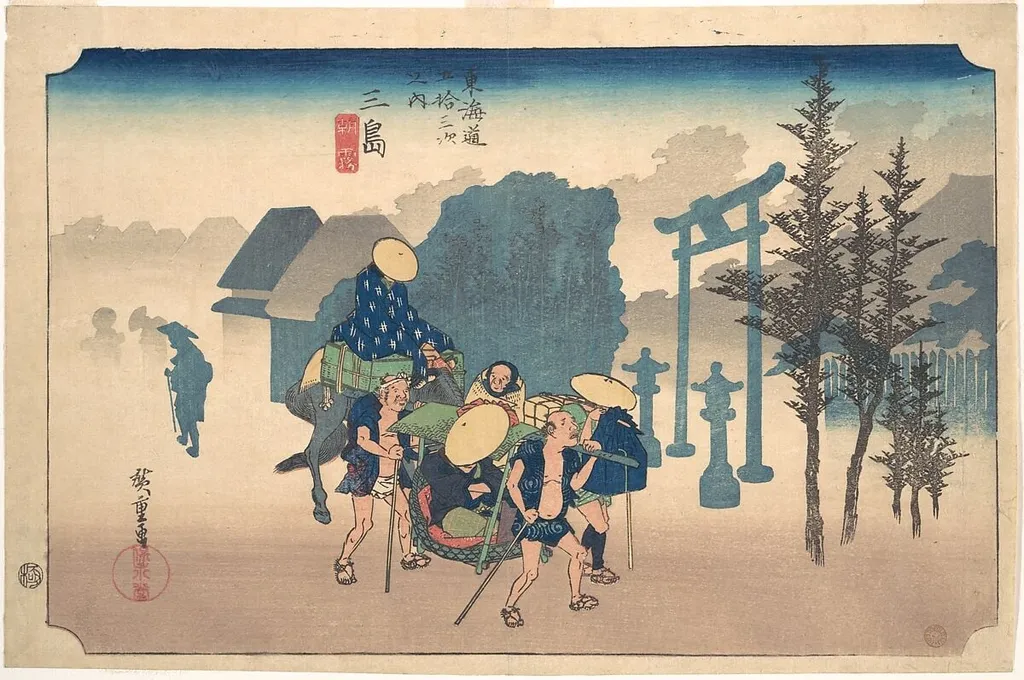
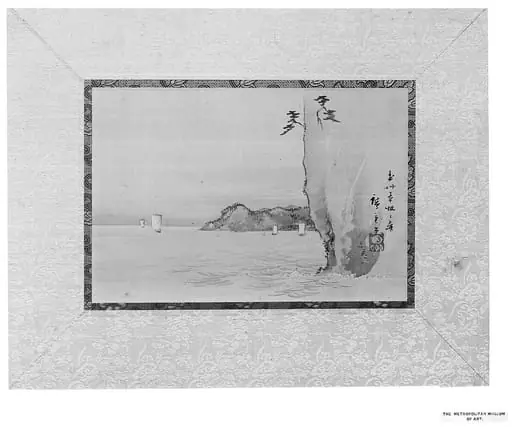
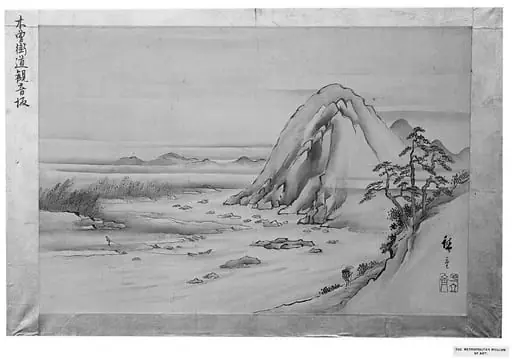
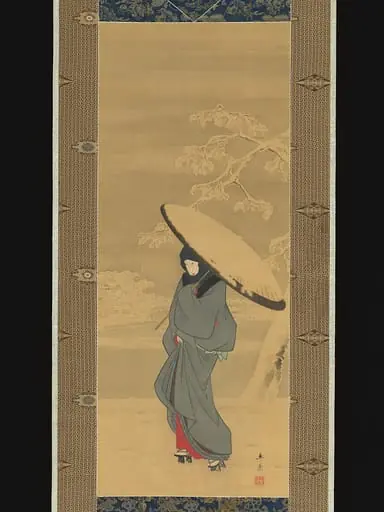
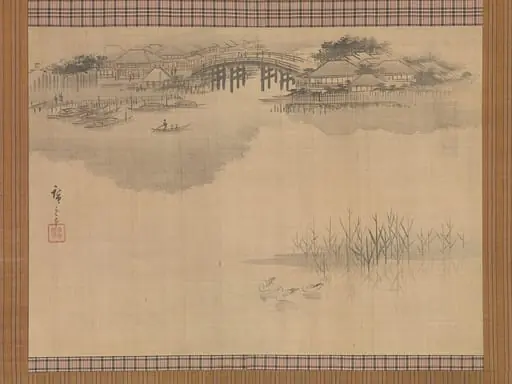
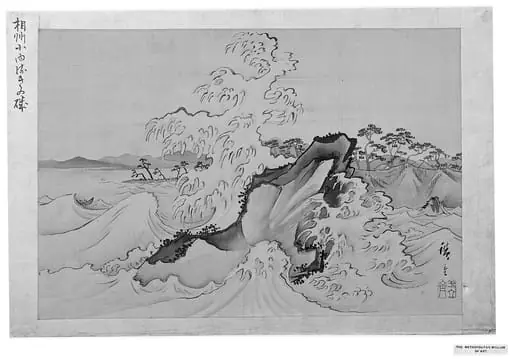
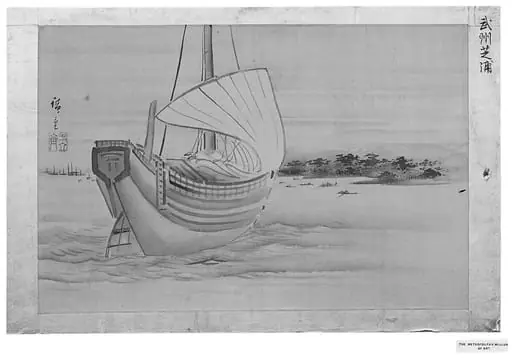
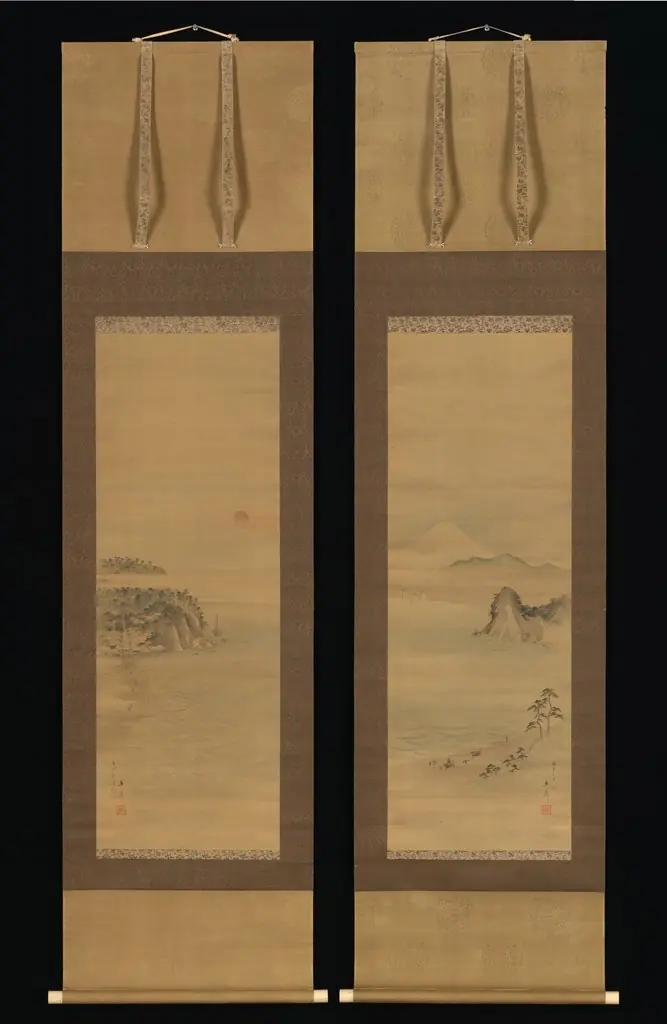
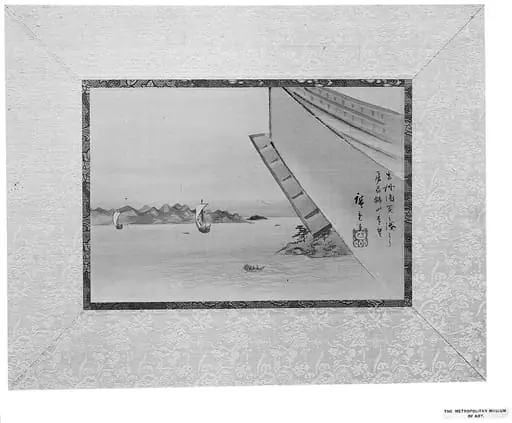
東海道五十三次 三島 朝霧|Morning Mist at Mishima is an ink print by the Romanticist artist Utagawa Hiroshige. It dates from 1833 and is held in the collection of the Metropolitan Museum of Art.
About this work
Overview
The print captures the quiet moment of dawn at Mishima, one of the post towns travelers passed through.
Created around 1833 by Utagawa Hiroshige, this woodblock print is part of the series *The Fifty-three Stations of the Tōkaidō*, which documents the journey along Japan’s main coastal road. The print captures the quiet moment of dawn at Mishima, one of the post towns travelers passed through. Unlike typical ukiyo-e subjects focused on city life, Hiroshige emphasized the natural environment and the experience of travel, using ink and color on paper to evoke a sense of stillness and transition.
Subject & Meaning
The scene shows a group of travelers moving along the road beneath a towering torii gate, their forms softened by morning mist. They carry bundles and a large drum, suggesting pilgrimage or trade. The lone, upward-reaching tree anchors the composition, symbolizing endurance amid fleeting conditions. The mist obscures distant details, inviting contemplation rather than narrative clarity—emphasizing the transient, meditative quality of the journey itself.
Technique & Style
Hiroshige employed fine woodblock carving and subtle layering of ink and water-based pigments to achieve a hazy, atmospheric effect. Muted blues and greens dominate, with minimal contrast to mimic the diffused light of early morning. The composition uses diagonal lines and layered planes to suggest depth, while the sparse figures and open space convey solitude. The technique prioritizes mood over detail, aligning with a poetic rather than documentary approach to landscape.
History & Provenance
The print was produced during Hiroshige’s most active period, when the *Tōkaidō* series gained widespread popularity among merchants and travelers. Original impressions were printed in limited quantities by publishers in Edo, often sold as affordable souvenirs. Surviving examples are held in major collections, including the Museum of Fine Arts, Boston, and the British Museum, reflecting its early circulation and enduring interest in Edo-period travel culture.
Context
The Tōkaidō road connected Edo with Kyoto and was heavily traveled by officials, pilgrims, and merchants. While earlier ukiyo-e focused on kabuki actors and courtesans, Hiroshige’s series redefined the genre by centering on landscape and seasonal change. This shift mirrored broader cultural interests in nature and pilgrimage, and coincided with improved road infrastructure and rising literacy among commoners seeking visual guides to distant places.
Legacy
Hiroshige’s *Tōkaidō* series influenced later Japanese artists and Western Impressionists, who admired its compositional economy and sensitivity to light. Though not overtly romantic, its quiet realism and emotional restraint resonated with 19th-century European tastes. The print remains a touchstone for how everyday travel and natural phenomena could be elevated through printmaking, shaping modern perceptions of Japanese visual culture.
Artist & collection
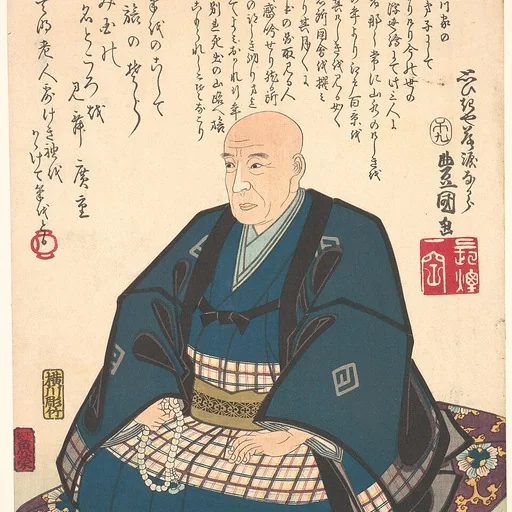
Artist
Utagawa Hiroshige (歌川 広重) or Andō Hiroshige (安藤 広重), born Andō Tokutarō (安藤 徳太郎; 1797 – 12 October 1858), was a Japanese ukiyo-e artist, considered the last great master of that tradition.