Artwork
Untitled
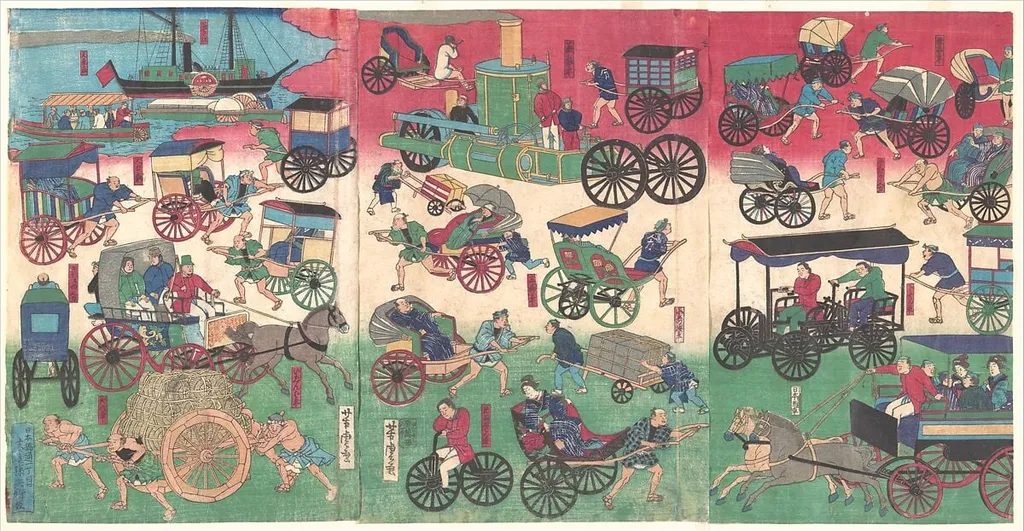
Untitled is an ink print by the Impressionist artist Utagawa Yoshitora. It dates from 1870 and is held in the collection of the Metropolitan Museum of Art.
About this work
Overview
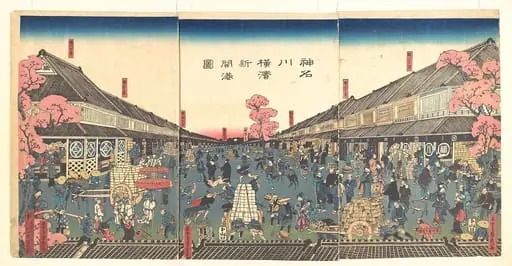
Created in 1870, this untitled work by Utagawa Yoshitora consists of a three‑panel woodblock print executed in ink and color on paper. The composition presents a bustling urban street scene, rendered in the flat, vivid palette typical of late‑Edo period prints.
Subject & Meaning
The panels depict a crowded thoroughfare filled with wagons, rickshaws, and pedestrians. A large vessel looms in the distance, while laborers load merchandise, children play, and travelers ride in carriages, offering a comprehensive view of everyday activity in a Japanese port city.
Technique & Style
Yoshitora employs traditional ukiyo‑e woodblock methods, using multiple carved blocks to apply distinct colors. The flat areas of pigment and bold outlines emphasize movement and density, while fine line work conveys the intricate details of horse harnesses, cart wheels, and street signage.
History & Provenance
The print was produced during the early Meiji era, a period of rapid modernization and urban growth in Japan. It was likely distributed as part of a series illustrating contemporary city life, though its exact ownership trail before entering museum collections remains undocumented.
Context
In the late 19th century, Japanese artists increasingly turned to genre scenes that recorded the transformation of cities. Yoshitora’s depiction aligns with this trend, capturing the coexistence of traditional transport—horses and rickshaws—and the expanding presence of larger ships and commercial activity.
Legacy
The work serves as a visual document of Meiji‑era urban dynamics, informing scholars of transportation, labor, and social interaction of the time. Its detailed representation continues to be referenced in studies of Japanese printmaking and the visual culture of modernization.
Artist & collection

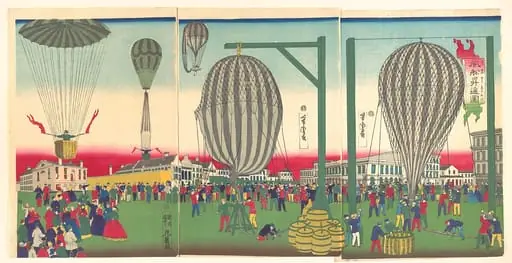 風船昇遥図|Illustration of a Balloon Ascending (Fūsen shōyō no zu)
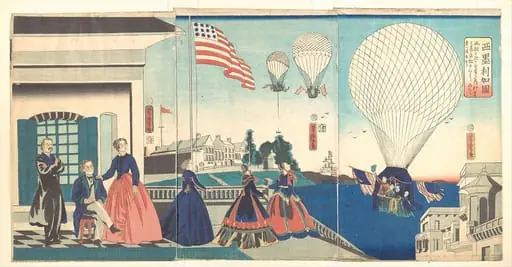 「亜墨利加國」|“America”: Enjoying Hot Air Balloons
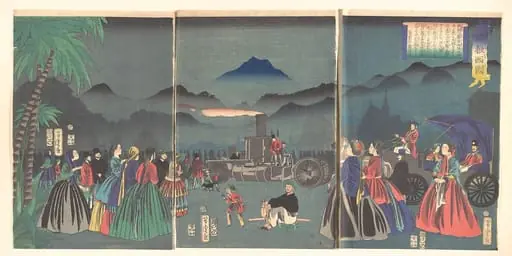 仏蘭西国|France (furansukoku)
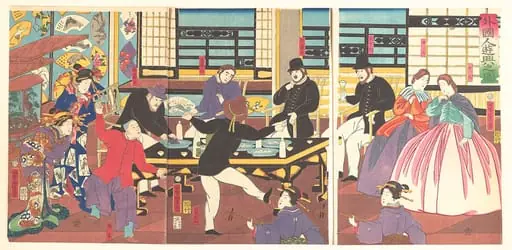 歌川義虎画 『外国人遊興之図』|Foreigners Enjoying a Party (Gaikokujin yūkyō no zu)
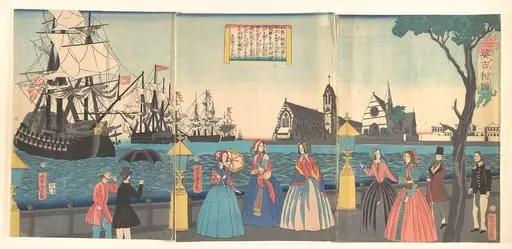 英吉利国|England (Igirisukoku)
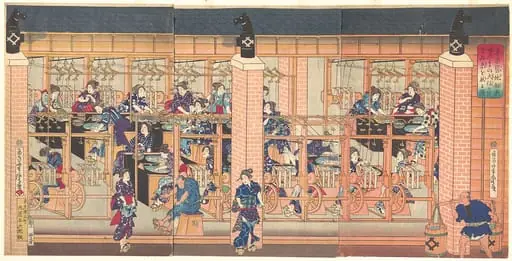 『東京築地舶来ぜんま い大仕かけきぬ糸をとる図』|Imported Silk Reeling Machine at Tsukiji in Tokyo
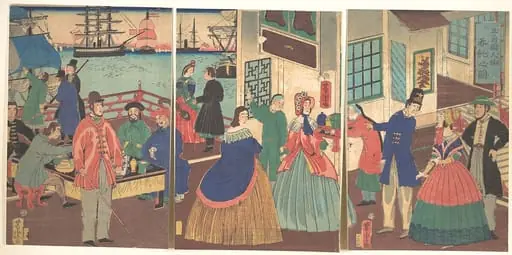 歌川芳虎画 『五箇国人物 呑飥之図』|People of the Five Nations Drinking and Eating (Gokakoku jinbutsu dontaku no zu)
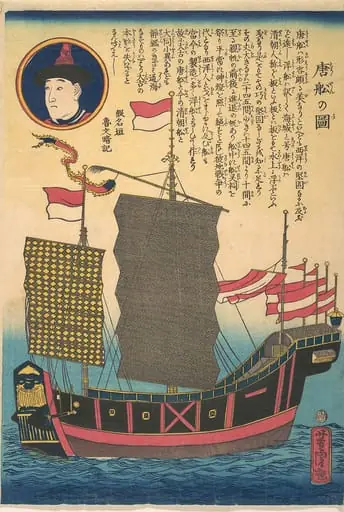 Tōsen no zu|Chinese Junk
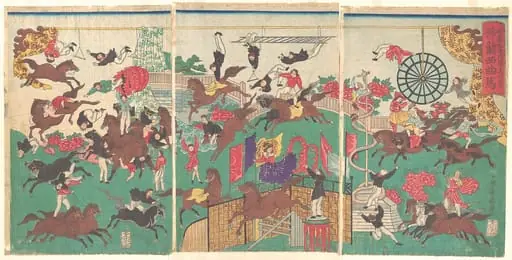 浅草観音境内ニ於イテ興行仕候 佛蘭西曲馬|French Equestrian Circus on the grounds of Asakusa Kannon temple (Asakusa kannon keidai ni oite kōgyō tsukawashi sōrō-Furansu kyokuba)
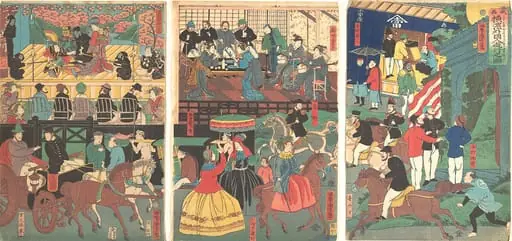 Bushu Yokohama gaikokujin yūkyō no zu|A View of the Amusements of the Foreigners in Yokohama, Bushu
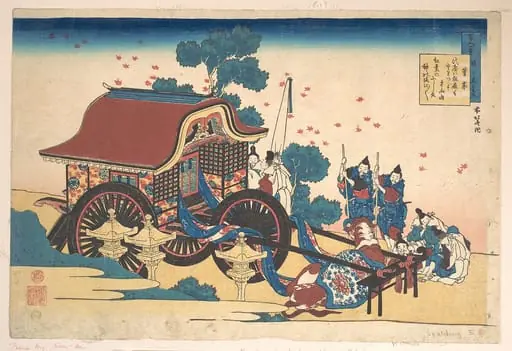 百人一首 うはかゑとき 菅家|Poem by Kanke (Sugawara Michizane), from the series One Hundred Poems Explained by the Nurse (Hyakunin isshu uba ga etoki)
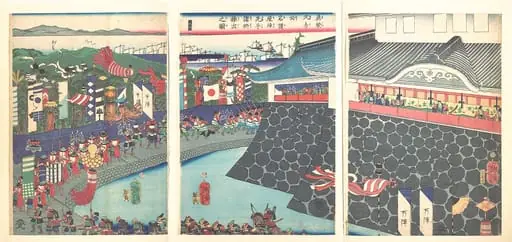 真柴秀吉公名護屋陣先手諸将繰出之図|Hideyoshi and His Troops Leaving Nagoya Camp (Mashiba Hideyoshi kō nagoya jin saki te no shoshō kuridashi no zu)
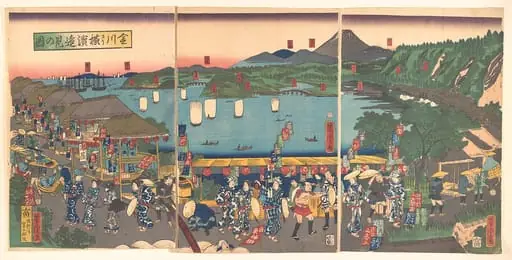 Kanagawa yōri Yokohama...ken no zu|A Distant View of Yokohama from Kanagawa
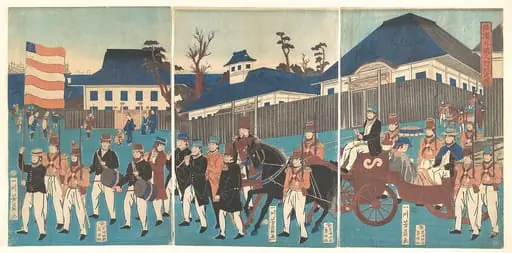 Yokohama Gankirō gaikokujin gyōretsu no zu|Picture of a Procession of Foreigners at Yokohama
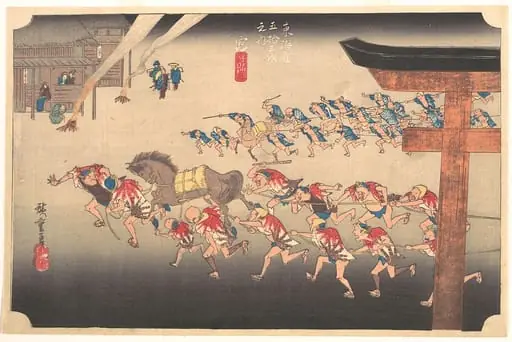 Miya Atsuta Shinji|東海道五十三次之内 宮 熱田神事|Festival at Atsuta Temple
 歌川五雲亭貞秀画 『神名川横浜新開港圖』|The Newly Opened Port of Yokohama in Kanagawa Prefecture (Kanagawa Yokohama shinkaikōzu)
 Untitled
 源氏物語図屏風「御幸」・「浮船」・「関谷」|“An Imperial Excursion” (Miyuki), “A Boat Cast Adrift” (Ukifune), and “The Barrier Gate” (Sekiya)
 A Newly Cut Print: Scenes from the First Part of Outlaws of the Marsh
 People Fleeing from a Fire