Artwork
Poem by Emperor Sanjo, from the series One Hundred Poems by One Hundred Poets Explained by an Old Nurse
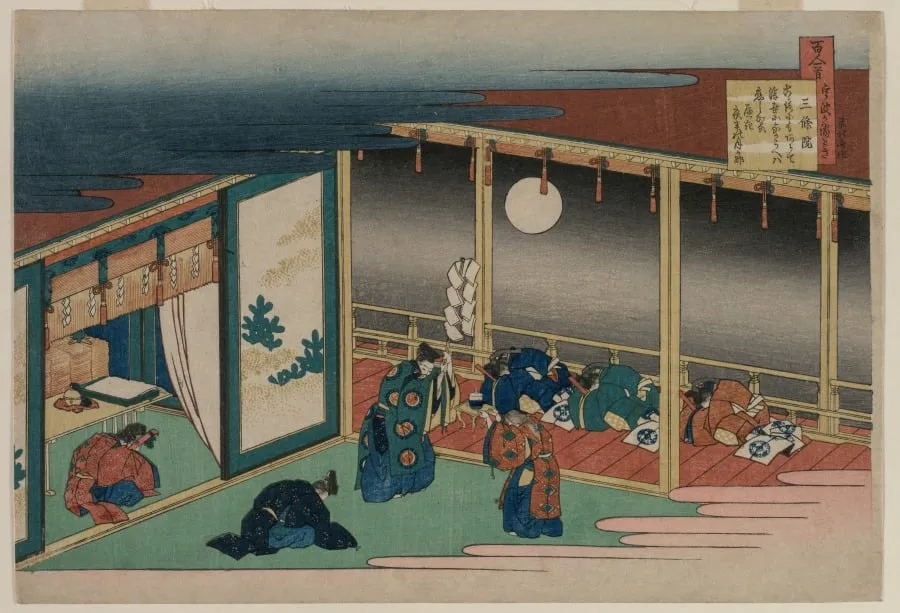
Poem by Emperor Sanjo, from the series One Hundred Poems by One Hundred Poets Explained by an Old Nurse is a print by the Romanticist artist Katsushika Hokusai. It dates from 1836 and is held in the collection of the Cleveland Museum of Art.
About this work
You see a priest holding a tall staff with fluttering white paper strips, while a group of people bow under a bright moon.
You see a priest holding a tall staff with fluttering white paper strips, while a group of people bow under a bright moon.
This print is from a series where an old nurse explains famous poems. The poem here is by Emperor Sanjo, who ruled Japan over 800 years ago. Hokusai shows the moment as if it’s happening now—simple lines, no extra details, just the quiet respect of the scene.
To see more prints like this, look up *Japan, Edo period (1615–1868)*.
Overview
This woodblock print depicts a serene, moonlit ceremony where a priest holds a gohei, a ritual staff adorned with zig-zag white paper strips, as surrounding figures bow in reverence. The scene illustrates a poem by Emperor Sanjo (976–1017) from the series *One Hundred Poems by One Hundred Poets Explained by an Old Nurse*.
Subject & Meaning
The print honors Emperor Sanjo through a ceremonial scene, highlighting the veneration of his poetic work. The gohei, used in Shinto rituals, and the collective bowing, emphasize spiritual and cultural respect within the context of poetic heritage.
Technique & Style
Characterized by simplicity and minimal detail, the print employs bold, expressive lines to capture the quiet intensity of the moment. The composition conveys a sense of immediacy, a hallmark of the artist's approach.
History & Provenance
Created during the Edo period (1615–1868), this print is part of a larger series interpreting classic Japanese poetry through contemporary artistic lens. The artist's depiction reflects the period's aesthetic values.
Context
The Edo period's flourishing of ukiyo-e (woodblock printing) facilitated the widespread appreciation of literary and poetic heritage among the general population, with series like this making classic works accessible.
Legacy
As part of *One Hundred Poems by One Hundred Poets Explained by an Old Nurse*, this print contributes to the enduring popularity of Japan's poetic canon, blending literary tradition with the visual innovations of the Edo period.
Artist & collection

Artist
Katsushika Hokusai spent his life in Edo, now Tokyo, where he drew and carved prints for a living.

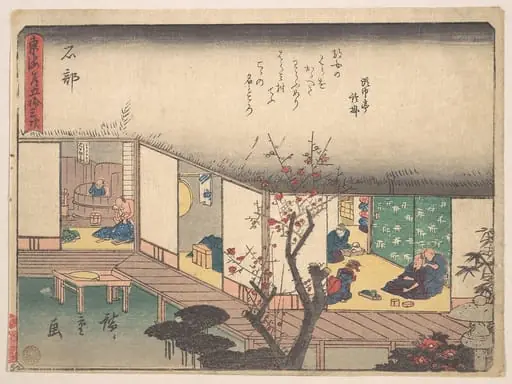 東海道五十三次 石部|Ishibe
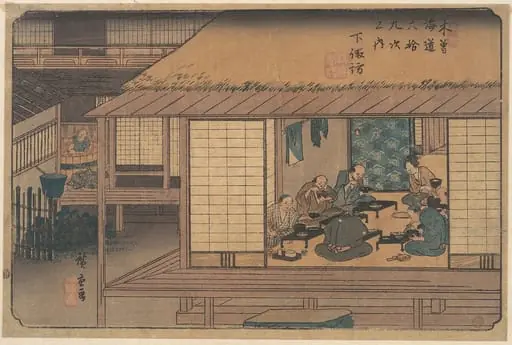 木曽海道六拾九次之内 下諏訪|Shimono Suwa Station
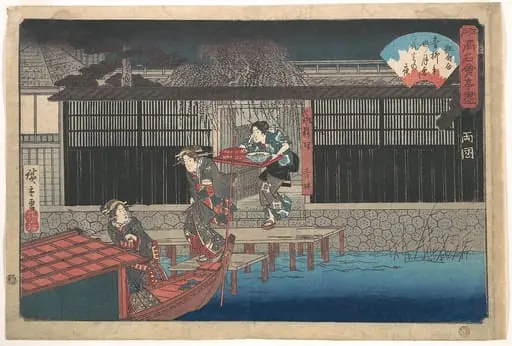 江戸高名会亭尽 両国|The Aoyagi in Ryogoku
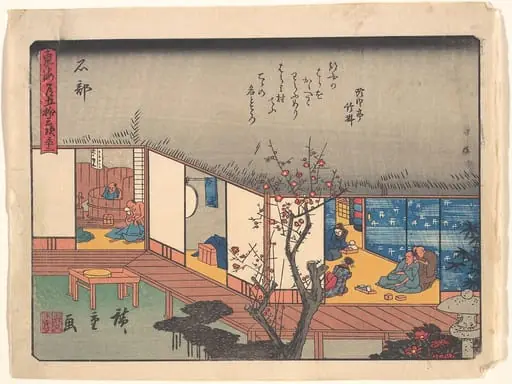 東海道五十三次 石部|Ishibe, from the series The Fifty-three Stations of the Tōkaidō Road
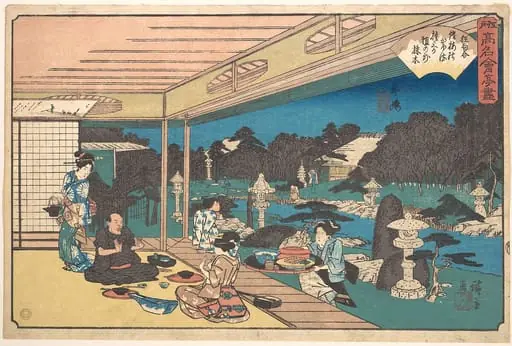 江戸高名会亭尽 牛嶋 武蔵屋|Ushijima (Musashi-ya)
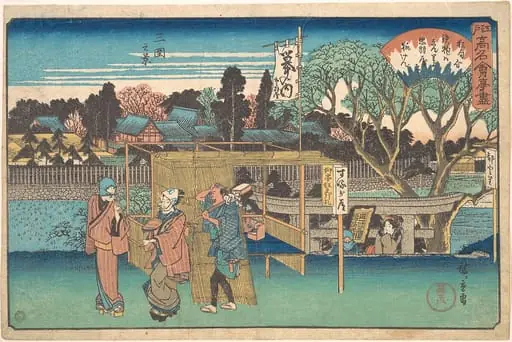 江戸高名会亭尽 三囲之景 出羽屋|Mimeguri no Kei (Toyoha-ya)
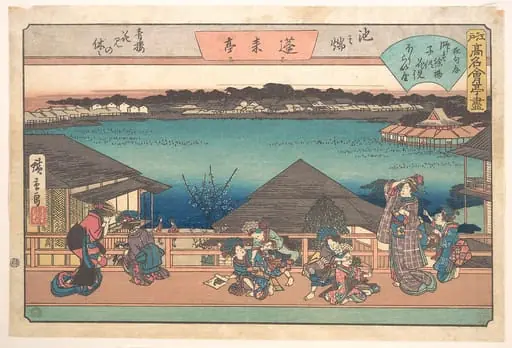 江戸高名会亭尽 池之端 蓬莱亭 青楼花見の休み|Ikeno Mata (Horai-ya)
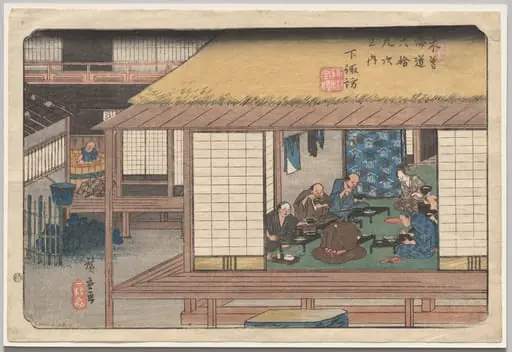 Shimosuwa, from Sixty-Nine Stations of the Kisokaidō