Artwork
Tachi-shi|職人三十六番|The Swordsmith
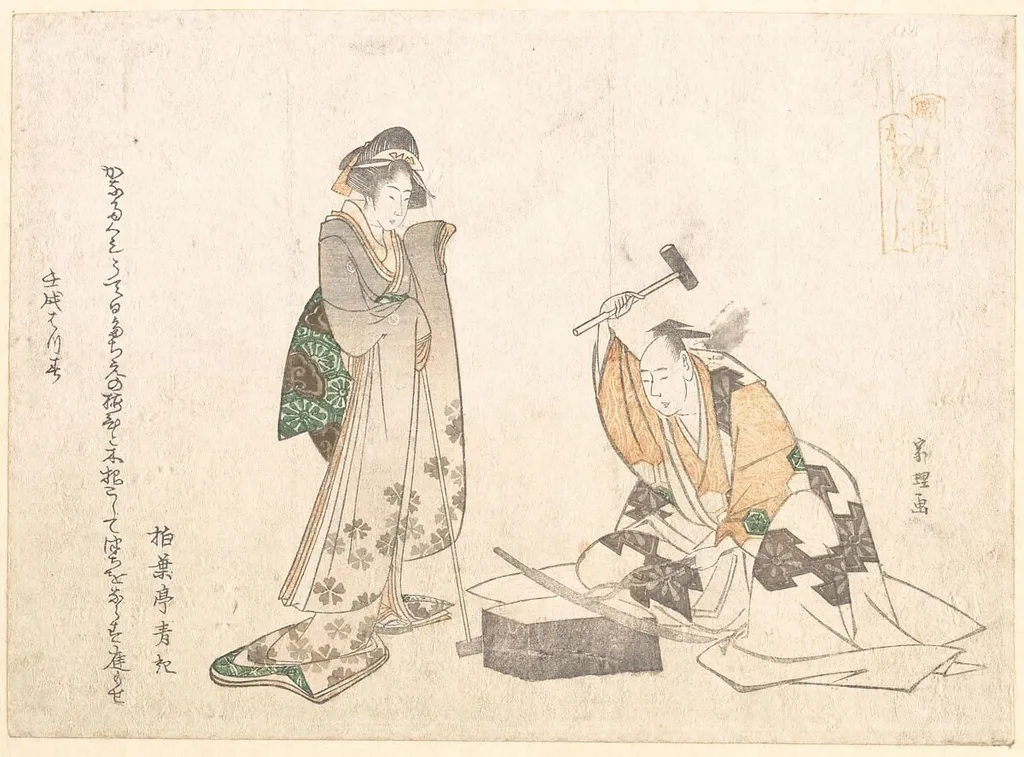
Tachi-shi|職人三十六番|The Swordsmith is an ink print by the Japonisme artist Katsushika Hokusai. It dates from 1802 and is held in the collection of the Metropolitan Museum of Art. This woodblock print, dated 1802, is part of a series titled 'Thirty-Six Crafts,' depicting artisans at work.
About this work
Overview
This woodblock print, dated 1802, is part of a series titled 'Thirty-Six Crafts,' depicting artisans at work.
This woodblock print, dated 1802, is part of a series titled 'Thirty-Six Crafts,' depicting artisans at work. Created by Katsushika Hokusai, it is executed in ink and color on paper, characteristic of surimono—privately commissioned prints valued for refined detail and subtle palettes. The scene captures a quiet moment in a craftsman’s workshop, emphasizing labor over spectacle. The Metropolitan Museum of Art holds this example, one of the few surviving impressions from the series.
Subject & Meaning
The print portrays a swordsmith at work, intent on shaping metal, while a woman observes nearby. Her stillness contrasts with his focused motion, suggesting a division of roles within the workshop. Though not explicitly religious or mythological, the image elevates manual labor through quiet dignity. The absence of ornamentation underscores the gravity of the craft, honoring the artisan’s skill without embellishment.
Technique & Style
Hokusai employs fine linework and restrained color to convey texture and posture. The woman’s robe, patterned in green and white, adds visual weight without distraction. The man’s tools and the wooden block are rendered with precision, hinting at the precision of his trade. The plain background eliminates context, directing focus to gesture and form. The print’s small scale and delicate execution reflect its origin as a surimono, made for connoisseurs rather than mass audiences.
History & Provenance
Produced in 1802, this print belongs to Hokusai’s lesser-known 'Thirty-Six Crafts' series, commissioned by private patrons interested in artisanal life. Few impressions survive, and this one entered the Metropolitan Museum of Art’s collection through documented acquisition. Its survival reflects early appreciation for Edo-period craft imagery, though the series never achieved the fame of Hokusai’s later landscapes.
Context
During the early 19th century, Edo society increasingly valued the dignity of skilled labor. Hokusai’s series responded to this cultural shift, documenting trades from brewing to blacksmithing. Unlike theatrical ukiyo-e subjects, these prints offered intimate glimpses into workshops, aligning with growing interest in the material world. The swordsmith’s craft held particular resonance, symbolizing discipline and tradition in a rapidly changing urban landscape.
Legacy
Though overshadowed by Hokusai’s 'Thirty-Six Views of Mount Fuji,' this print contributes to a broader recognition of artisanal life in Japanese art. Its quiet composition influenced later depictions of labor in both Japanese and Western printmaking. Scholars now view the 'Thirty-Six Crafts' series as an early ethnographic record, preserving the rhythms of pre-industrial work through the lens of a master draftsman.
Artist & collection

Artist
Katsushika Hokusai spent his life in Edo, now Tokyo, where he drew and carved prints for a living.

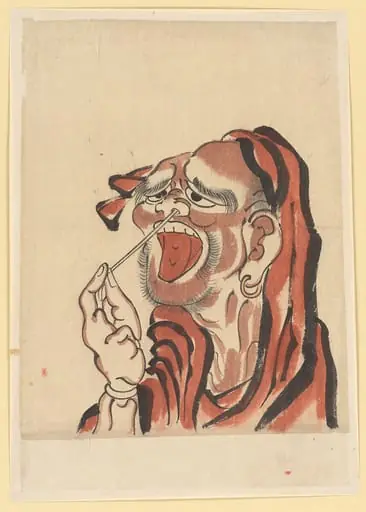
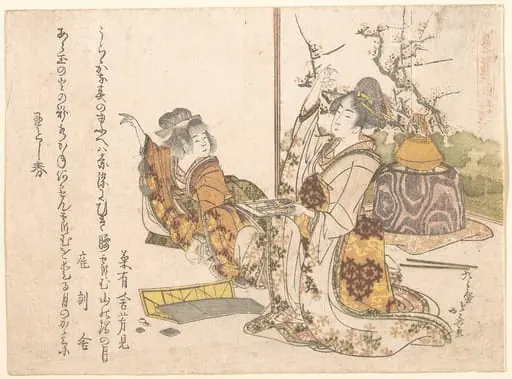 Untitled
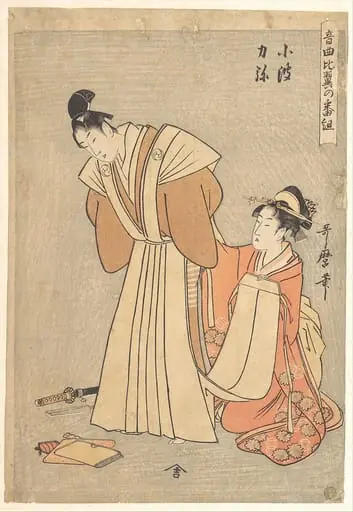 音曲比翼の番組 小波 力弥|Rikiya and Konami, from the series A Program with Music about Loving Couples (Ongyoku hiyoku no bangumi)
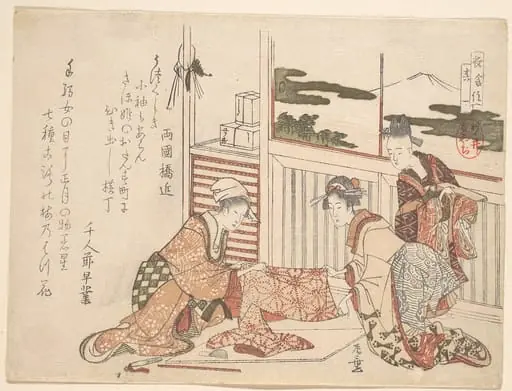 衣食住|Attire
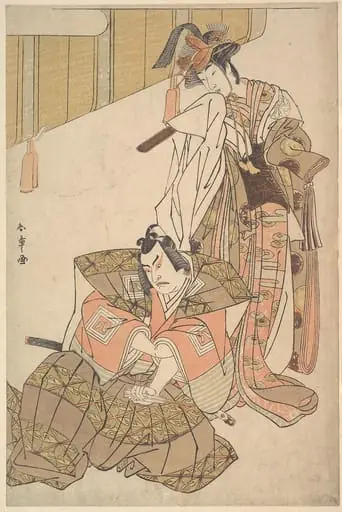 Untitled
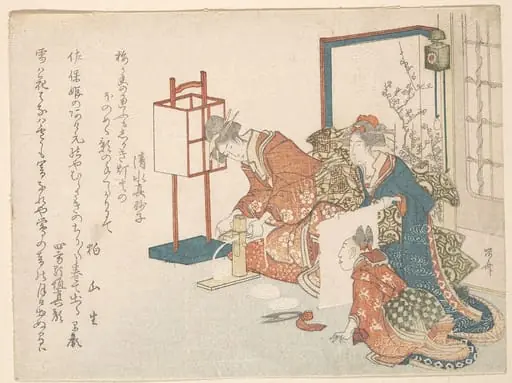 Untitled
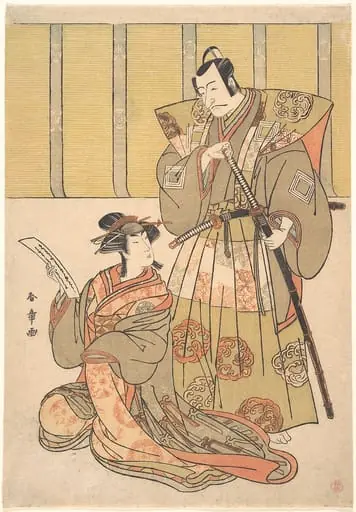 Untitled
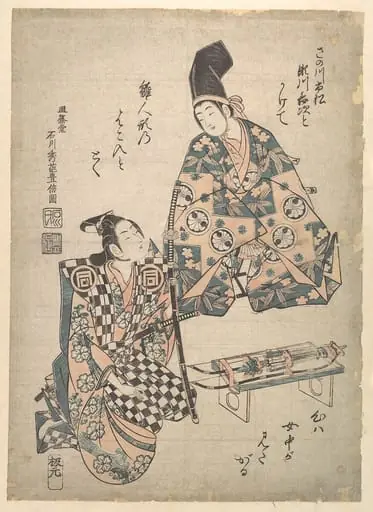 Untitled
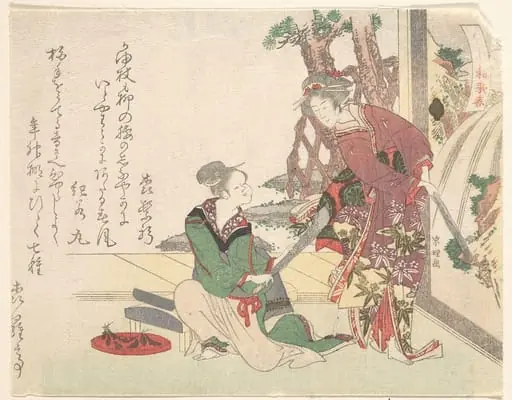 うし和歌春|Two Women, from the series Spring Poems on Ushiwaka for the Year of the Ox (Ushiwaka haru)
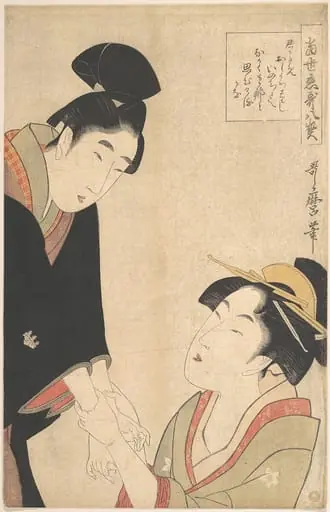 当世恋歌八契 お七と吉三郎|The Lovers Oshichi and Kichisaburo
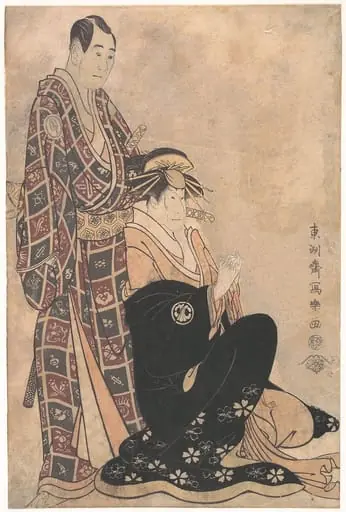 Untitled