Artwork
当世恋歌八契 お七と吉三郎|The Lovers Oshichi and Kichisaburo
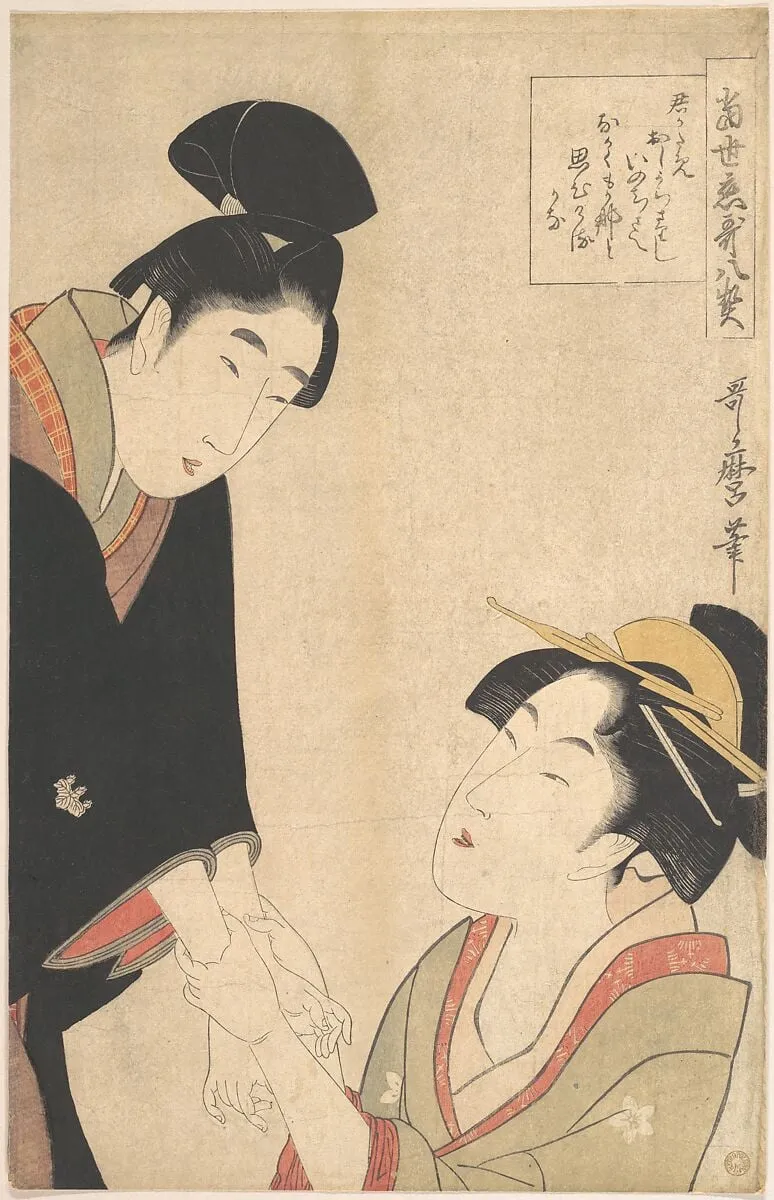
当世恋歌八契 お七と吉三郎|The Lovers Oshichi and Kichisaburo is an ink print by the Romanticist artist Kitagawa Utamaro. It dates from 1800 and is held in the collection of the Metropolitan Museum of Art.
About this work
Overview
This woodblock print, created around 1800 by Kitagawa Utamaro, depicts a pair of lovers from a well-known Edo-period tale. Executed in ink and color on paper, it belongs to a series titled 'Eight Bonds of Contemporary Love.' The work is part of the collection at The Metropolitan Museum of Art, where it is preserved as an example of ukiyo-e portraiture from the late Edo period.
Subject & Meaning
The print illustrates Oshichi and Kichisaburo, a pair whose tragic romance ended in execution after Oshichi attempted to set fire to Edo to reunite with her lover. Utamaro captures them in a quiet, intimate moment, avoiding overt drama. Their subdued expressions and close proximity suggest emotional intimacy, transforming a tale of doom into a meditation on devotion and fate.
Technique & Style
The soft modeling of faces and restrained palette reflect the artist’s mastery of bijin-ga, emphasizing psychological nuance over theatricality.
Utamaro employs fine, flowing lines to define the figures’ forms and garments, with subtle gradations of color enhancing texture and depth. The woman’s red sash and the man’s crimson-lined robe contrast against the muted beige background, drawing focus to their connection. The soft modeling of faces and restrained palette reflect the artist’s mastery of bijin-ga, emphasizing psychological nuance over theatricality.
History & Provenance
The print was produced during the final years of Utamaro’s career, when he focused on intimate portraits of lovers and courtesans. It was likely printed in limited quantities for the urban merchant class. The work entered The Metropolitan Museum of Art’s collection in the 20th century, having passed through private Japanese and Western collections since its creation.
Context
This print emerged during a period when ukiyo-e artists increasingly turned to literary and romantic themes for popular appeal. Stories of doomed lovers like Oshichi and Kichisaburo were widely circulated in kabuki theater and printed literature. Utamaro’s interpretation aligns with contemporary tastes for emotionally resonant narratives, rendered with elegance rather than sensationalism.
Legacy
Though not among Utamaro’s most widely reproduced works, this print exemplifies his late style—refined, restrained, and psychologically attuned. It contributes to the broader understanding of how Edo-period artists humanized folk tales, transforming moralistic legends into quiet studies of emotion. Its preservation in major institutions ensures continued scholarly attention to its narrative subtlety.
Artist & collection


 Untitled
 Untitled
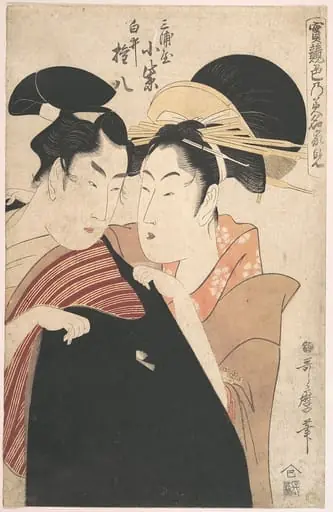 実競色乃美名家見 三浦屋小紫 白井権八|The Lovers Miura-ya Komurasaki and Shirai Gonpachi.
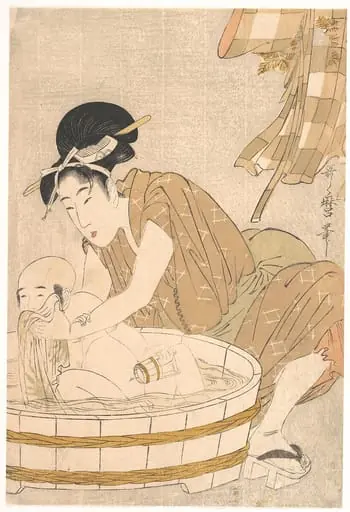 行水|Bathtime (Gyōzui)
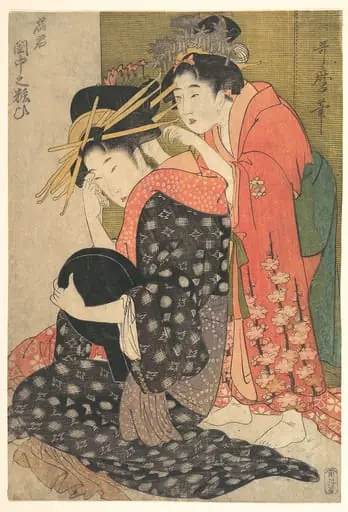 名君 閨中の粧ひ|The Oiran Yoso-oi Seated at Her Toilet
 Untitled
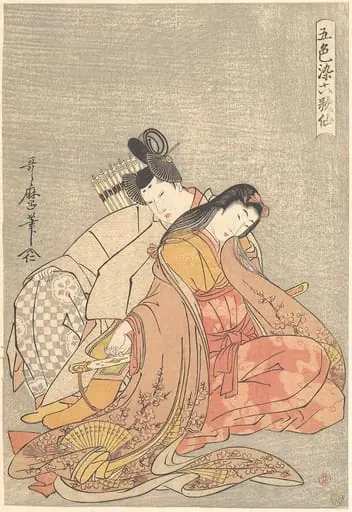 『五色染六歌仙』 在原業平と小野小町|“The Poet Ariwara no Narihira (825–880) and Ono no Komachi,” from the series Five Colors of Love for the Six Poetic Immortals (Goshiki-zome rokkasen)
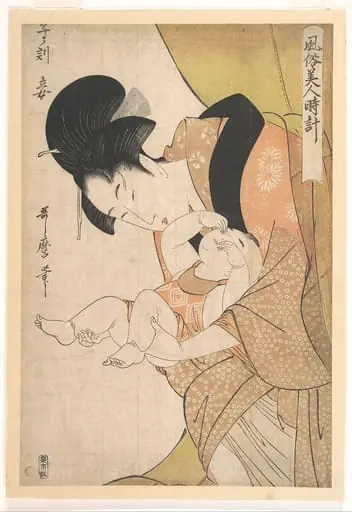 風俗美人時計 子ノ刻 妾|Midnight: Mother and Sleepy Child
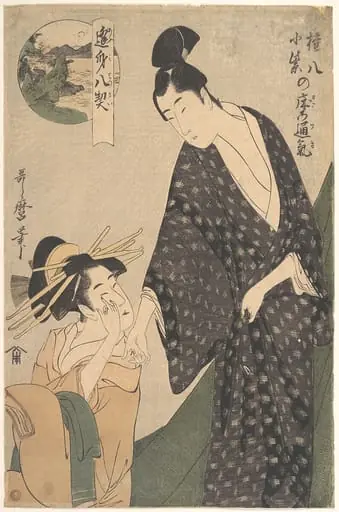 逢身八契 権八小紫の床の通気|Gonpachi ni Komurasaki no Toko no Tsuki
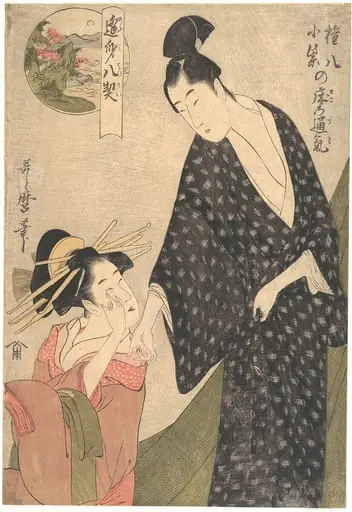 Gompachi Komurasaki no Toko no Tsuki|逢身八契 権八小紫の床の通気|Shared Feelings in the Bedchamber of Komurasaki and Gompachi
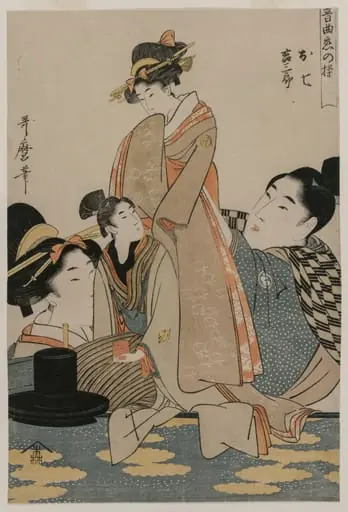 Oshichi and Kichisaburo (from the series Music on the Theme of Constancy in Love)
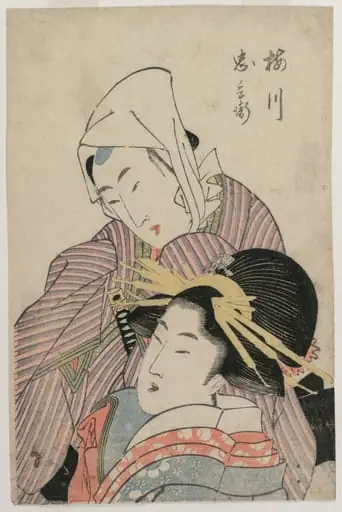 The Lovers Umegawa and Chubei
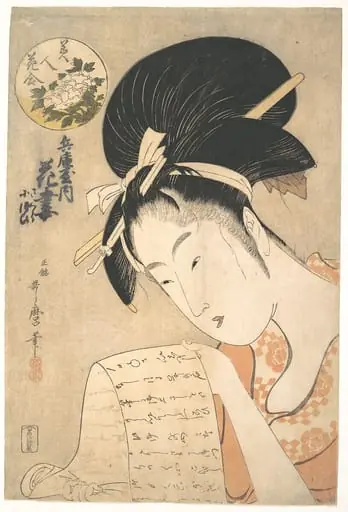 喜多川歌麿画 『美人花合』 「兵庫屋内 花妻図」|“The Courtesan Hanazuma Reading a Letter,” from the series Beauties Compared to Flowers (Bijin hana awase)
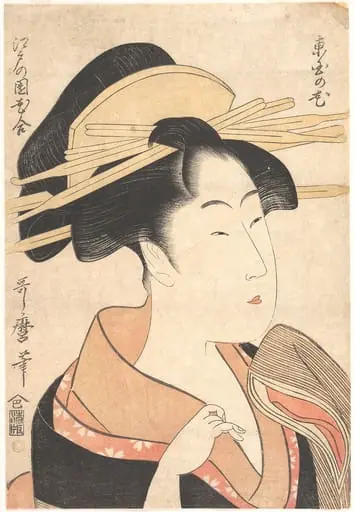 江戸の園花合 東屋の花|Azumaya no Hana