Artwork
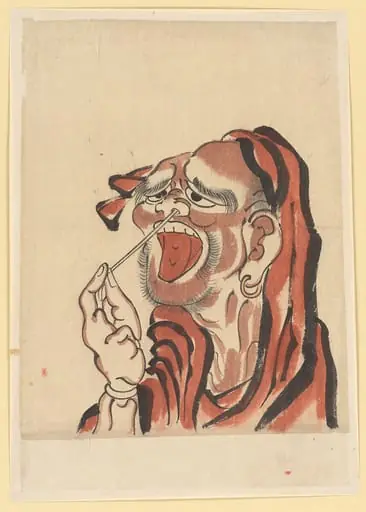
市川団十郎|The Actor Ichikawa Danjuro I 1660–1704
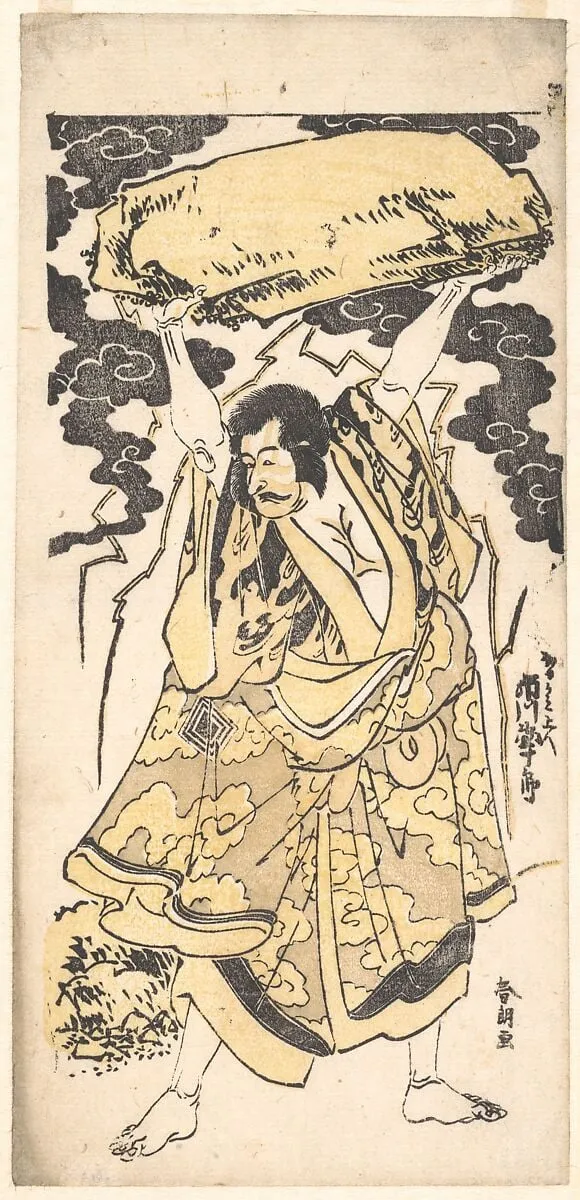
市川団十郎|The Actor Ichikawa Danjuro I 1660–1704 is an ink print by the Japonisme artist Katsushika Hokusai. It dates from 1804 and is held in the collection of the Metropolitan Museum of Art. This woodblock print depicts the kabuki actor Ichikawa Danjuro I, rendered in ink and color on paper.
About this work
Overview
The work is part of the collection at The Metropolitan Museum of Art, where it is preserved as an example of early 19th-century theatrical portraiture.
This woodblock print depicts the kabuki actor Ichikawa Danjuro I, rendered in ink and color on paper. Created in 1804, it belongs to the ukiyo-e tradition of Japanese printmaking. The work is part of the collection at The Metropolitan Museum of Art, where it is preserved as an example of early 19th-century theatrical portraiture. Though often associated with Hokusai, the print is actually by Utagawa Kuniyoshi, whose style is evident in the bold composition and dramatic tension.
Subject & Meaning
The print portrays Ichikawa Danjuro I, a legendary kabuki actor known for his portrayal of heroic roles, particularly the aragoto style characterized by exaggerated gestures and powerful presence. He is shown mid-motion, holding a large ceremonial object above his head, suggesting a dramatic moment from a stage performance. The pose conveys authority and impending action, reflecting the actor’s reputation for embodying larger-than-life characters on the kabuki stage.
Technique & Style
The print employs the woodblock technique typical of ukiyo-e, with precise linework and layered color applications. The robe’s cloud motif is rendered in fine, flowing lines, while the background sky uses graded washes to suggest movement and tension. The actor’s facial features and costume details are meticulously carved, emphasizing texture and volume. The composition is asymmetrical and dynamic, drawing the viewer’s eye upward toward the raised object and the stormy sky.
History & Provenance
Produced in 1804, the print was likely commissioned as a commemorative portrait for fans of Ichikawa Danjuro I, who had died decades earlier. Such prints circulated widely as collectibles among urban audiences. The work entered The Metropolitan Museum of Art’s collection in the 20th century, having passed through private Japanese and Western collections. Its attribution was clarified through stylistic analysis and comparison with known works by Utagawa Kuniyoshi.
Context
In early 19th-century Edo, kabuki actors were cultural icons, and their images were mass-produced as woodblock prints for public consumption. This print reflects the popularity of aragoto roles and the growing market for theatrical memorabilia. Artists like Kuniyoshi specialized in capturing the theatricality of kabuki, blending realism with stylized drama to appeal to audiences familiar with the performances. The stormy sky and dynamic pose align with contemporary tastes for heightened emotional expression.
Legacy
The print remains a significant example of ukiyo-e’s ability to merge portraiture with theatrical narrative. It influenced later artists in Japan and abroad, contributing to Western interest in Japanese print aesthetics during the 19th century. Today, it is studied for its technical precision and cultural insight into Edo-period entertainment. While not as widely known as Hokusai’s landscapes, it holds a distinct place in the history of Japanese visual culture.
Artist & collection

Artist
Katsushika Hokusai spent his life in Edo, now Tokyo, where he drew and carved prints for a living.

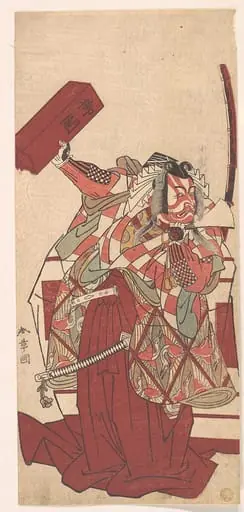 三代目市川海老蔵の篠塚伊賀守定綱|The Actor Ichikawa Ebizō III as Shinozuka Iga no kami Sadatsuna in a Shibaraku Scene
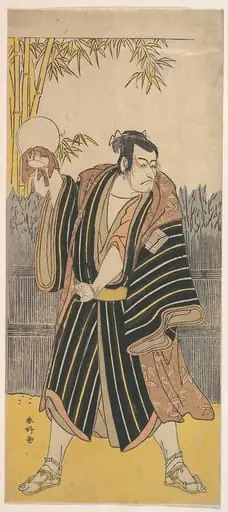 勝川春好画 七代目片岡仁左衛門 五代目市川團十郎|Kabuki Actor Ichikawa Danjūrō V
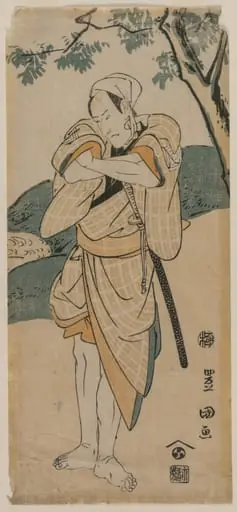 The Actor Ichikawa Danjuro as a Samurai
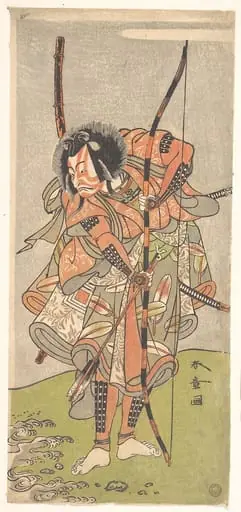 三代目市川海老蔵|Kabuki Actor Ichikawa Ebizō III (Ichikawa Danjūrō IV)
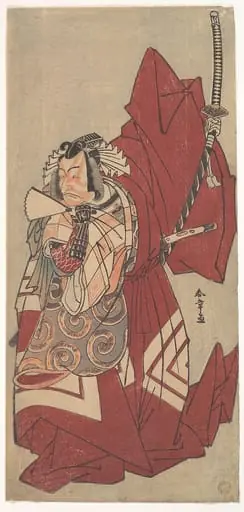 五代目市川団十郎|Kabuki Actor Ichikawa Danjūrō V in a Shibaraku (Stop Right There!) Role as Hannya no Gorō
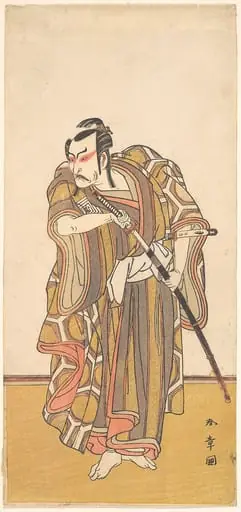 四代目市川團蔵|Kabuki Actor Ichikawa Danzō IV