Artwork
Untitled
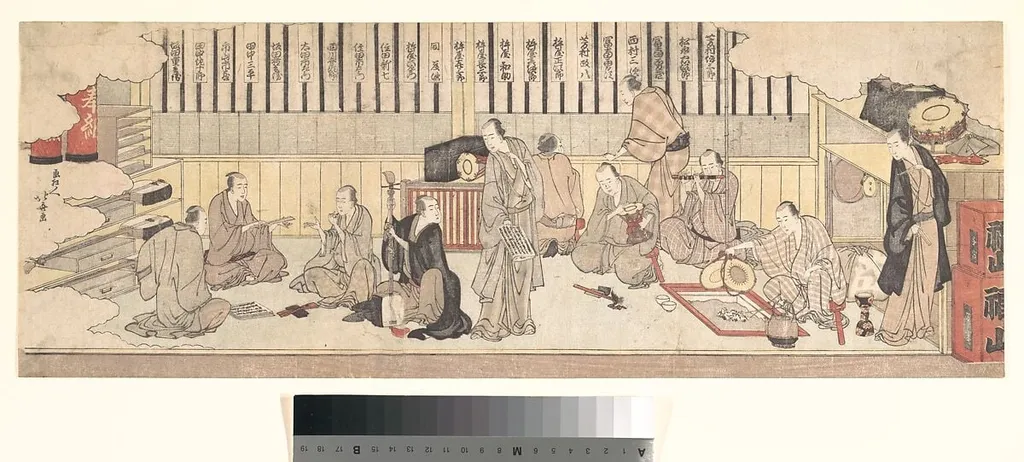
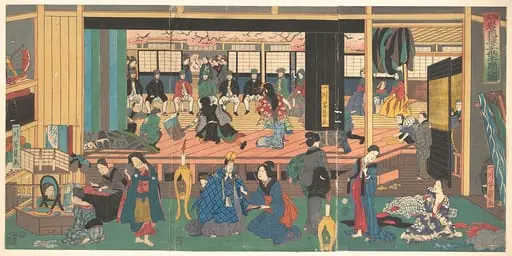
Untitled is an ink print by the Japonisme artist Katsushika Hokusai. It dates from 1804 and is held in the collection of the Metropolitan Museum of Art.
About this work
Overview
This woodblock print, dated 1804, is one of many genre scenes by Katsushika Hokusai that capture everyday life in early 19th-century Japan.
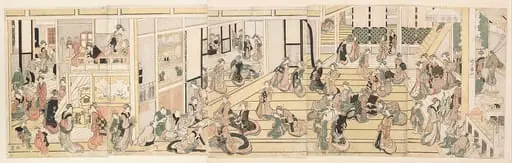
This woodblock print, dated 1804, is one of many genre scenes by Katsushika Hokusai that capture everyday life in early 19th-century Japan. Executed in ink and color on paper, it depicts an interior space teeming with activity. The composition is densely populated with figures engaged in varied tasks, arranged with careful attention to spatial depth and movement. The work is part of the collection at The Metropolitan Museum of Art.
Subject & Meaning
The scene portrays a bustling indoor environment, likely a workshop or storage area, where individuals are occupied with writing, handling tools, and managing scrolls, fans, and musical instruments. The presence of banners with Japanese script and stacked shelves suggests a place of cultural or administrative function. The umbrella held by one figure may indicate transition or preparation for movement, hinting at the rhythm of daily routines rather than a single narrative moment.
Technique & Style
Hokusai employed fine ink lines and layered color to define forms and suggest volume. Cross-hatching and subtle shading create a sense of three-dimensionality in clothing, tools, and architectural elements. The arrangement of figures avoids rigid symmetry, instead favoring a dynamic, almost chaotic order that mirrors the energy of the scene. The use of flat planes and selective detail reflects the conventions of ukiyo-e while demonstrating Hokusai’s skill in rendering complex spatial relationships.
History & Provenance
Created in 1804, the print belongs to a series of genre works Hokusai produced during a period of prolific output before his famous Thirty-Six Views of Mount Fuji. It entered The Metropolitan Museum of Art’s collection through documented acquisitions in the early 20th century, likely as part of a broader interest in Japanese prints among Western collectors. Its survival in good condition reflects careful preservation over two centuries.
Context
In early 1800s Edo, woodblock prints were widely circulated and often depicted scenes of urban life, commerce, and leisure. Hokusai, already established as a versatile artist, turned frequently to domestic and occupational settings to appeal to a broad audience. This print reflects the growing demand for imagery that celebrated the ordinary, aligning with the ukiyo-e tradition’s focus on the fleeting moments of contemporary existence.
Legacy
Though less famous than Hokusai’s landscapes, this print exemplifies his ability to infuse mundane settings with visual richness and narrative subtlety. It contributes to the broader understanding of his range as an artist beyond Mount Fuji, revealing his keen observation of social detail and his mastery of compositional complexity within the constraints of the woodblock medium.
Artist & collection

Artist
Katsushika Hokusai spent his life in Edo, now Tokyo, where he drew and carved prints for a living.

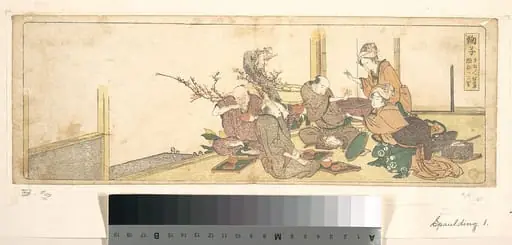 鞠子|Mariko
 Untitled
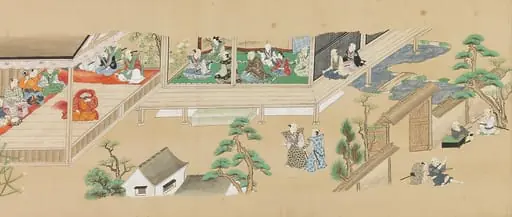 能楽風俗図絵巻|Six Noh Performances in Scenes from Daily Life
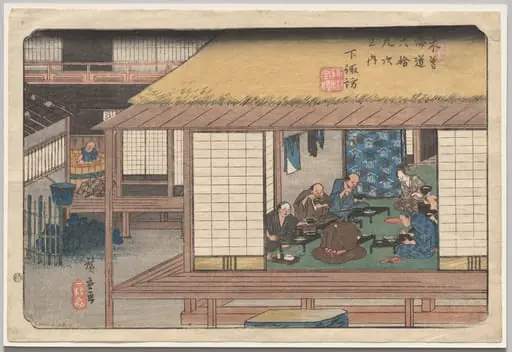 Shimosuwa, from Sixty-Nine Stations of the Kisokaidō
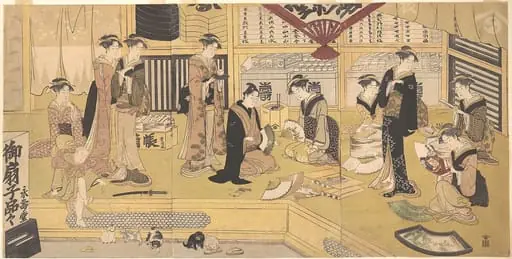 御影堂扇屋図|The Mieidō Fan Shop
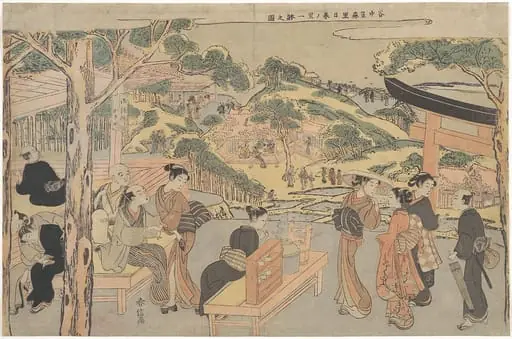 Untitled
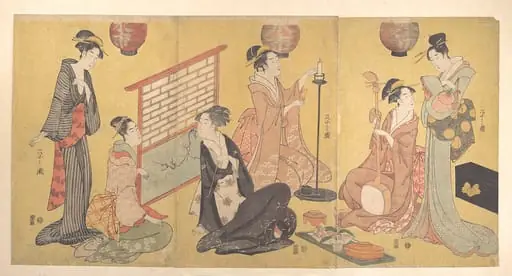 Untitled
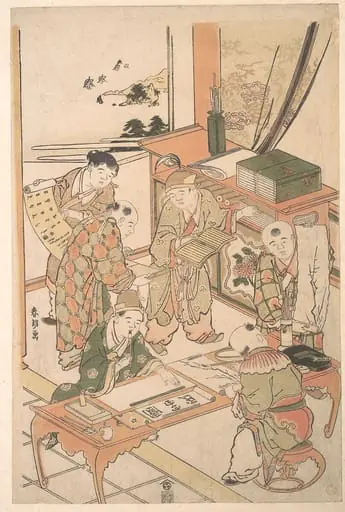 唐子書画図|Chinese Boys Learning to Write and Paint
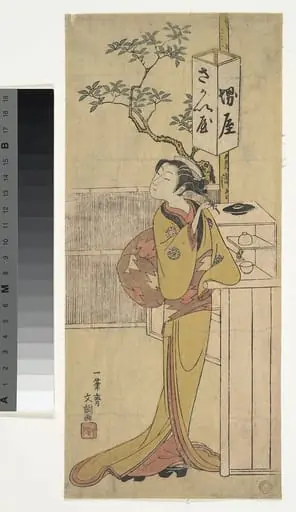 Untitled
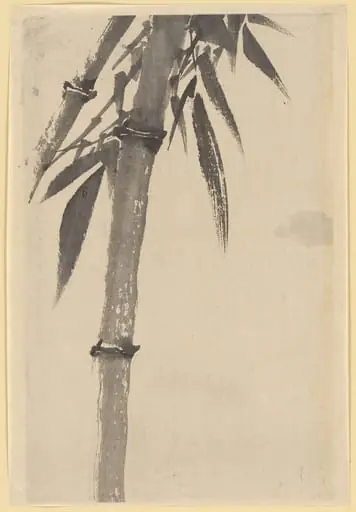 Untitled
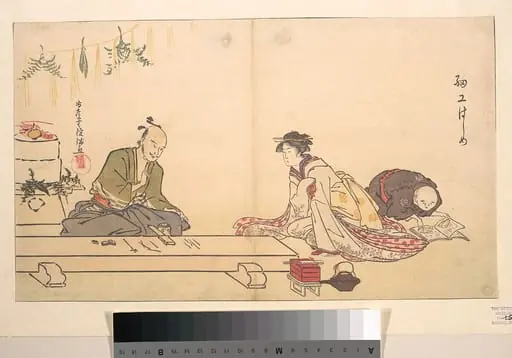 Untitled
 Yokohama Gankirō kodomo te odori no zu|Foreigners Enjoying Children's Kabuki at the Gankirō Tea House