Artwork
Yokohama Gankirō kodomo te odori no zu|Foreigners Enjoying Children's Kabuki at the Gankirō Tea House
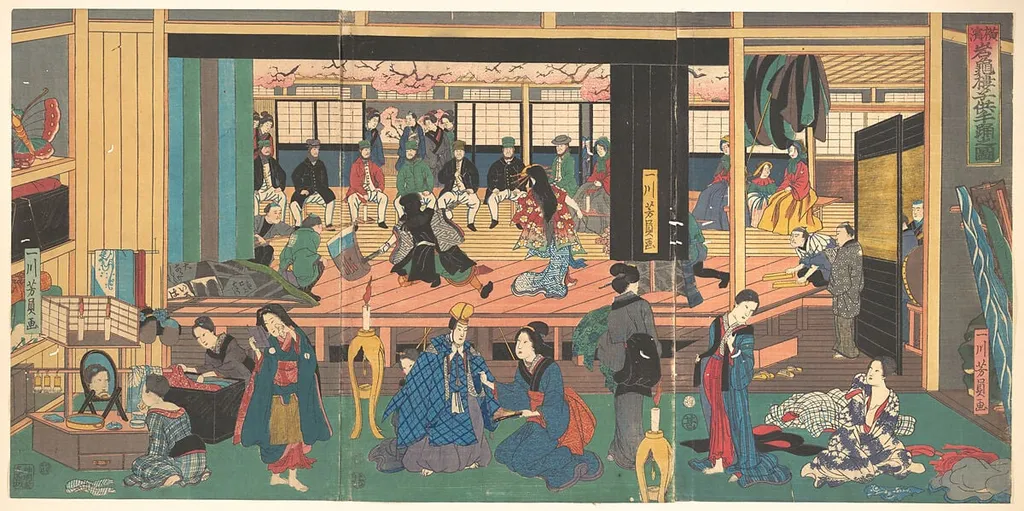
Yokohama Gankirō kodomo te odori no zu|Foreigners Enjoying Children's Kabuki at the Gankirō Tea House is an ink print by the Impressionist artist Utagawa Yoshikazu. It dates from 1 and is held in the collection of the Metropolitan Museum of Art.
About this work
Overview
Yokohama Gankirō kodomo te odori no zu, also known as Foreigners Enjoying Children’s Kabuki at the Gankirō Tea House, is a triptych woodblock print by Utagawa Yoshikazu. Executed in ink and color on paper, the work captures a bustling interior scene where adults and children share a festive performance. The print is part of the collection of the Metropolitan Museum of Art.
Subject & Meaning
The composition depicts a tea house filled with patrons—both Japanese and foreign—observing a children’s kabuki show. Young performers in vivid costumes occupy the floor, while seated guests in elegant attire watch, converse, and partake in food and drink. The scene reflects the cultural curiosity of the period, highlighting how Western visitors engaged with traditional Japanese entertainment.
Technique & Style
Yoshikazu employs the ukiyo-e woodblock method, carving separate blocks for each color and layering them to achieve bright, saturated hues. Bold outlines define figures and architectural elements, while the use of perspective creates depth within the cramped interior. The artist’s careful arrangement of numerous figures conveys movement without sacrificing clarity.
History & Provenance
Created in the early Meiji era, the print was produced for the Yokohama market, where foreign residents sought images of Japanese life. It later entered the collection of the Metropolitan Museum of Art, where it is displayed as an example of cross‑cultural visual exchange in Japanese printmaking.
Context
During the late 19th century, Yokohama’s international port attracted a diverse population, prompting Japanese artists to depict scenes that appealed to both domestic and expatriate audiences. Prints like this one served as visual souvenirs, documenting everyday interactions between Japanese tradition and Western curiosity.
Artist & collection

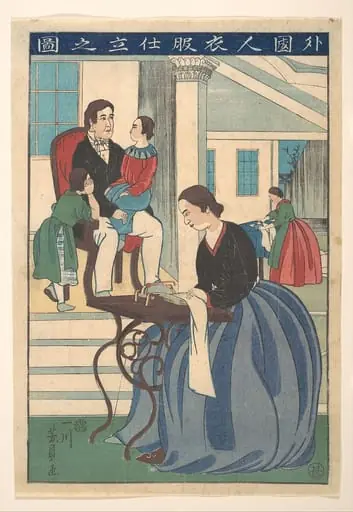 歌川芳員画 『外国人衣服仕立之図』|Foreign Family with Wife Making Clothes (Gaikokujin ifuku shitate no zu)
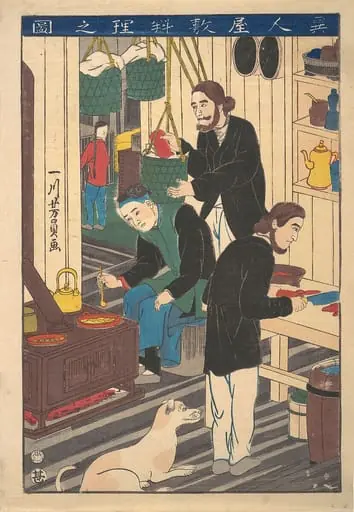 Ijiin Yashiki ryōri no zu|Inside a Foreign Restaurant
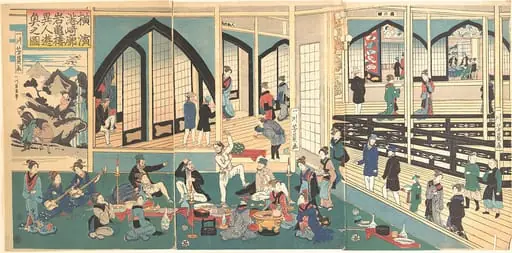 Yokohama Miyozaki-kaku Gankirō ijin yūkyō no zu|Foreigners Enjoying a Party at the Gankirō Tea House
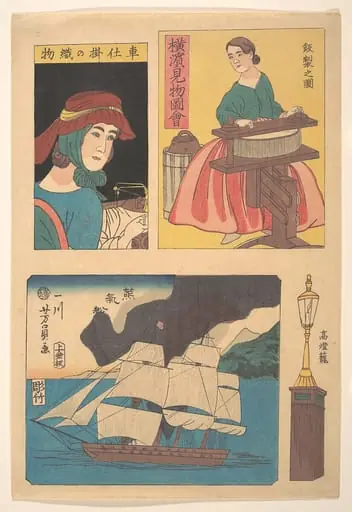 Yokohama kenbutsu zue|Picture of Sights in Yokohama: Woman with a Ringer, Lamp Post, a Steamboat at Full Sail and a Woman with a Sewing Machine
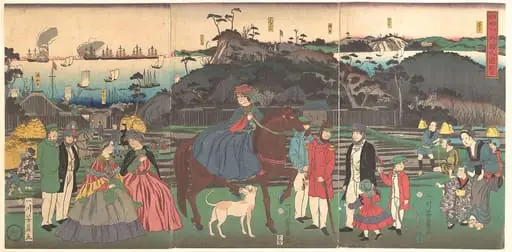 Kanagawa Gongenyama Gaikokujin yūran|Foreigners Visiting the Famous Site of Mt. Gongen in Kanagawa
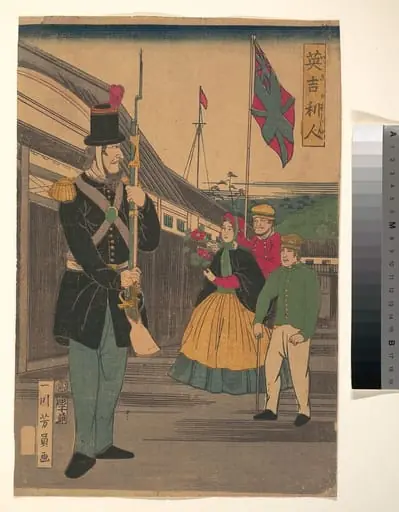 Igirisujin|英吉利人|Englishmen
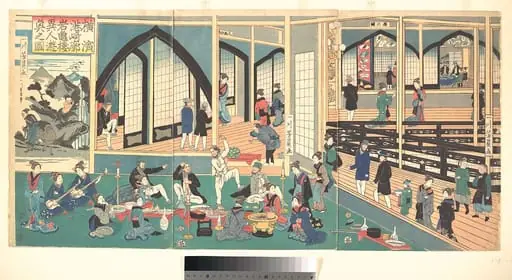 Untitled
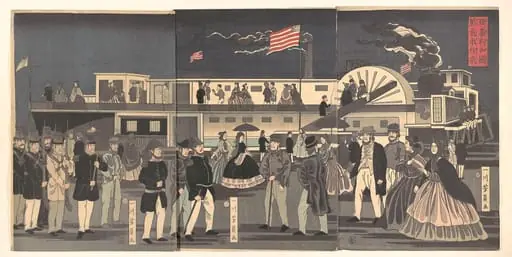 「亞墨利加國蒸氣車往来」|“America”: A Steamship in Transit
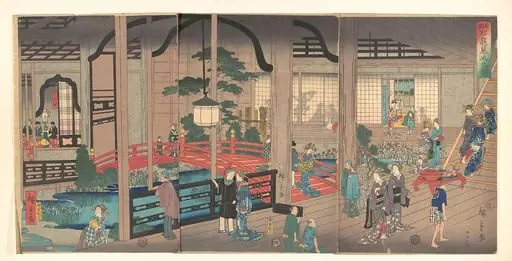 Yokohama Gankirō no zu|View of the Interior of the Gankirō Tea House in Yokohama
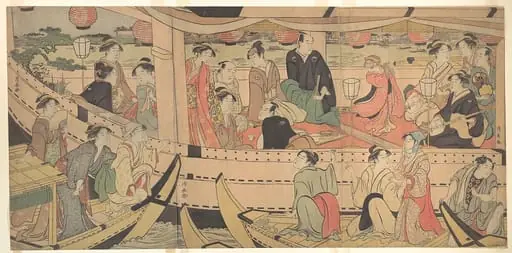 三俳優隅田川船遊び|Sumida River Holiday
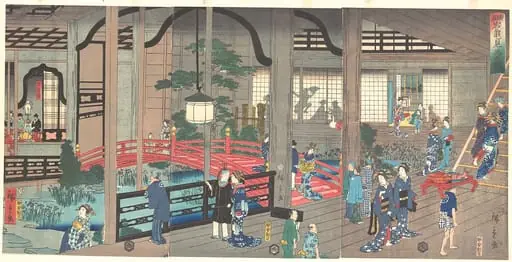 横浜 岩亀見込の図|The Interior of the Gankiro Tea House in Yokohama
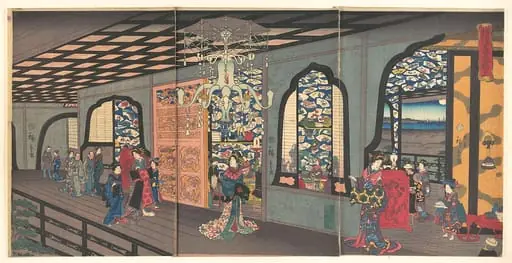 Yokohama Gankirō age|横浜岩亀楼上|Upper Floor of the Gankirō Tea House in Yokohama
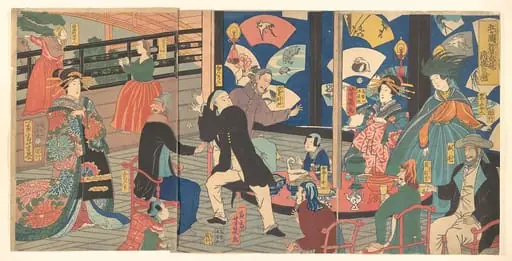 Gok'koku o Gankirō sakamori no zu|The Five Nations Enjoying a Drunken Revel at the Gankirō Tea House
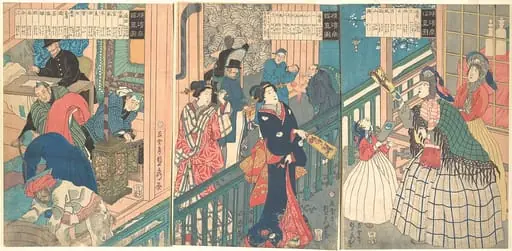 歌川(五雲亭)貞秀画 「横濱商館真圖」|A True View of a Trading House of a Yokohama Merchant
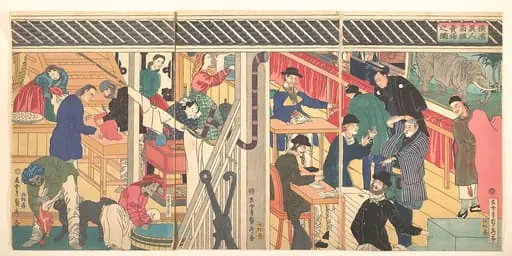 「横浜異人商館買場之圖」|Foreign Business Establishment in Yokohama (Yokohama ijin shōkan uriba no zu)
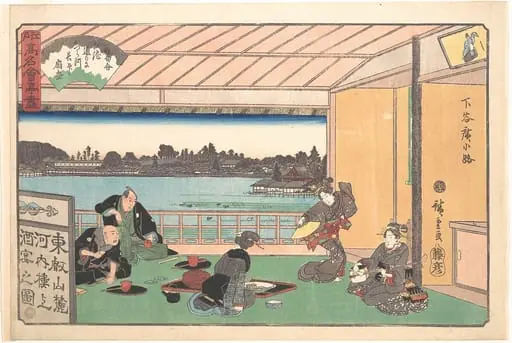 Shitaya Hirokōji (Oike)|江戸高名会亭尽 下谷広小路 河内楼|Teahouse at Hirokōji
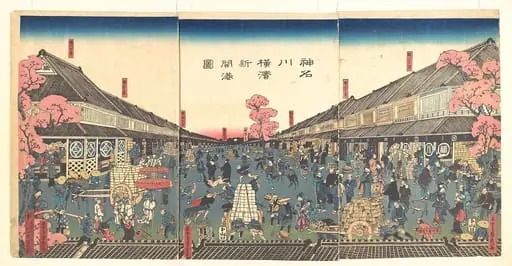 歌川五雲亭貞秀画 『神名川横浜新開港圖』|The Newly Opened Port of Yokohama in Kanagawa Prefecture (Kanagawa Yokohama shinkaikōzu)