Artwork
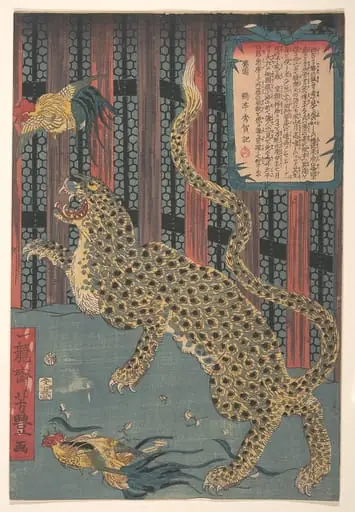
「今昔未見 生物猛虎之真図」|Never Seen Before: True Picture of a Live Wild Tiger (Konjaku miken, Ikimono mōko no shinzu)
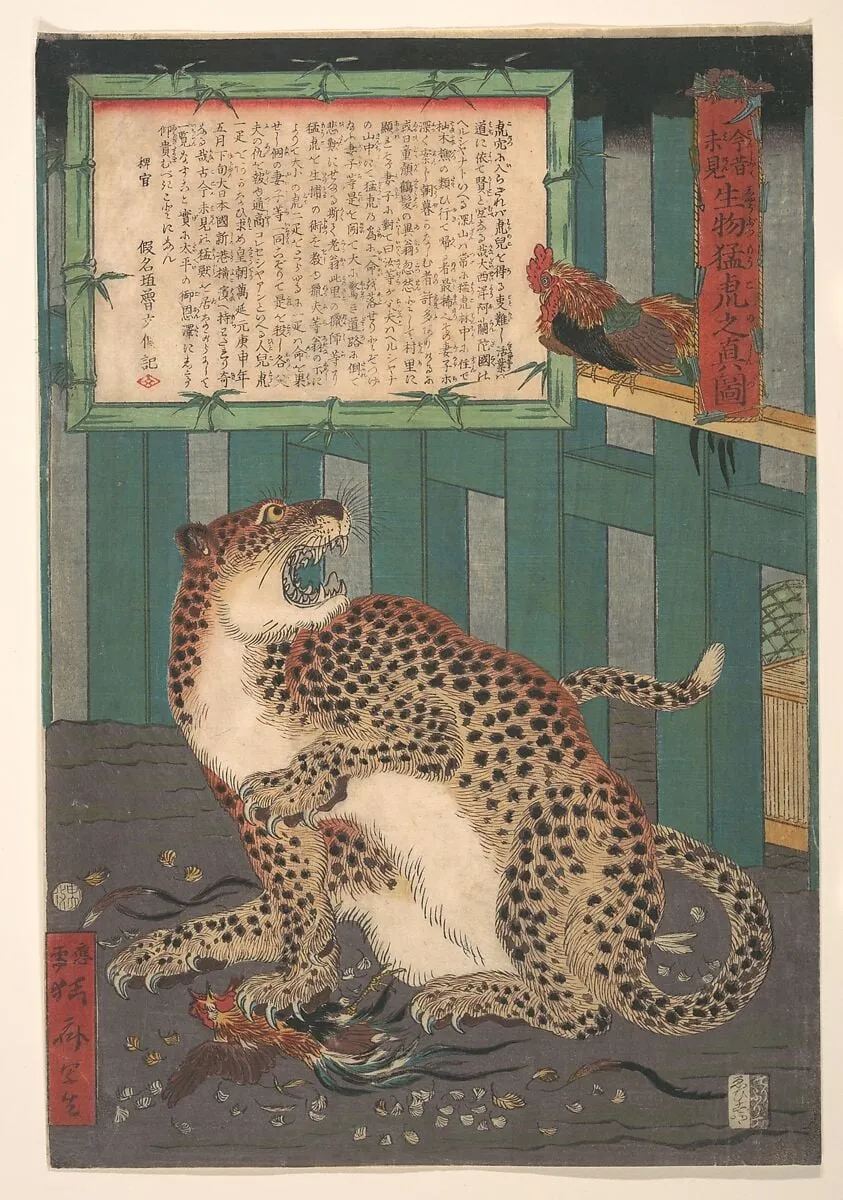
「今昔未見 生物猛虎之真図」|Never Seen Before: True Picture of a Live Wild Tiger (Konjaku miken, Ikimono mōko no shinzu) is an ink print by the Impressionist artist Kawanabe Kyōsai 河鍋暁斎. It dates from 1860 and is held in the collection of the Metropolitan Museum of Art. Created in 1860, this woodblock print by Kawanabe Kyōsai presents a striking encounter between a tiger and a rooster.
About this work
The tiger’s fierce pose contrasts with the rooster’s stillness, creating a surprising scene.
This print shows a tiger crouched low, its mouth open wide as if roaring. Behind it, a rooster perches on a windowsill, looking calm. The tiger’s fur is detailed with black spots, and its claws are sharp. A scroll with Japanese writing hangs on the wall, and a red sign stands to the right.
The tiger’s fierce pose contrasts with the rooster’s stillness, creating a surprising scene. This print was made in 1860 using woodblock printing, a traditional Japanese method.
Look up Kawanabe Kyōsai to see more of his bold, expressive animal prints.
Overview
Created in 1860, this woodblock print by Kawanabe Kyōsai presents a striking encounter between a tiger and a rooster. Executed with ink and color on paper, the composition captures the tiger in a low, open‑mouth roar while the rooster sits calmly on a windowsill. A hanging scroll with Japanese characters and a red sign complete the interior setting, emphasizing the contrast between ferocity and tranquility.
Subject & Meaning
The central figure, a tiger crouched and poised to strike, embodies raw power and untamed energy. Opposite it, the rooster’s composed posture offers a counterpoint of domestic serenity. This juxtaposition may allude to the coexistence of wild and cultivated forces, a theme often explored in Japanese visual culture to reflect balance between nature’s vigor and human order.
Technique & Style
Kyōsai employed traditional ukiyo‑e woodblock methods, carving separate blocks for ink outlines and each color layer. The tiger’s fur is rendered with fine black stippling that suggests the texture of its stripes, while the vivid reds and greens of the background and accessories are applied through successive impressions. The dynamic line work and bold coloration reveal Kyōsai’s skill in merging realistic detail with expressive exaggeration.
History & Provenance
The print emerged during the late Edo period, a time when Japanese artists increasingly experimented with subject matter beyond conventional landscapes. Though specific ownership records are scarce, the work is documented in catalogues of Kyōsai’s animal series and has appeared in several museum collections devoted to 19th‑century Japanese prints, confirming its attribution and preservation within the artist’s oeuvre.
Artist & collection
Artist
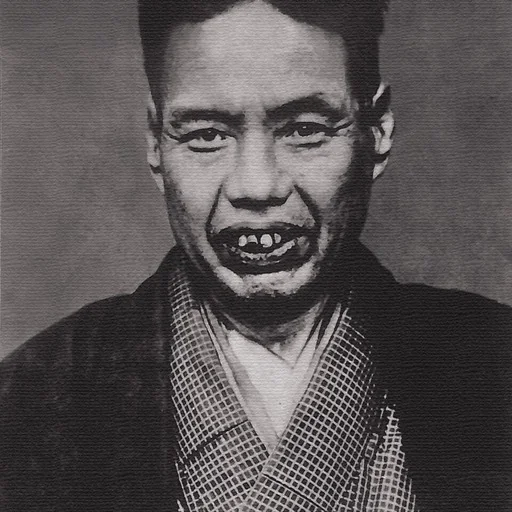
Kawanabe Kyōsai (河鍋 暁斎; May 18, 1831 – April 26, 1889) was a Japanese painter and caricaturist. In the words of art historian Timothy Clark, "an individualist and an independent, perhaps the last virtuoso in traditional Japanese painting".

 Untitled
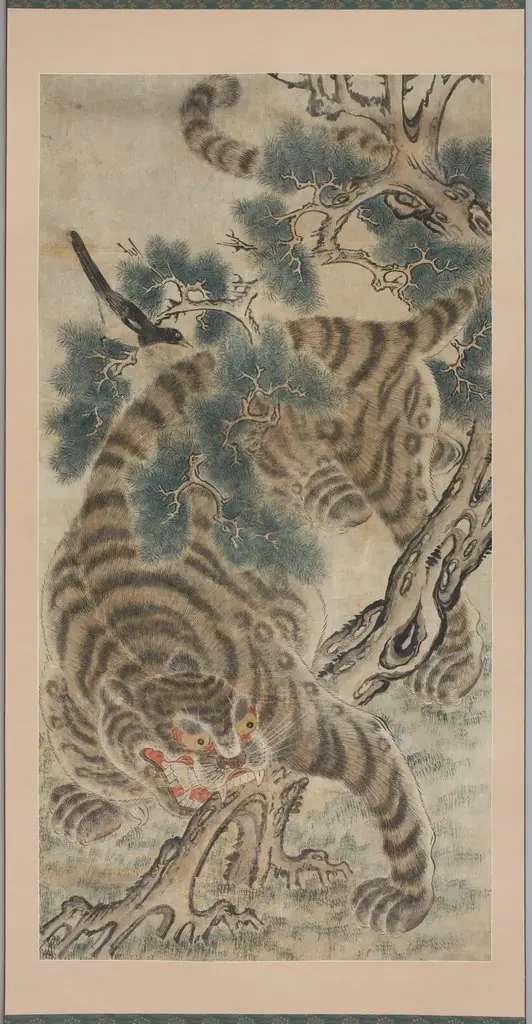 Tiger and Magpie
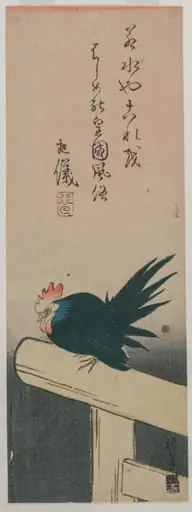 Green Rooster Perched on Torii (Shrine Gate)
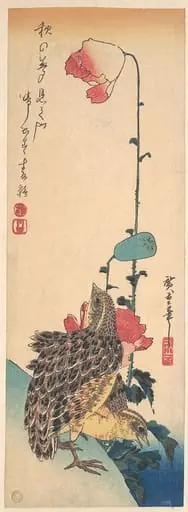 歌川広重画 罌栗に鶉|A Pair of Quails and Poppies
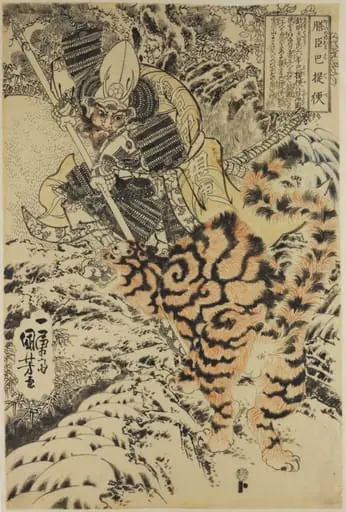 Kashiwade no Hatebe
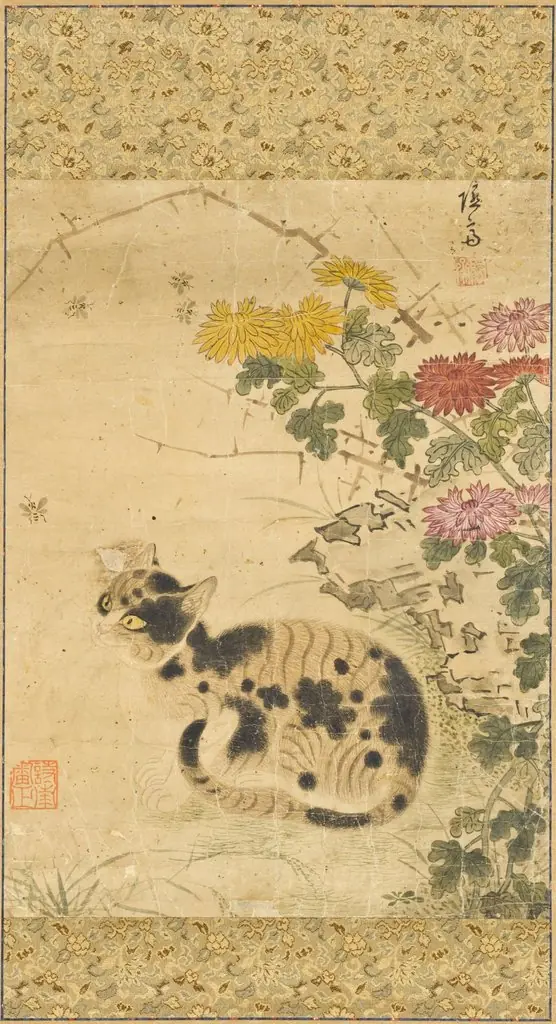 Cat under Chrysanthemums Hen and Chicks under Flower
 Untitled
 歌川広重画 朝顔に鶏と傘|Rooster, Umbrella, and Morning Glories
 「三ひらの内」松・牡丹に孔雀|Peacock on Pine Tree and Peonies, from the series Three Sheets (Mihira no uchi)
 Cat under Chrysanthemums Hen and Chicks under Flower