Artwork
Green Rooster Perched on Torii (Shrine Gate)
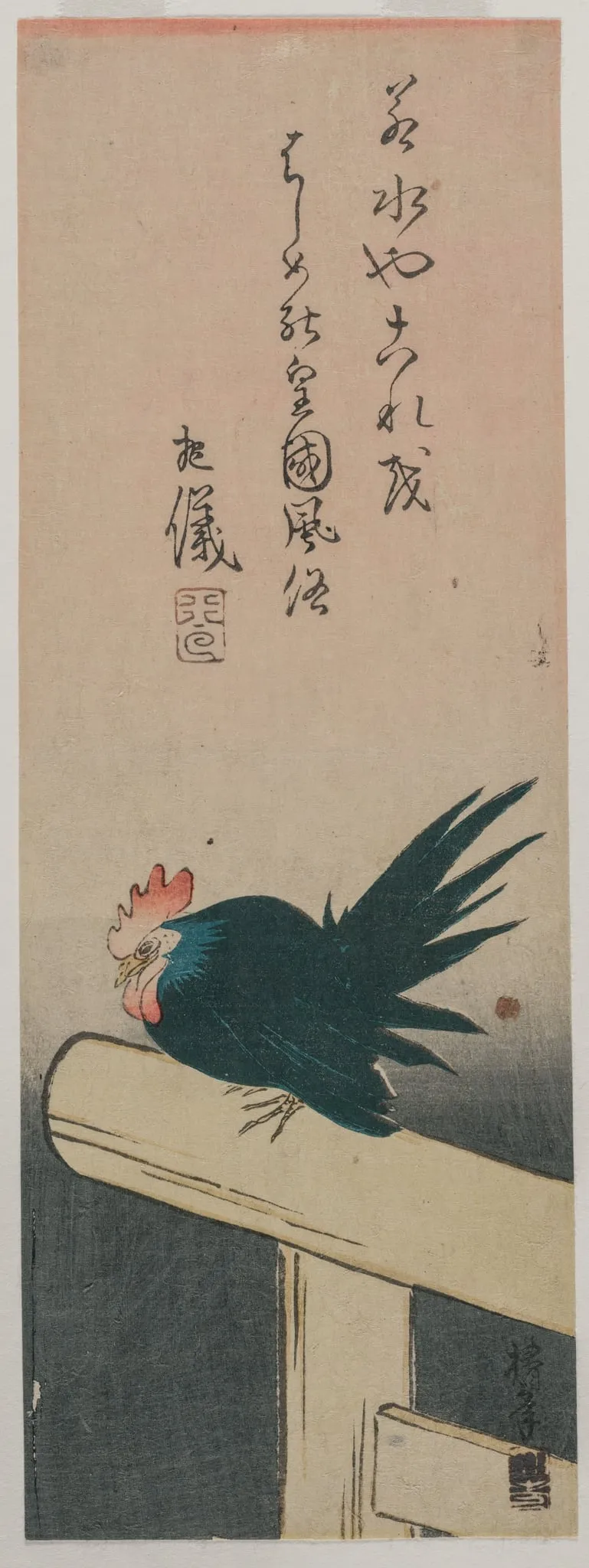
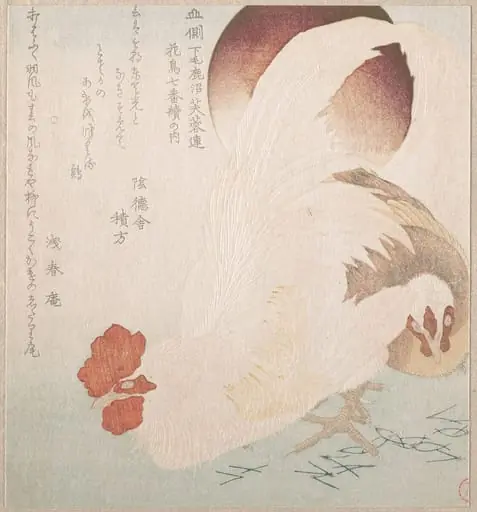
Green Rooster Perched on Torii (Shrine Gate) is a print by the Romanticist artist Chinnen. It dates from 1834 and is held in the collection of the Cleveland Museum of Art.
About this work
Overview
The composition emphasizes contrast between the bird and the architectural form, suggesting symbolic intent without explicit narrative.
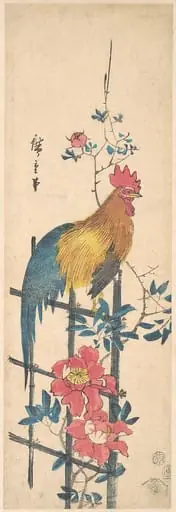
Created around 1834 by the artist Chinnen, this woodblock print depicts a rooster with vivid green plumage perched atop a torii gate. It is part of the collection at The Cleveland Museum of Art, where it represents a lesser-known but distinctive example of early 19th-century Japanese printmaking. The composition emphasizes contrast between the bird and the architectural form, suggesting symbolic intent without explicit narrative.
Subject & Meaning
The rooster, a common motif in Japanese art, may allude to vigilance, dawn, or spiritual protection, given its association with Shinto shrines. The torii gate, marking sacred space, reinforces this context. While the green coloration deviates from naturalism, its symbolic purpose—perhaps to denote divinity or otherworldliness—remains interpretive. No definitive textual source confirms the artist’s intent, leaving meaning open to cultural and visual reading.
Technique & Style
The print employs bold, flat areas of color typical of ukiyo-e traditions, with the rooster rendered in an intense, unnatural green that draws immediate attention. Lines are clean and deliberate, defining both the bird’s form and the torii’s structure. The background is left unadorned, focusing attention on the central figures. This stylistic choice reflects a balance between decorative emphasis and symbolic clarity.
History & Provenance
The work entered The Cleveland Museum of Art’s collection through documented acquisitions of Japanese prints from the late 19th and early 20th centuries. While its exact provenance prior to museum acquisition is not fully recorded, its style and condition suggest it was produced for domestic or export markets during the Edo period. No known editions or signatures have been verified, limiting precise attribution beyond the artist’s name.
Context
During the 1830s, Japanese printmakers increasingly explored non-traditional color palettes and symbolic subjects beyond urban scenes. Chinnen’s work aligns with a trend of spiritual or nature-based imagery gaining traction in regional print circles. Though not part of major publishing houses, such prints reflect broader cultural interests in Shinto symbolism and the natural world as vessels of meaning.
Legacy
Chinnen’s print remains a quiet example of Edo-period experimentation in symbolic representation. It contributes to scholarly understanding of how regional artists adapted ukiyo-e conventions to express spiritual themes. While not widely reproduced or studied, it offers insight into the diversity of Japanese printmaking beyond the most famous masters of the era.
Artist & collection