Artwork
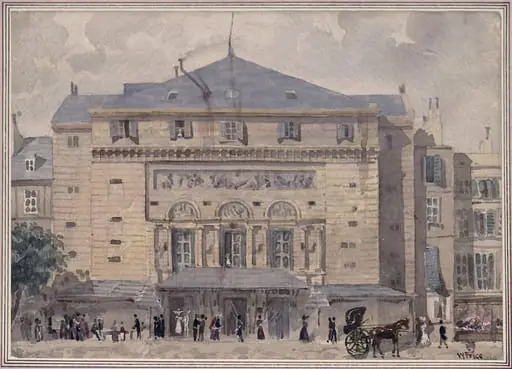
Exterior of London Bridge Theatre
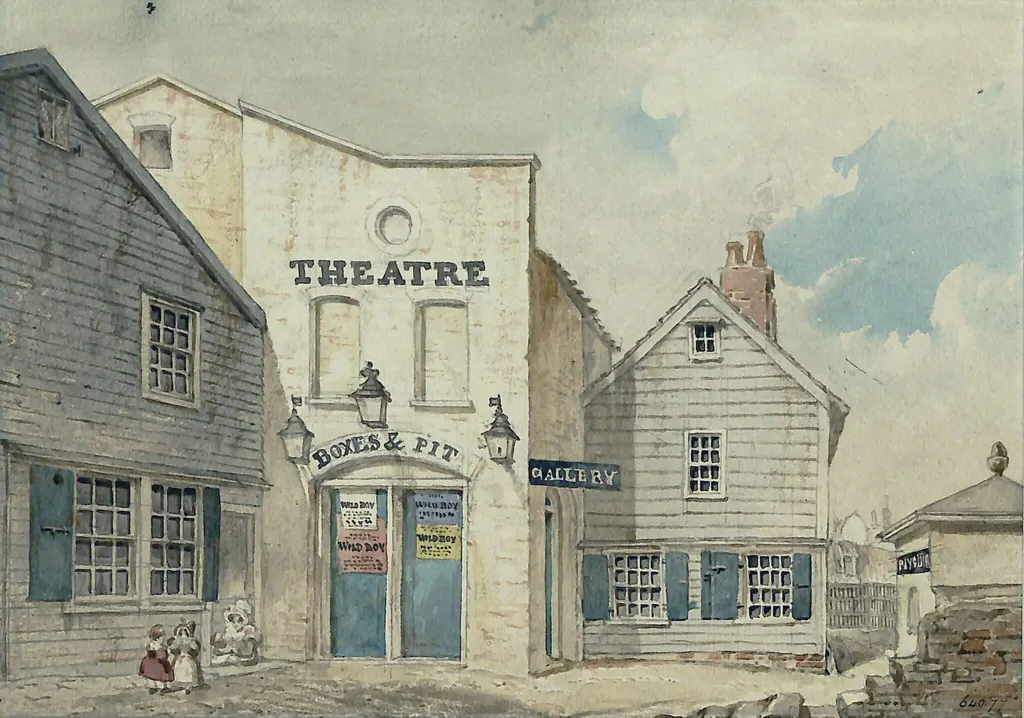
Exterior of London Bridge Theatre is a watercolor work on paper by the British Romanticist artist Kennedy. It dates from 1806 and is held in the collection of the Victoria and Albert Museum. The 1806 watercolour captures the façade of the London Bridge Theatre, a modest wooden structure set on a bustling street.
About this work
Overview
The 1806 watercolour captures the façade of the London Bridge Theatre, a modest wooden structure set on a bustling street. Children are depicted at play in the foreground, while the building’s entrance is marked by blue doors and windows. Above the doorway, painted signs identify distinct seating areas, and a bright poster advertises a performance titled “Wild Boy.”
Subject & Meaning
The scene offers a snapshot of everyday urban life, juxtaposing theatrical commerce with street activity. The presence of youngsters and passers‑by underscores the theatre’s role as a communal hub, while the signage for “Boxes & Pit” and “Gallery” reflects the social stratification of audiences in early‑19th‑century venues.
Technique & Style
Executed in transparent watercolour, the work employs a muted palette of pale sky and soft clouds, allowing the architectural details to emerge with clarity. Fine brushwork delineates the wooden façade and the bustling street, while the occasional splash of bright colour on posters draws the eye to commercial aspects of the setting.
History & Provenance
The London Bridge Theatre, situated near the Globe Tavern on Bedale Street, stood until the mid‑19th century. Between 1856 and 1860 it was dismantled to accommodate railway arches constructed by the South Eastern Railway, reflecting the era’s rapid infrastructural change. The watercolour remains a valuable visual record of the building before its demolition.
Context
At the time of its creation, London’s theatrical landscape was expanding beyond the West End, with smaller venues serving local audiences. The depiction of signage and advertisements illustrates how theatres marketed performances to a diverse public, while the surrounding street scene conveys the mixed residential‑commercial character of the neighbourhood.
Artist & collection
Artist

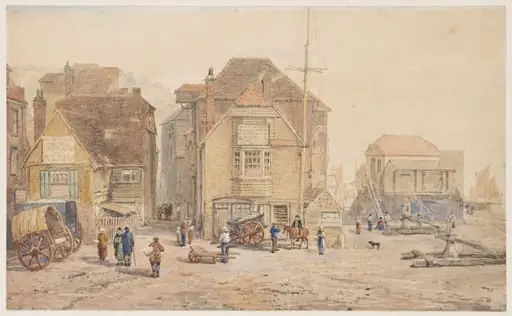 The old fishmarket at Hastings
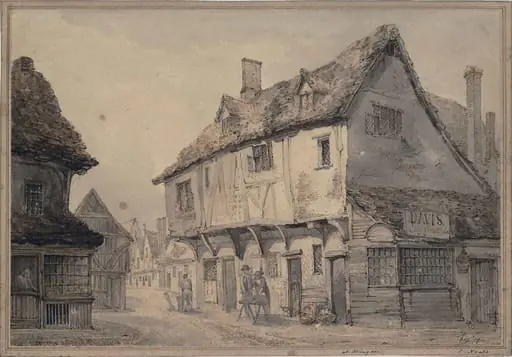 Old Houses at Abingdon, Berkshire
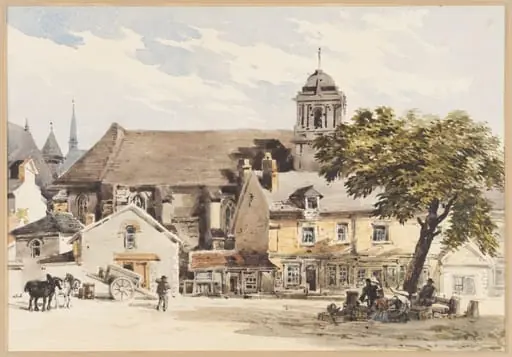 The Post House, Amboise
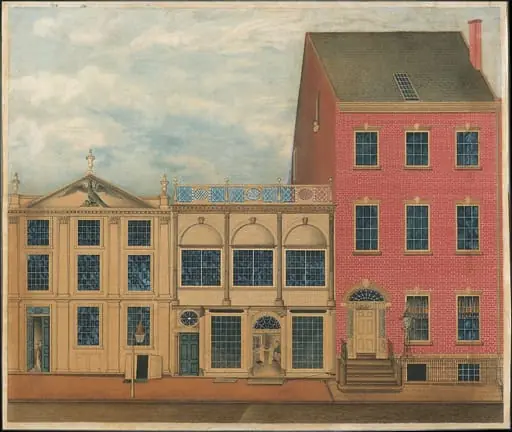 Shop and Warehouse of Duncan Phyfe, 168–172 Fulton Street, New York City
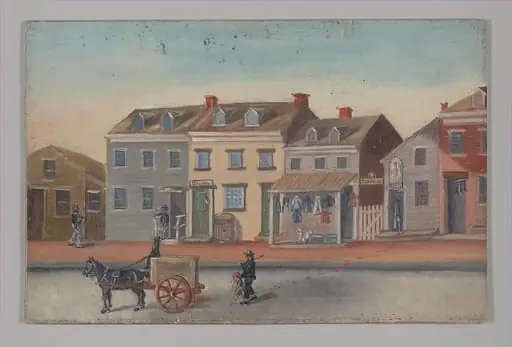 The Dog Killer
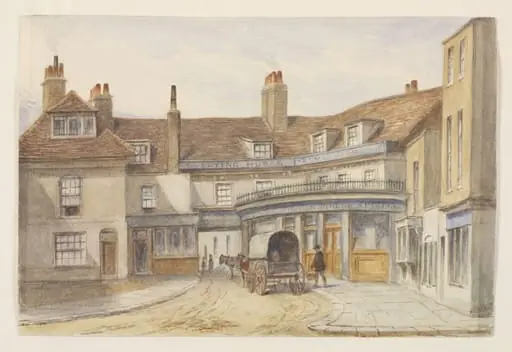 The Flying Horse, Hackney
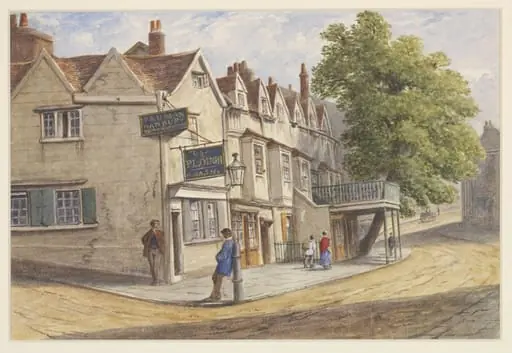 The Plough Inn, Homerton
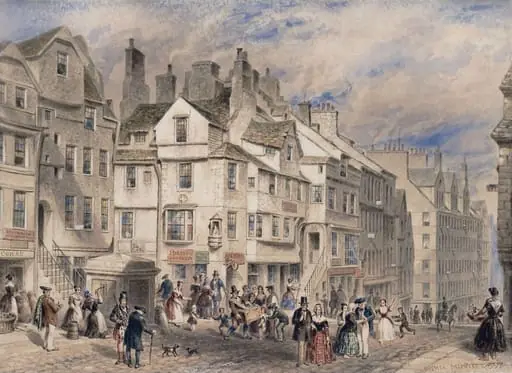 The High Street in Edinburgh, showing John Knox's house
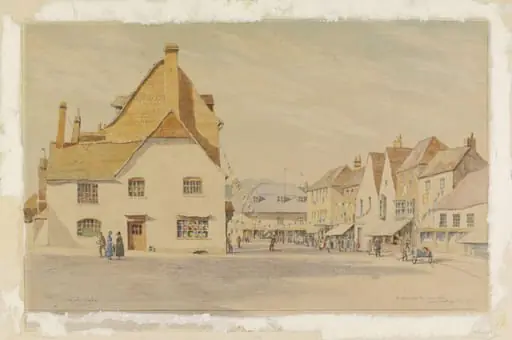 Preparing for the Coronation, West Malling, May, 1937.
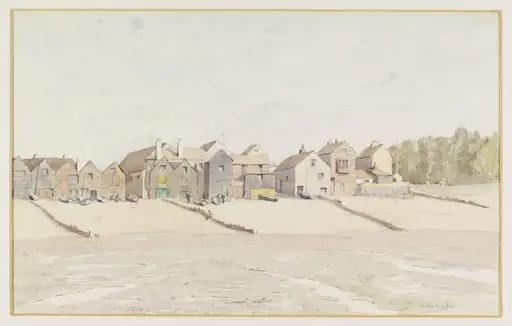 Whitstable, 1934
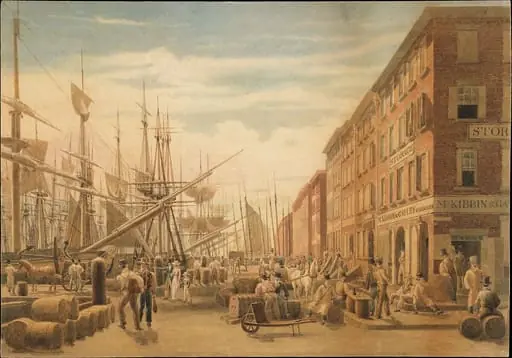 View of South Street, from Maiden Lane, New York City
 Theatre de la Porte St Martin