Artwork
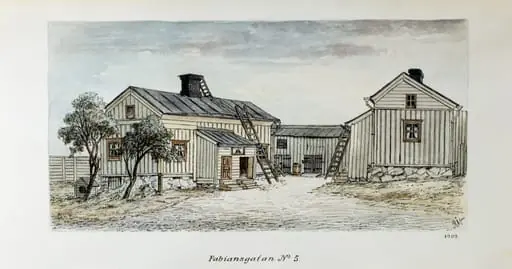
Fabianinkatu 7, piha
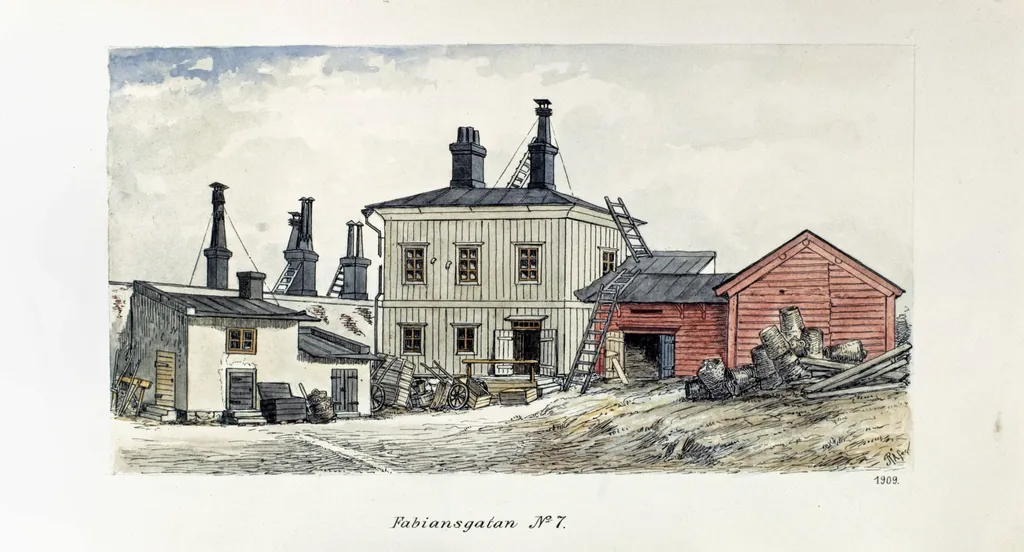
Fabianinkatu 7, piha is a drawing by Rudolf Åkerblom. It dates from 1897 and is held in the collection of the Helsinki City Museum.
About this work
Overview
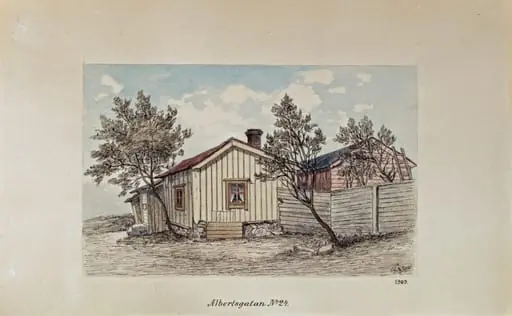
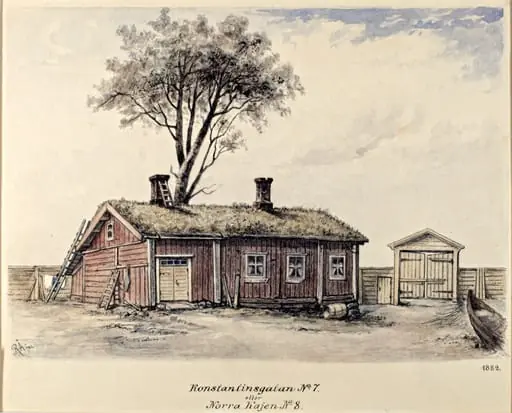
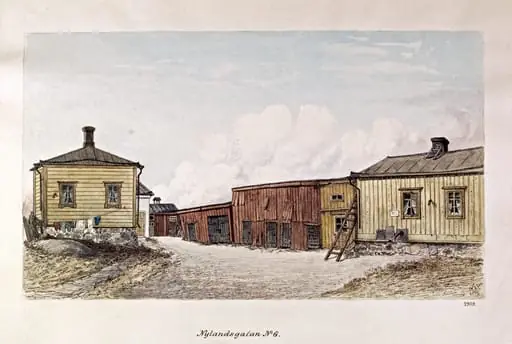
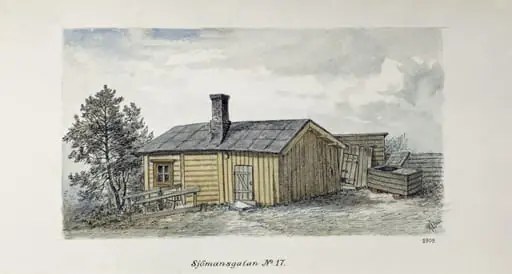
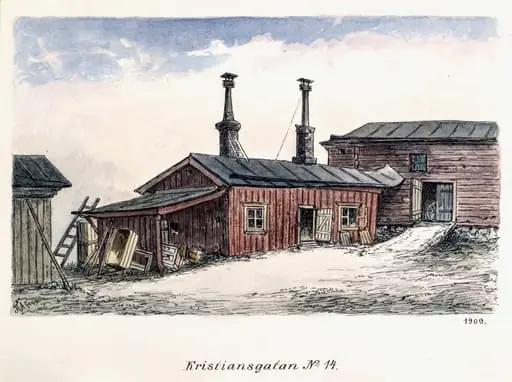
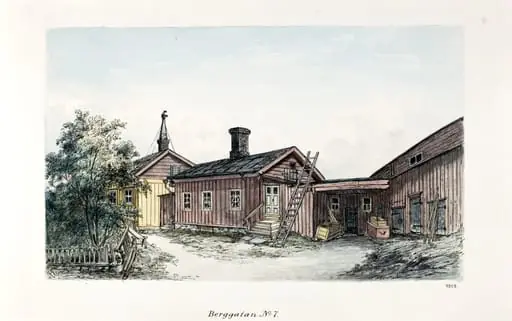
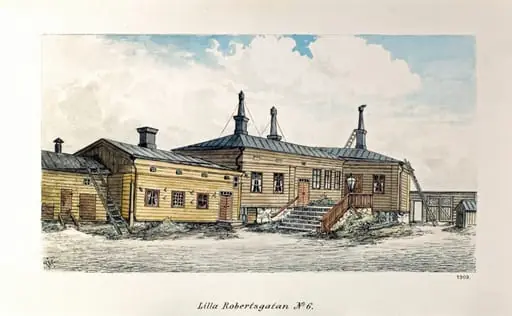
The composition centers on a modest cluster of wooden structures—a two-story dwelling and two smaller outbuildings—arranged around a damp, cluttered yard.
Rudolf Åkerblom created this pencil sketch around 1897, depicting the courtyard behind Fabianinkatu 7 in Helsinki. The composition centers on a modest cluster of wooden structures—a two-story dwelling and two smaller outbuildings—arranged around a damp, cluttered yard. A cart and ladder are positioned near the main house, while scattered logs and tools suggest daily domestic activity. The sketch captures an unadorned, everyday urban space with quiet precision.
Subject & Meaning
The scene portrays a working-class courtyard, likely used for storage, chores, and animal care. The presence of a cart, ladder, and tools implies practical, utilitarian use rather than ornamentation. The muddy ground and weathered wood convey the physical realities of urban life in late 19th-century Helsinki. Åkerblom’s focus on ordinary architecture reflects an interest in the overlooked spaces of daily existence, free from idealization.
Technique & Style
Åkerblom employed light, delicate pencil strokes to suggest texture and form, avoiding heavy outlines. Shadows are rendered through subtle cross-hatching and varied pressure, particularly on the wooden surfaces and chimneys. The sky is left nearly blank, allowing the structures to dominate the composition. This restrained approach emphasizes volume and materiality over atmospheric detail, aligning with observational drawing traditions of the period.
History & Provenance
The sketch is part of Åkerblom’s personal archive of urban studies, likely made during his time in Helsinki. It was not intended for public exhibition but served as a record of architectural forms and spatial relationships. The work remained in private hands until its inclusion in institutional collections, where it now functions as a document of Helsinki’s late-Victorian domestic architecture.
Context
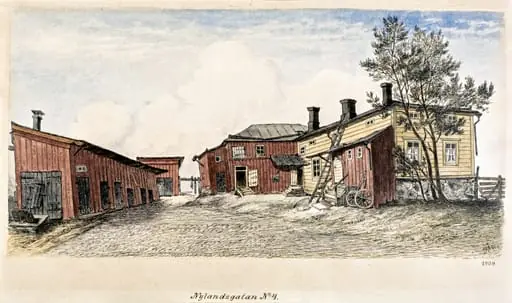
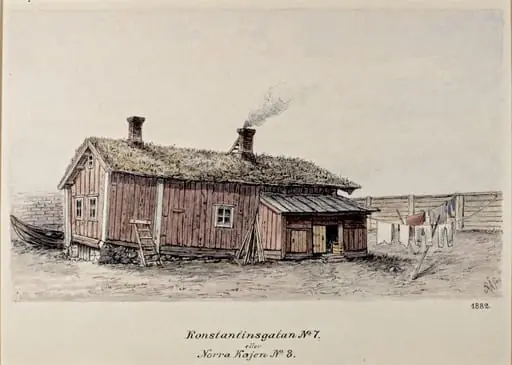
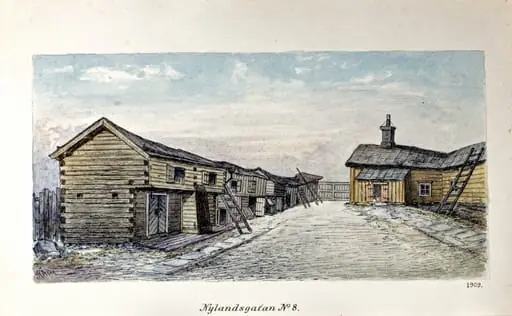
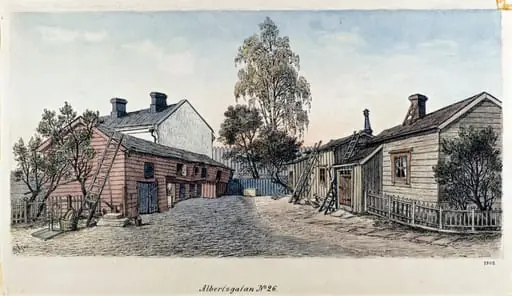
In the 1890s, Helsinki was expanding rapidly, with working-class neighborhoods developing around the city center. Courtyards like the one depicted were common features of multi-family dwellings, serving as shared utility spaces. Åkerblom’s sketch aligns with a broader European trend of artists turning to mundane urban environments, documenting the lived experience of ordinary citizens amid industrialization.
Legacy
Though not widely exhibited during Åkerblom’s lifetime, this sketch contributes to a visual record of Helsinki’s architectural past. It offers insight into the material conditions of urban life before modernization transformed such spaces. Today, it is valued for its unembellished realism and as an example of Finnish draftsmanship focused on the everyday rather than the monumental.
Artist & collection