Artwork
Iso Roobertinkatu 15
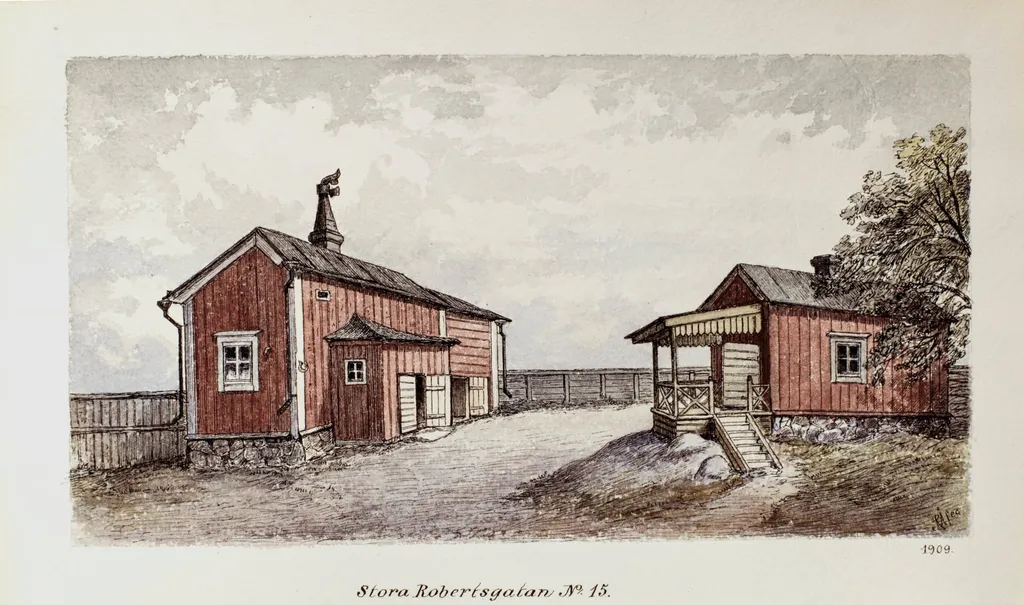
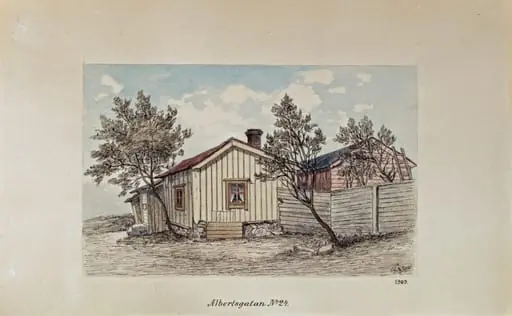
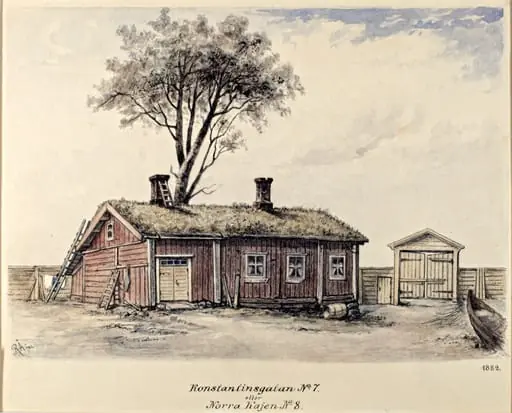
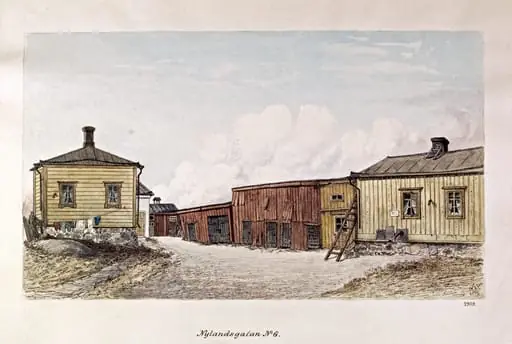
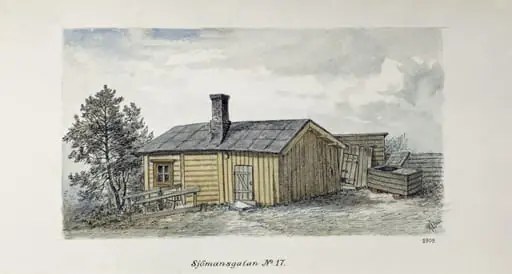
Iso Roobertinkatu 15 is a drawing by Rudolf Åkerblom. It dates from 1897 and is held in the collection of the Helsinki City Museum.
About this work
Overview
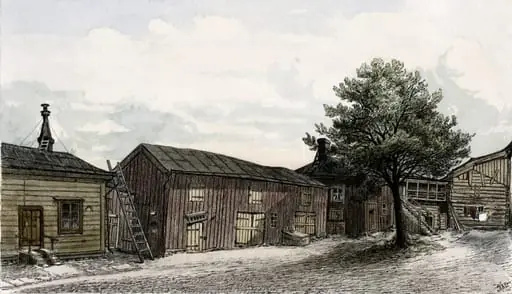
Rendered in pencil or ink, the composition focuses on two simple wooden structures, their forms rendered with delicate precision.
Created around 1897 by Finnish artist Rudolf Åkerblom, this drawing captures a modest residential street in Helsinki. Rendered in pencil or ink, the composition focuses on two simple wooden structures, their forms rendered with delicate precision. The quiet atmosphere and restrained palette suggest a moment of stillness, likely from late autumn or early winter, when the landscape is bare and the air feels crisp.
Subject & Meaning
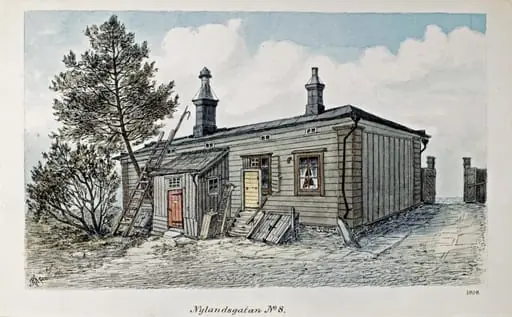
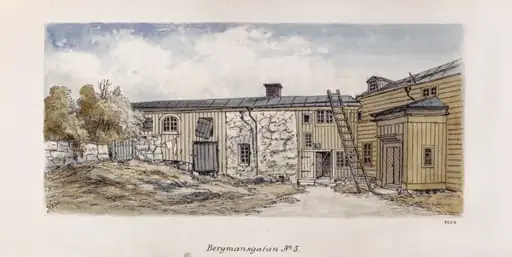
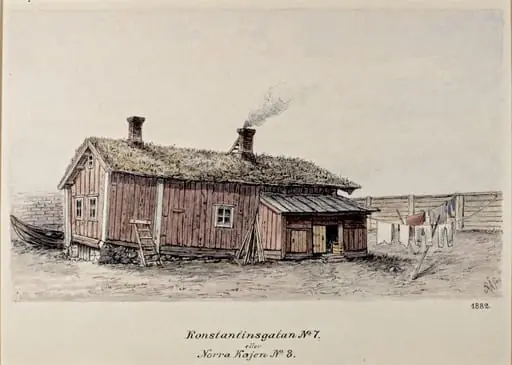
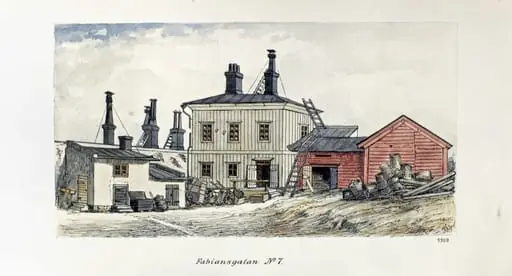
The scene depicts two unadorned dwellings on Iso Roobertinkatu, one elevated on stilts with a covered porch, the other with a gabled roof and chimney. These are ordinary homes, not monuments, reflecting everyday urban life in late 19th-century Finland. The absence of people and the muted tones emphasize solitude and routine, offering a quiet meditation on domestic architecture rather than a narrative.
Technique & Style
Åkerblom employs fine, controlled lines and subtle cross-hatching to suggest texture in the wood, fence, and cloud-covered sky. The damp ground is implied through soft, smudged shading rather than explicit detail. The technique avoids dramatic contrast, favoring tonal gradations that enhance the scene’s quietude. The precision in rendering architectural elements reveals an eye for structural clarity over emotional expression.
History & Provenance
The drawing originates from Åkerblom’s personal sketchbook, likely made during his time in Helsinki as he documented local architecture. It was not exhibited publicly during his lifetime and remained in private hands until acquired by a Finnish cultural institution in the mid-20th century. Its survival reflects its value as a record of urban vernacular rather than as a finished artwork.
Context
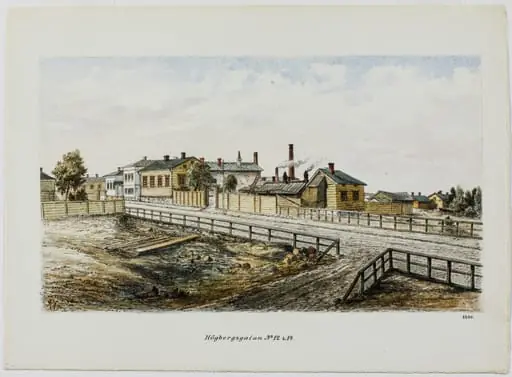
In the 1890s, Helsinki was expanding rapidly, yet many wooden houses still lined its quieter streets. Åkerblom’s sketch aligns with a broader Nordic interest in capturing everyday environments, influenced by realism and early modernist attention to ordinary life. Unlike grand cityscapes, this work records the unremarkable—homes that would soon be replaced by brick and stone as the city modernized.
Legacy
Though not widely known outside Finland, this drawing contributes to the archive of late 19th-century Nordic urban documentation. It exemplifies how artists of the period used sketching not for public display but as a means of observation. Its preservation offers insight into the architectural and social fabric of Helsinki before large-scale urban renewal transformed its neighborhoods.
Artist & collection