Artwork
Maharana Sarup Singh of Udaipur
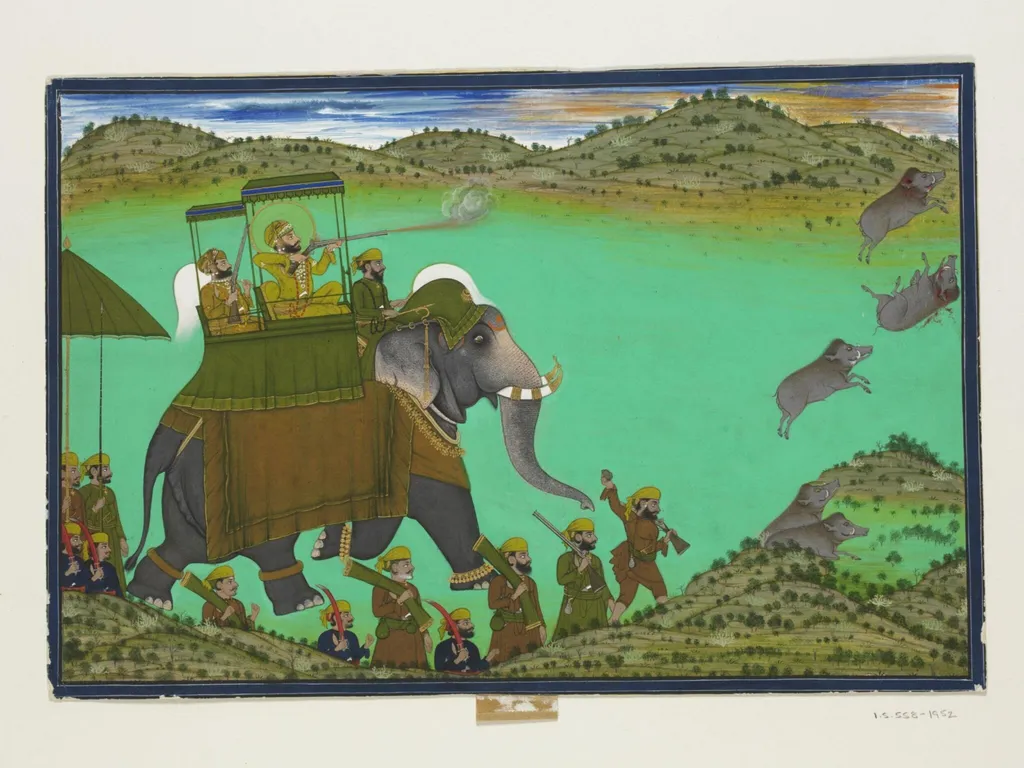
Maharana Sarup Singh of Udaipur is a paint painting by the Impressionist artist Tara. It dates from 1855 and is held in the collection of the Victoria and Albert Museum.
About this work
Overview
This opaque watercolor and gold painting on paper portrays Maharana Sarup Singh of Udaipur during a boar hunt, mounted on an elephant. Attendants and foot soldiers accompany him, some carrying firearms or banners, while the hunted boar dashes through a densely detailed landscape. The scene is rendered with vivid hues and strong outlines, characteristic of Rajasthani court painting traditions.
Subject & Meaning
The hunt serves as a display of royal prowess and control over nature, reinforcing the ruler’s authority. The presence of armed attendants and the dynamic chase underscore the martial culture of the Mewar court. The boar, a symbol of wild strength, is subdued not by force alone but by the organized hierarchy of the royal procession, reflecting order under sovereign command.
Technique & Style
The artist employed flat planes of bright color with bold, dark outlines to define forms, avoiding Western perspective and modeling. Gold accents highlight textiles and elephant trappings, while the landscape is stylized with clustered trees and rolling hills. The composition is densely packed, emphasizing movement and activity rather than spatial depth.
History & Provenance
Created in the mid-19th century in the Udaipur court, the painting likely originated as part of a royal album documenting ceremonial or sporting events. It entered the Victoria and Albert Museum’s collection through British colonial acquisitions, where it remains as an example of late Rajput courtly art.
Context
Boar hunting was a favored royal pastime in Rajput courts, blending sport with ritual. Such paintings reinforced the ruler’s role as protector and master of his domain. Similar works from Mewar and other Rajasthani states show comparable scenes, reflecting shared visual conventions among regional courts during the period of increasing British influence.
Legacy
This work exemplifies the persistence of indigenous artistic traditions under colonial rule. Though Western styles gained traction in Indian courts, artists in Udaipur continued to produce works rooted in local aesthetics. The painting now serves as a historical record of courtly life and the visual language of power in 19th-century Rajasthan.
Artist & collection


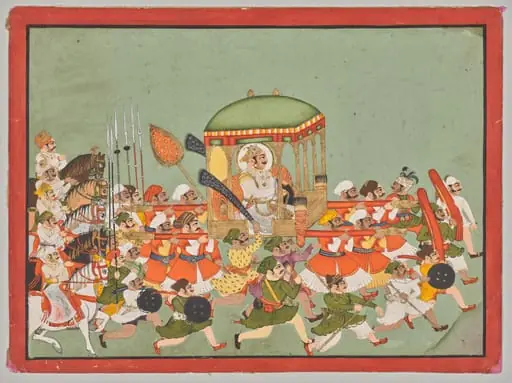 Maharao Chattar Sal (reigned 1758–64) of Kota in a Palanquin
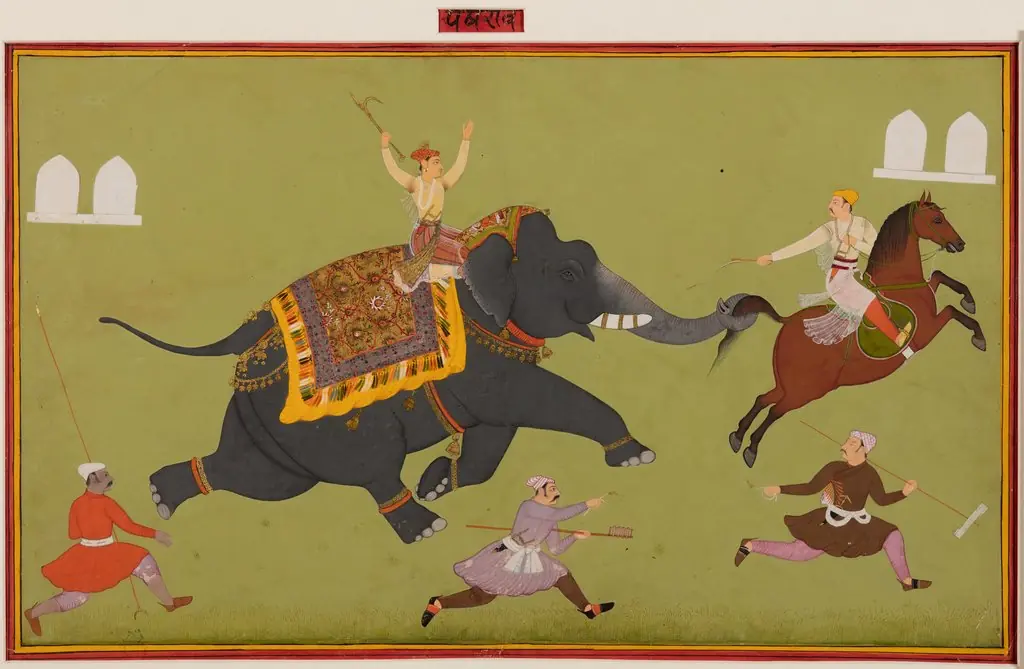 The Elephant of Maharana Jai Singh of Mewar (r. 1680–98) Catches a Horse by the Tail
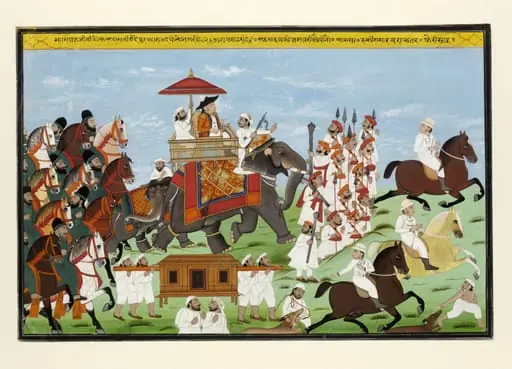 Captain James Tod riding an elephant with his companions and escort
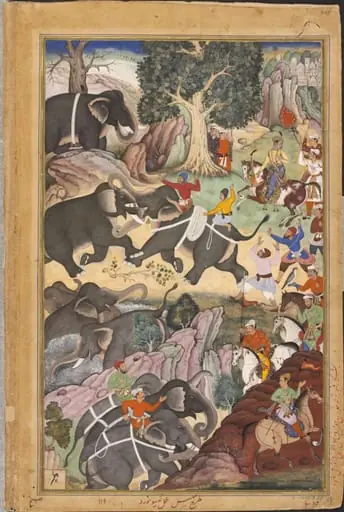 Akbar
Akbar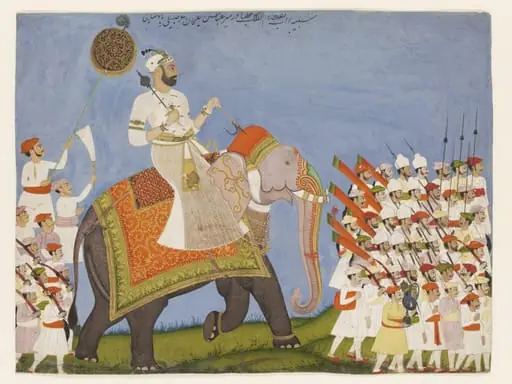 Nawab I'tisam al-Mulk
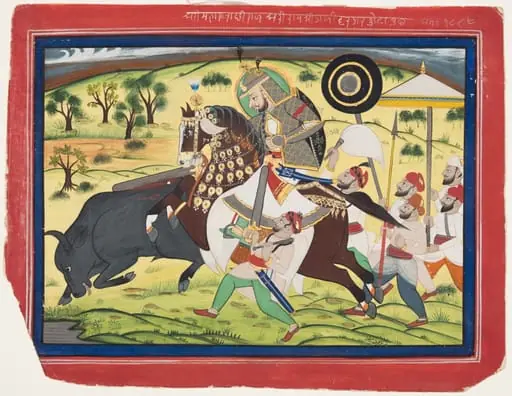 Maharao Ram Singh II of Kota (r. 1828–66) Hunting Buffalo
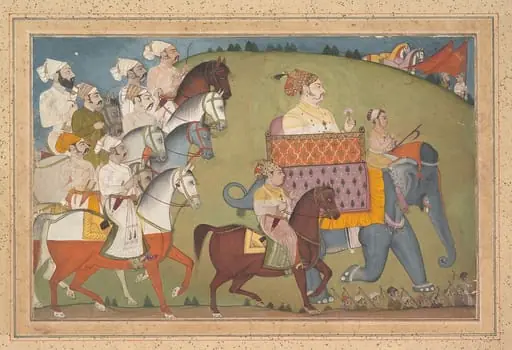 Untitled
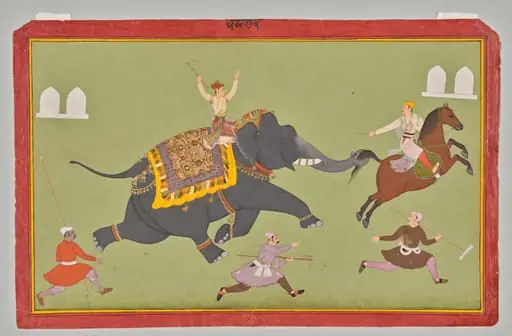 The Elephant of Maharana Jai Singh of Mewar (r. 1680–98) Catches a Horse by the Tail
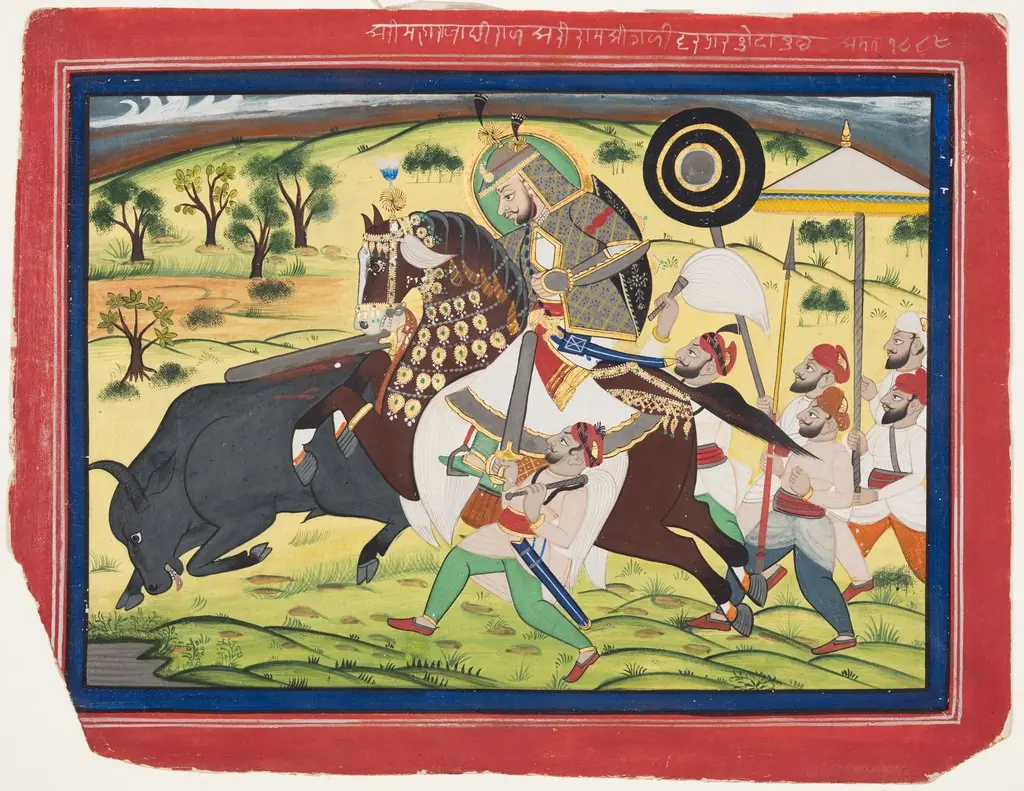 Maharao Ram Singh II of Kota (r. 1828–66) Hunting Buffalo
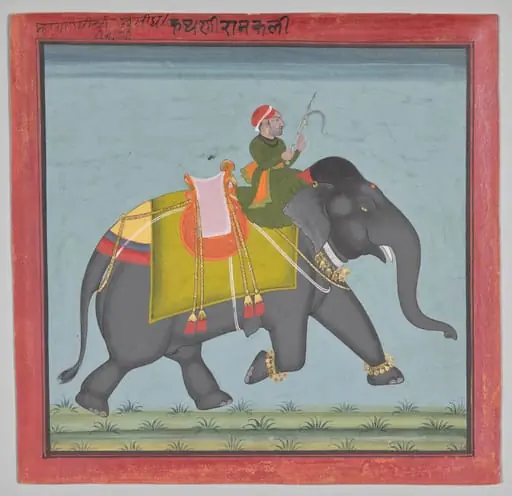 Royal Elephant Ramkali with a Mahout