Artwork
Akbar
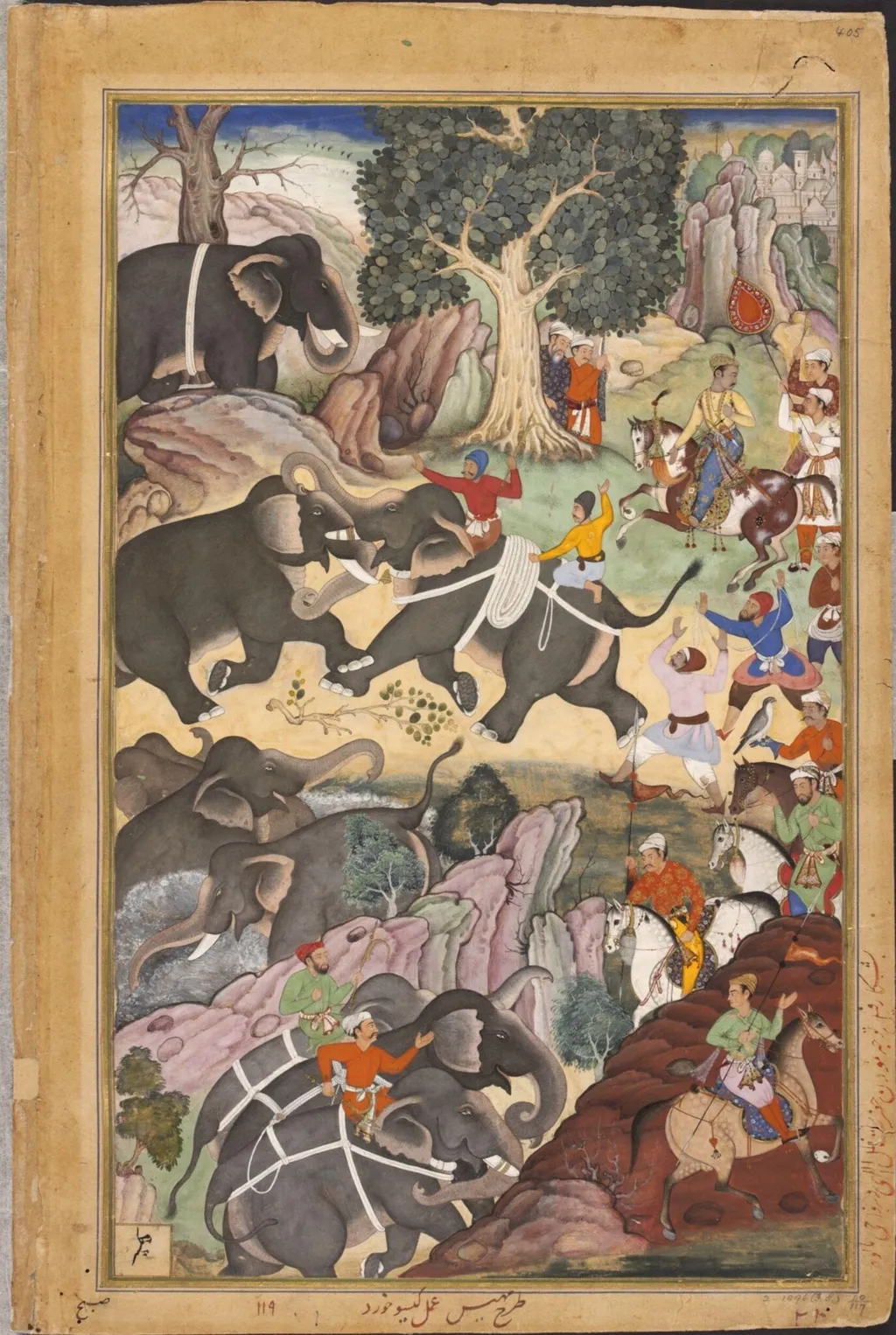
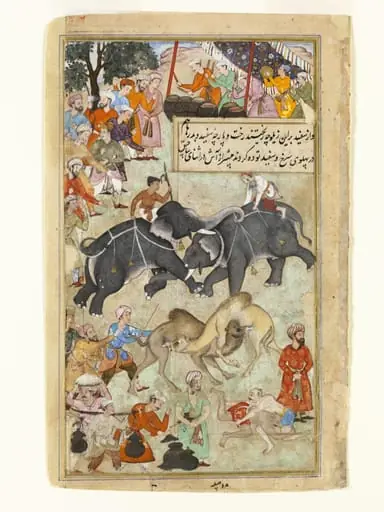
Akbar is a paint painting by the Mughal Painting artist Mahesh. It dates from 1592 and is held in the collection of the Victoria and Albert Museum.
About this work
Overview
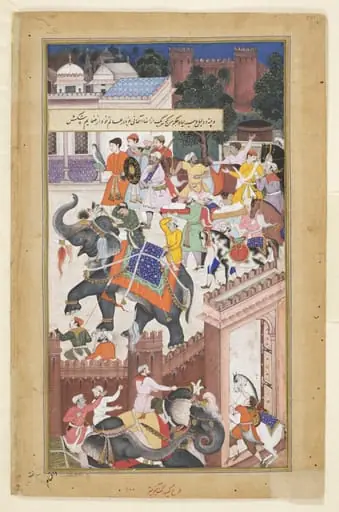
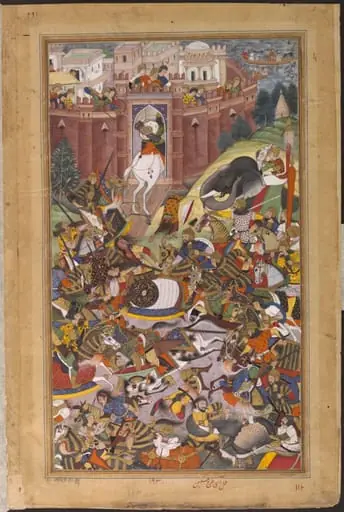
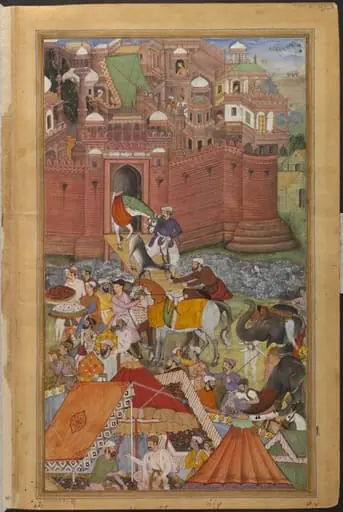
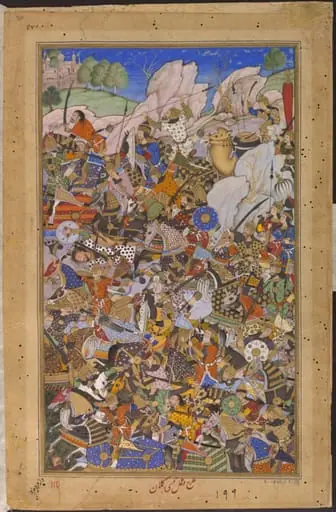
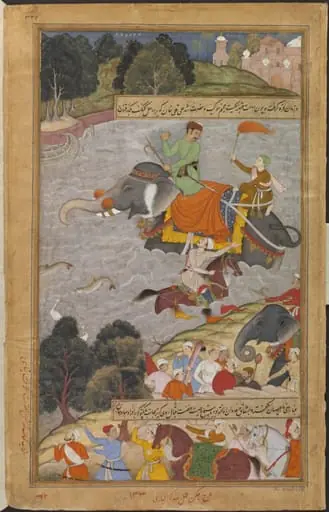
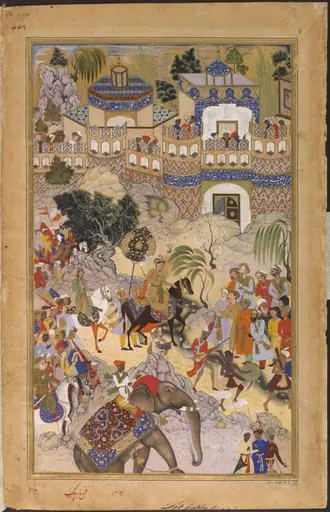
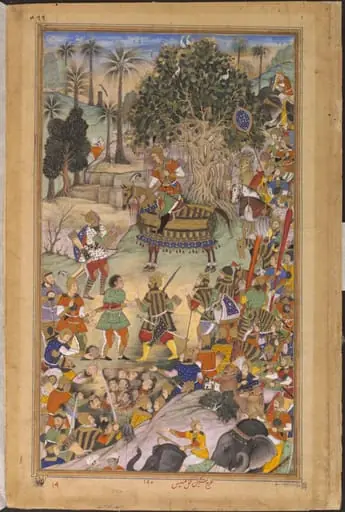
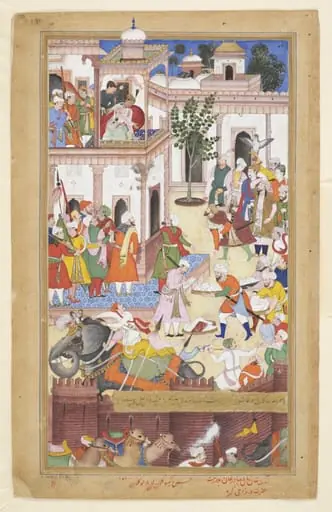
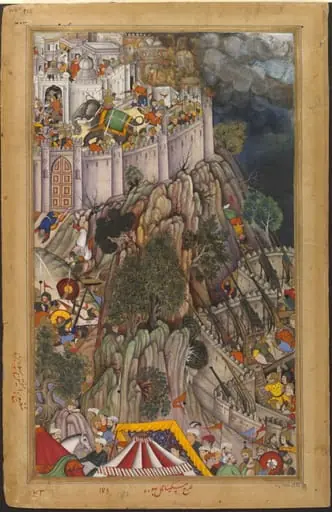
Illustrated by court artists Mohesh and Kesav Khord, it depicts a specific event from 1564: a combat between elephants near Malwa.
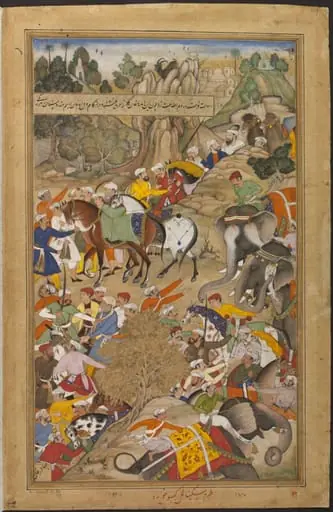
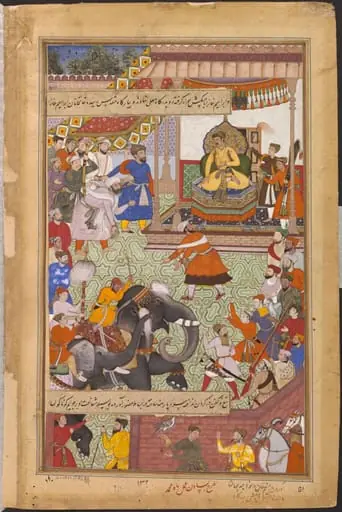
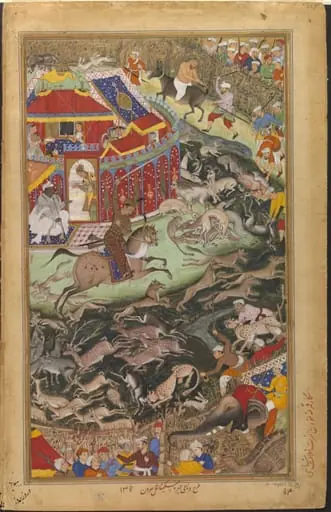
This painting is part of the Akbarnama, a commissioned chronicle of Emperor Akbar’s reign, created between 1592 and 1595. Illustrated by court artists Mohesh and Kesav Khord, it depicts a specific event from 1564: a combat between elephants near Malwa. The V&A’s manuscript is among the earliest known illustrated versions, produced under royal supervision with contributions from artists documented in Abu’l Fazl’s A’in-i Akbari. The work was intended for Akbar’s personal library, not public display.
Subject & Meaning
The scene captures Akbar observing a staged elephant duel, a symbol of imperial strength and control. Elephants, central to Mughal military and ceremonial life, were often pitted against each other to demonstrate power and entertain the court. By including this moment in his official biography, Akbar reinforced his image as a sovereign who commanded nature and spectacle. The presence of courtiers and attendants underscores the event’s political and ceremonial significance.
Technique & Style
The painting employs fine brushwork and vivid mineral pigments to render intricate details: the texture of elephant skin, the folds of royal garments, and the dust kicked up by the animals. Figures are arranged with deliberate hierarchy, Akbar elevated on a white platform to emphasize his authority. The composition balances naturalism with stylized space, reflecting a synthesis of Persian, Indian, and emerging Mughal aesthetics. Inscriptions in red ink identify the artists, affirming the work’s royal provenance.
History & Provenance
After Akbar’s death, the manuscript passed to his son Jahangir and later to Shah Jahan, remaining within the imperial collection. In the 19th century, it entered private hands through Major General John Clarke, who acquired it during his tenure as Commissioner of Oudh. His widow, Frances Clarke, sold the volume to the V&A in 1896. The manuscript’s journey from Mughal court to British museum reflects colonial-era collecting practices and the dispersal of imperial treasures.
Context
The Akbarnama was conceived as a legitimizing narrative of Akbar’s rule, blending historical record with moral and political ideology. Its illustrations were not mere decorations but tools of state propaganda, crafted by a team of artists selected for their skill and loyalty. The project reflected Akbar’s broader patronage of the arts and his interest in synthesizing diverse cultural traditions into a unified imperial identity, visible in both text and imagery.
Legacy
The Akbarnama’s illustrations set a standard for Mughal manuscript painting, influencing later court artists and shaping the visual language of imperial biography. Its survival in partial form allows scholars to trace the evolution of Mughal artistic practice and the role of visual culture in governance. The work remains a key reference for understanding how power was represented through art in early modern South Asia.
Artist & collection
Artist
This artist painted epic scenes in watercolor and paint during the 1500s. In *Qasam al-Abbas Arrives from Mecca and Crushes Tahmasp with a Mace*, a holy warrior rides in to defeat a king with a giant mace. Another work…