Artwork
Portrait of Sayyid Mirza Azim Beg
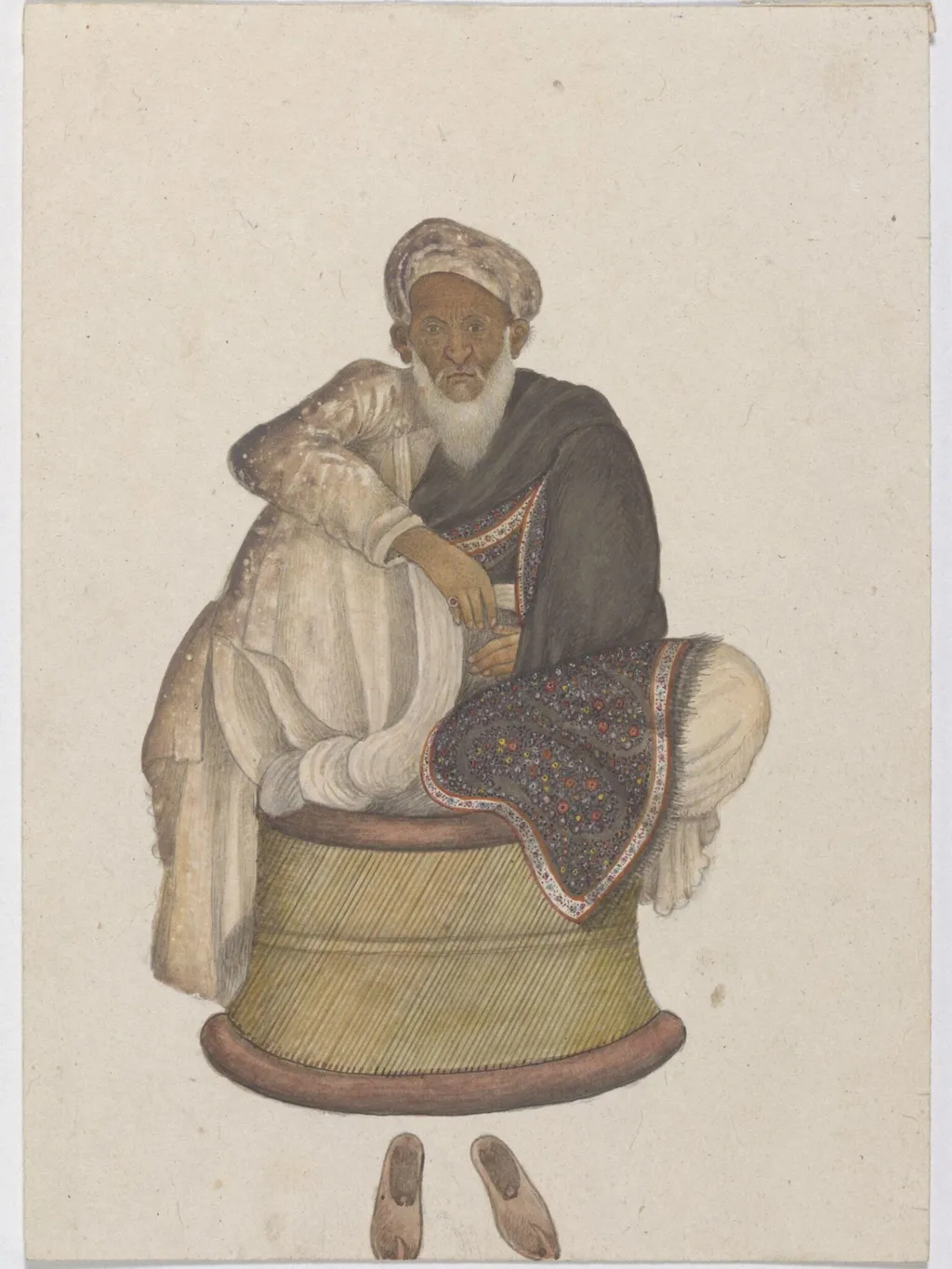
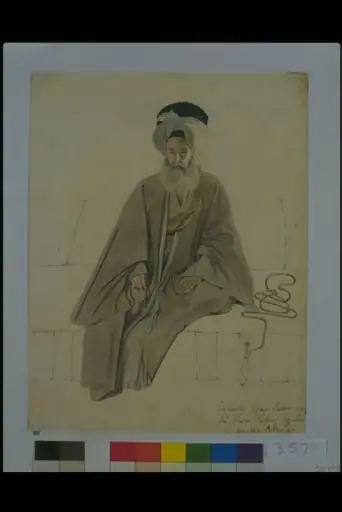
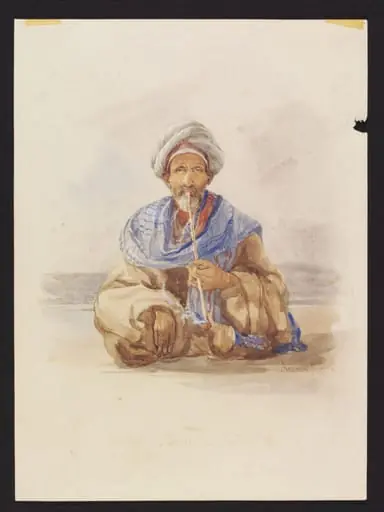
Portrait of Sayyid Mirza Azim Beg is a paint painting by the Patna School of Painting artist Ghulam Ali Khan. It dates from 1822 and is held in the collection of the Victoria and Albert Museum.
About this work
Overview
The work reflects the convergence of Mughal miniature traditions with Western naturalism, characteristic of artists working in Delhi during this period.
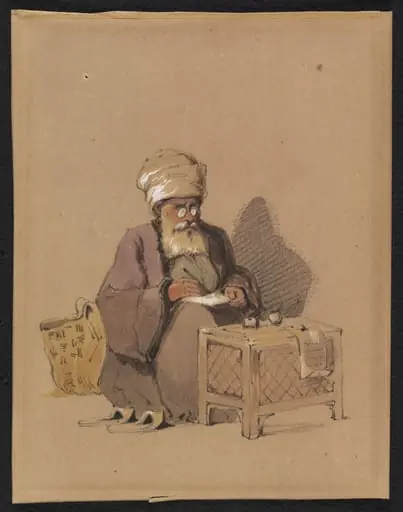
This portrait belongs to the genre of Company painting, a hybrid style developed in early 19th-century India for European patrons, particularly those affiliated with the East India Company. Executed in watercolor on paper, it presents a seated elder in quiet repose, rendered with meticulous detail and restrained tonality. The work reflects the convergence of Mughal miniature traditions with Western naturalism, characteristic of artists working in Delhi during this period.
Subject & Meaning
The subject is Sayyid Mirza Azim Beg, a nobleman and jagirdar from Hansi near Delhi, whose age is recorded as 100 or 109 in dual inscriptions on the reverse. His serene posture, white robes, and calm gaze convey dignity and longevity, values esteemed in both Islamic and colonial contexts. The portrait functions not merely as a likeness but as a testament to personal and social status, emphasizing endurance and refinement through stillness.
Technique & Style
The artist employs fine brushwork and soft, muted pigments to model the figure with subtle gradations of light and shadow, a departure from flat decorative conventions of earlier Indian portraiture. The Kashmir shawl is rendered with delicate embroidery patterns, while the cane stool and background are minimized to focus attention on the face and hands. The composition balances Indian attention to detail with Western spatial clarity.
History & Provenance
Attributed to Ghulam Ali Khan, a Delhi-based painter and brother of Faiz Ali Khan, the work likely dates to the 1820s. The presence of both Persian and English inscriptions suggests it was made for a British audience familiar with Persianate culture. The shawl’s design, linked to William Moorcroft’s 1823 travels, provides a temporal anchor, indicating the painting was created shortly after his return to England.
Context
Company paintings emerged as a commercial response to European demand for accurate depictions of Indian people, costumes, and customs. Artists like Ghulam Ali Khan adapted indigenous techniques to satisfy colonial tastes, producing works that were both ethnographic records and status objects. This portrait reflects a moment when Indian artisans navigated between local identity and foreign patronage, shaping a new visual language.
Legacy
The portrait stands as an example of how Indian artists reinterpreted their traditions under colonial influence, preserving cultural nuance while accommodating foreign expectations. It contributes to a broader corpus of Company paintings that document the social fabric of early colonial India, offering insight into the lives of local elites who maintained their status through quiet resilience and visual representation.
Artist & collection
Artist
Ghulam Ali Khan painted delicate Mughal-style portraits and hunting scenes in the early 1800s.