Artwork
Walter Reinhardt
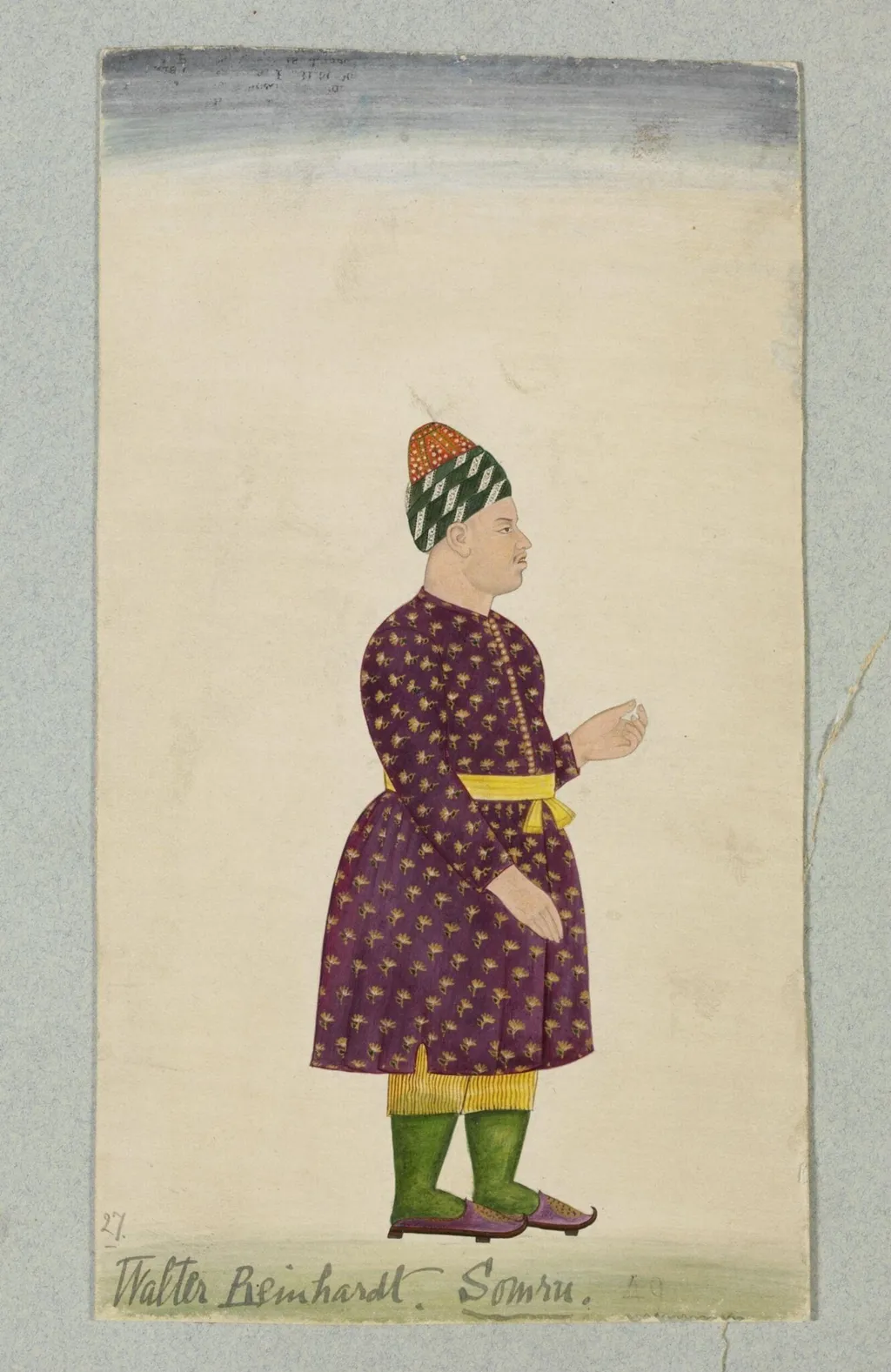
Walter Reinhardt is a paint painting by the Impressionist artist Unknown. It dates from 1890 and is held in the collection of the Victoria and Albert Museum.
About this work
Overview
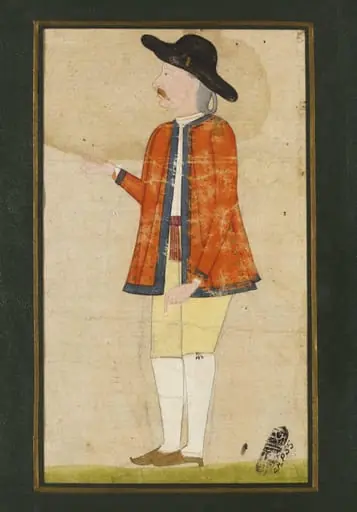
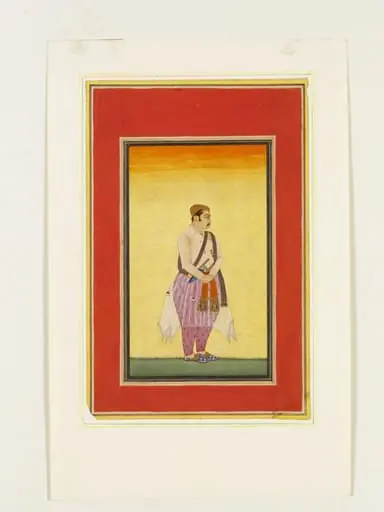
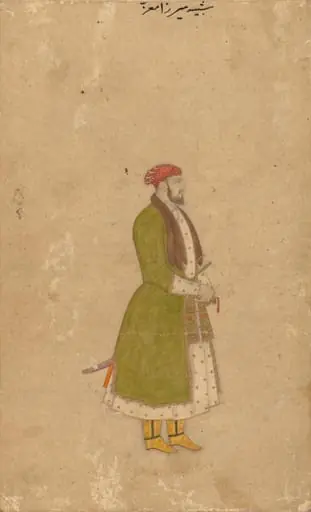
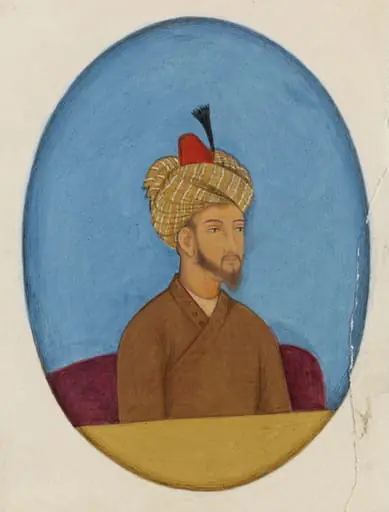
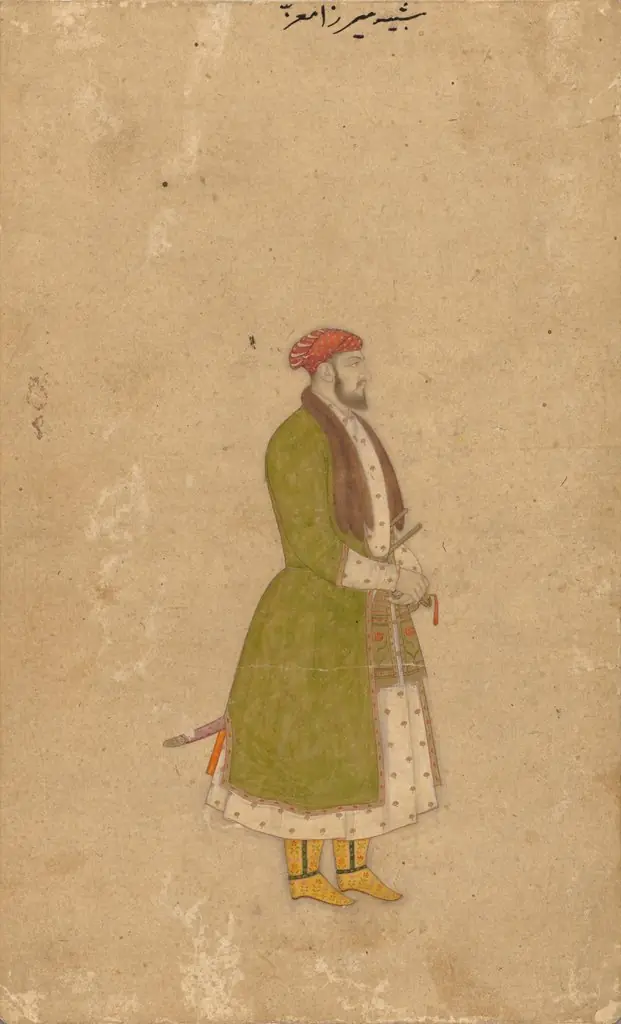
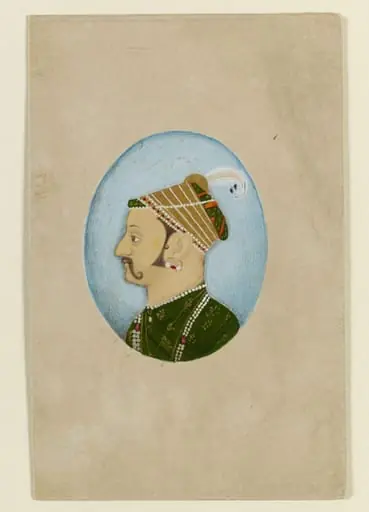
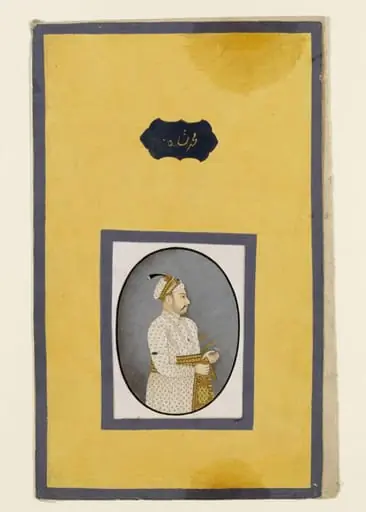
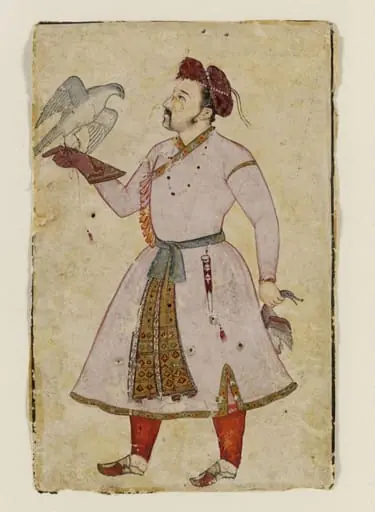
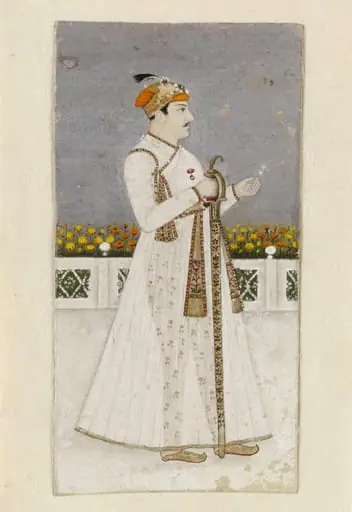
This 1890 opaque watercolor and gold-on-paper portrait depicts Walter Reinhardt, known as Samru, a mercenary who rose to prominence in 18th-century North India.
This 1890 opaque watercolor and gold-on-paper portrait depicts Walter Reinhardt, known as Samru, a mercenary who rose to prominence in 18th-century North India. Rendered with deliberate simplicity, the work emphasizes formal dress and symbolic color over naturalistic detail. The flat, unmodulated surfaces and clear outlines reflect a regional tradition of portraiture that prioritized status over psychological depth.
Subject & Meaning
Walter Reinhardt, a European adventurer who became a ruler in northern India, is portrayed in full ceremonial attire, signaling his dual identity and political authority. The small object in his right hand may indicate a token of office or personal emblem. His elaborate clothing, blending European and South Asian elements, visually asserts his unique position between cultures and his claim to legitimacy in a complex political landscape.
Technique & Style
The painting employs opaque watercolor with gold leaf on paper, a technique common in Mughal and post-Mughal court art. Colors are applied in flat, unshaded planes with sharp contours, creating a decorative, almost textile-like effect. The absence of background or spatial depth focuses attention entirely on the figure, reinforcing the portrait’s function as a symbol of identity rather than a lifelike representation.
History & Provenance
Created in 1890, the portrait likely originated in a regional atelier connected to the descendants or successors of Reinhardt’s legacy, possibly in the Awadh or Punjab courts. Though Reinhardt died in 1778, his memory endured among local elites. The painting’s date suggests it was commissioned decades later as a commemorative piece, preserving his image within a lineage of regional rulers.
Context
During the late 19th century, many Indian courts commissioned portraits of historical figures to reinforce cultural continuity amid British colonial expansion. Reinhardt’s image, blending European military dress with Indian ornamentation, resonated as a symbol of indigenous authority. Such works were part of a broader effort to document and legitimize pre-colonial power structures through visual heritage.
Legacy
The portrait stands as an example of how personal and political identities were visually negotiated in colonial India. Its stylistic simplicity and symbolic richness align it with other regional court paintings held in institutions like the Victoria and Albert Museum. While not widely known, it contributes to understanding how non-royal figures were memorialized in a period of shifting power and cultural hybridity.
Artist & collection

 Domestic Scene
 Giacomo and Cardinal Marco, investing Andrea, Abbot of San Zeno, with his Benefice
 The Nymph of Fontainebleau
 Portrait of a Woman
 Madonna and Child with Saints in the Enclosed Garden
 Venus and Minerva
 Family Group of Four on Sofa
 Wall painting from Room H of the Villa of P. Fannius Synistor at Boscoreale