Artwork
Autumn Moon at the Temple Ishiyamadera from the series Fashionable Eight Views
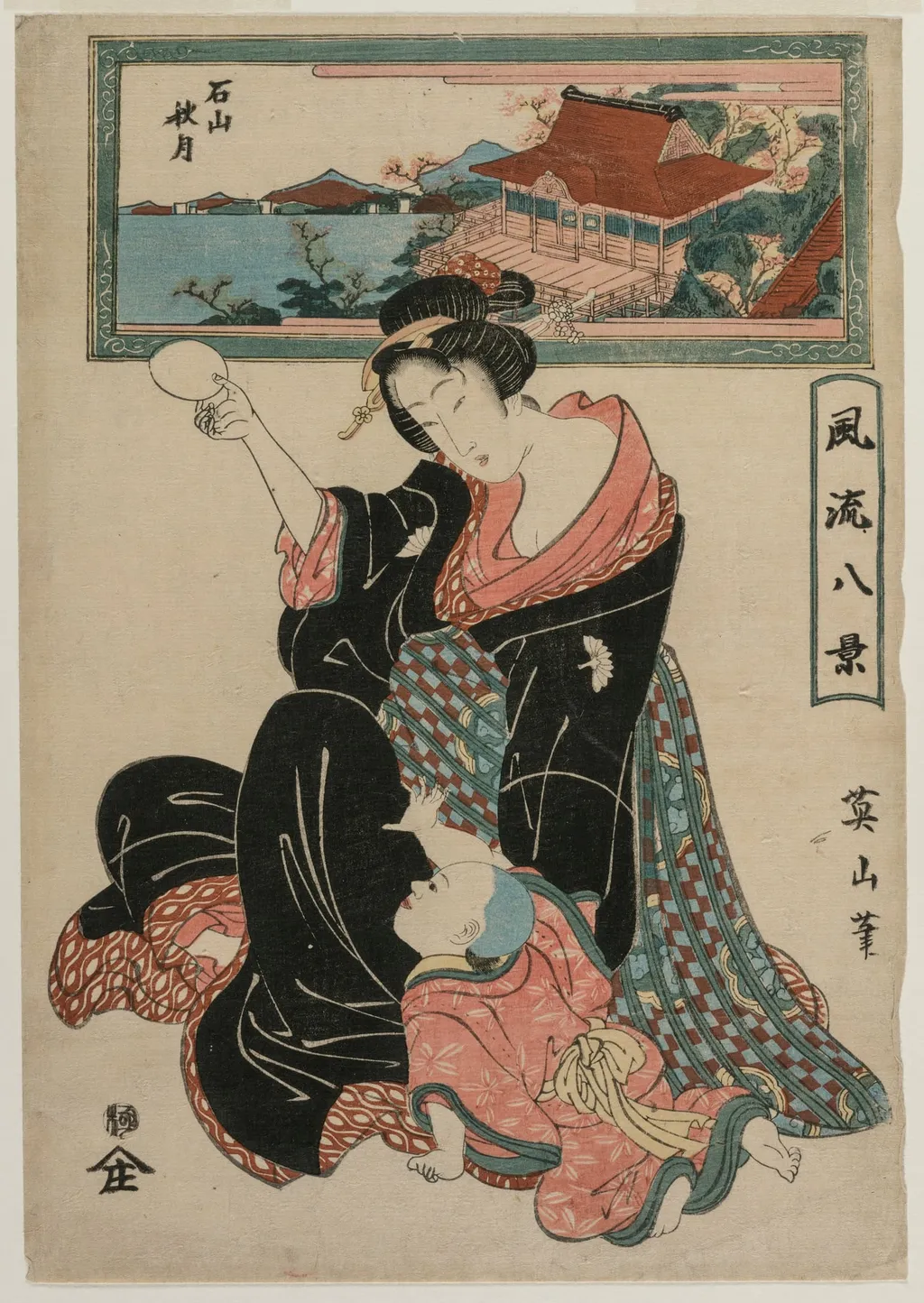
Autumn Moon at the Temple Ishiyamadera from the series Fashionable Eight Views is a print by the Romanticist artist Kikukawa Eizan. It dates from 1816 and is held in the collection of the Cleveland Museum of Art.
About this work
Overview
The print is held in the collection of The Cleveland Museum of Art, representing the genre of ukiyo-e that fused poetic tradition with modern aesthetics.
Created around 1816 by Kikukawa Eizan, this woodblock print is part of the series Fashionable Eight Views, which reimagines classical landscape themes through contemporary urban life. It depicts a quiet moment at Ishiyamadera Temple, blending natural scenery with figures from Edo-period society. The print is held in the collection of The Cleveland Museum of Art, representing the genre of ukiyo-e that fused poetic tradition with modern aesthetics.
Subject & Meaning
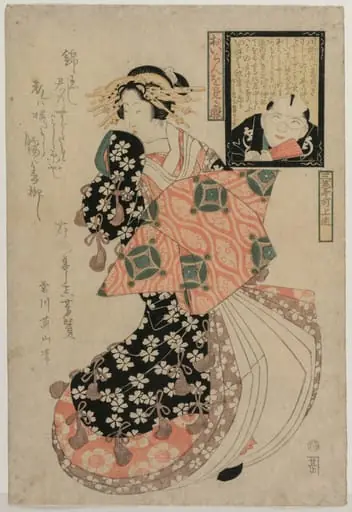
A woman in a black kimono with a red obi stands beside a child dressed in pink, both facing a temple nestled near water. The woman holds a circular object, likely a mirror or fan, while the child gazes upward. The scene evokes maternal tenderness and spiritual reflection, aligning with the temple’s association with the moon and Buddhist contemplation. The composition suggests a private, meditative pause amid a revered pilgrimage site.
Technique & Style
Eizan employed delicate line work and soft, layered pigments typical of early 19th-century ukiyo-e. The sky transitions subtly from pale to deeper blue, with wisps of cloud rendered in faint washes. Figures are outlined with precision, their garments rendered in flat, harmonious tones. The water’s surface reflects the sky and architecture with minimal detail, enhancing the quiet mood through restraint rather than elaboration.
History & Provenance
The print was produced during the Bunka era, a time when ukiyo-e artists increasingly turned to intimate, literary subjects over dramatic narratives. As part of a series referencing the classical Eight Views of Ōmi, it reflects a trend of reinterpreting ancient poetic landscapes for Edo’s middle-class audiences. The Cleveland Museum of Art acquired the work in the 20th century, preserving its place in the Western canon of Japanese prints.
Context
Ishiyamadera Temple, located near Lake Biwa, had long been a site of literary and religious significance, celebrated in poetry for its autumn moonlit views. Eizan’s version adapts this tradition to contemporary fashion and domestic life, replacing monks with a mother and child. The series responded to urban tastes that favored refined, emotionally resonant scenes over bold action, signaling a shift in ukiyo-e’s cultural role.
Legacy
Eizan’s Autumn Moon at the Temple Ishiyamadera exemplifies the late Edo period’s move toward lyrical, intimate ukiyo-e. Its quiet composition influenced later artists who prioritized mood over spectacle. Though not widely reproduced, the print remains a key example of how traditional themes were reimagined for a changing society, bridging classical aesthetics with everyday human experience.
Artist & collection

Artist
Kikukawa Eizan was a designer of ukiyo-e style Japanese woodblock prints. He first studied with his father, Eiji, a minor painter of the Kanō school, and subsequently with Suzuki Nanrei (1775–1844), of the Shijō…

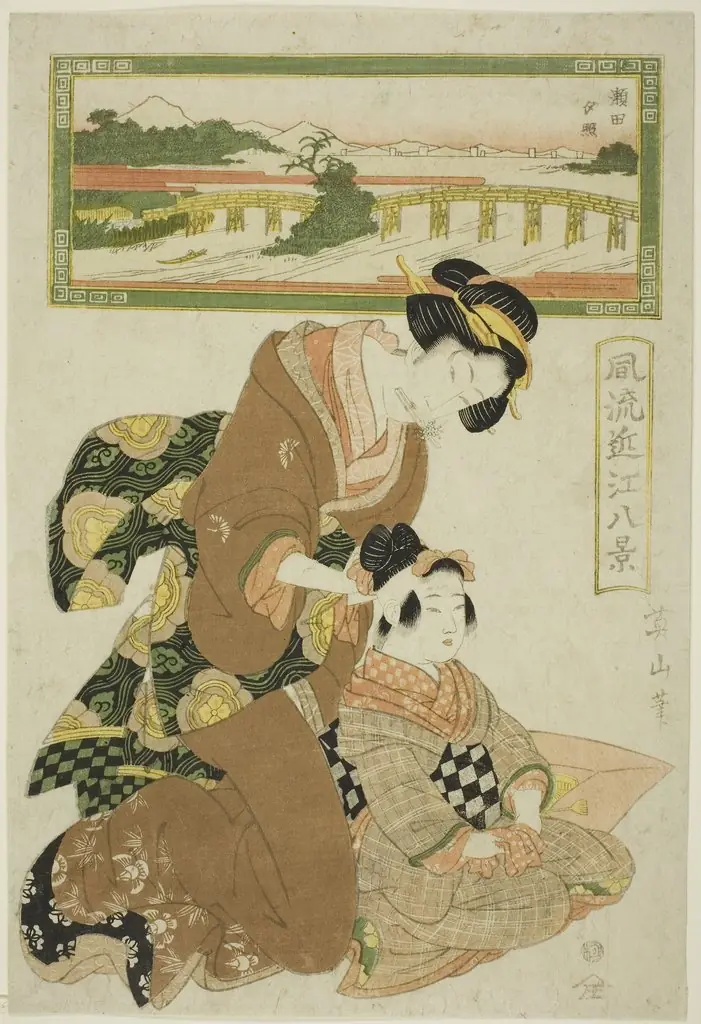 Evening Glow at Seta (Seta sekisho), from the series "Fashionable Eight Views of Omi (Furyu Omi hakkei)"
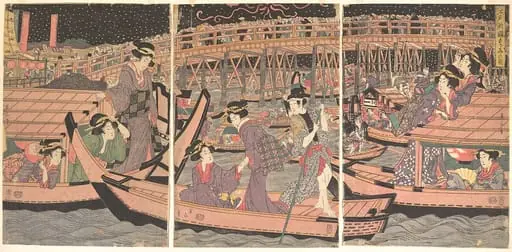 Untitled
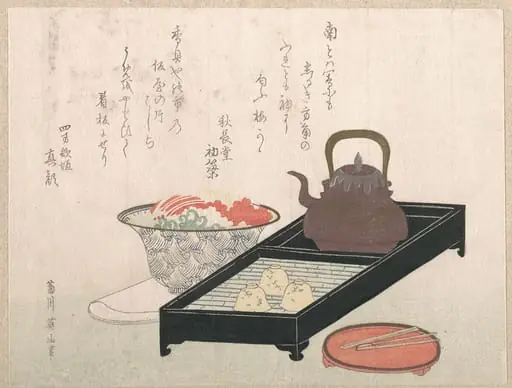 Untitled
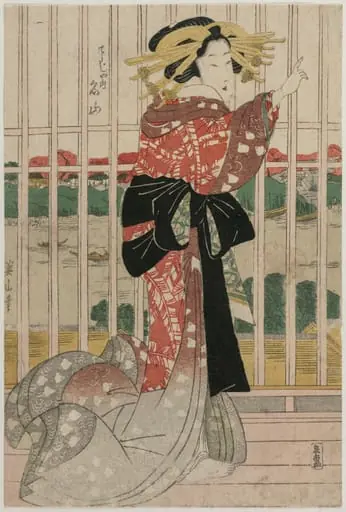 The Courtesan Meizan of the Chojiya on a Balcony Overlooking the Sumida River
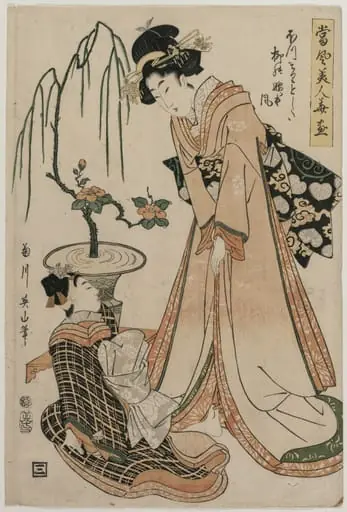 A Lady-in-Waiting with Waist as Slender as a Willow from the series Flowers and Modern Beauties
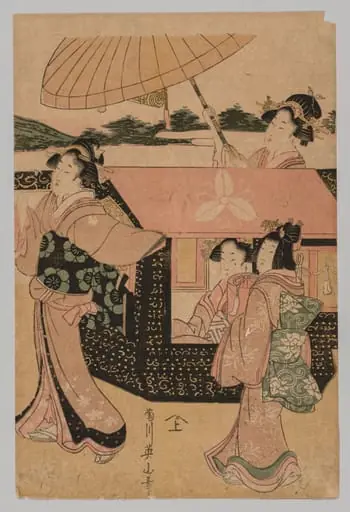 No Title
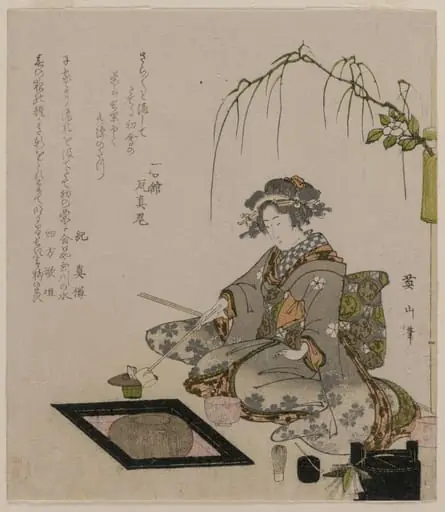 Woman Performing the Tea Ceremony
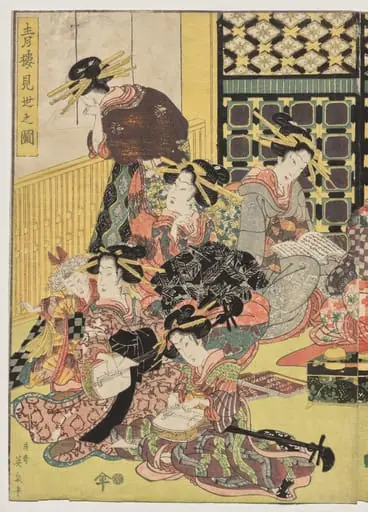 A Picture of the Viewing in the Pleasure Quarters
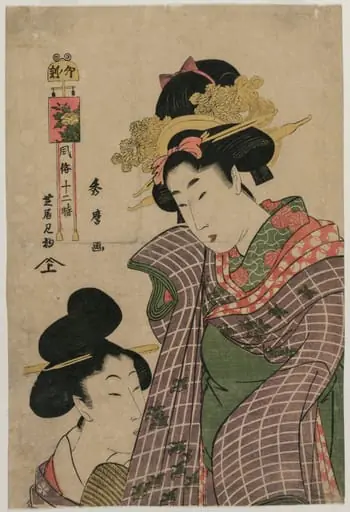 Going to the Kabuki Theater in the Hour of the Hare (From the Series The Twelve Hours with Daily Events)
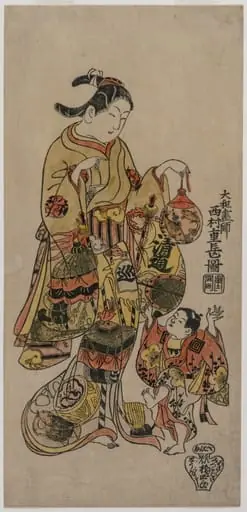 Child Reaching for a Fishbowl
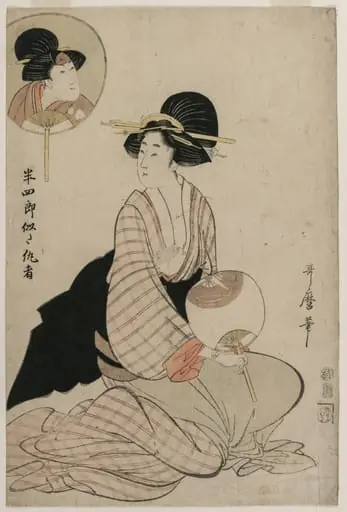 An Attractive Woman Who Looks Like the Actor Iwai Hanshiro V
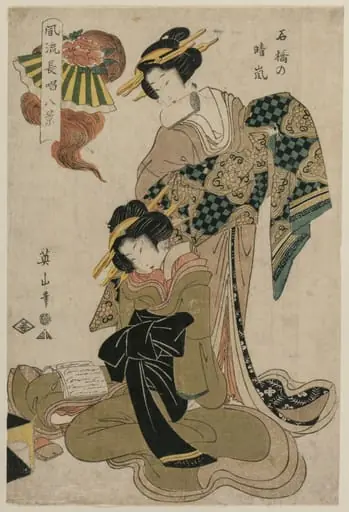 Haze on a Clear Day at Stone Bridge (From the series Eight Elegant Views of Chanted Accompanimnets for Kabuki Plays)
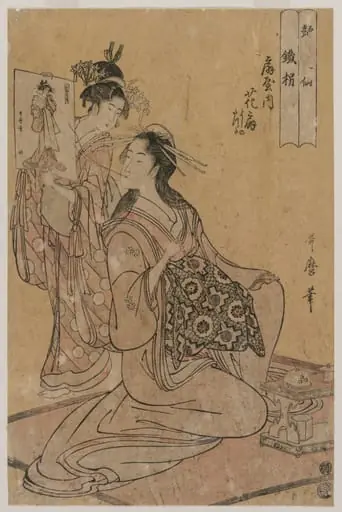 The Courtesan Hana-ogi of Ogiya as the Sennin Tekkai (from the series Eight Immortals of Sensuality)
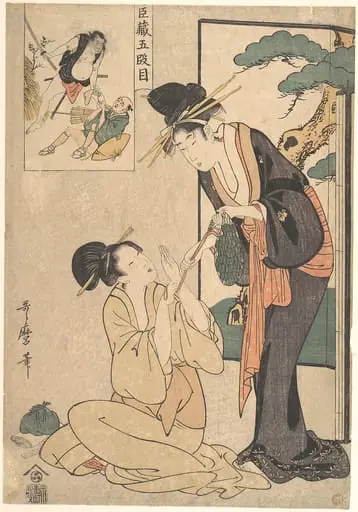 忠臣蔵五段目|A Woman Snatching a Bag of Sweetmeats from Her MotHer
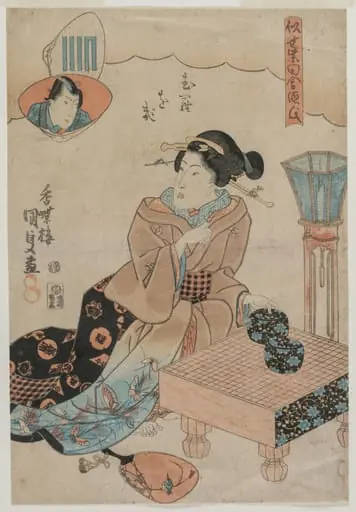 Muraogi, from the series The False Murasaki's Rustic Genji (Nise Murasaki Inaka Genji)
 Eyes for Looking at a Courtesan
 琉球八景 泉崎夜月|Evening Moon at Izumizaki (Izaumizaki yagetsu), from the series Eight Views of the Ryūkyū Islands (Ryūkyū hakkei)