Artwork
Child Reaching for a Fishbowl
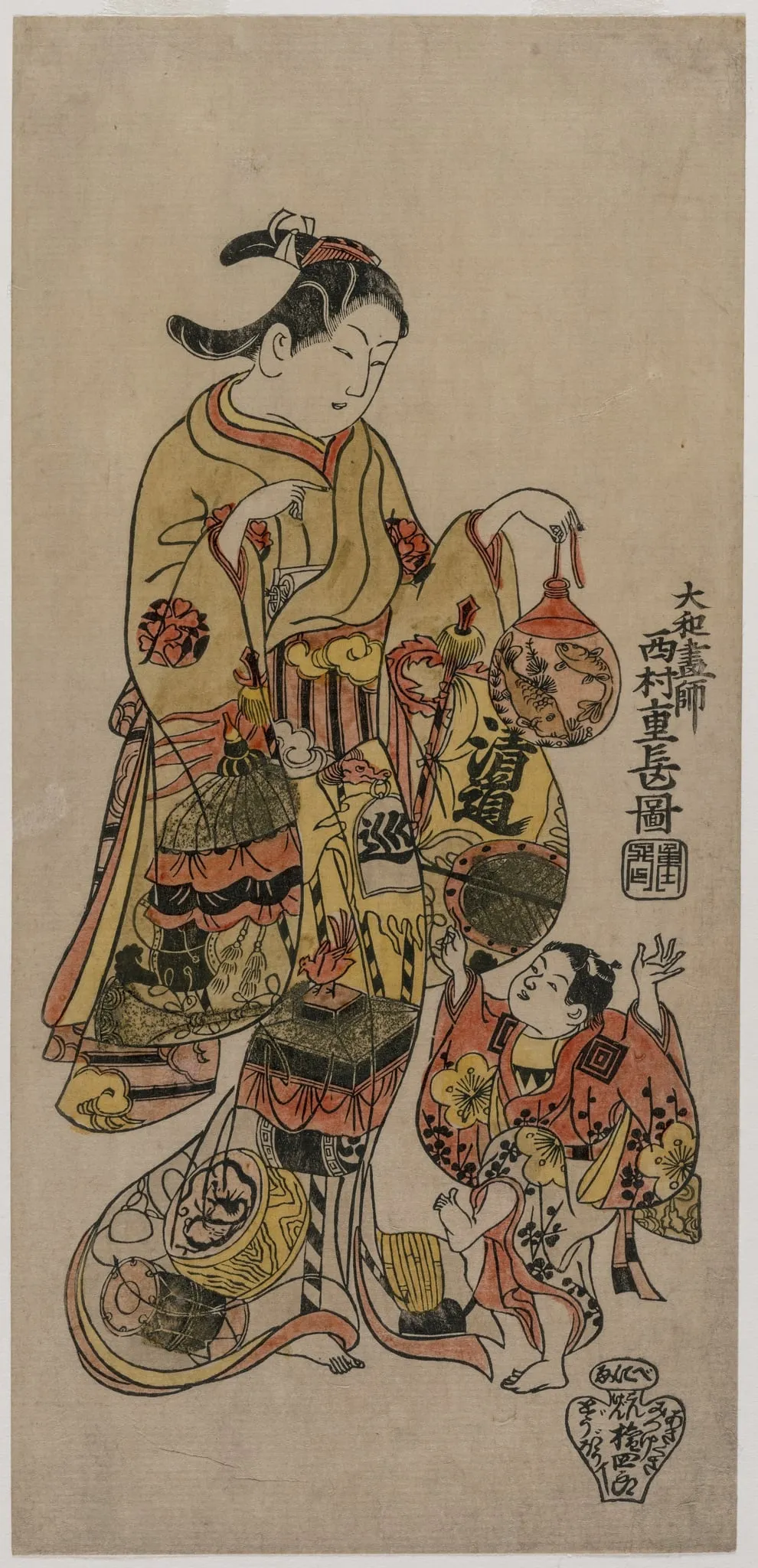
Child Reaching for a Fishbowl is a print by the Baroque artist Nishimura Shigenaga. It dates from 1724 and is held in the collection of the Cleveland Museum of Art.
About this work
Overview
Child Reaching for a Fishbowl is an early hand-colored print that incorporates urushi-e, a technique combining black pigment with a glue overlay to achieve a lacquer-like sheen.
Subject & Meaning
The print depicts a child in a red kimono reaching for a fishbowl placed on a low table covered in gold brocade. The bowl contains water with tiny black fish, while the child's gesture conveys curiosity or longing.
Technique & Style
The urushi-e technique is prominently featured, with glue applied over black ink areas to create a lustrous effect. Additional luxury details include metal filings on the woman's (presumably the child's companion, though not described in action) kimono, embellishing parasols, a fan, and musical instruments.
History & Provenance
Created during the Edo period, the print's specific origins and ownership history are not detailed here. It is now part of the collection at the Cleveland Museum of Art.
Context
This work reflects the Edo period's aesthetic values, emphasizing luxury and subtle texture through innovative printing techniques like urushi-e.
Legacy
As part of the Cleveland Museum of Art's Edo-period print collection, it contributes to the understanding and appreciation of Japanese ukiyo-e woodblock printing's technical and artistic evolution.
Artist & collection
Artist
Nishimura Shigenaga spent his life in Edo, a city now called Tokyo, where he carved and printed pictures for a living.

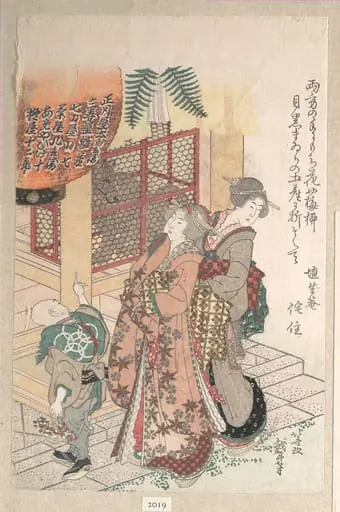 初詣|Young Women Visiting a Shinto Shrine
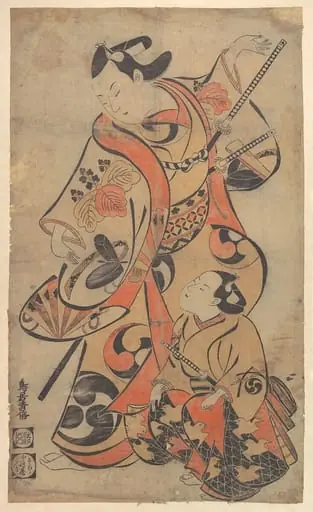 Untitled
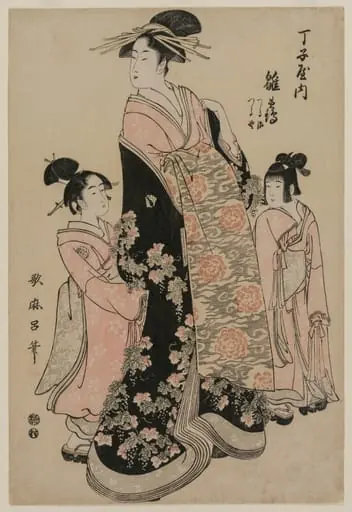 The Courtesan Hinazuru of Chojiya with her Attendants Tsuruji and Tsuruno
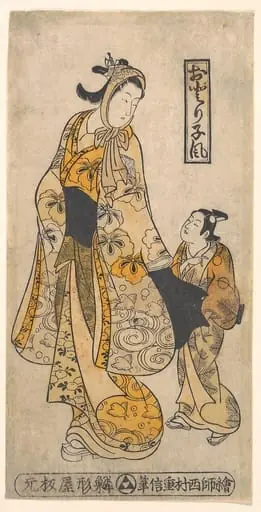 Odari Kafu|Style of the Dancer
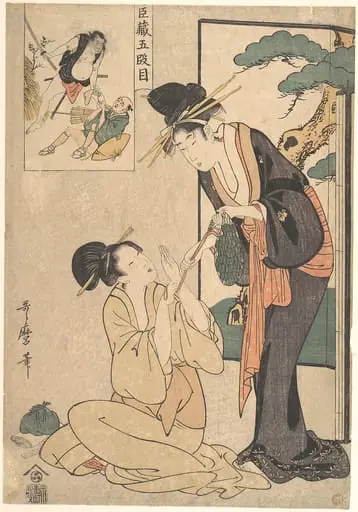 忠臣蔵五段目|A Woman Snatching a Bag of Sweetmeats from Her MotHer
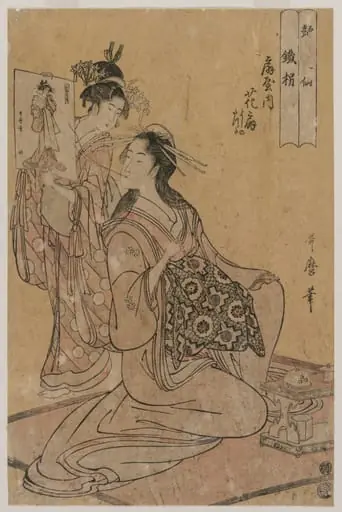 The Courtesan Hana-ogi of Ogiya as the Sennin Tekkai (from the series Eight Immortals of Sensuality)
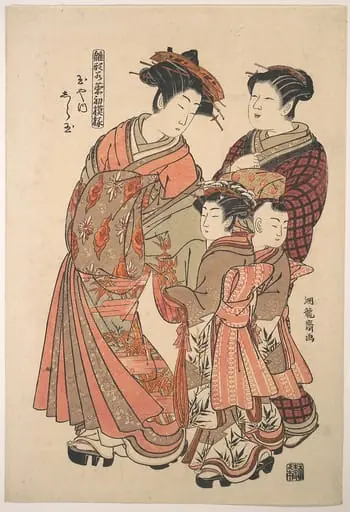 『雛形若菜初模様 玉や内 しら玉』|The Courtesan Shiratama of the Tamaya Brothel, from the series “A Pat-tern Book of the Year’s First Designs, Fresh as Spring Herbs” (“Hinagata wakana hatsu moyō”)
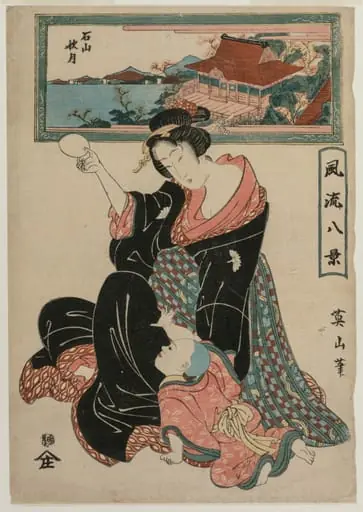 Autumn Moon at the Temple Ishiyamadera from the series Fashionable Eight Views
 相模屋亭主|Actor as Master of Sagamiya (Sagamiya teishu)
 Chōdayu of the Okamotoya from the series ?
 Sanjo Kantaro as a Young Woman Standing in a Wisteria Arbor
 Fujimura Handayu as a Courtesan