Artwork
Bernhard, Abbot of the Monastery of Saint Udalric and Afra in Augsburg
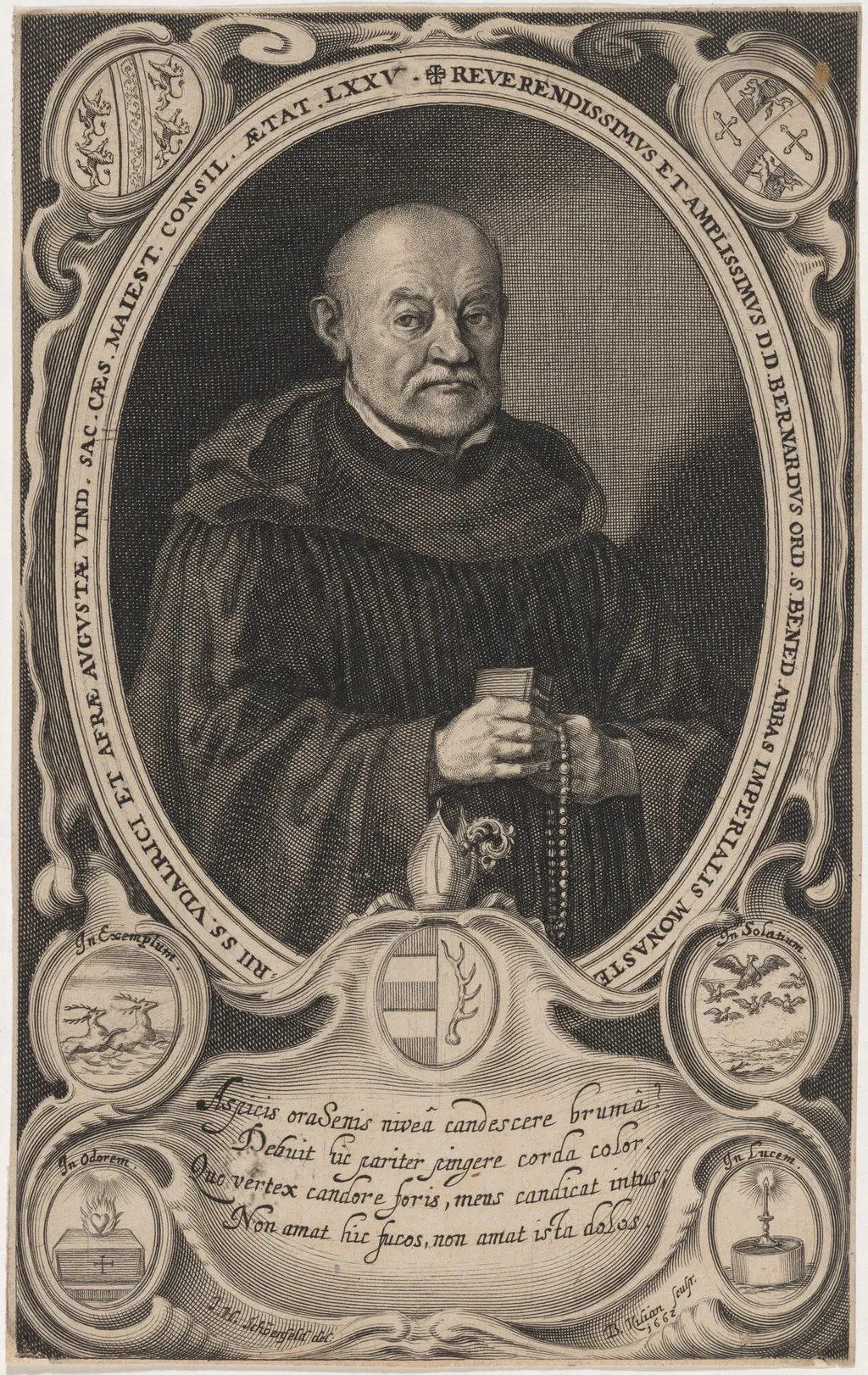
Bernhard, Abbot of the Monastery of Saint Udalric and Afra in Augsburg is an ink print by the Baroque artist Bartholomaus Kilian. It dates from 1662 and is held in the collection of the National Gallery of Art.
About this work
Overview
This 1662 engraving by Bartholomaus Kilian depicts Bernhard, abbot of the Benedictine monastery of Saint Udalric and Afra in Augsburg.
This 1662 engraving by Bartholomaus Kilian depicts Bernhard, abbot of the Benedictine monastery of Saint Udalric and Afra in Augsburg. Rendered in monochrome on laid paper, the portrait follows the conventions of ecclesiastical portraiture of the period. The image was produced through the intaglio technique, allowing fine lines to define form and texture with precision, typical of printed religious figures intended for institutional or devotional use.
Subject & Meaning
The abbot is portrayed with solemn dignity, dressed in dark monastic robes, holding a rosary in one hand and a small object—likely a ring or key—in the other. These items symbolize spiritual authority and administrative responsibility within the monastery. The surrounding Latin inscription and heraldic crests reinforce his ecclesiastical status and institutional affiliation, framing him not merely as an individual but as a representative of the abbey’s legacy.
Technique & Style
Kilian employed fine-line engraving to render the abbot’s facial features, fabric folds, and ornamental border with meticulous detail. The use of cross-hatching and controlled etching creates tonal variation without color, relying on contrast and line density to suggest volume and texture. The decorative frame, with its heraldic emblems and Latin text, reflects the formal aesthetic of 17th-century ecclesiastical portraiture, emphasizing hierarchy and tradition.
History & Provenance
Created in 1662, the print likely served as an official portrait for the monastery’s archives or as a gift to patrons and allied institutions. Its production coincided with the Counter-Reformation’s emphasis on visual representation of religious authority. While its early ownership is undocumented, such engravings were commonly circulated among monastic networks in southern Germany, reinforcing communal identity and clerical legitimacy.
Context
In mid-17th-century Augsburg, Benedictine abbeys maintained significant cultural and political influence. Portraits like this were part of a broader practice of using print to assert institutional prestige. The inclusion of heraldry and Latin inscriptions aligned with contemporary norms in clerical representation, where visual symbols communicated lineage, jurisdiction, and spiritual authority to both literate and illiterate audiences.
Legacy
The engraving remains a representative example of religious portraiture in early modern Germany, illustrating how print media sustained the visibility of monastic leadership. Though not widely known outside regional archives, it contributes to the understanding of how ecclesiastical authority was visually constructed and disseminated during a period of religious consolidation and institutional self-definition.
Artist & collection

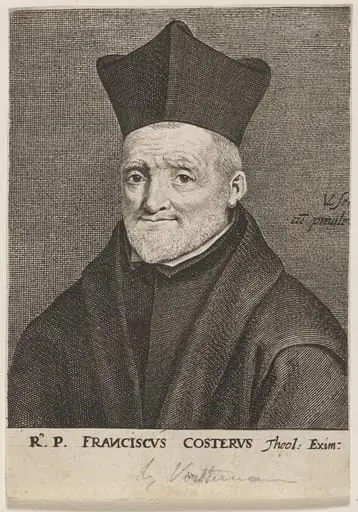 R. P. Francis Coster
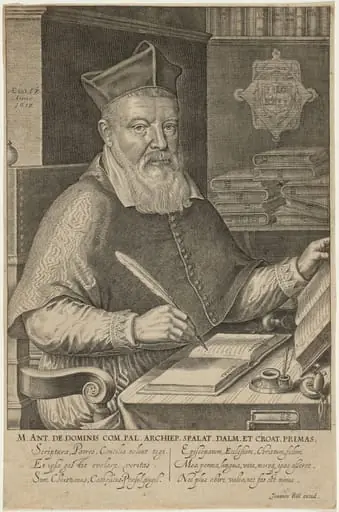 Marc Antonis De Dominis
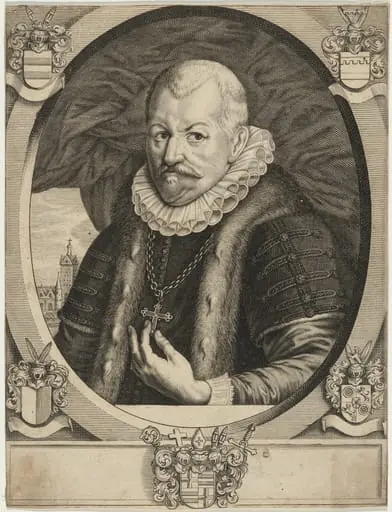 Portrait of a Man With Cross Around Neck
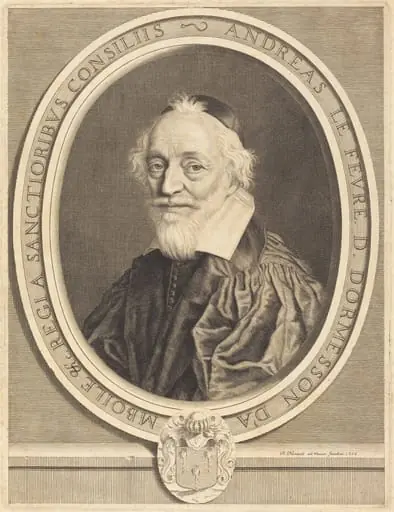 Andre Le Fevre d'Ormesson
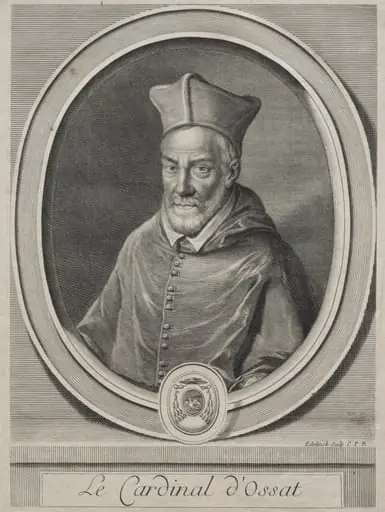 Cardinal Arnaud d'Ossat
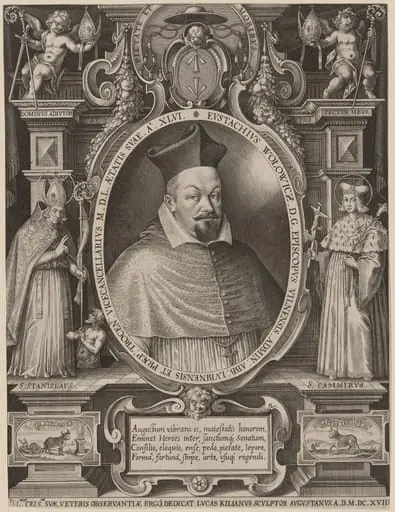 Eustace Wolowicz, Archbishop of Vilna
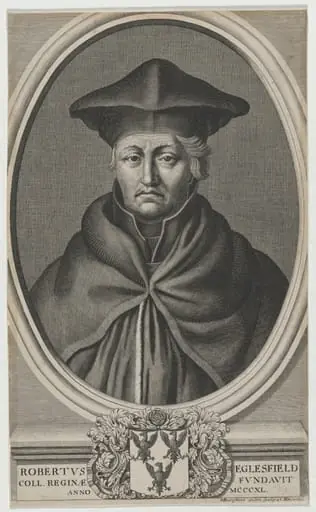 Robert Eglesfield, Founder of Queen's College, Oxford
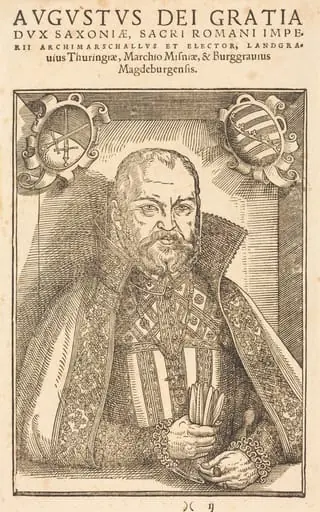 Augustus Hertzog zu Sachsen
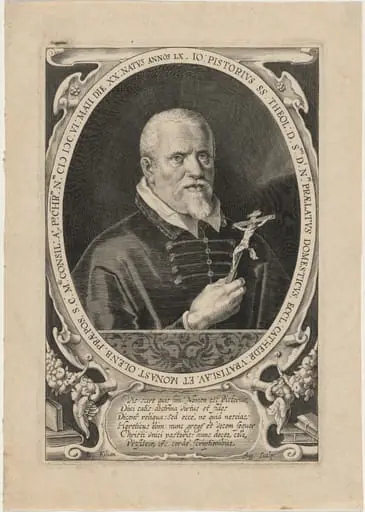 Johannes Pistorius, Divine
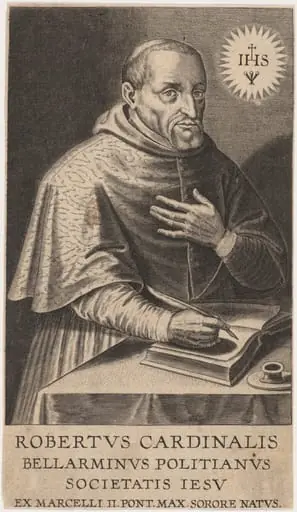 Roberto, Cardinal Bellarminus
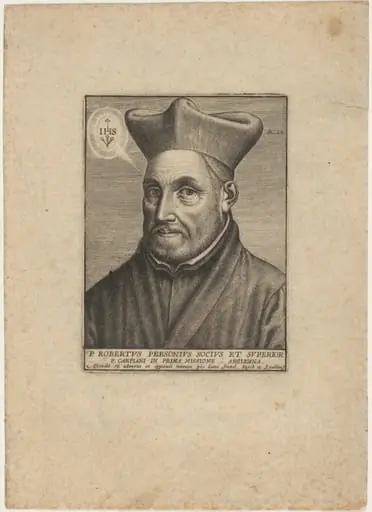 Robert Parsons, Jesuit Missionary
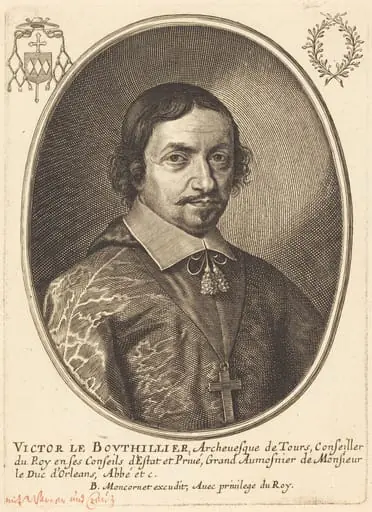 Victor Bouthillier