Artwork
Robert Eglesfield, Founder of Queen's College, Oxford
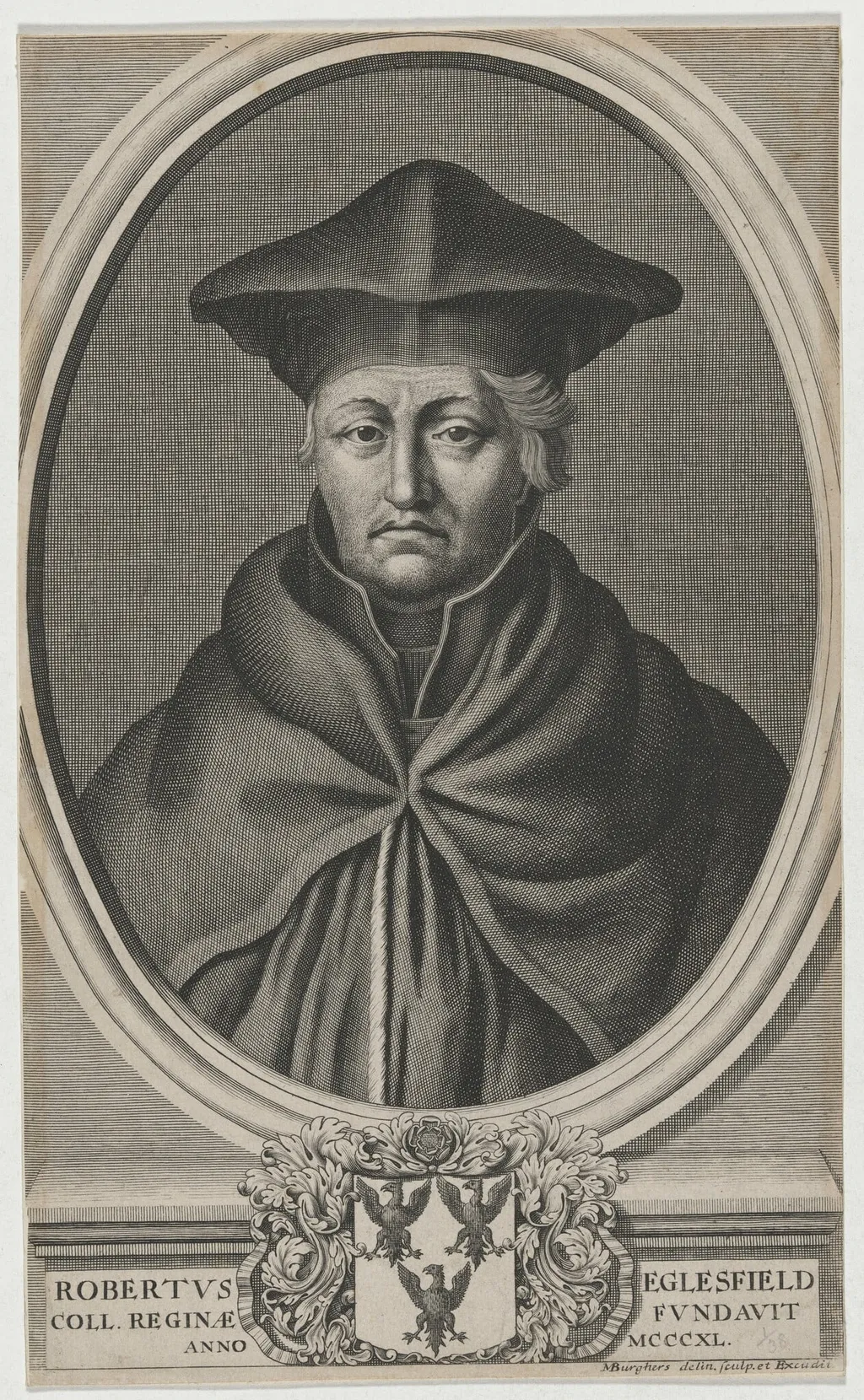
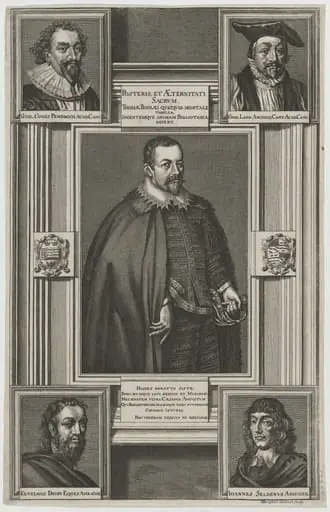
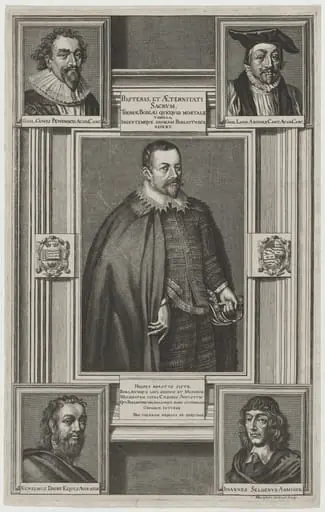
Robert Eglesfield, Founder of Queen's College, Oxford is an ink print by the Baroque artist Michael Burghers. It dates from 1682 and is held in the collection of the National Gallery of Art.
About this work
Overview
Executed in the Baroque tradition, the portrait presents Eglesfield in formal ecclesiastical attire, rendered with precise line work.
This 1682 engraving by Michael Burghers portrays Robert Eglesfield, the 14th-century founder of Queen’s College, Oxford. Executed in the Baroque tradition, the portrait presents Eglesfield in formal ecclesiastical attire, rendered with precise line work. The composition is centered and static, emphasizing dignity over dynamism. The plain background focuses attention on the figure’s posture and garments, typical of scholarly portraiture of the period.
Subject & Meaning
Robert Eglesfield is depicted as a solemn, authoritative figure, his high collar and wide-brimmed hat suggesting clerical status and academic gravitas. The portrait does not reference his founding role through symbols or setting, instead relying on his dignified bearing to convey legacy. His direct gaze and stillness evoke a sense of enduring authority, aligning with the 17th-century practice of honoring institutional founders through restrained, reverent imagery.
Technique & Style
Burghers employed fine cross-hatching to model fabric folds and the texture of the hat and collar, creating subtle tonal variation without color. The engraving’s linear precision reflects the technical discipline of printmaking in late 17th-century England. The absence of landscape or architectural context narrows focus to the individual, a convention common in academic portraiture where character, not circumstance, was paramount.
History & Provenance
Created in 1682, the engraving was likely commissioned to commemorate Queen’s College’s institutional identity during a period of renewed interest in its origins. Burghers, a Dutch-born engraver active in Oxford, produced numerous portraits for the university. This print may have been used in college records or distributed to dignitaries, reinforcing the college’s historical continuity through visual representation.
Context
In late 17th-century England, universities increasingly turned to portraiture to legitimize their histories. Eglesfield’s image aligns with broader trends in academic commemoration, where founders were depicted in period-appropriate dress, often anachronistically. The Baroque emphasis on realism and psychological presence informed the engraving’s solemn tone, though it lacks the dramatic lighting seen in continental works by Caravaggio or Rembrandt.
Legacy
The engraving remains one of the earliest visual records of Queen’s College’s founder, serving as a reference for later depictions. Its restrained style reflects the college’s preference for understated tradition over theatrical display. Though not widely reproduced beyond academic circles, it endures as a document of institutional memory, preserving the imagined likeness of a medieval benefactor through early modern print culture.
Artist & collection


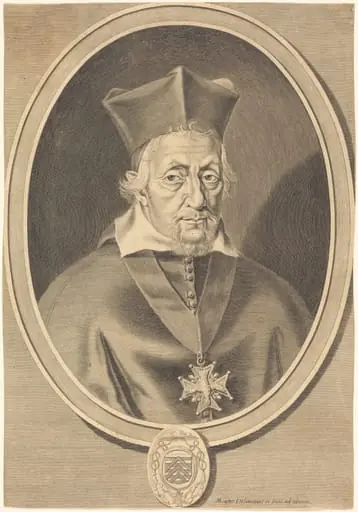 François La Rochefoucauld
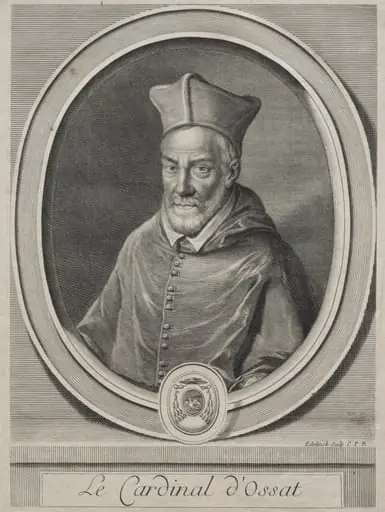 Cardinal Arnaud d'Ossat
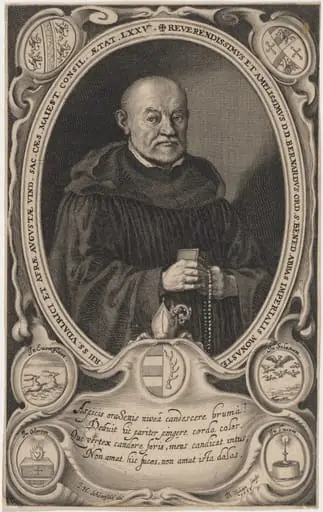 Bernhard, Abbot of the Monastery of Saint Udalric and Afra in Augsburg
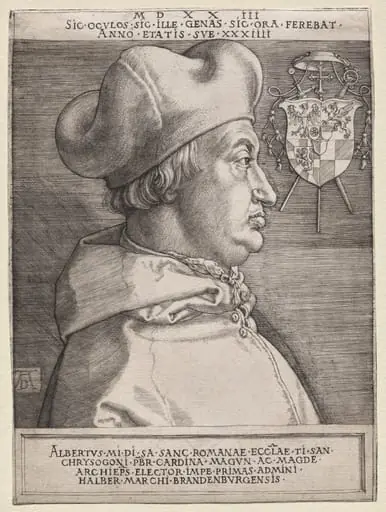 Cardinal Albrecht of Brandenburg - the Large Plate
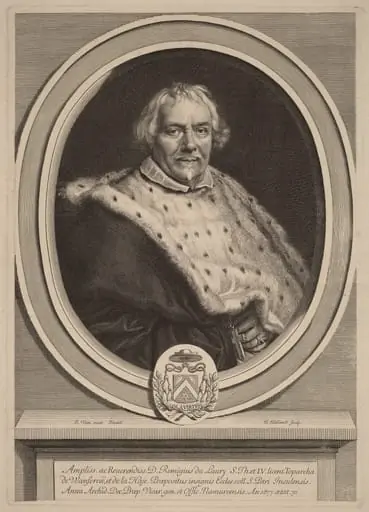 Remi Du Laury
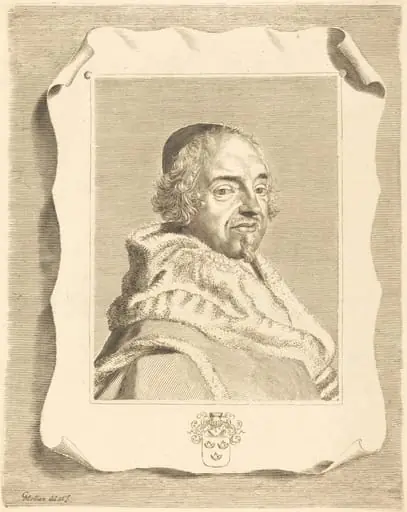 François-Théodore de Nesmond
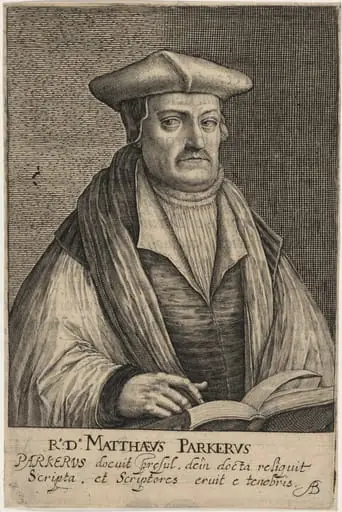 Matthew Parker, Archbishop of Canterbury
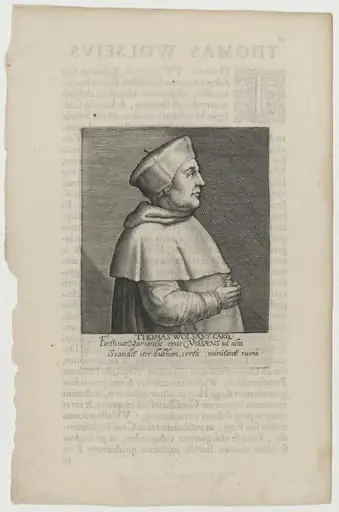 Thomas Wolsey, Cardinal
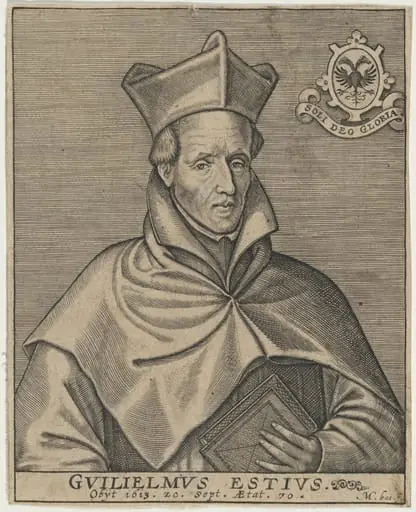 William Estius, Catholic Priest
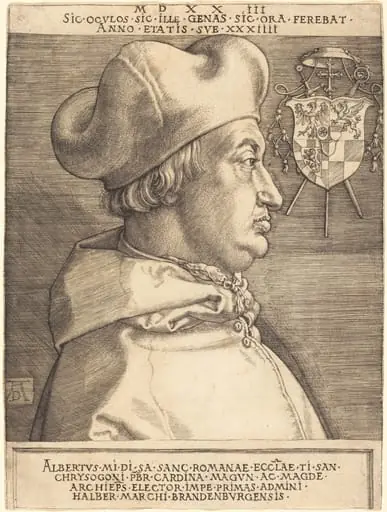 Cardinal Albrecht of Brandenburg ("Large Cardinal")
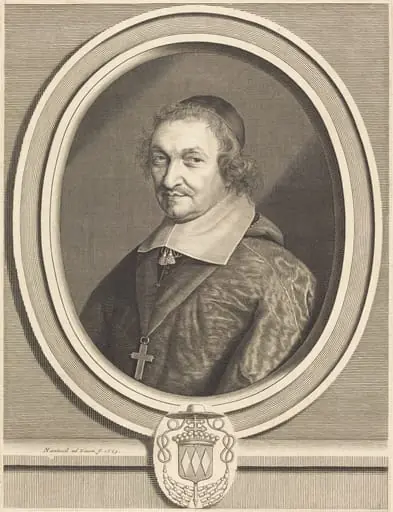 Victor Bouthillier
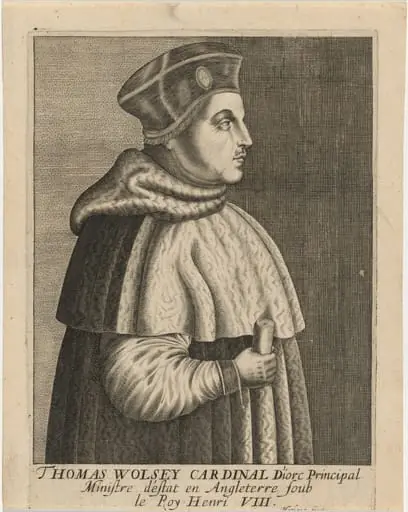 Thomas Wolsey, Cardinal, Lord Chancellor, Archbishop of York