Artwork
Georg Paul Jenisch
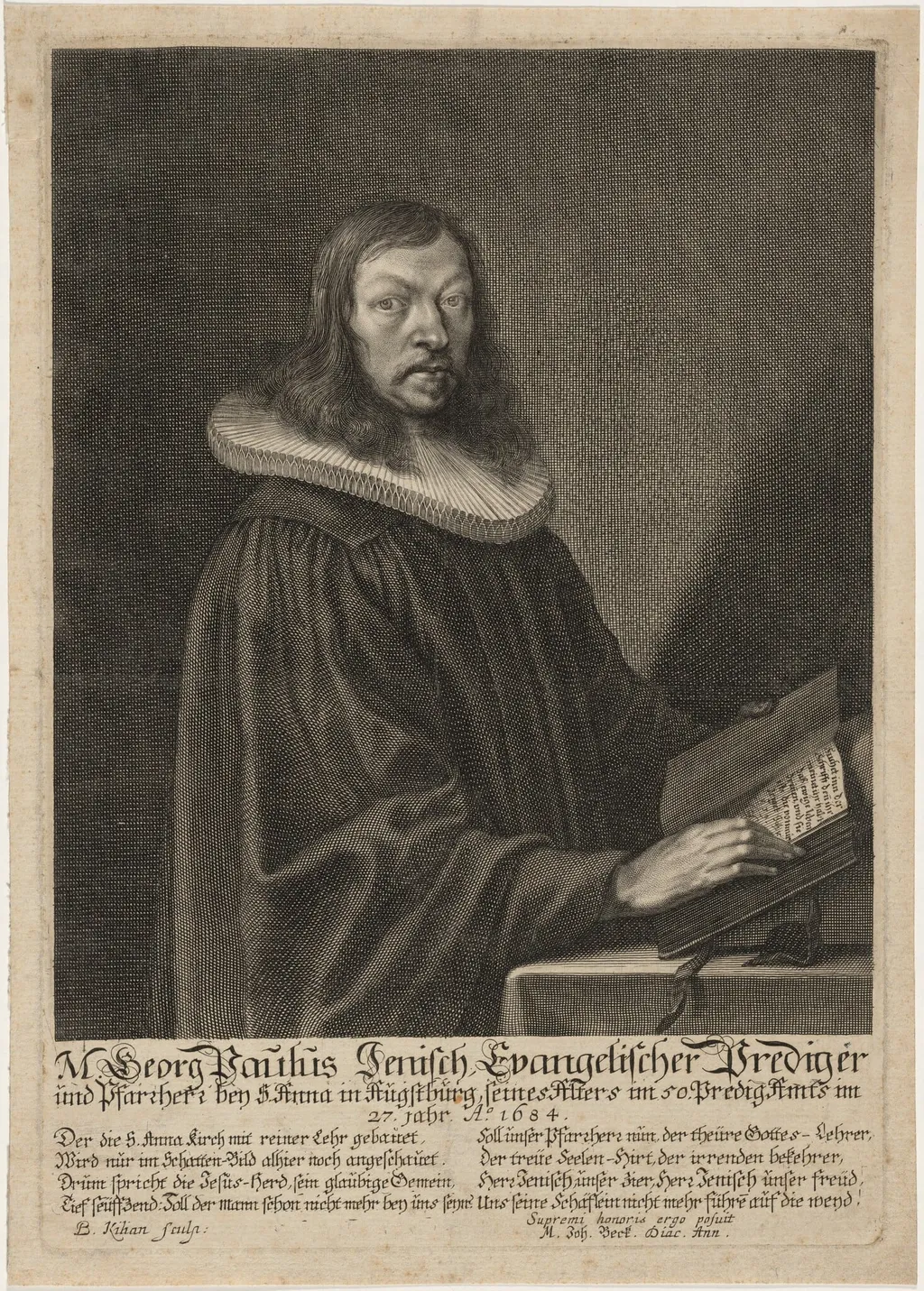
Georg Paul Jenisch is an ink print by the Baroque artist Bartholomaus Kilian. It dates from 1684 and is held in the collection of the National Gallery of Art.
About this work
Overview
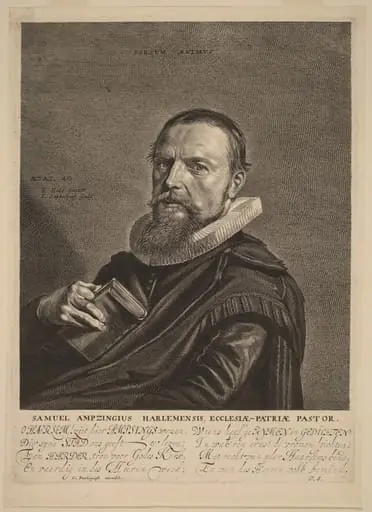
This 1684 engraving by Bartholomaus Kilian depicts Georg Paul Jenisch, a German preacher, rendered in monochrome on laid paper. The image is a portrait carved into a metal plate and transferred to paper, characteristic of printmaking techniques of the late 17th century. The composition is formal, emphasizing the subject’s intellectual and clerical identity through posture and attire.
Subject & Meaning
Jenisch, aged 27 at the time, is portrayed as a learned clergyman, holding a book and a sheet of paper—symbols of scripture and sermon. His serious expression, short beard, and detailed facial lines convey solemnity and introspection. The inclusion of his age and profession in German text anchors the image as a biographical record, typical of scholarly portraiture in Protestant regions.
Technique & Style
Kilian employed fine linear engraving to render texture and form, using precise incisions to define the lace collar, fabric folds, and facial contours. The absence of tone or wash emphasizes line and contrast, typical of copperplate engravings. The paper’s laid texture subtly enhances the print’s tactile quality, reinforcing its handcrafted nature.
History & Provenance
Created in 1684, the print likely served as a portrait for academic or ecclesiastical circulation, common among Protestant clergy of the era. No detailed ownership history is recorded, but such engravings were often distributed in scholarly circles or retained in family archives. Its survival suggests it was valued as a personal or institutional keepsake.
Context
In late 17th-century Germany, engraved portraits of clergy were used to affirm social and religious status. Printmaking allowed for wider dissemination than painted portraits, making them ideal for documenting figures like Jenisch, whose influence was local but significant within their communities. The medium reflected both technical skill and cultural reverence for literacy.
Legacy
The engraving endures as an example of Baroque-era print portraiture, illustrating how religious figures were visually codified in print culture. While Jenisch himself is not widely known beyond regional records, the work preserves a moment of individual identity within a broader tradition of clerical representation through mechanical reproduction.
Artist & collection