Artwork
The South Prospect of the New Quadrangle of Christ Church in Oxford
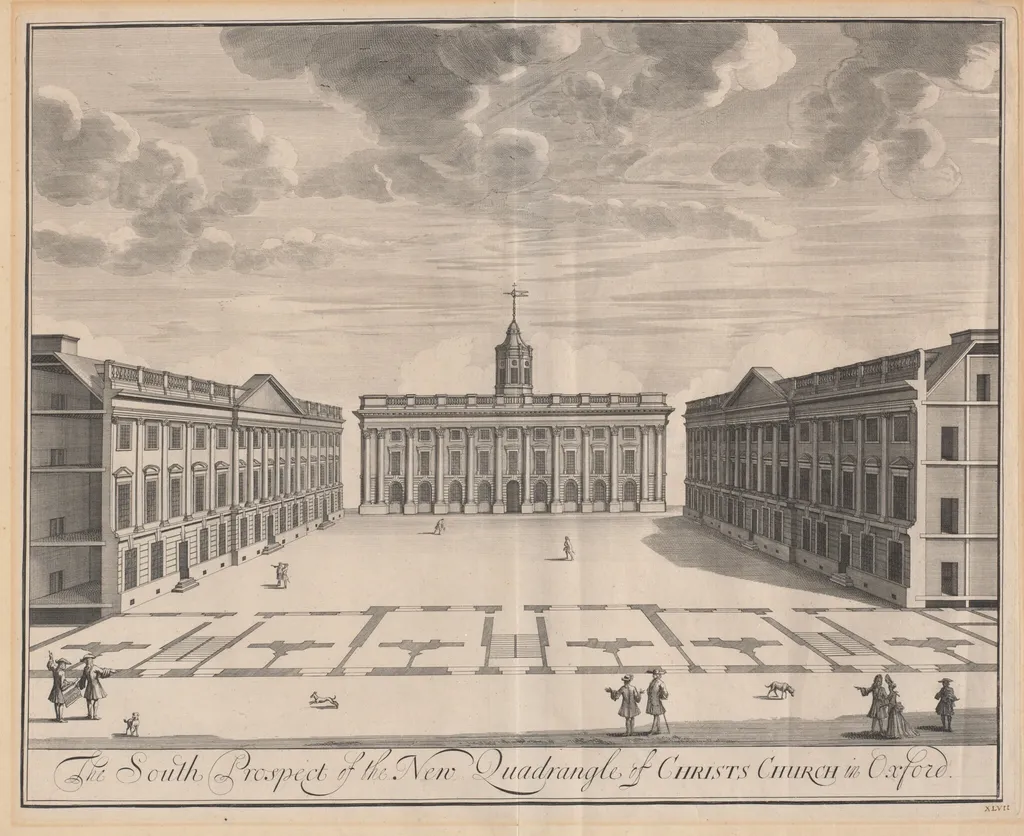
The South Prospect of the New Quadrangle of Christ Church in Oxford is an ink print by the Baroque artist Johannes Kip. It dates from 1707 and is held in the collection of the National Gallery of Art.
About this work
Next, check out the technique: etching to see how artists like Kip made prints like this.
This print shows a long, empty courtyard with three matching buildings on either side. The center building has tall columns and a clock tower. People and a dog walk along the paths, and the sky above is dotted with fluffy clouds.
The title at the bottom tells us this is Christ Church in Oxford, drawn in 1707. The artist used a sharp, precise style to show every detail of the stone and windows.
Next, check out the technique: etching to see how artists like Kip made prints like this.
Overview
Created in 1707 by Dutch artist Johannes Kip, this print captures the newly completed south quadrangle of Christ Church, Oxford. Executed in etching and engraving on laid paper, it belongs to a growing tradition of topographical prints that documented English institutional architecture. Kip’s precision in rendering stone, windows, and spatial depth reflects his specialization in architectural views, made for audiences interested in the built environment of elite institutions.
Subject & Meaning
The print presents a symmetrical, empty courtyard framed by three identical buildings, emphasizing order and institutional permanence. The central structure, marked by tall columns and a clock tower, anchors the composition, signaling the college’s academic and ceremonial authority. Sparse figures and a single dog suggest quiet daily activity, reinforcing the setting as a place of study and contemplation rather than public spectacle.
Technique & Style
Kip employed fine-line etching and engraving to achieve meticulous detail in the stonework, window tracery, and cloud formations. The use of laid paper, with its subtle texture, enhanced the tonal range of the print. His style is clinical and measured, avoiding dramatic lighting or emotional flourish; instead, he prioritizes accuracy, allowing the architecture itself to convey presence and scale.
History & Provenance
Kip, a Dutch expatriate working in England, produced this print as part of a series documenting English country houses and academic buildings. He often collaborated with Leonard Knyff, though this work is attributed solely to him. The print likely served as a record for patrons and scholars, circulating among those with interest in Oxford’s architectural development during the early 18th century.
Context
This print emerged during a period of renewed interest in institutional architecture following the Restoration. Christ Church’s new quadrangle, completed in the late 17th century, symbolized the college’s revival and alignment with classical ideals. Such engravings were not merely decorative but functioned as visual documentation, contributing to the cultural prestige of Oxford and the broader English academic landscape.
Legacy
Kip’s work helped establish a visual language for English academic architecture, influencing later topographical artists and publishers. While not widely known today, his prints remain valuable historical records, offering insight into how institutions presented themselves through built form. The precision and restraint of this etching reflect a broader 18th-century shift toward empirical representation in visual culture.
Artist & collection

Artist
Johannes "Jan" Kip (1652/53 in Amsterdam – 1722 in Westminster) was a Dutch draftsman, engraver and print dealer. Together with Leonard Knyff, he made a speciality of engraved views of English country houses.

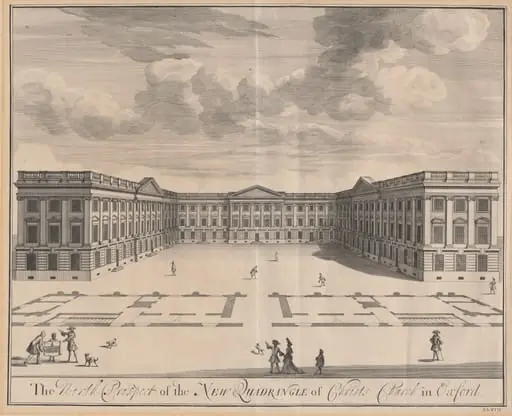
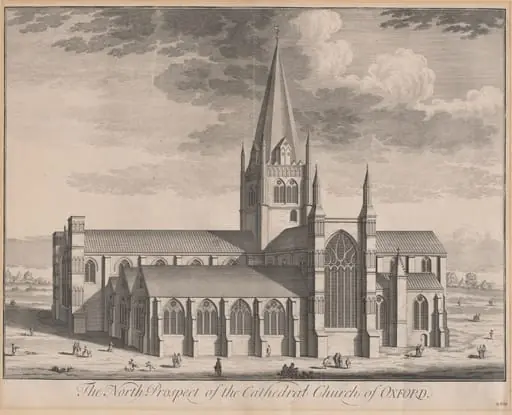
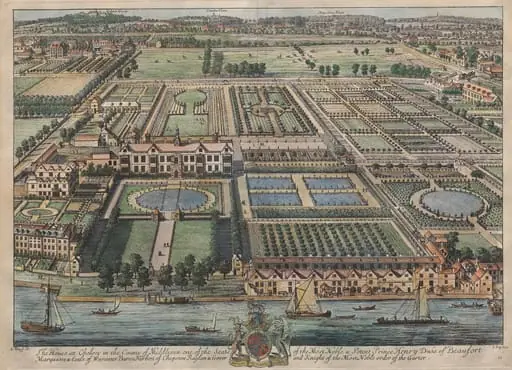
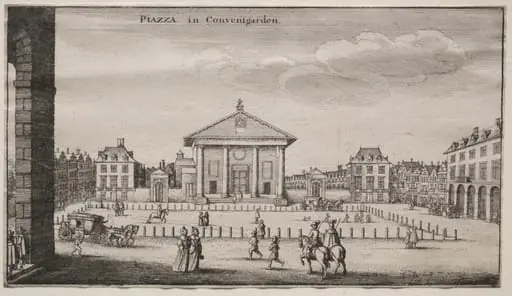 Views of London: The Piazza in Covent Garden
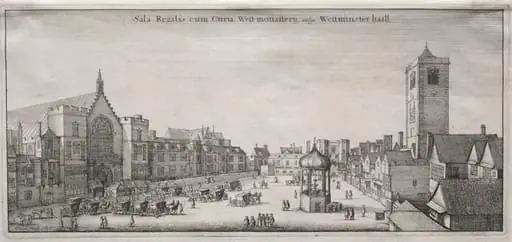 View of London: New Palace Yard with Westminster Hall, and the Clock House
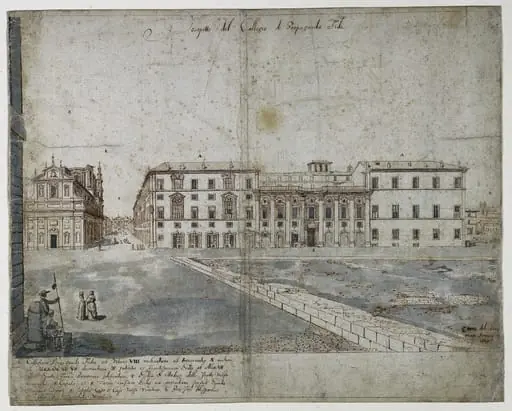 Eighteen Views of Rome: The Collegio di Propaganda Fide (recto)
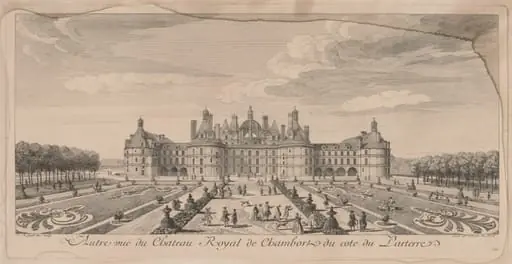 Chateau Chambord from the Gardens
 Milsom Street in Bath
 The Inner Courtyard of Old Somerset House in the Strand
 Veüe générale de la Ville et du Chateau de Versailles du côté des Jardins (View of Versailles)
 H Beard Print Collection
 Topographical drawing
 H Beard Print Collection