Artwork
View of London: New Palace Yard with Westminster Hall, and the Clock House
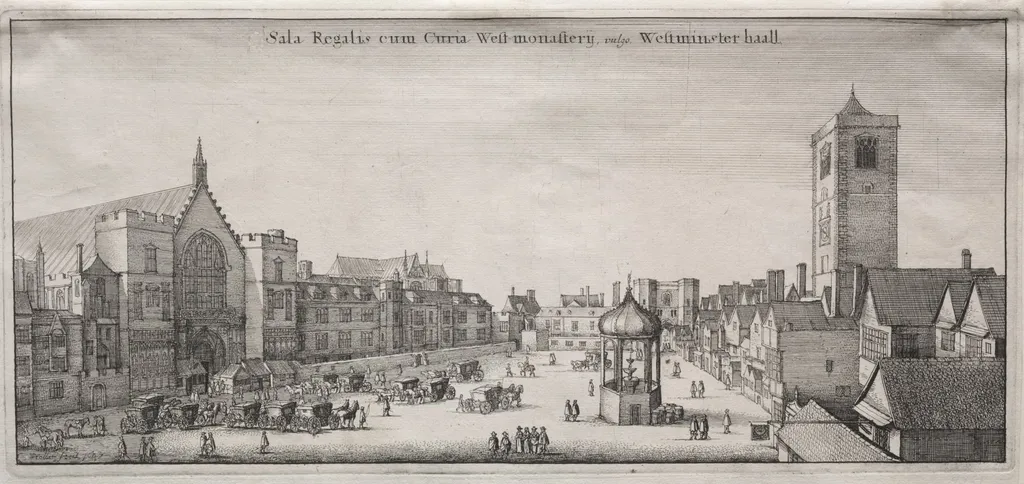
View of London: New Palace Yard with Westminster Hall, and the Clock House is a print by the Baroque artist Wenceslaus Hollar. It dates from 1647 and is held in the collection of the Cleveland Museum of Art.
About this work
Overview
As a Bohemian artist settled in England, Hollar documented the city’s architecture with meticulous attention to structural detail.
Created in 1647 by Wenceslaus Hollar, this print presents a precise topographical view of New Palace Yard in London, centered on Westminster Hall and the adjacent Clock House. As a Bohemian artist settled in England, Hollar documented the city’s architecture with meticulous attention to structural detail. The work belongs to a broader tradition of urban record-keeping through print, reflecting both the physical layout and social activity of mid-seventeenth-century London.
Subject & Meaning
The scene captures a working civic space: Westminster Hall, a medieval judicial building, stands on the left, while the Clock House—later part of the Palace of Westminster—rises on the right. Figures in period dress and horse-drawn vehicles populate the courtyard, suggesting daily administrative and commercial life. The central pavilion and flagpole imply ceremonial presence, reinforcing the site’s political significance without overt symbolism.
Technique & Style
Hollar employed fine-line etching to render textures with exceptional clarity: cobblestones, fabric folds, timber framing, and roof tiles are all delicately incised. The composition uses linear perspective to guide the eye toward the hall’s gabled end, while overlapping forms suggest depth. His technique prioritizes accuracy over dramatic effect, aligning with the empirical spirit of topographical engraving in the Baroque era.
History & Provenance
Hollar produced this print during his decades-long residence in England, where he worked for patrons including the Earl of Arundel. Created in 1647, it predates the Great Fire of London and offers a rare visual record of pre-Civil War structures. The print circulated among collectors and antiquarians, and Hollar remained in London until his death in 1677, buried at St. Margaret’s, Westminster.
Context
This view emerged during a period of political upheaval, yet Hollar’s focus remained on architecture rather than ideology. His work aligns with a European trend of documenting urban spaces as cultural artifacts, influenced by Dutch and Flemish printmaking traditions. Unlike allegorical scenes, this image values observation over narrative, serving as a documentary record of London’s built environment.
Legacy
Hollar’s detailed engravings became reference points for later historians and artists studying pre-modern London. His approach to urban documentation influenced subsequent topographical prints and contributed to the development of architectural illustration as a distinct field. Though not widely known today, his works remain valuable for their fidelity to the physical and social landscape of 17th-century England.
Artist & collection
Artist
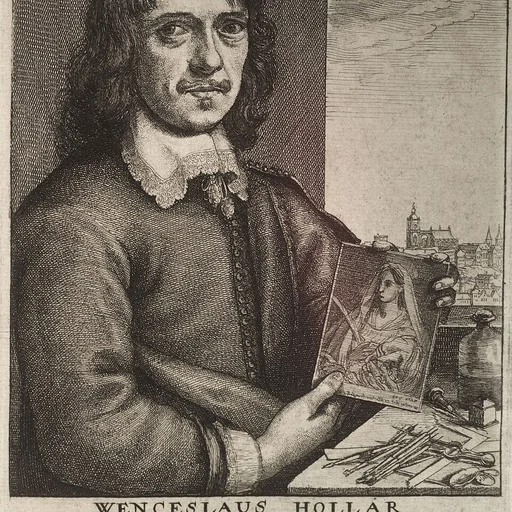
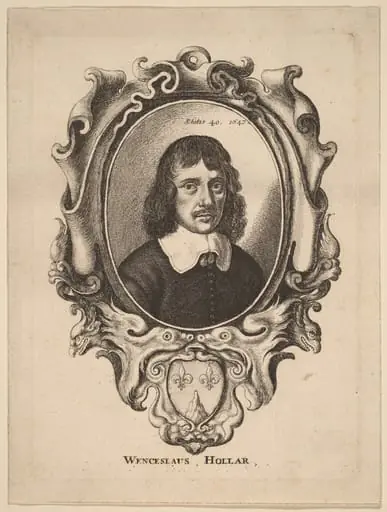
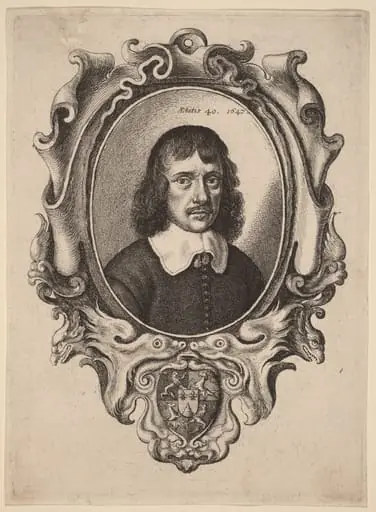
Wenceslaus Hollar (Czech: Václav Hollar (Czech pronunciation: ), German: Wenzel Hollar; 23 July 1607 – 25 March 1677) was a Czech engraver, etcher and painter.


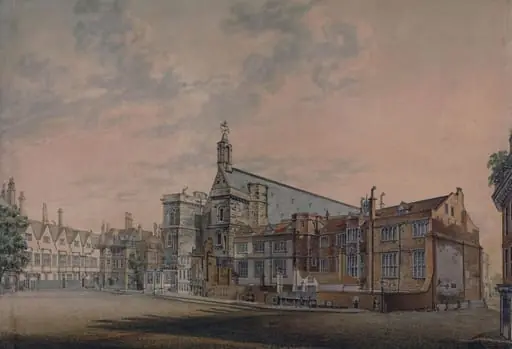 New Palace Yard with the Augmentation Office as in 1793 and the Offices of the Exchequer
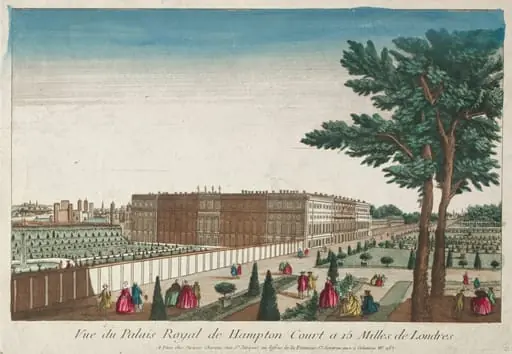 View of the Royal Palace of Hampton Court
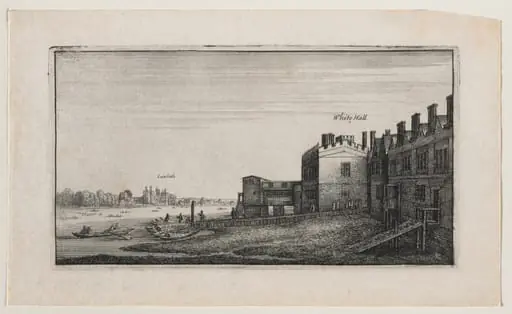 Whitehall from the River, with Lambeth in the Distance
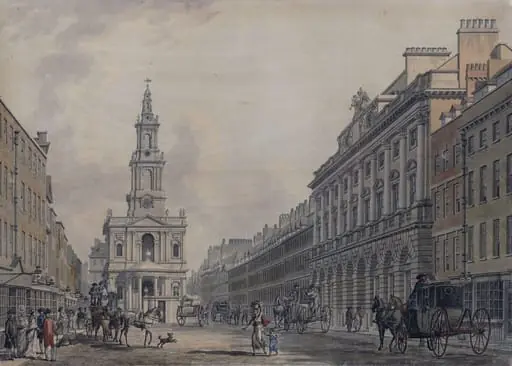 The Strand, with Somerset House and St Mary's Church
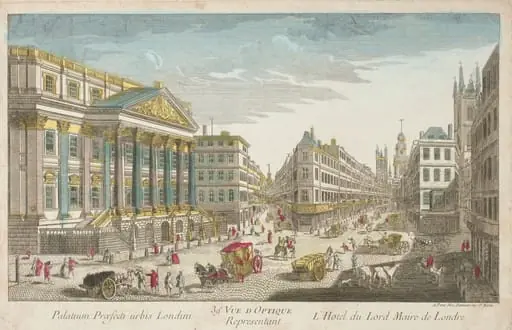 Residence of the Lord Mayor of London
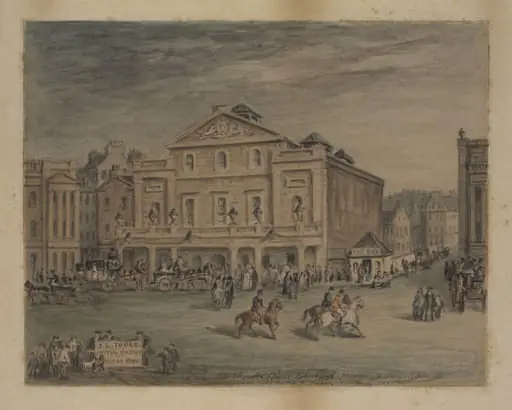 Untitled
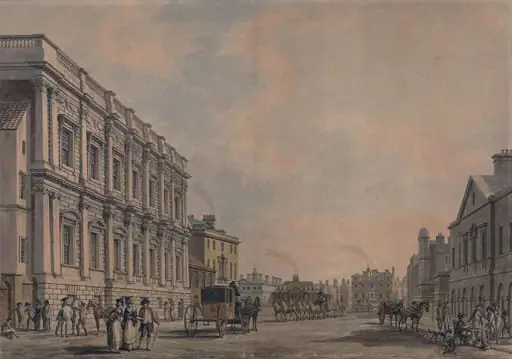 Whitehall, with the Banqueting House