Artwork
Siesta
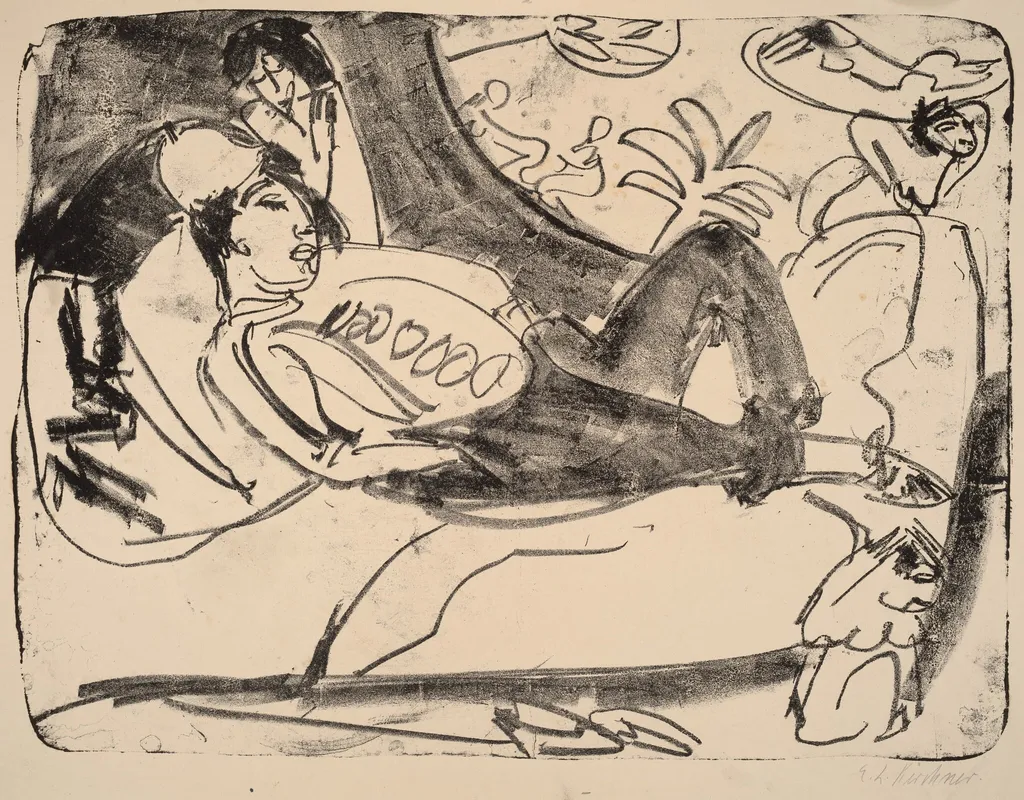
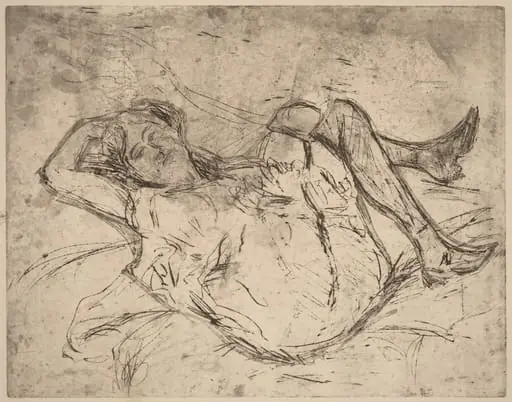
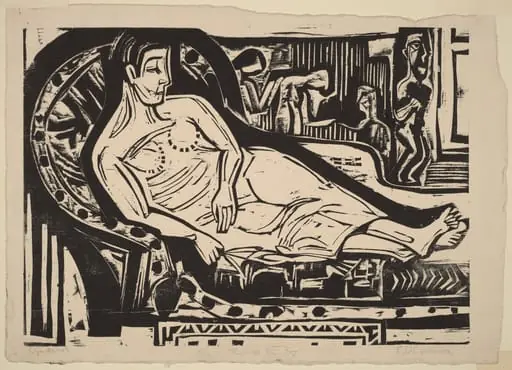
Siesta is an ink print by Ernst Ludwig Kirchner. It dates from 1912 and is held in the collection of the National Gallery of Art.
About this work
Overview
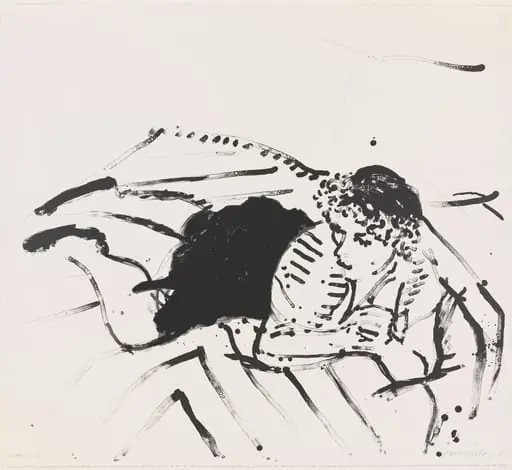
Rendered entirely in black, the composition emphasizes silhouette and gesture over detail, creating a scene that feels both intimate and unsettled.
Ernst Ludwig Kirchner’s 1912 lithograph *Siesta* presents a dimly lit interior where several figures recline in various poses. Rendered entirely in black, the composition emphasizes silhouette and gesture over detail, creating a scene that feels both intimate and unsettled. The work exemplifies Kirchner’s engagement with the expressive possibilities of printmaking during the early modernist period.
Subject & Meaning
The print depicts a small gathering of people at rest: a central figure cradles a guitar while others lounge on a couch or lie on the floor. The loose, sketch‑like lines convey a sense of fatigue and informal camaraderie, suggesting a moment of private leisure that is simultaneously charged with underlying tension through its stark, shadowy atmosphere.
Technique & Style
Executed as a black‑ink lithograph, Kirchner employed rough, uneven strokes that resemble rapid sketches, allowing the image to retain a spontaneous, hand‑drawn quality. The stark contrast between the dense black forms and the light background heightens the sense of depth and movement, aligning the work with the bold, emotive aesthetics of early Expressionism.
History & Provenance
Created shortly after Kirchner co‑founded the avant‑garde group Die Brücke, *Siesta* reflects the collective’s departure from academic realism toward a more subjective visual language. The lithograph was produced in Germany in 1912 and has since circulated in several public and private collections, illustrating Kirchner’s pivotal role in the development of modern printmaking.
Context
*Siesta* emerged during a period when German artists were actively redefining representation, favoring distortion and heightened emotion over faithful depiction. Within this milieu, Kirchner’s focus on everyday scenes rendered in stark monochrome contributed to the broader Expressionist agenda of exposing inner experience through exaggerated form and line.
Legacy
The print remains a representative example of Kirchner’s early print output, demonstrating how lithography could serve Expressionist aims. Its emphasis on gesture and atmosphere continues to inform scholarly discussions of the movement’s visual strategies and the role of graphic media in early twentieth‑century art.
Artist & collection
Artist
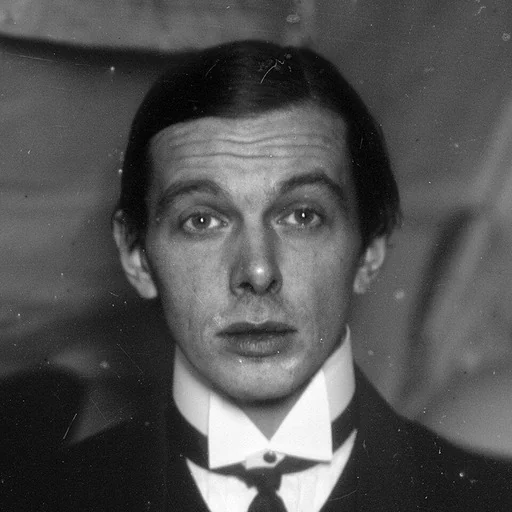
Ernst Ludwig Kirchner (6 May 1880 – 15 June 1938) was a German expressionist painter and printmaker.

![Dance Hall Bellevue [obverse], by Ernst Ludwig Kirchner](https://artifactworldgallery.com/img/ernst-ludwig-kirchner--dance-hall-bellevue-obverse--d1e14aac4297c69e-w320.webp)
![Nude Figure [reverse], by Ernst Ludwig Kirchner](https://artifactworldgallery.com/img/ernst-ludwig-kirchner--nude-figure-reverse--4b135f0364753e98-w320.webp)
![Two Nudes [obverse], by Ernst Ludwig Kirchner](https://artifactworldgallery.com/img/ernst-ludwig-kirchner--two-nudes-obverse--eb3914183f0bc96d-w320.webp)
![Dancing Couple in the Snow [reverse], by Ernst Ludwig Kirchner](https://artifactworldgallery.com/img/ernst-ludwig-kirchner--dancing-couple-in-the-snow-reverse--87ca007d7c05b553-w320.webp)