Artwork
Untitled
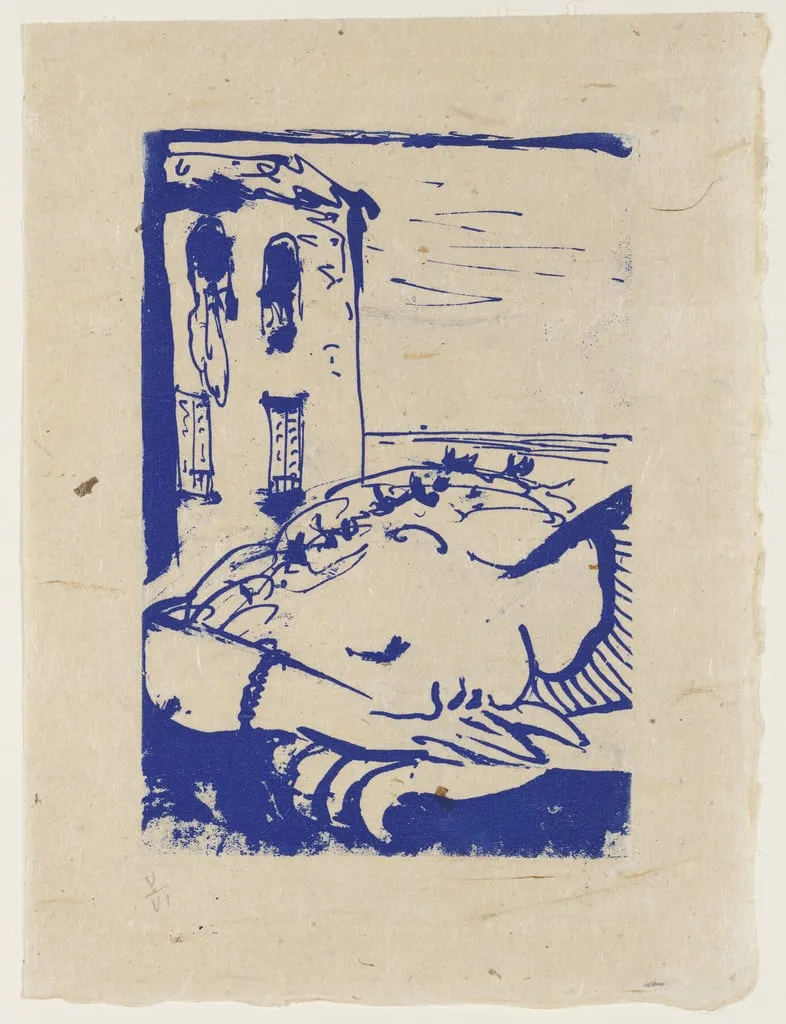
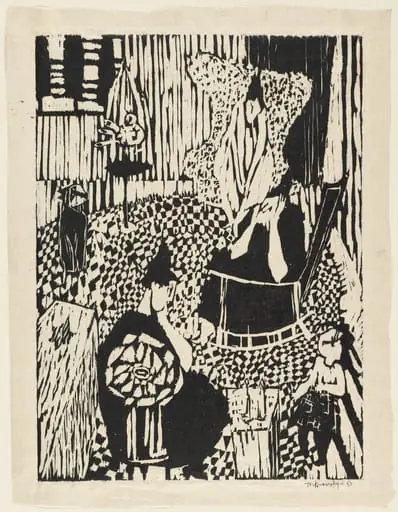
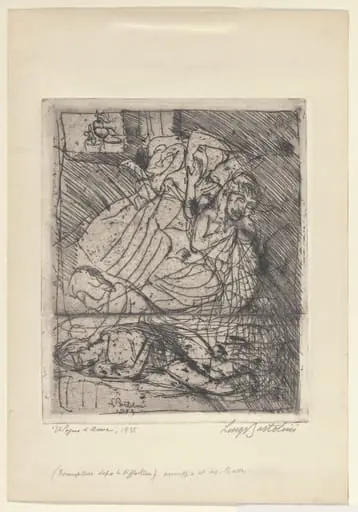
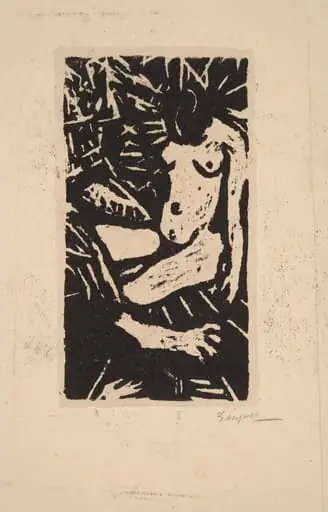
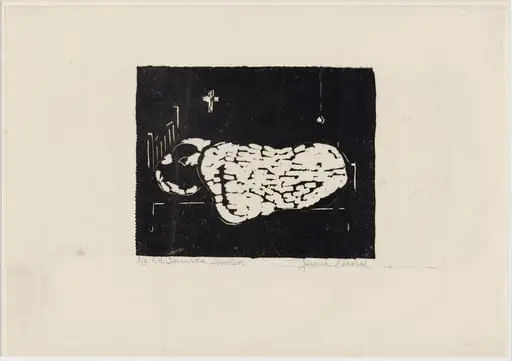
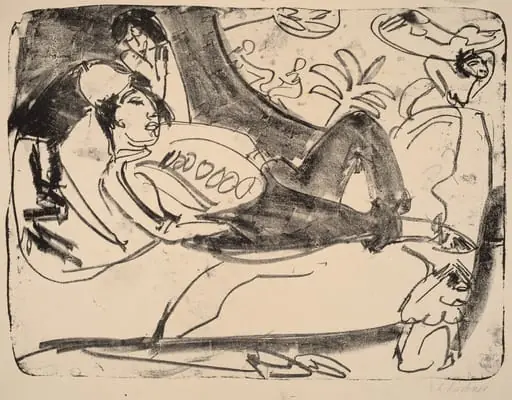
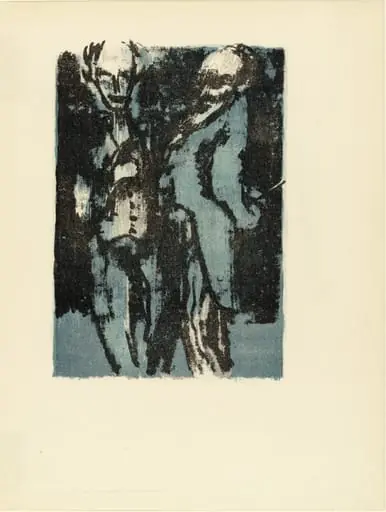
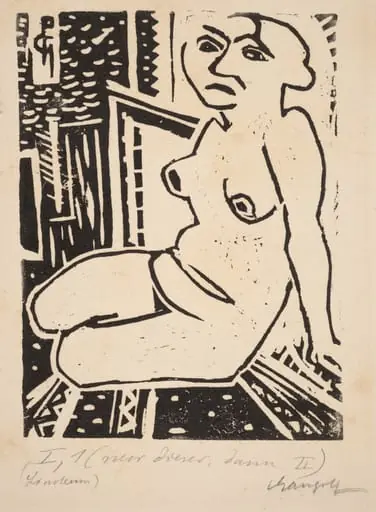
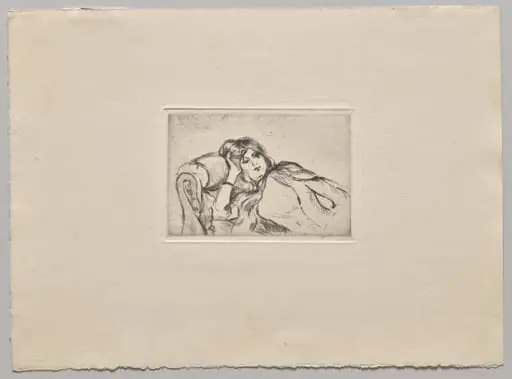
Untitled is an ink print by Pablo Picasso. It dates from 1936 and is held in the collection of the Museum of Modern Art.
About this work
Overview
Pablo Picasso’s 1936 aquatint, titled Untitled, is a modestly scaled print held by the Museum of Modern Art. Executed the same year as his monumental anti‑war canvas Guernica, the work reflects Picasso’s continued experimentation with printmaking during a period of intense political and artistic activity.
Subject & Meaning
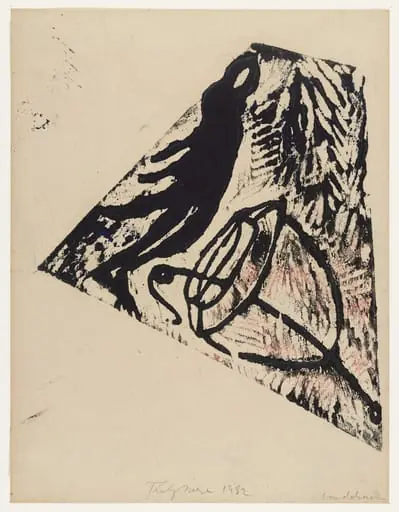
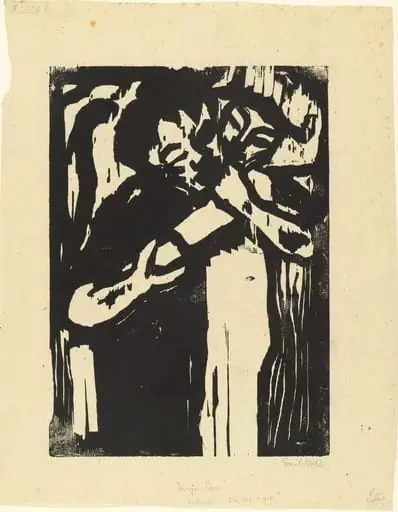
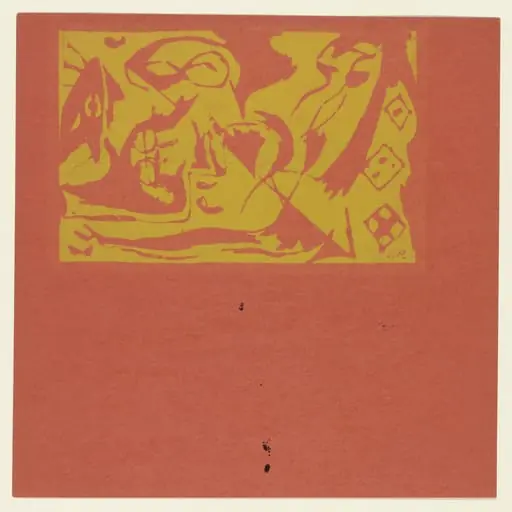
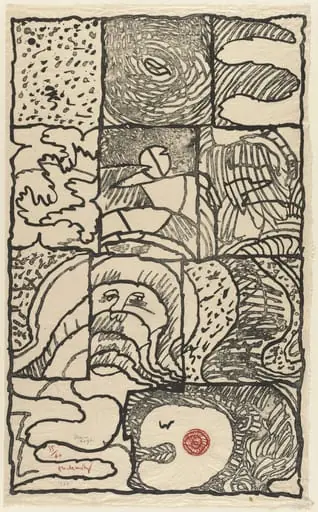
The composition presents a solitary blue form against a light beige ground. On the left, two elongated, slender figures stand beside a simple building with windows, while a wavering line below suggests water or a pathway, punctuated by tiny marks that may indicate vegetation or stones. The sparse imagery invites contemplation of isolation and landscape without explicit narrative.
Technique & Style
Created with the aquatint process, the print relies on only two hues: the blue pigment and the natural tone of the paper. Picasso employed rough, uneven lines that give the figures a sketch‑like quality, emphasizing spontaneity over precise rendering. The limited palette and textural marks highlight the medium’s capacity for tonal variation.
History & Provenance
Picasso, a Spanish-born artist who spent most of his adult life in France, produced this work amid his prolific output in the mid‑1930s. The print entered the collection of the Museum of Modern Art, where it remains part of the institution’s holdings of his graphic works.
Context
While Picasso is renowned for co‑founding Cubism and for his diverse stylistic shifts, the 1930s saw him engaging with socially charged subjects, as exemplified by Guernica. Untitled, though less overtly political, reflects his ongoing interest in distilling form to essential lines and tones, a concern that runs parallel to his larger canvases of the era.
Artist & collection
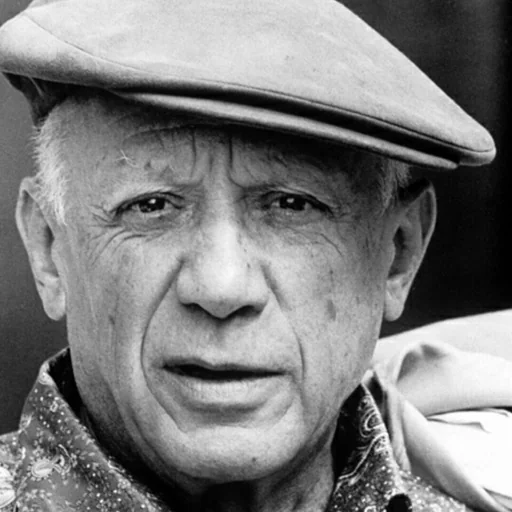
Artist
Pablo Ruiz Picasso (25 October 1881 – 8 April 1973) was a Spanish painter and sculptor who spent most of his adult life in France.