Artwork
Women at a Table in a Room
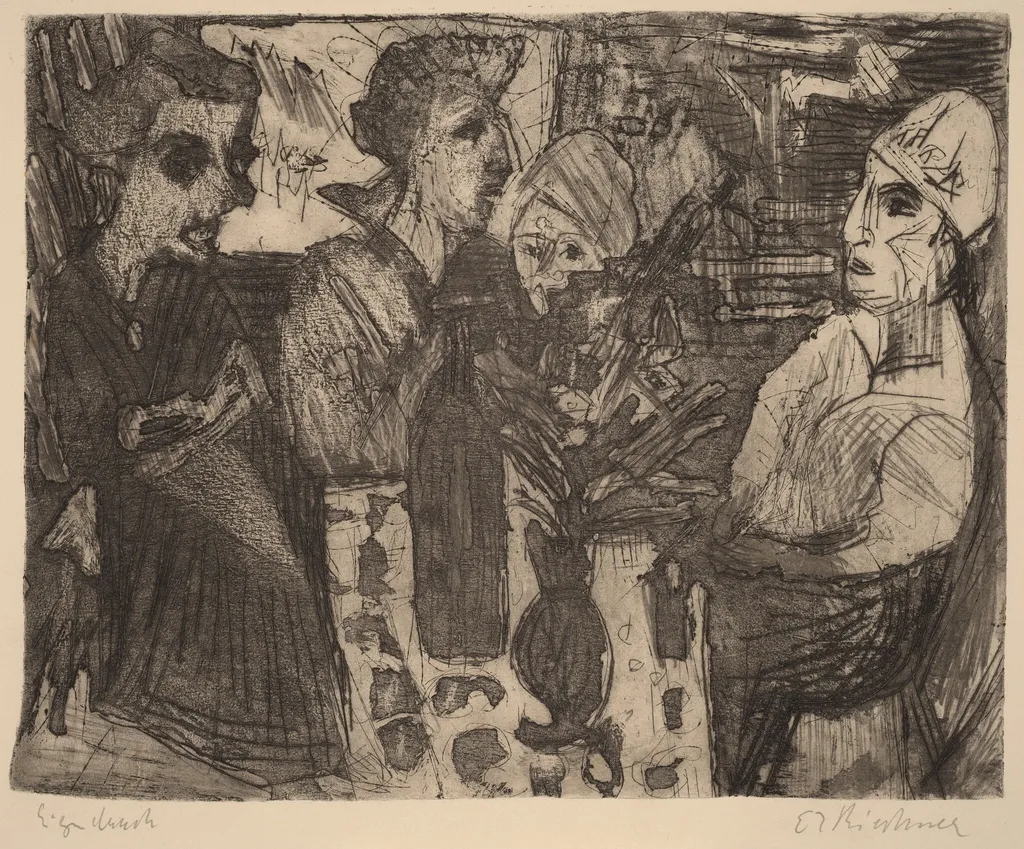
Women at a Table in a Room is an ink print by Ernst Ludwig Kirchner. It dates from 1920 and is held in the collection of the National Gallery of Art.
About this work
Overview
Ernst Ludwig Kirchner produced the print *Women at a Table in a Room* in 1920. Executed as an etching that combines drypoint and surface etching, the work presents a quiet interior scene in which several women are gathered around a central table. The composition is rendered in a limited palette of dark tones, emphasizing the figures and the surrounding furnishings.
Subject & Meaning
The image captures a domestic gathering, with the women dressed in somber clothing—one wearing a hat—engaged in conversation. Their arrangement around the table creates a sense of communal focus, while the enclosed interior suggests a private, perhaps contemplative atmosphere. The work reflects Kirchner’s interest in everyday life and the psychological space of social interaction.
Technique & Style
Kirchner employed traditional etching alongside drypoint, allowing him to produce both fine lines and richer, velvety shadows. Surface etching contributes additional texture to the background, while the bold, decisive strokes of drypoint define the figures and furniture. The overall effect is a stark, tactile rendering that underscores the expressionist emphasis on mood over precise detail.
History & Provenance
Created shortly after Kirchner’s return to Germany following World War I, the print belongs to the period when he was consolidating his expressionist language.
Created shortly after Kirchner’s return to Germany following World War I, the print belongs to the period when he was consolidating his expressionist language. Like many of his works, it later suffered under the Nazi regime; in 1937 more than six hundred of his pieces were confiscated, sold, or destroyed. The print’s survival offers insight into his resilient artistic output during a turbulent era.
Context
Kirchner was a founding member of Die Brücke, a group that sought to break with academic conventions and promote a raw, emotional visual language. By 1920, his practice had expanded from painting to printmaking, using the medium to explore similar themes of modern life and interiority. This work exemplifies his shift toward quieter, interior subjects after the war’s upheaval.
Artist & collection
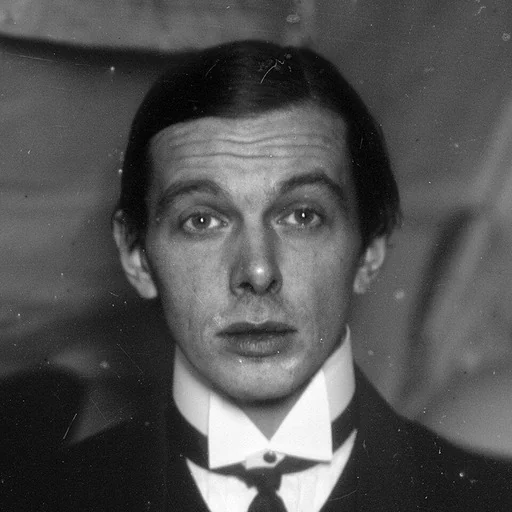
Artist
Ernst Ludwig Kirchner (6 May 1880 – 15 June 1938) was a German expressionist painter and printmaker.

![Dance Hall Bellevue [obverse], by Ernst Ludwig Kirchner](https://artifactworldgallery.com/img/ernst-ludwig-kirchner--dance-hall-bellevue-obverse--d1e14aac4297c69e-w320.webp)
![Nude Figure [reverse], by Ernst Ludwig Kirchner](https://artifactworldgallery.com/img/ernst-ludwig-kirchner--nude-figure-reverse--4b135f0364753e98-w320.webp)
![Two Nudes [obverse], by Ernst Ludwig Kirchner](https://artifactworldgallery.com/img/ernst-ludwig-kirchner--two-nudes-obverse--eb3914183f0bc96d-w320.webp)
![Dancing Couple in the Snow [reverse], by Ernst Ludwig Kirchner](https://artifactworldgallery.com/img/ernst-ludwig-kirchner--dancing-couple-in-the-snow-reverse--87ca007d7c05b553-w320.webp)
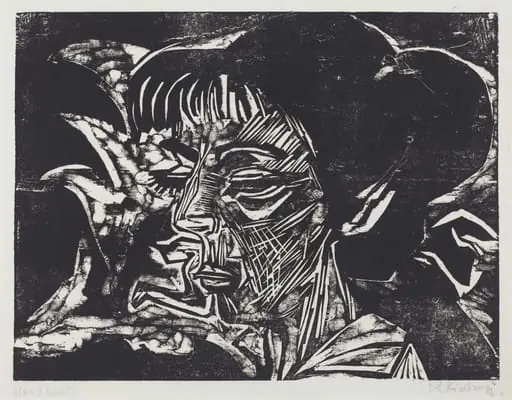 Fanny Wocke
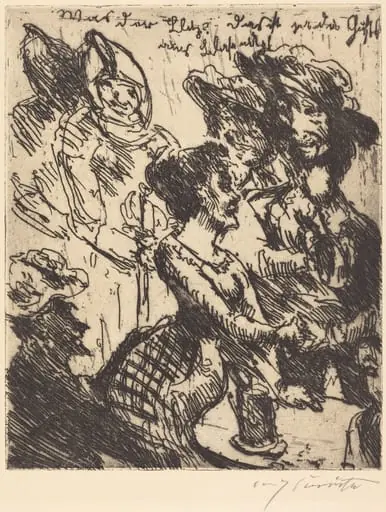 "Was der blitz! Das ist ja die gustel von blasewitz" ("What's That! It's Gustel von Blasewitz")
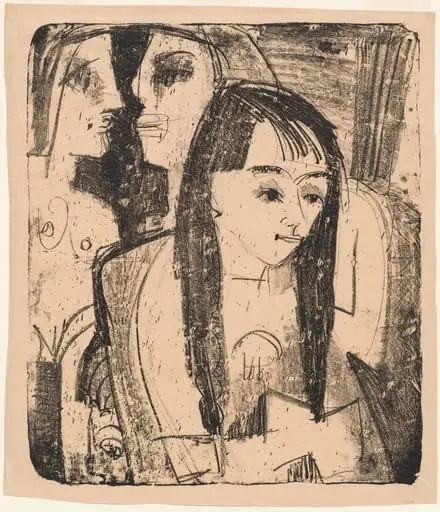 Portrait of a Girl
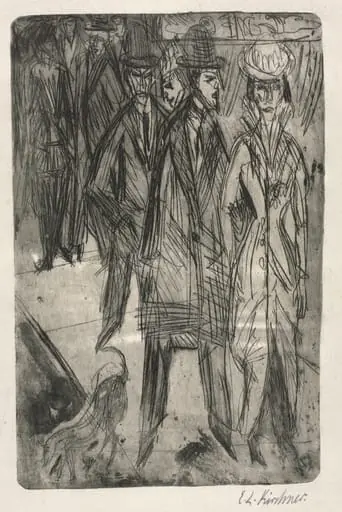 On the Street
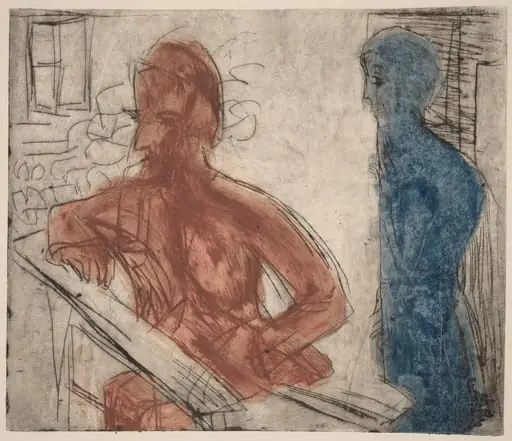 Peasant and Girl
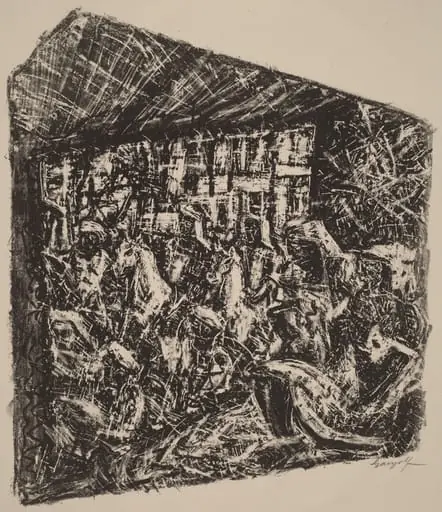 Aufzug der Polizei von Bagdad
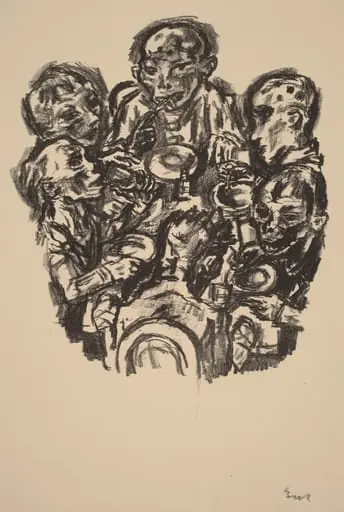 Six Diners at Table
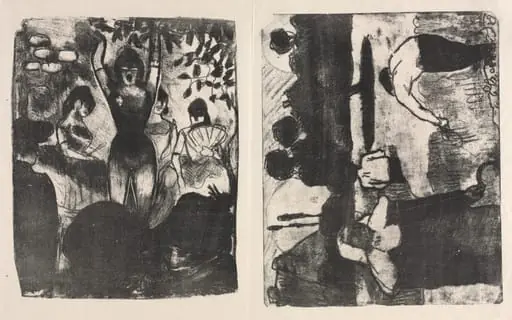 Singer at the Café-Concert and The Harvesters (Les Moissonneurs)
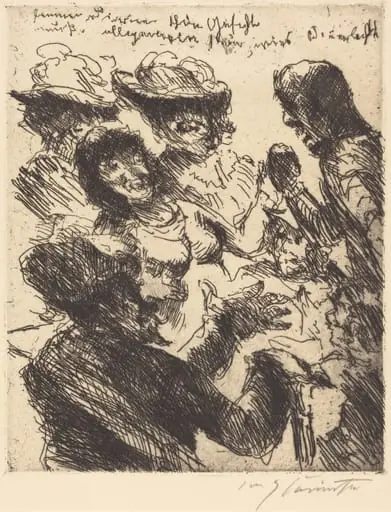 "Einer dirne schön gesicht muss allgemein sein wie's sonnenlicht" ("A Pretty Girl's Face is Like the Sunshine")
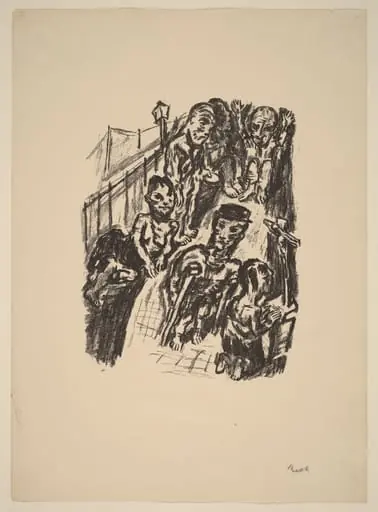 Street Scene with a Cripple and a Praying Man
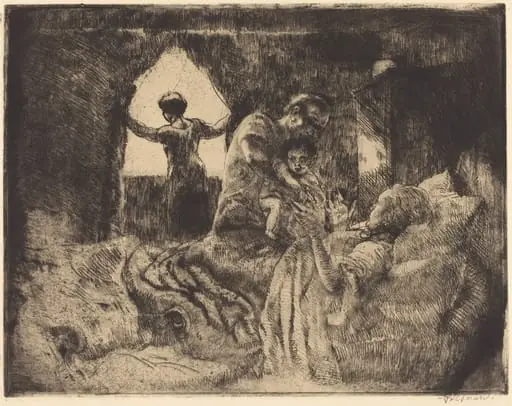 Greeting Grandmother (Le Bonjour à la Grand-mère)
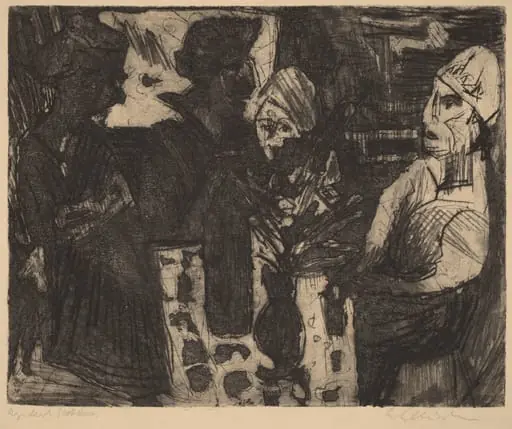 Women at a Table in a Room (recto) / Nude Woman (verso)