Artwork
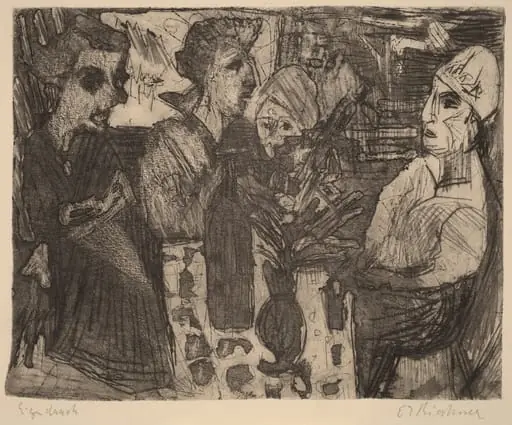
Women at a Table in a Room (recto) / Nude Woman (verso)
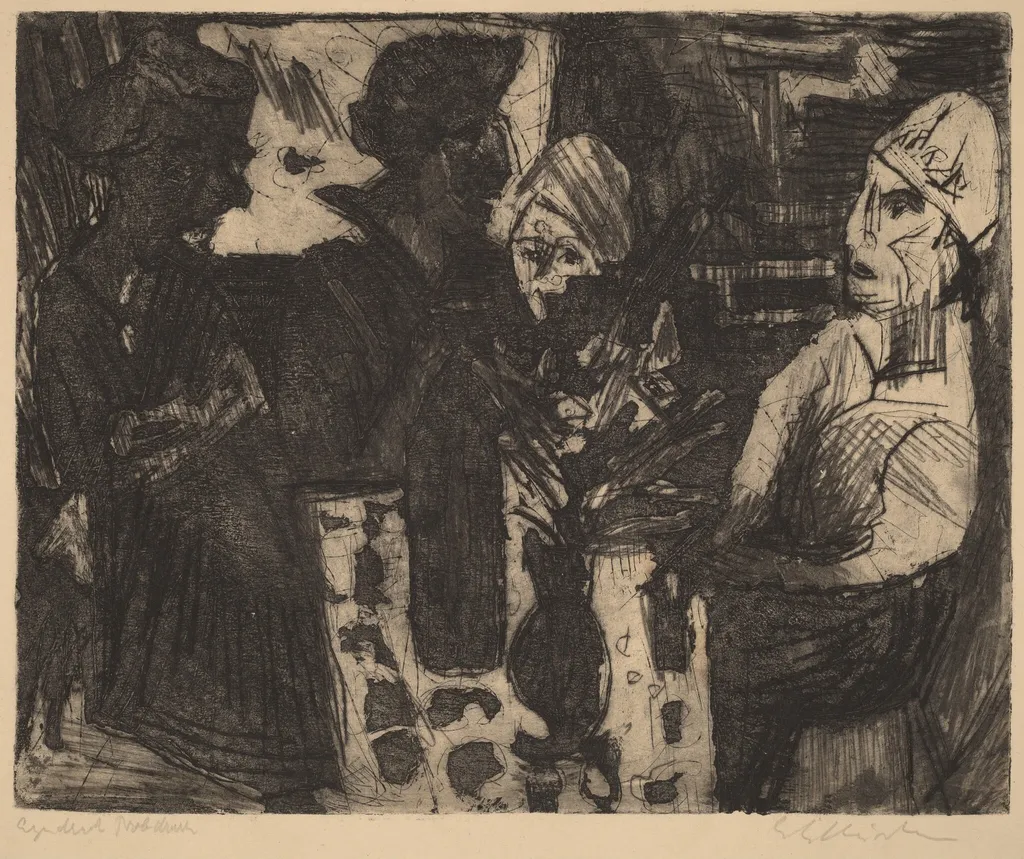
Women at a Table in a Room (recto) / Nude Woman (verso) is a graphite print by Ernst Ludwig Kirchner. It dates from 1920 and is held in the collection of the National Gallery of Art.
About this work
Overview
Ernst Ludwig Kirchner’s 1920 work combines two distinct images on a single sheet: the front (recto) shows two women seated at a table inside a dimly lit room, while the back (verso) contains a graphite drawing of a nude figure. The front is executed with etching, dry‑point and surface etching, and the reverse is a simple graphite study.
Subject & Meaning
The interior scene captures a quiet moment, the women rendered with angular, sketch‑like lines; one wears a headscarf and the other rests her hands on the tabletop, suggesting a domestic or private atmosphere. The nude on the verso, drawn in graphite, offers a contrasting study of the human form, emphasizing the artist’s interest in both social interaction and the anatomy of the body.
Technique & Style
The graphite drawing on the verso relies on direct hand shading, highlighting Kirchner’s versatility across media.
Kirchner employed a combination of etching, dry‑point and surface etching on the recto, allowing him to produce both fine linear marks and deeper, burr‑rich lines that stand out when inked. The dry‑point scratches create a characteristic velvety darkness, while the surface etching adds texture. The graphite drawing on the verso relies on direct hand shading, highlighting Kirchner’s versatility across media.
History & Provenance
Created shortly after Kirchner’s return to Germany following World War I, the print reflects his mature expressionist phase. In the 1930s the work fell under Nazi condemnation; in 1937 more than six hundred of Kirchner’s pieces were either confiscated, sold under duress, or destroyed as “degenerate art.” The surviving sheets later entered museum collections through post‑war acquisitions.
Context
Kirchner was a founding member of Die Brücke, a group that sought to break with academic conventions and promote a raw, emotive visual language. By 1920 his practice had shifted from painting to printmaking, using the medium to explore everyday scenes with heightened psychological tension. The dual‑image format reflects the period’s experimental approach to print media within the broader expressionist movement.
Own this work as a print
Artist & collection
Artist
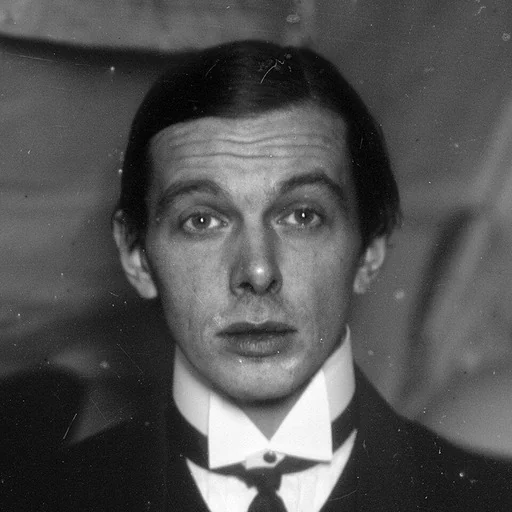
Ernst Ludwig Kirchner (6 May 1880 – 15 June 1938) was a German expressionist painter and printmaker.

![Dance Hall Bellevue [obverse], by Ernst Ludwig Kirchner](https://artifactworldgallery.com/img/ernst-ludwig-kirchner--dance-hall-bellevue-obverse--d1e14aac4297c69e-w320.webp)
![Nude Figure [reverse], by Ernst Ludwig Kirchner](https://artifactworldgallery.com/img/ernst-ludwig-kirchner--nude-figure-reverse--4b135f0364753e98-w320.webp)
![Two Nudes [obverse], by Ernst Ludwig Kirchner](https://artifactworldgallery.com/img/ernst-ludwig-kirchner--two-nudes-obverse--eb3914183f0bc96d-w320.webp)
![Dancing Couple in the Snow [reverse], by Ernst Ludwig Kirchner](https://artifactworldgallery.com/img/ernst-ludwig-kirchner--dancing-couple-in-the-snow-reverse--87ca007d7c05b553-w320.webp)
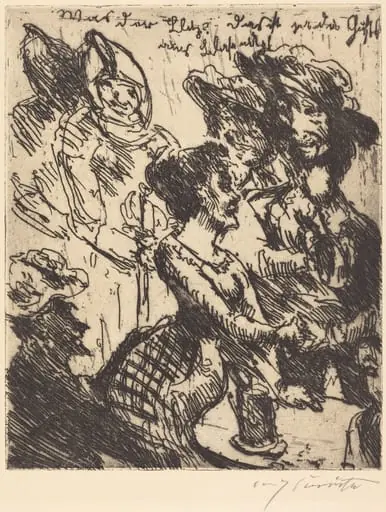 "Was der blitz! Das ist ja die gustel von blasewitz" ("What's That! It's Gustel von Blasewitz")
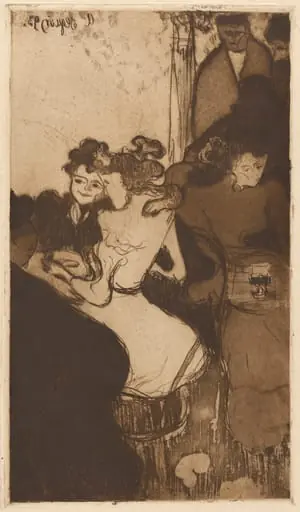 Le Bar
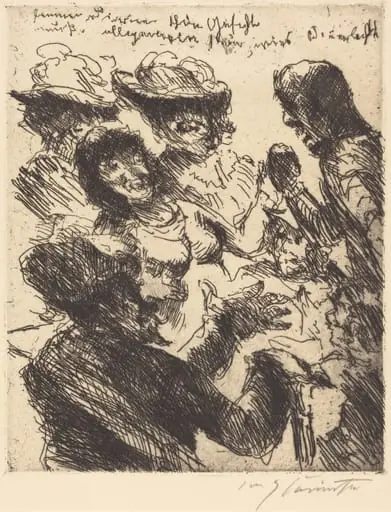 "Einer dirne schön gesicht muss allgemein sein wie's sonnenlicht" ("A Pretty Girl's Face is Like the Sunshine")
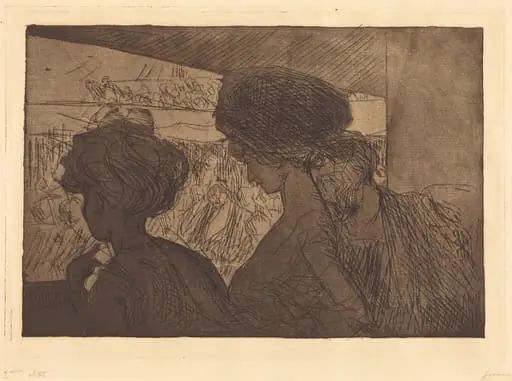 Baignoire au théatre (Lower Box at the Theater)
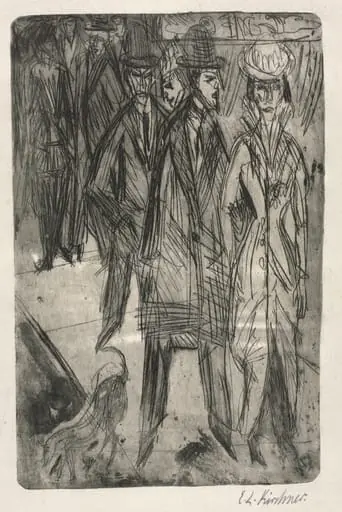 On the Street
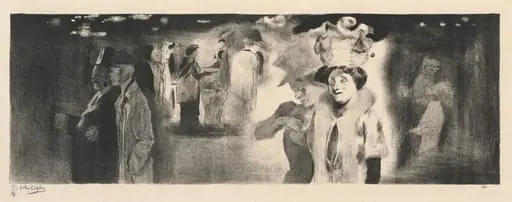 A Night Scene
 Portrait of a Girl
 The Cup of Tea (La tasse de thé)
 Scène d'audience (les deux avocats) (Scene of a Hearing (The Two Lawyers))
 The Forge
 The Music Room
 Women at a Table in a Room