Artwork
November
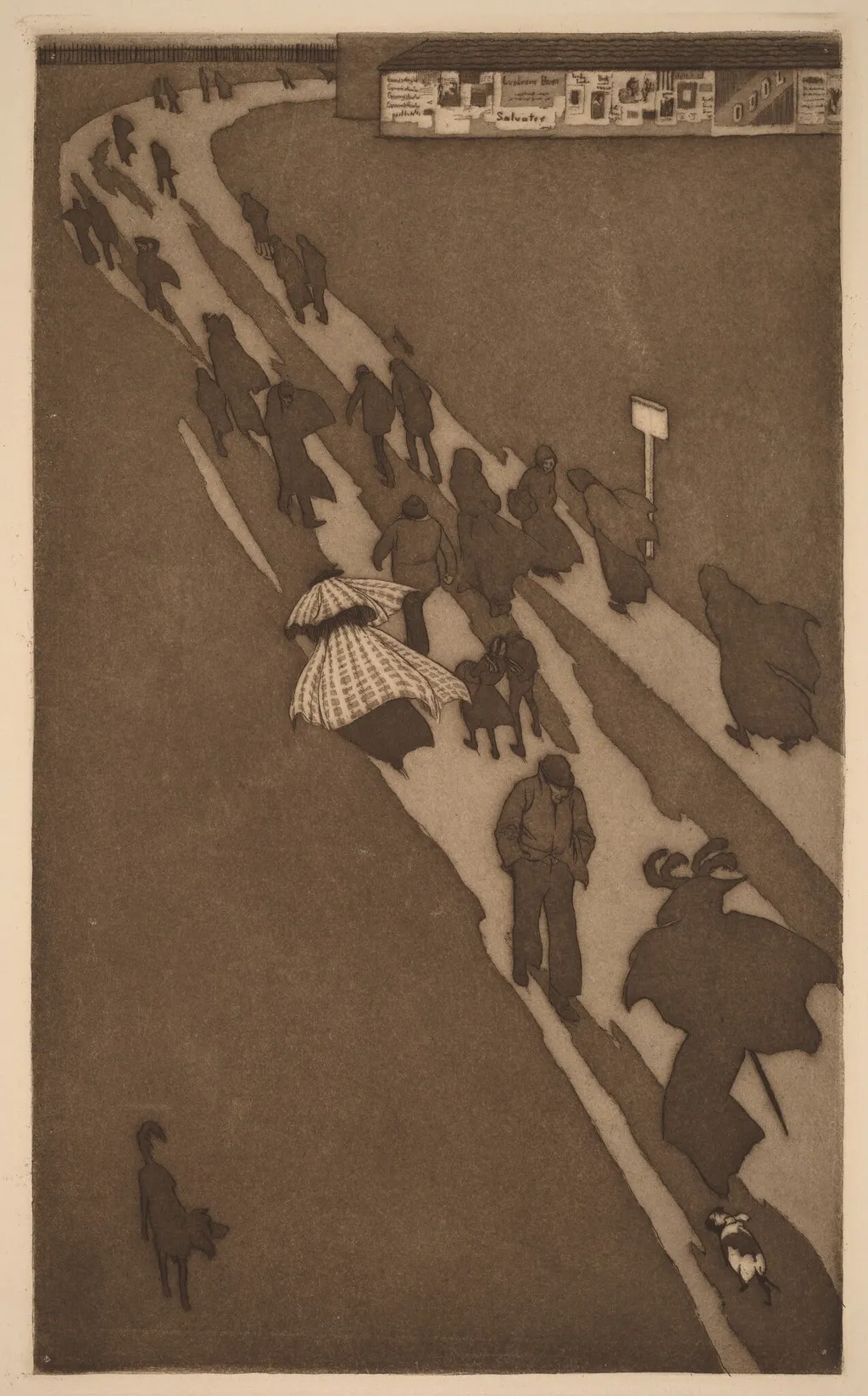
November is an ink print by the Impressionist artist Eugen Kirchner. It dates from 1896 and is held in the collection of the National Gallery of Art.
About this work
Overview
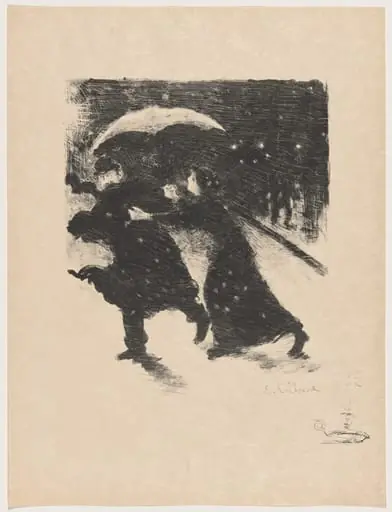
It captures a urban street scene during the late 19th century, rendered through layered tonal contrasts and incised lines.
November is an 1896 print by Eugen Kirchner, executed in etching and aquatint using brown ink on laid paper. It captures a urban street scene during the late 19th century, rendered through layered tonal contrasts and incised lines. The work belongs to a period when printmaking was being revitalized as a medium for expressive, observational art, distinct from painting but equally attuned to modern life.
Subject & Meaning
The scene portrays pedestrians navigating a crowded thoroughfare, their forms suggested with abbreviated, dynamic contours. A central figure—a woman holding an umbrella—stands slightly apart, anchoring the composition amid the flow of anonymous figures. The image conveys the rhythm of daily urban existence without narrative detail, emphasizing solitude within collectivity rather than spectacle or drama.
Technique & Style
Kirchner employed etching for sharp, linear definition and aquatint to build gradations of brown ink, creating atmospheric depth. The textured surface of the laid paper enhances the tactile quality of the print, while the restricted palette focuses attention on form and shadow. The brushwork-like ink washes and varied line weights suggest movement without literal realism, aligning with emerging modernist tendencies in graphic art.
History & Provenance
Created in 1896, November emerged during Kirchner’s early career, before his association with Die Brücke. It reflects his engagement with contemporary European print culture, particularly German and French etchers who explored urban themes. The work was likely produced in limited editions for collectors interested in intimate, hand-crafted imagery, though its early ownership history remains undocumented.
Context
In the 1890s, artists across Europe turned to printmaking to respond to rapid urbanization and changing social rhythms. Kirchner’s work shares affinities with contemporaries like James McNeill Whistler and Max Klinger, who used etching to convey psychological and environmental nuance. Unlike Impressionist painters, Kirchner avoided light effects, favoring structural clarity and somber tonality to evoke the weight of city life.
Legacy
November represents an early step in Kirchner’s evolution toward expressive line and emotional intensity, foreshadowing his later Expressionist style. Though not widely exhibited in his lifetime, the print contributes to the broader recognition of printmaking as a vehicle for modernist observation. It remains a quiet testament to the quiet alienation and motion of urban existence at the turn of the century.
Artist & collection

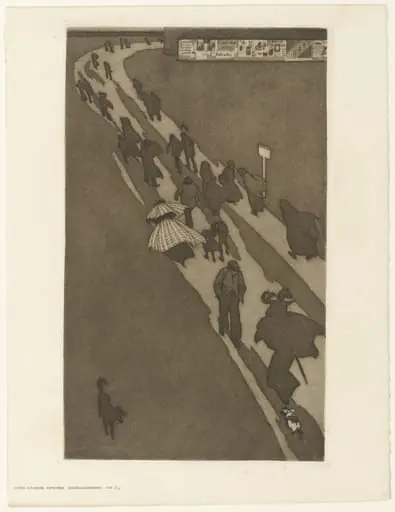 Untitled
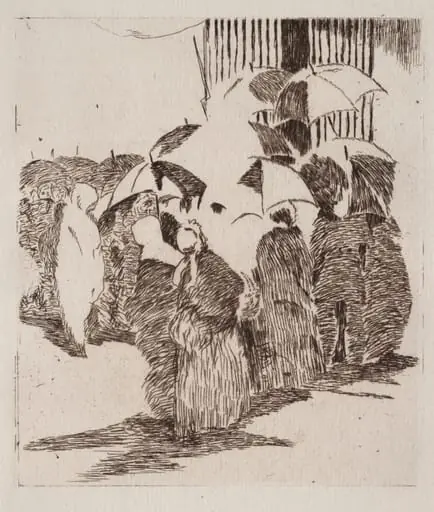 Line in Front of the Butcher Shop
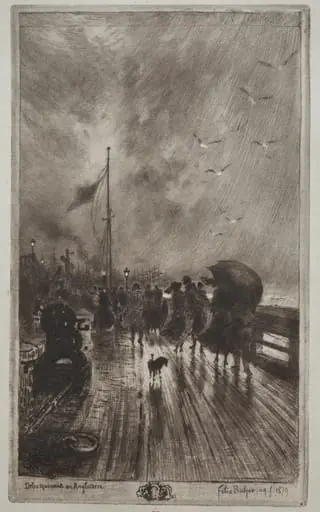 Landing in England
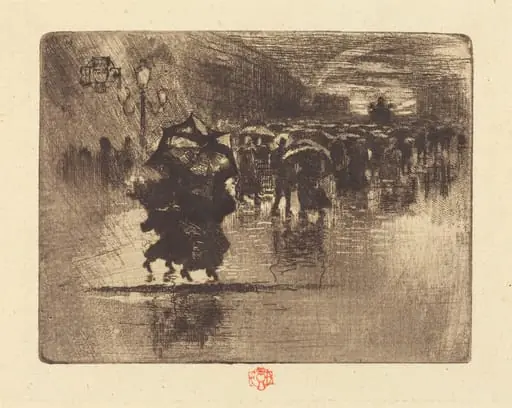 Le Petit Enterrement (The Burial - Small Plate)
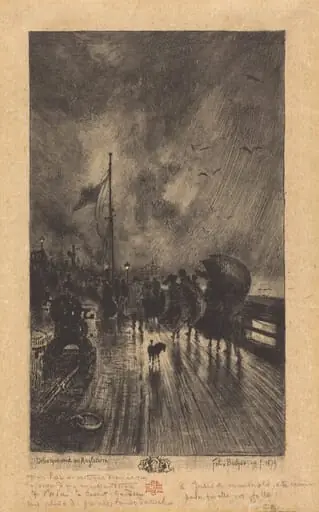 Un Débarquement en Angleterre (Landing in England)
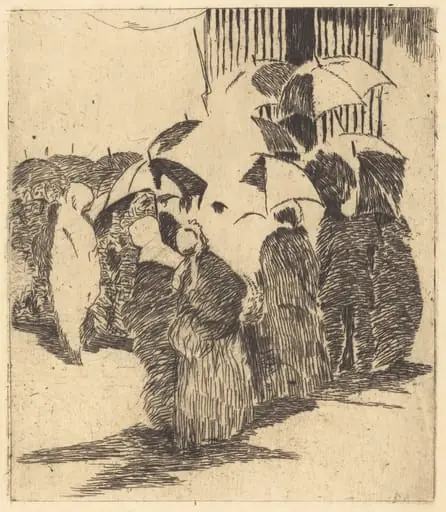 Line in Front of the Butcher Shop (Queue devant la boucherie)
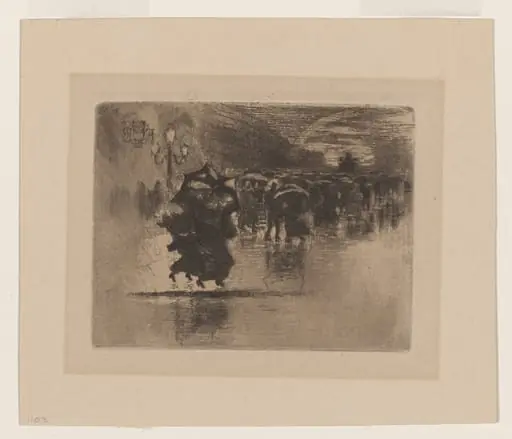 Le Petite Enterrement (The Burial -- Small Plate)
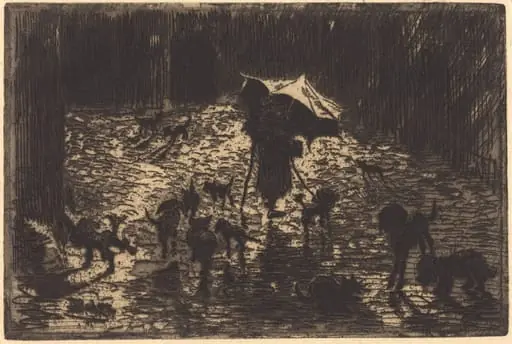 Les Noctambules (The Night Prowlers)
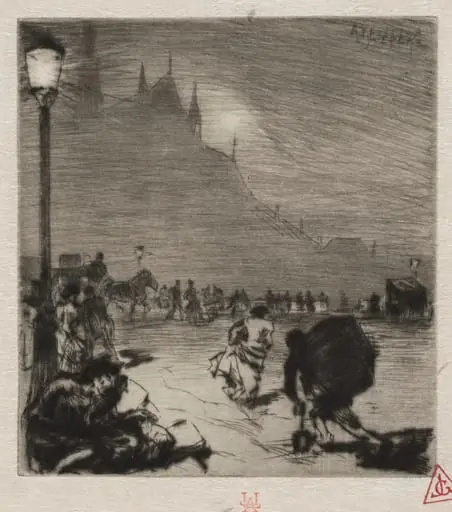 Au Coin du Pont-aux-Doubles
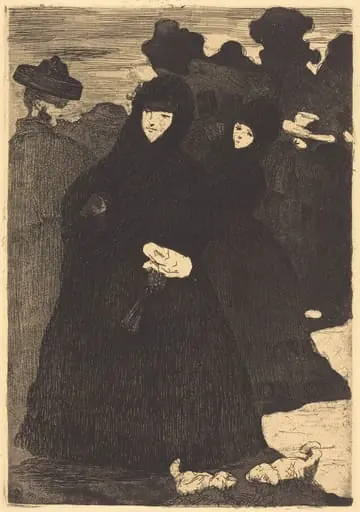 At the Prado (Au Prado)
 London Types: Lady
 Nocturne (By Night)