Artwork
Chushingura: Act III of The Storehouse of Loyalty
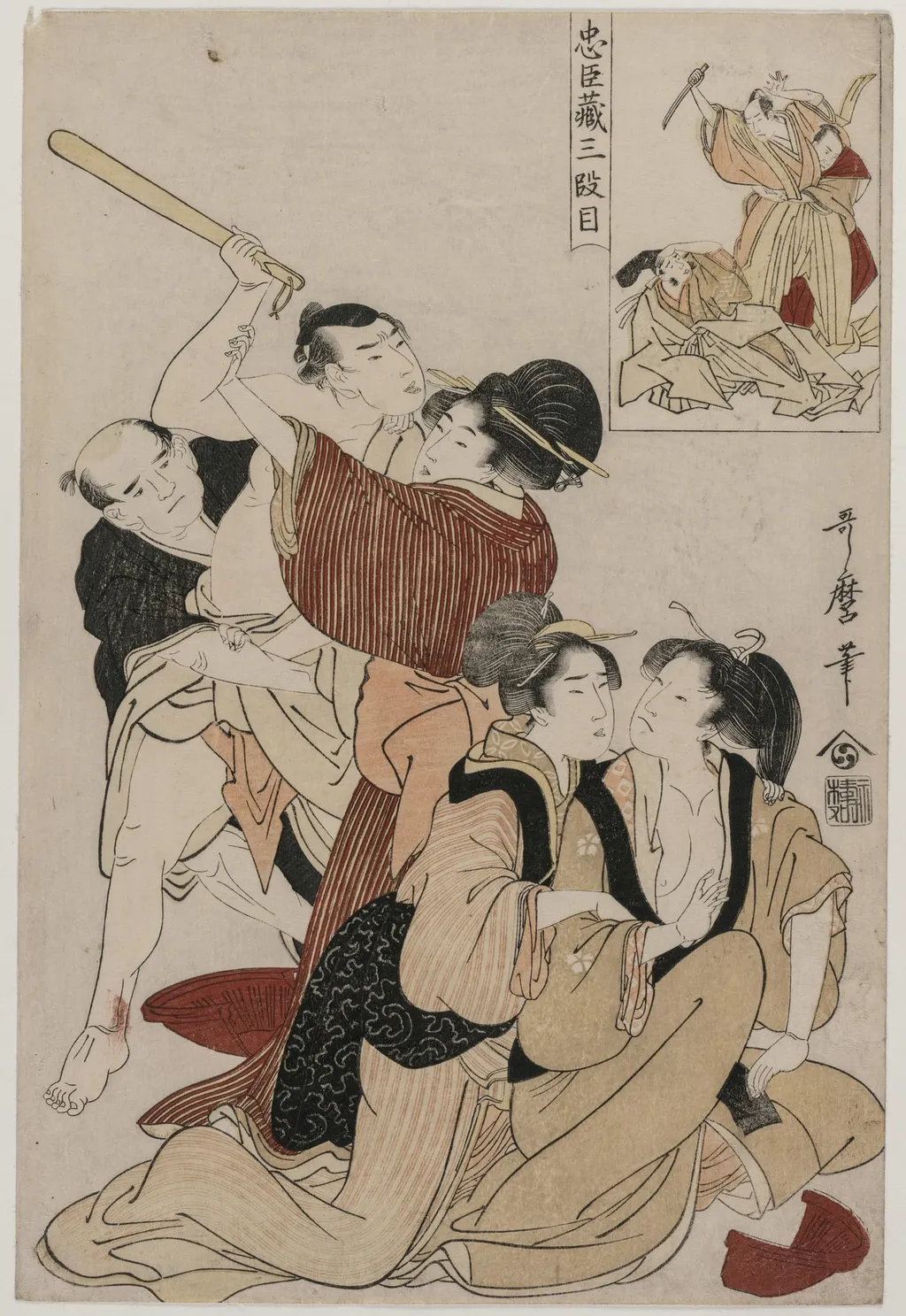
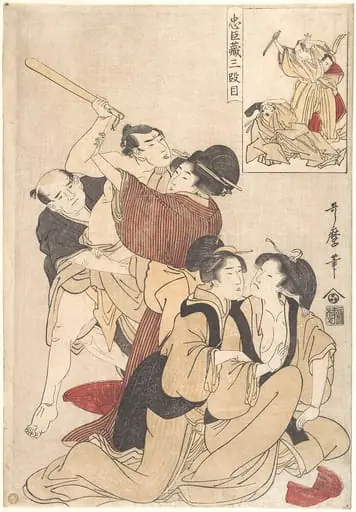
Chushingura: Act III of The Storehouse of Loyalty is a print by the Romanticist artist Kitagawa Utamaro. It dates from 1794 and is held in the collection of the Cleveland Museum of Art.
About this work
Overview
The Cleveland Museum of Art holds this impression, one of many prints produced during the Edo period that brought theatrical narratives to a broad audience.
This woodblock print, dated around 1794, is part of a series illustrating episodes from the Chūshingura, a celebrated tale of samurai loyalty. Created by Kitagawa Utamaro, it captures a pivotal moment from Act III of the story. The composition is dynamic, with five figures caught in motion amid a confined space. The Cleveland Museum of Art holds this impression, one of many prints produced during the Edo period that brought theatrical narratives to a broad audience.
Subject & Meaning
The scene depicts a violent confrontation among retainers of the fallen lord Asano, as they plot or engage in retribution. One figure wields a long pole, while others react with urgency—kneeling, crouching, or recoiling. The inset above shows two additional characters, likely key figures in the unfolding drama. The narrative draws from kabuki theater, emphasizing moral duty and emotional intensity, central themes in the Chūshingura legend.
Technique & Style
Utamaro employs fine linework and subtle tonal gradations to convey movement and tension. The palette is restrained, dominated by earth tones and deep blacks, with selective use of red in a hat and fan to draw attention to key figures. The exaggerated gestures and facial expressions reflect the stylized acting of kabuki, while the inset panel introduces narrative depth without disrupting the main composition’s energy.
History & Provenance
Produced during the late 18th century, this print was part of a popular series that capitalized on public fascination with the Chūshingura story, often adapted for the stage. Though original publication records are sparse, the print entered the Cleveland Museum of Art’s collection through documented acquisitions in the 20th century, preserving its place within the canon of ukiyo-e theater prints.
Context
During the Edo period, woodblock prints served as affordable entertainment, translating popular plays into visual form. The Chūshingura, based on a real 18th-century vendetta, was frequently staged despite government censorship of contemporary subjects. Artists like Utamaro navigated these restrictions by depicting historical tales, allowing audiences to engage with themes of honor and sacrifice under the guise of the past.
Legacy
Utamaro’s series helped solidify the visual language of kabuki prints, influencing later artists in both Japan and the West. His ability to capture psychological intensity within a crowded scene became a hallmark of narrative ukiyo-e. While the Chūshingura story remains culturally significant in Japan, this print endures as a precise example of how theater, printmaking, and moral storytelling converged in Edo-period visual culture.
Artist & collection


 Untitled
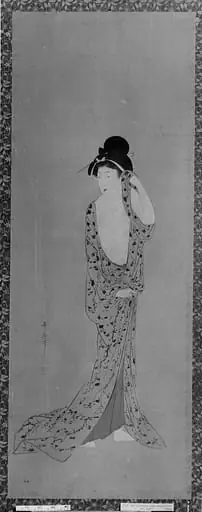 Untitled
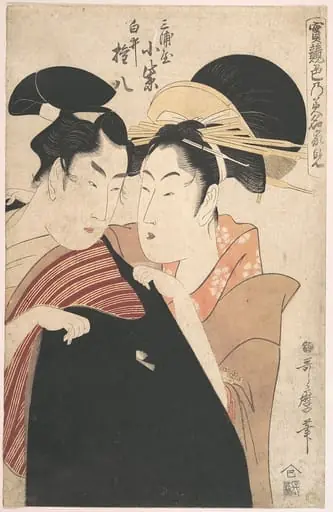 実競色乃美名家見 三浦屋小紫 白井権八|The Lovers Miura-ya Komurasaki and Shirai Gonpachi.
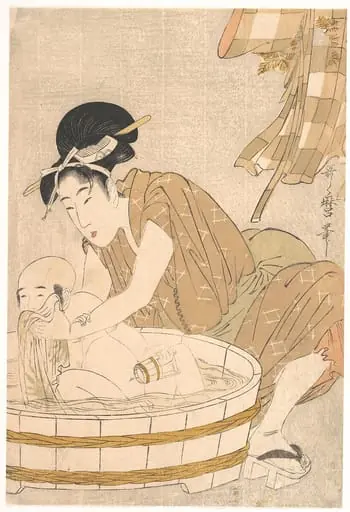 行水|Bathtime (Gyōzui)
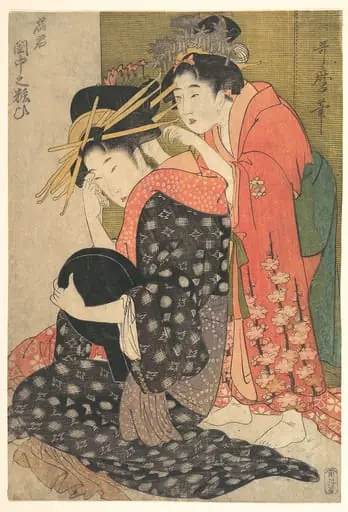 名君 閨中の粧ひ|The Oiran Yoso-oi Seated at Her Toilet
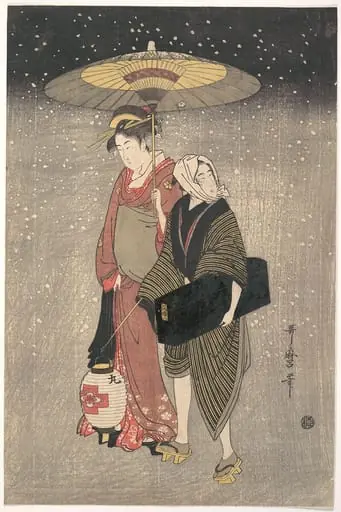 Untitled
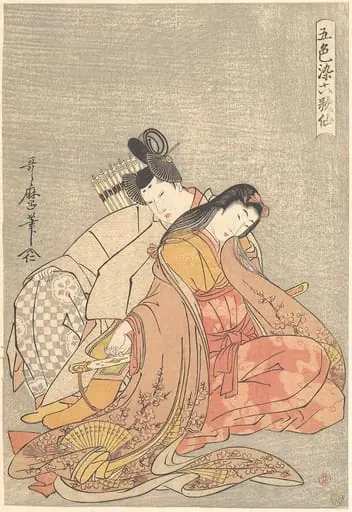 『五色染六歌仙』 在原業平と小野小町|“The Poet Ariwara no Narihira (825–880) and Ono no Komachi,” from the series Five Colors of Love for the Six Poetic Immortals (Goshiki-zome rokkasen)
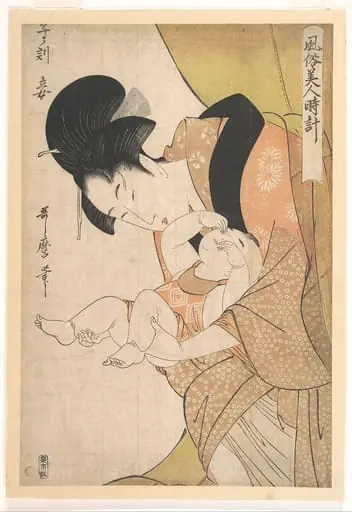 風俗美人時計 子ノ刻 妾|Midnight: Mother and Sleepy Child