Artwork
風俗美人時計 子ノ刻 妾|Midnight: Mother and Sleepy Child
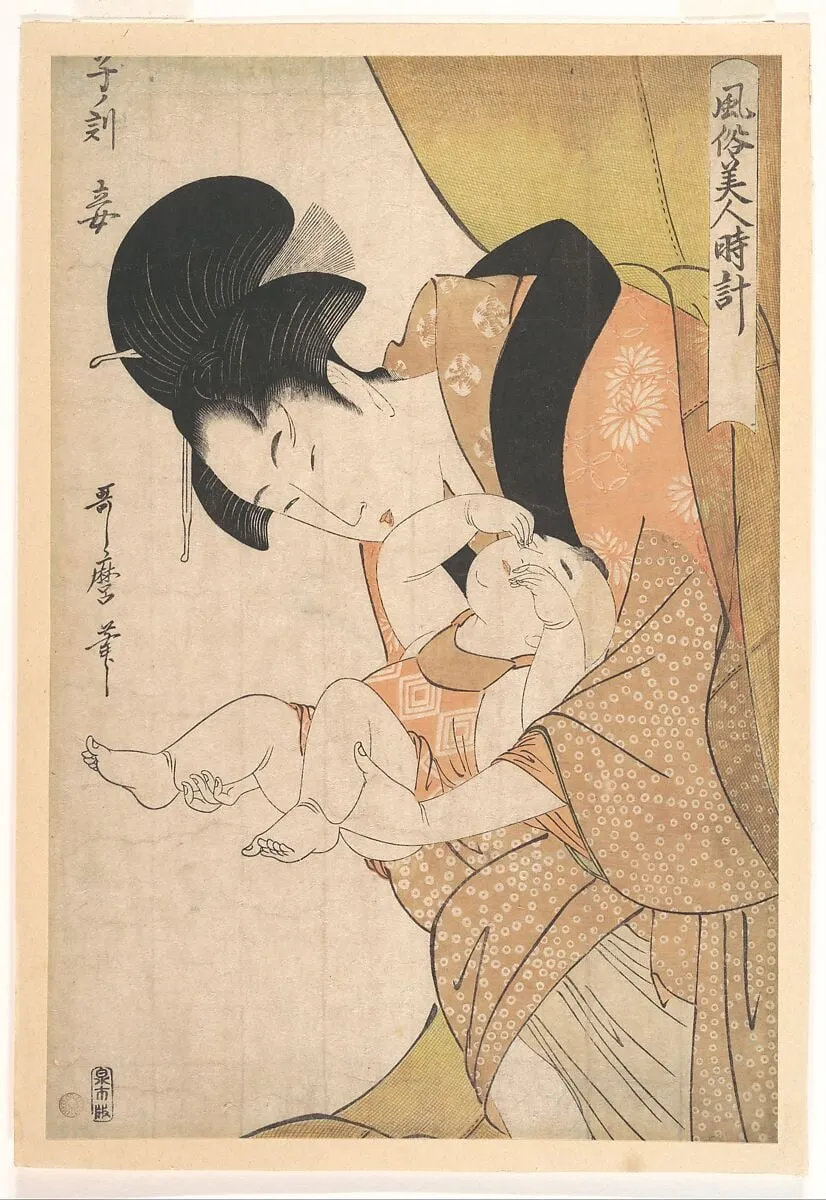
風俗美人時計 子ノ刻 妾|Midnight: Mother and Sleepy Child is an ink print by the Romanticist artist Kitagawa Utamaro. It dates from 1790 and is held in the collection of the Metropolitan Museum of Art.
About this work
Overview
Kitagawa Utamaro’s woodblock print, dated 1790, presents a nocturnal domestic scene titled “Midnight: Mother and Sleepy Child.
Kitagawa Utamaro’s woodblock print, dated 1790, presents a nocturnal domestic scene titled “Midnight: Mother and Sleepy Child.” Executed in ink and color on paper, the image captures a mother gently holding her drowsy infant within a dim interior, the composition framed by a decorative clock. The work belongs to Utamaro’s series of everyday genre prints that depict intimate moments of ordinary life.
Subject & Meaning
The central figures are a woman and her child, rendered in a tender pose that emphasizes maternal care. The child’s head rests against the mother’s shoulder, eyes closed, suggesting a moment of quiet repose. The inclusion of a clock underscores the late‑night hour, reinforcing the theme of private, unobserved time shared between parent and offspring.
Technique & Style
Utamaro employs the ukiyo‑e woodblock method, combining fine line work with subtle color washes to achieve a soft, atmospheric effect. Delicate outlines define the figures, while gradated shading creates a sense of depth and the warm, muted palette conveys the hush of a nighttime interior. The print’s compositional balance and restrained detail exemplify Utamaro’s skill in portraying nuanced human expression.
History & Provenance
Produced for the broader public rather than elite collectors, the print circulated among Edo‑period consumers of popular art. While specific ownership records are scarce, the piece has been documented in several museum collections and catalogues of Utamaro’s oeuvre, confirming its attribution and dating to the late 18th century.
Context
Created during the Kansei era, the work reflects the growing interest in everyday subjects within ukiyo‑e, moving beyond the traditional focus on courtesans and actors. Utamaro’s attention to domestic scenes aligns with contemporary literary trends that celebrated the private lives of ordinary people, offering viewers a glimpse into familial intimacy in Edo‑period Japan.
Artist & collection


 Untitled
 Untitled
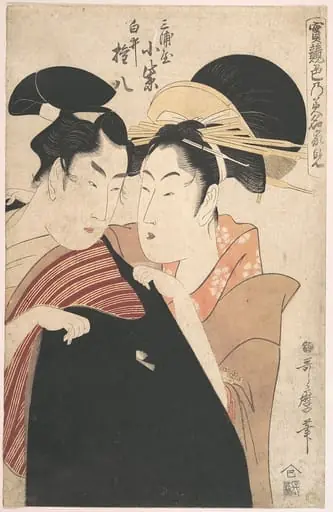 実競色乃美名家見 三浦屋小紫 白井権八|The Lovers Miura-ya Komurasaki and Shirai Gonpachi.
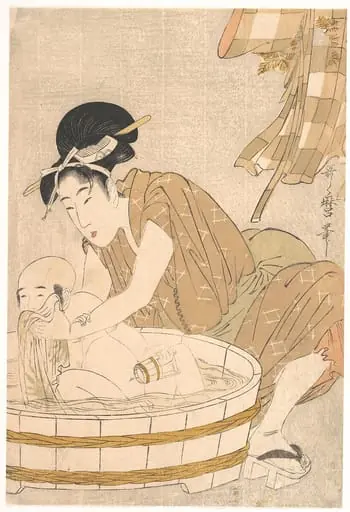 行水|Bathtime (Gyōzui)
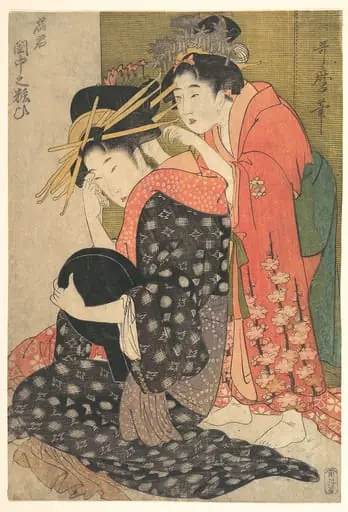 名君 閨中の粧ひ|The Oiran Yoso-oi Seated at Her Toilet
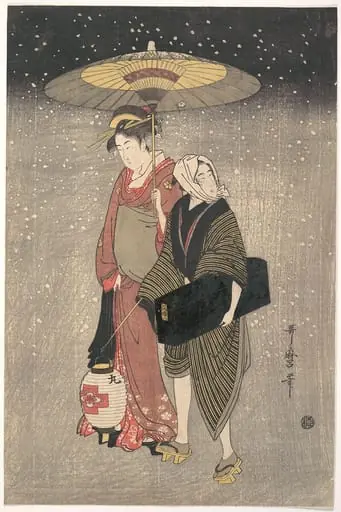 Untitled
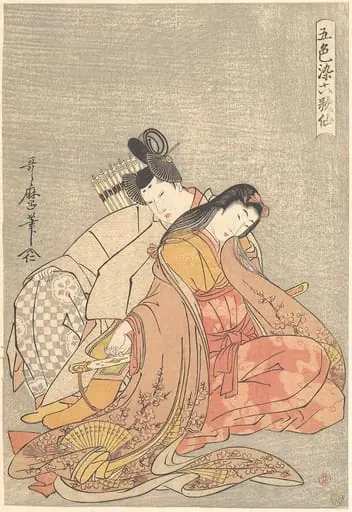 『五色染六歌仙』 在原業平と小野小町|“The Poet Ariwara no Narihira (825–880) and Ono no Komachi,” from the series Five Colors of Love for the Six Poetic Immortals (Goshiki-zome rokkasen)
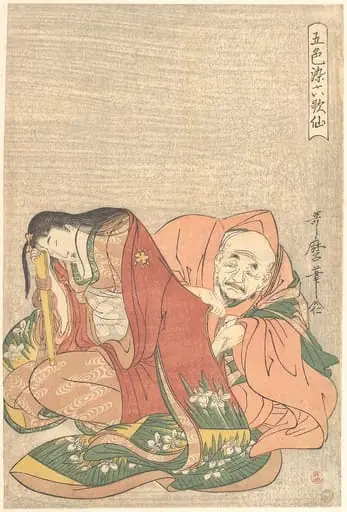 『五色染六歌仙』 僧正遍昭|“The Poet Sōjō Henjō (816–890) Slipping a Letter into a Woman’s Sleeve,” from the series Five Colors of Love for the Six Poetic Immortals (Goshiki-zome rokkasen)