Artwork
実競色乃美名家見 三浦屋小紫 白井権八|The Lovers Miura-ya Komurasaki and Shirai Gonpachi.
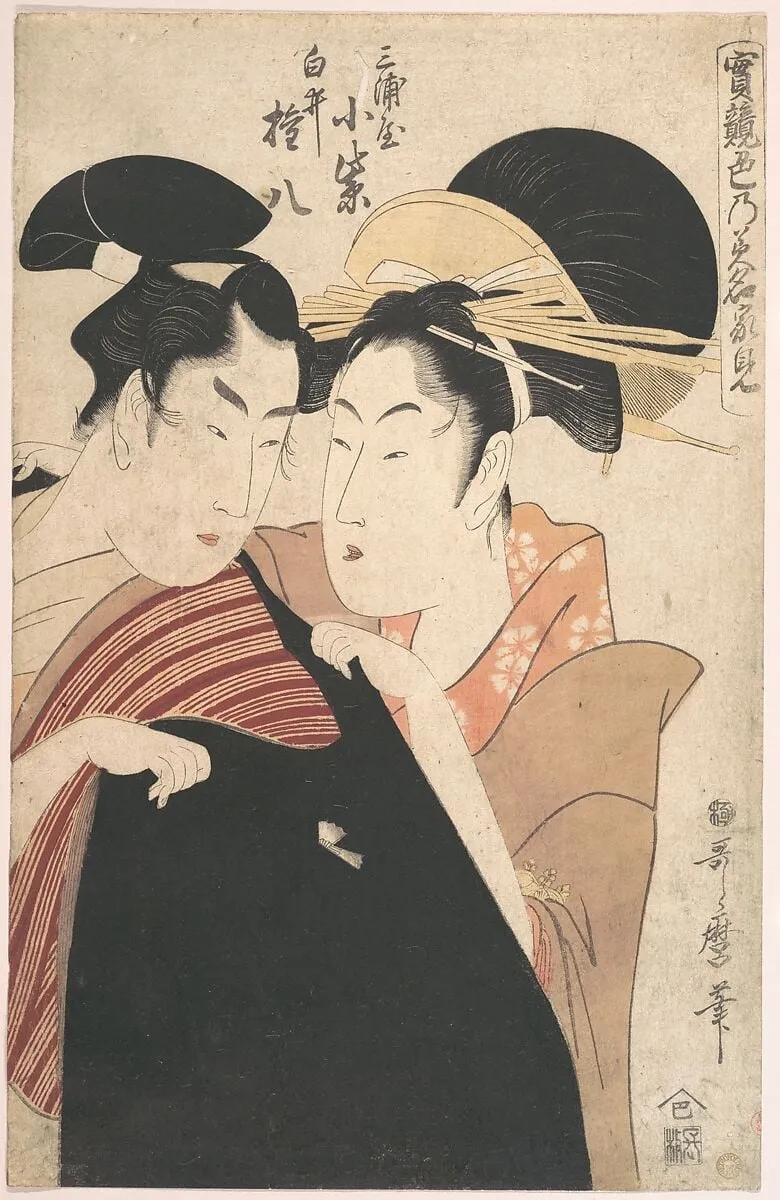
実競色乃美名家見 三浦屋小紫 白井権八|The Lovers Miura-ya Komurasaki and Shirai Gonpachi. is an ink print by the Romanticist artist Kitagawa Utamaro. It dates from 1797 and is held in the collection of the Metropolitan Museum of Art.
About this work
Overview
Kitagawa Utamaro’s woodblock print, dated around 1797, presents an intimate scene featuring the courtesan Komurasaki of the Miura-ya house and the outlaw Shirakawa Gonpachi. Executed with ink and color on paper, the work belongs to the ukiyo-e tradition of portraying celebrated lovers from popular narratives.
Subject & Meaning
The composition centers on the pair seated in a modest interior, their faces drawn close together. Komurasaki wears a soft pink kimono patterned with delicate blossoms, while Gonpachi is clothed in a plain dark robe. Their restrained expressions and the quiet proximity suggest a moment of private affection amid their contrasting social roles.
Technique & Style
Utamaro employs fine line work to define the figures, allowing subtle ink washes to render the warmth of their skin tones. The limited palette—muted pinks, dark blues, and earthy browns—enhances the sense of intimacy, while the flat background emphasizes the couple’s emotional focus.
History & Provenance
Created in the late eighteenth century, the print was part of a series that celebrated famous romantic pairings from contemporary literature and theater. It circulated among the urban populace of Edo, where such images served both decorative and narrative functions.
Context
During the Edo period, ukiyo-e artists frequently depicted courtesans and their lovers, reflecting the city’s fascination with the pleasure quarters. Utamaro’s portrayal aligns with this trend, yet his emphasis on subtle gesture and muted emotion distinguishes it from more overtly dramatic works of the time.
Artist & collection


 Untitled
 Untitled
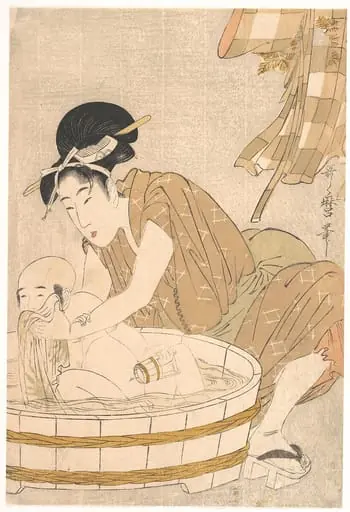 行水|Bathtime (Gyōzui)
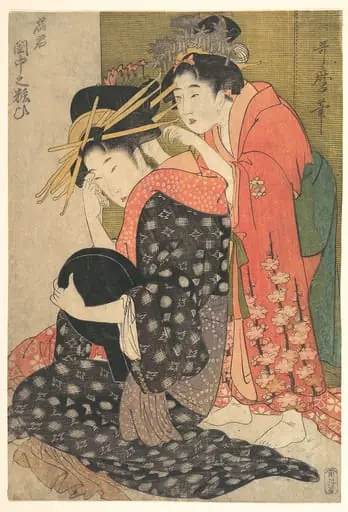 名君 閨中の粧ひ|The Oiran Yoso-oi Seated at Her Toilet
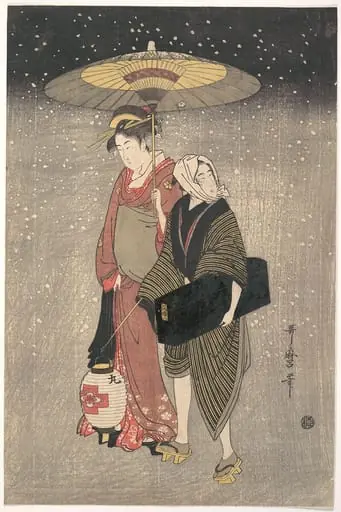 Untitled
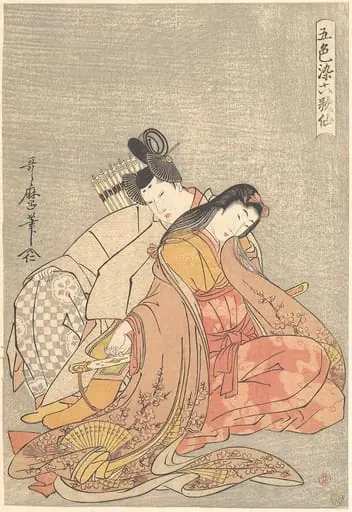 『五色染六歌仙』 在原業平と小野小町|“The Poet Ariwara no Narihira (825–880) and Ono no Komachi,” from the series Five Colors of Love for the Six Poetic Immortals (Goshiki-zome rokkasen)
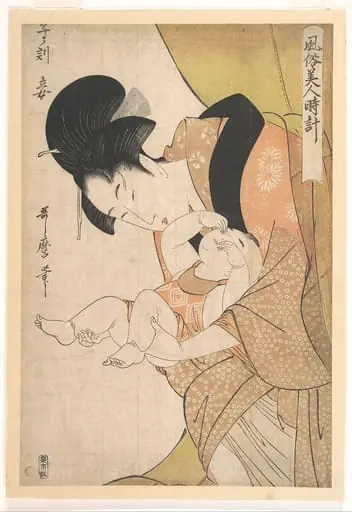 風俗美人時計 子ノ刻 妾|Midnight: Mother and Sleepy Child
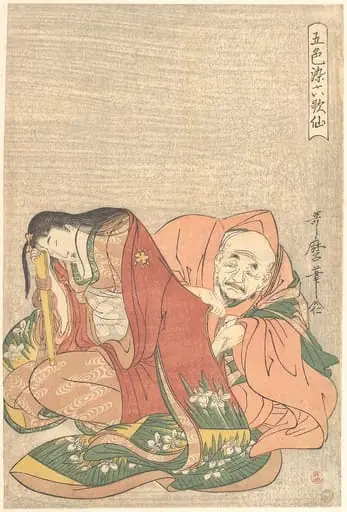 『五色染六歌仙』 僧正遍昭|“The Poet Sōjō Henjō (816–890) Slipping a Letter into a Woman’s Sleeve,” from the series Five Colors of Love for the Six Poetic Immortals (Goshiki-zome rokkasen)