Artwork
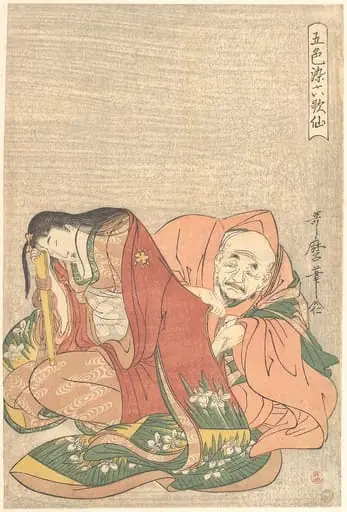
『五色染六歌仙』 在原業平と小野小町|“The Poet Ariwara no Narihira (825–880) and Ono no Komachi,” from the series Five Colors of Love for the Six Poetic Immortals (Goshiki-zome rokkasen)
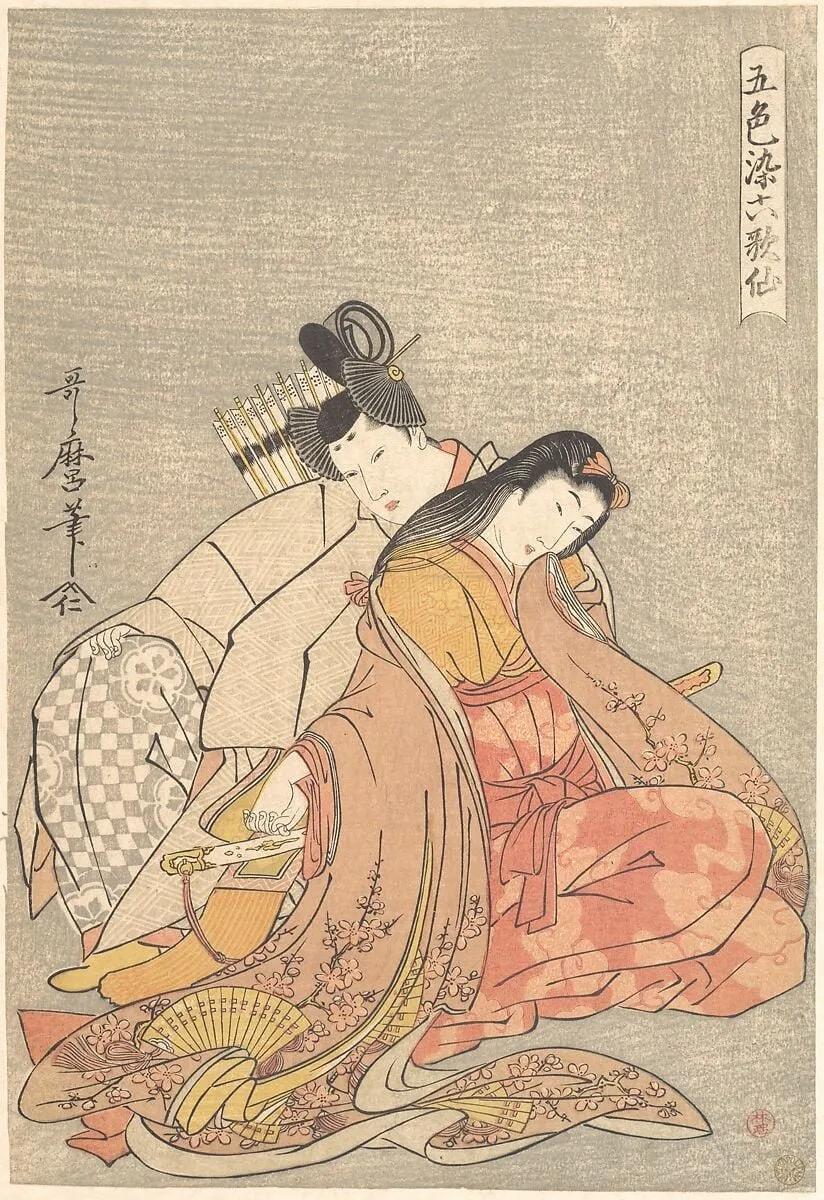
『五色染六歌仙』 在原業平と小野小町|“The Poet Ariwara no Narihira (825–880) and Ono no Komachi,” from the series Five Colors of Love for the Six Poetic Immortals (Goshiki-zome rokkasen) is an ink print by the Romanticist artist Kitagawa Utamaro. It dates from 1798 and is held in the collection of the Metropolitan Museum of Art.
About this work
Overview
Kitagawa Utamaro’s woodblock print, created around 1798, belongs to the series Goshiki‑zome rokkasen, “Five‑color dyed Six Poetic Immortals.” The work presents a trio of figures—Ariwara no Narihira, the celebrated Heian poet, Ono no Komachi, famed for her beauty and verse, and an additional poet—arranged side by side against a softly colored background.
Subject & Meaning
The composition foregrounds two of Japan’s legendary poets, emphasizing their cultural stature. Narihira is shown in a patterned robe with a composed demeanor, while Komachi holds a fan and appears contemplative, suggesting the interplay of masculine and feminine poetic ideals in the Heian court.
Technique & Style
Executed in ink and multiple pigments on paper, the print employs a restrained palette of pinks, greens, and blues typical of the five‑color scheme. Utamaro’s fine line work delineates facial features and garment folds, while the coloration remains delicate yet vivid, reflecting the ukiyo‑e practice of combining elegance with accessible visual appeal.
History & Provenance
Produced in the late eighteenth century, the print reflects the popularity of multi‑panel series that celebrated literary figures for a growing urban audience. As part of the Goshiki‑zome rokkasen set, it would have been distributed among collectors of ukiyo‑e prints, contributing to the broader dissemination of Heian poetry motifs during the Edo period.
Context
The work situates Heian poetic archetypes within the Edo‑era’s fascination with nostalgia for classical culture. By rendering Narihira and Komachi in contemporary ukiyo‑e aesthetics, Utamaro bridges past literary reverence with the visual tastes of his time, aligning the poets with the fashionable world of the pleasure districts.
Artist & collection


 Untitled
 Untitled
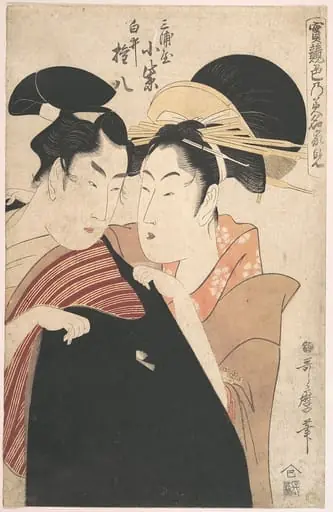 実競色乃美名家見 三浦屋小紫 白井権八|The Lovers Miura-ya Komurasaki and Shirai Gonpachi.
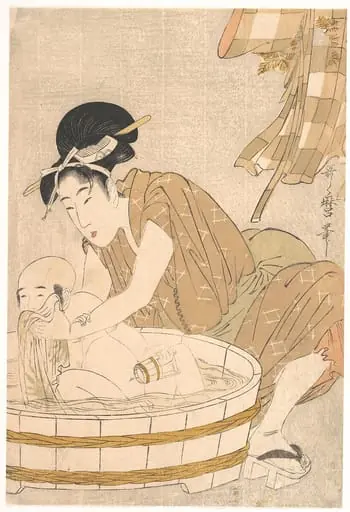 行水|Bathtime (Gyōzui)
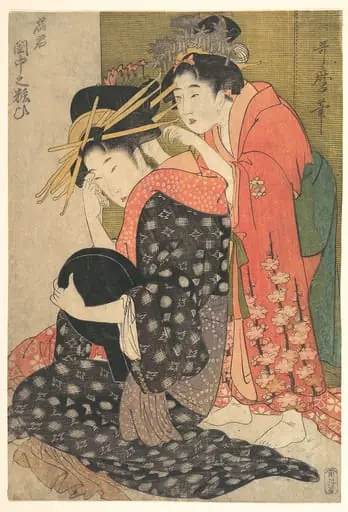 名君 閨中の粧ひ|The Oiran Yoso-oi Seated at Her Toilet
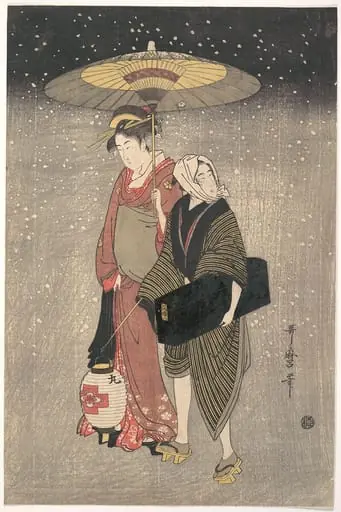 Untitled
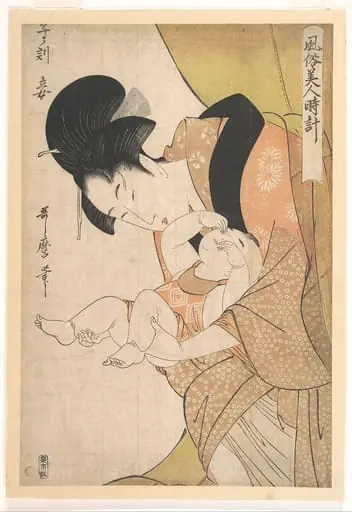 風俗美人時計 子ノ刻 妾|Midnight: Mother and Sleepy Child
 『五色染六歌仙』 僧正遍昭|“The Poet Sōjō Henjō (816–890) Slipping a Letter into a Woman’s Sleeve,” from the series Five Colors of Love for the Six Poetic Immortals (Goshiki-zome rokkasen)