Artwork
行水|Bathtime (Gyōzui)
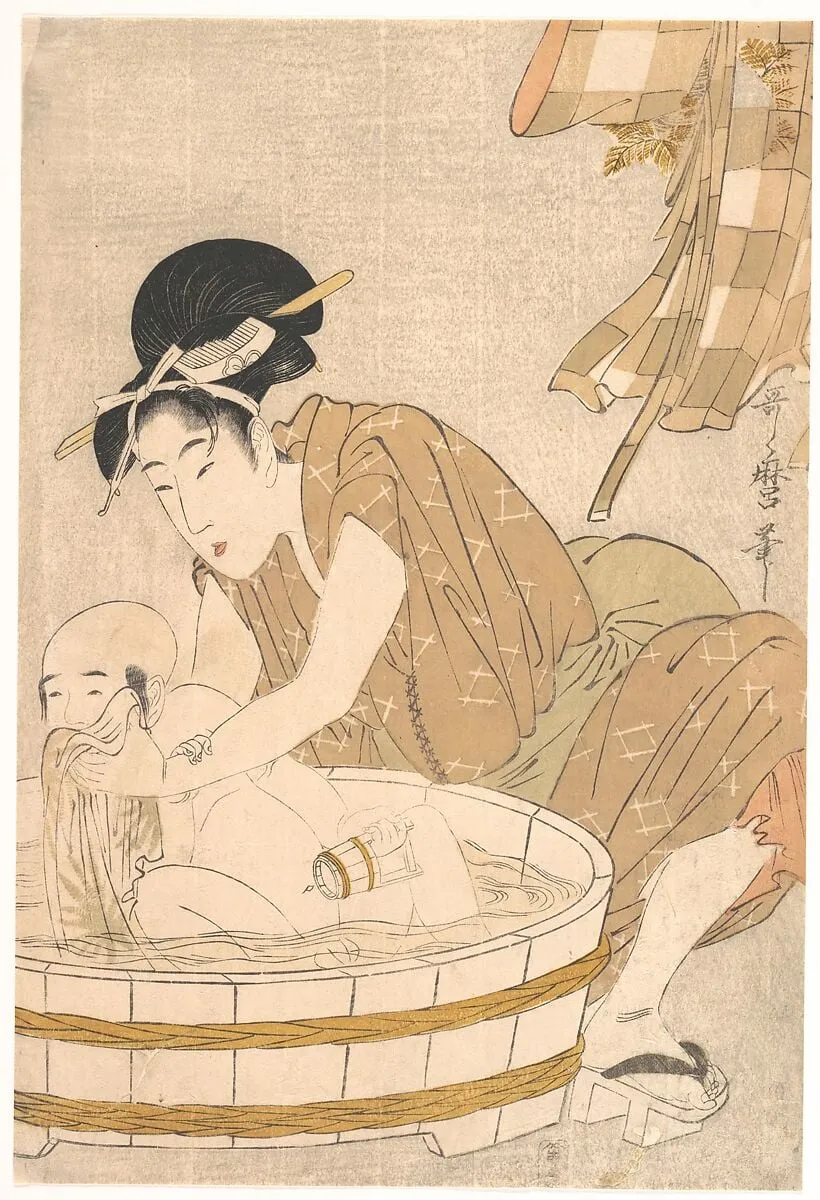
行水|Bathtime (Gyōzui) is an ink print by the Romanticist artist Kitagawa Utamaro. It dates from 1801 and is held in the collection of the Metropolitan Museum of Art. Kitagawa Utamoro’s woodblock print, titled 行水 (Gyōzui, “Bathtime”), dates from around 1801.
About this work
Overview
Kitagawa Utamoro’s woodblock print, titled 行水 (Gyōzui, “Bathtime”), dates from around 1801. Executed in ink and color on paper, the image captures a domestic scene of a woman assisting a child during a bath, rendered in the delicate style characteristic of early‑19th‑century Japanese prints.
Subject & Meaning
The composition shows a mother kneeling on a wooden floor, tilting a bucket to pour water over a young girl who stands in a shallow tub. The child’s hands are clasped, and a faint veil of steam rises, emphasizing the intimacy and routine care of daily life in Edo‑period households.
Technique & Style
Utamaro employs fine line work and subtle coloration to convey the softness of the steam and the texture of the wooden floor. The restrained palette and careful gradations of ink create a quiet atmosphere, while the precise carving highlights the figures’ gestures without overt dramatization.
History & Provenance
Part of a series that documented ordinary moments, this print illustrates Utamaro’s interest in everyday domestic activities. It was produced in the early 1800s, a period when ukiyo‑e artists increasingly turned to scenes of private life, expanding the genre beyond its earlier focus on actors and courtesans.
Context
During the Edo era, bathing rituals held both hygienic and social significance, especially for families. Prints like Gyōzui offered viewers a glimpse into these private rituals, reflecting broader cultural values of modesty, familial duty, and the aesthetic appreciation of mundane tasks.
Artist & collection


 Untitled
 Untitled
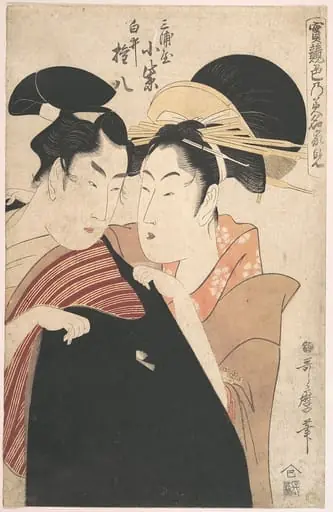 実競色乃美名家見 三浦屋小紫 白井権八|The Lovers Miura-ya Komurasaki and Shirai Gonpachi.
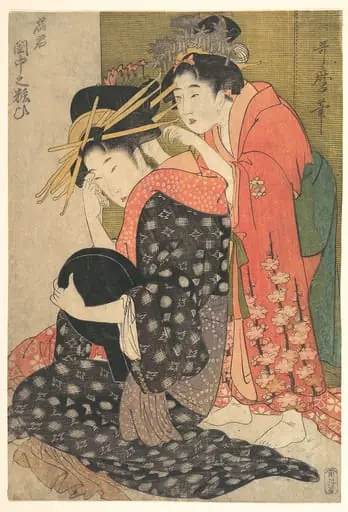 名君 閨中の粧ひ|The Oiran Yoso-oi Seated at Her Toilet
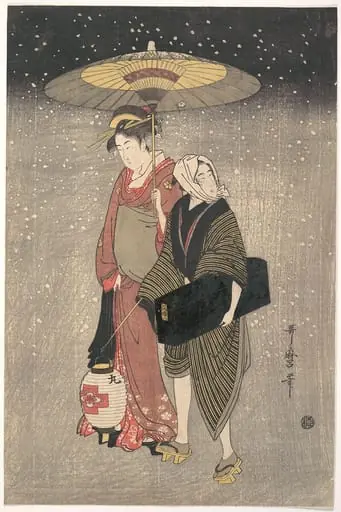 Untitled
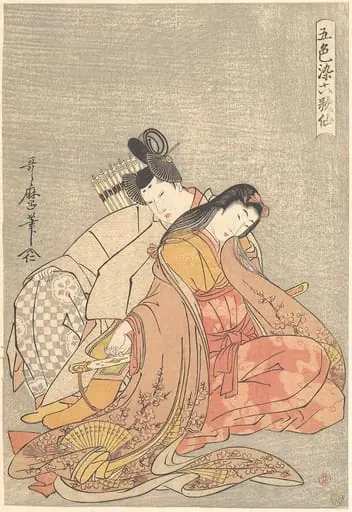 『五色染六歌仙』 在原業平と小野小町|“The Poet Ariwara no Narihira (825–880) and Ono no Komachi,” from the series Five Colors of Love for the Six Poetic Immortals (Goshiki-zome rokkasen)
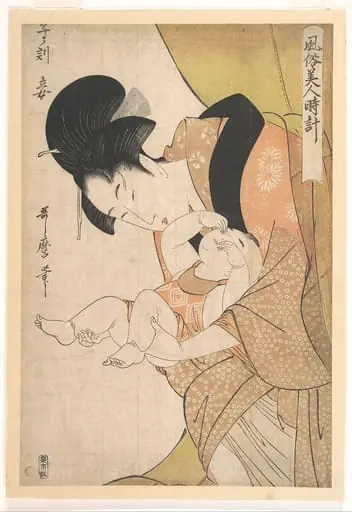 風俗美人時計 子ノ刻 妾|Midnight: Mother and Sleepy Child
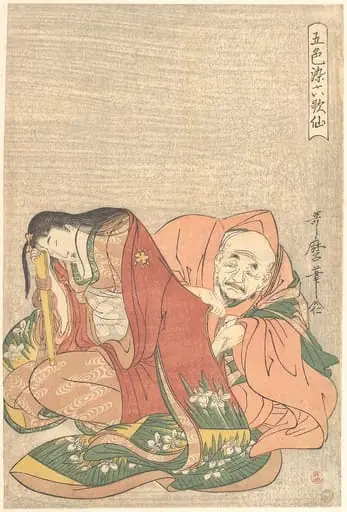 『五色染六歌仙』 僧正遍昭|“The Poet Sōjō Henjō (816–890) Slipping a Letter into a Woman’s Sleeve,” from the series Five Colors of Love for the Six Poetic Immortals (Goshiki-zome rokkasen)