Artwork
Chushingura: Act IX of The Storehouse of Loyalty
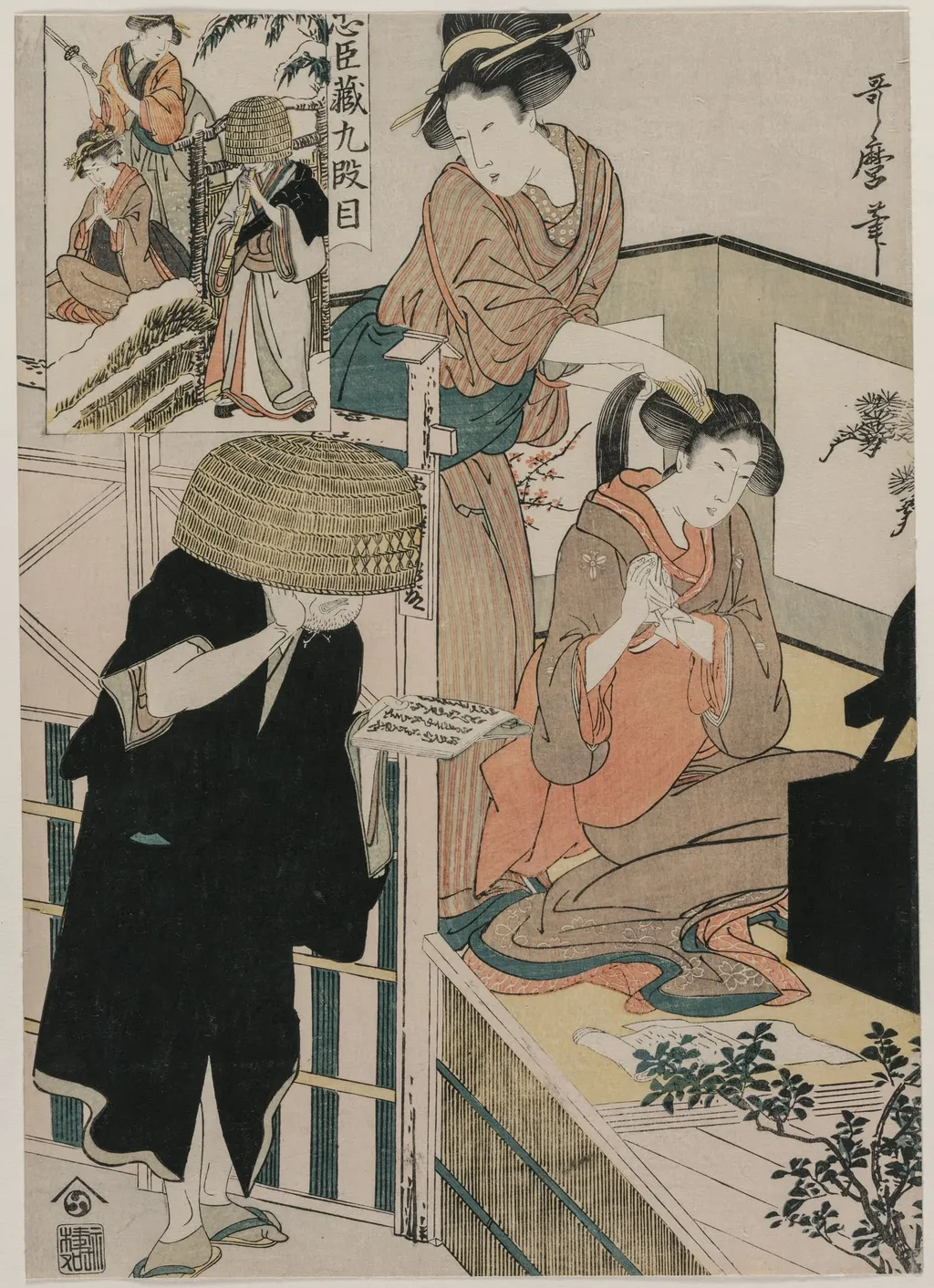
Chushingura: Act IX of The Storehouse of Loyalty is a print by the Romanticist artist Kitagawa Utamaro. It dates from 1794 and is held in the collection of the Cleveland Museum of Art.
About this work
A mother kneels with a sword raised over her daughter. The room is dark but the blade gleams. Both women wear kimono with stiff folds.
This scene comes from a famous Japanese play. The plot turns on a broken promise and near-tragedy. Utamaro shows raw emotion in simple shapes and lines.
See how the mother’s shadow stretches across the tatami. It hints at the weight she feels.
Look up Kitagawa Utamaro (Japanese, c. 1754–1806).
Overview
Both figures are dressed in kimono with sharply defined folds, and the mother’s shadow stretches across the tatami, underscoring the tension of the scene.
Kitagawa Utamaro’s woodblock print, titled “Chushingura: Act IX of The Storehouse of Loyalty,” reinterprets a climactic moment from the celebrated Japanese play Chushingura. The image shows a mother poised with a sword above her daughter, set in a dim interior where the blade catches the light. Both figures are dressed in kimono with sharply defined folds, and the mother’s shadow stretches across the tatami, underscoring the tension of the scene.
Subject & Meaning
The composition draws on Act IX of the play, in which the mother Tonase, spurned by her daughter’s rejected marriage contract, prepares to kill her child and then take her own life. In Utamaro’s version, the violent drama is softened into a domestic tableau: the mother appears to be brushing her daughter’s hair while an itinerant priest reads aloud, suggesting a shift from tragedy to everyday intimacy.
Technique & Style
Utamaro employs stark, simplified lines to convey the figures’ emotions, using contrast between the dark interior and the gleaming sword to focus attention on the central action. The rendering of the kimono’s stiff folds and the elongated shadow across the tatami demonstrate his skill in balancing detail with abstraction, creating a sense of immediacy within the limited space of a print.
History & Provenance
The print belongs to a series produced in the late 18th century, a period when Utamaro frequently created parody works that referenced popular theater. It is catalogued as part of the museum’s collection under the accession number 1985.338.9, indicating its acquisition alongside related stage‑scene illustrations.
Context
Chushingura, based on the historical Akō incident, was one of the most performed plays of the Edo period, celebrated for its themes of loyalty and honor. Utamaro’s parody reflects the era’s vibrant culture of ukiyo‑e prints that both documented and humorously re‑imagined theatrical spectacles for a broad audience.
Own this work as a print
Artist & collection


 Untitled
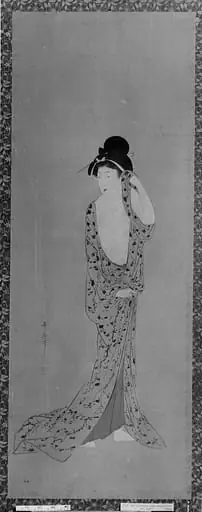 Untitled
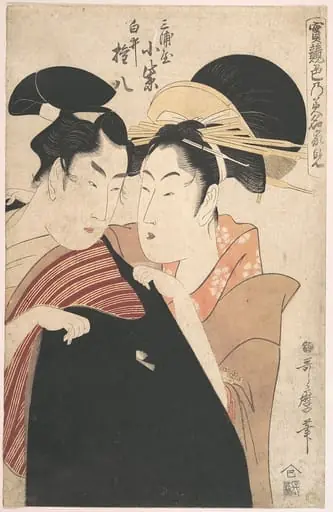 実競色乃美名家見 三浦屋小紫 白井権八|The Lovers Miura-ya Komurasaki and Shirai Gonpachi.
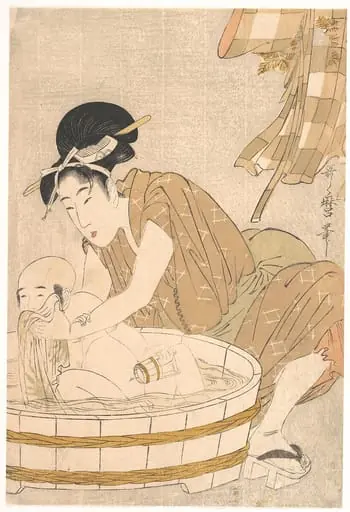 行水|Bathtime (Gyōzui)
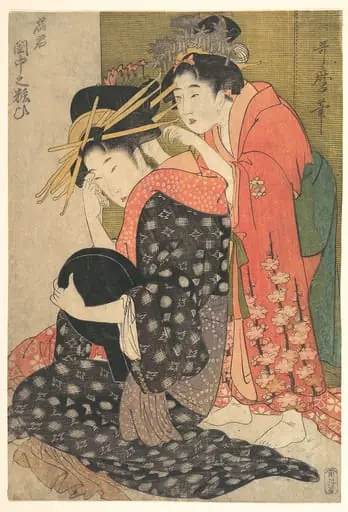 名君 閨中の粧ひ|The Oiran Yoso-oi Seated at Her Toilet
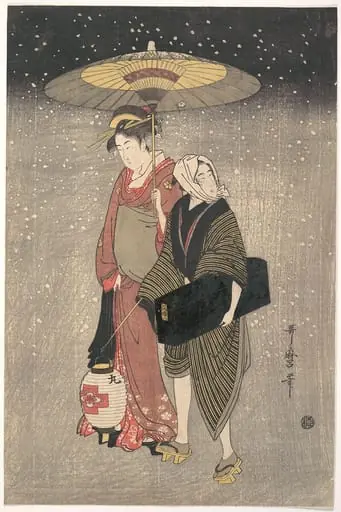 Untitled
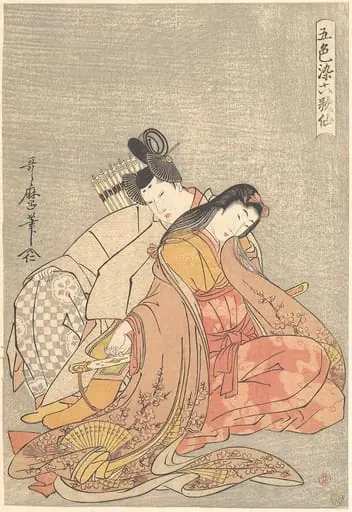 『五色染六歌仙』 在原業平と小野小町|“The Poet Ariwara no Narihira (825–880) and Ono no Komachi,” from the series Five Colors of Love for the Six Poetic Immortals (Goshiki-zome rokkasen)
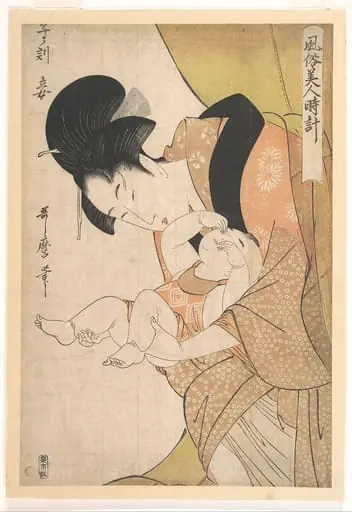 風俗美人時計 子ノ刻 妾|Midnight: Mother and Sleepy Child