Artwork
Der Verliebte (The Loved One)
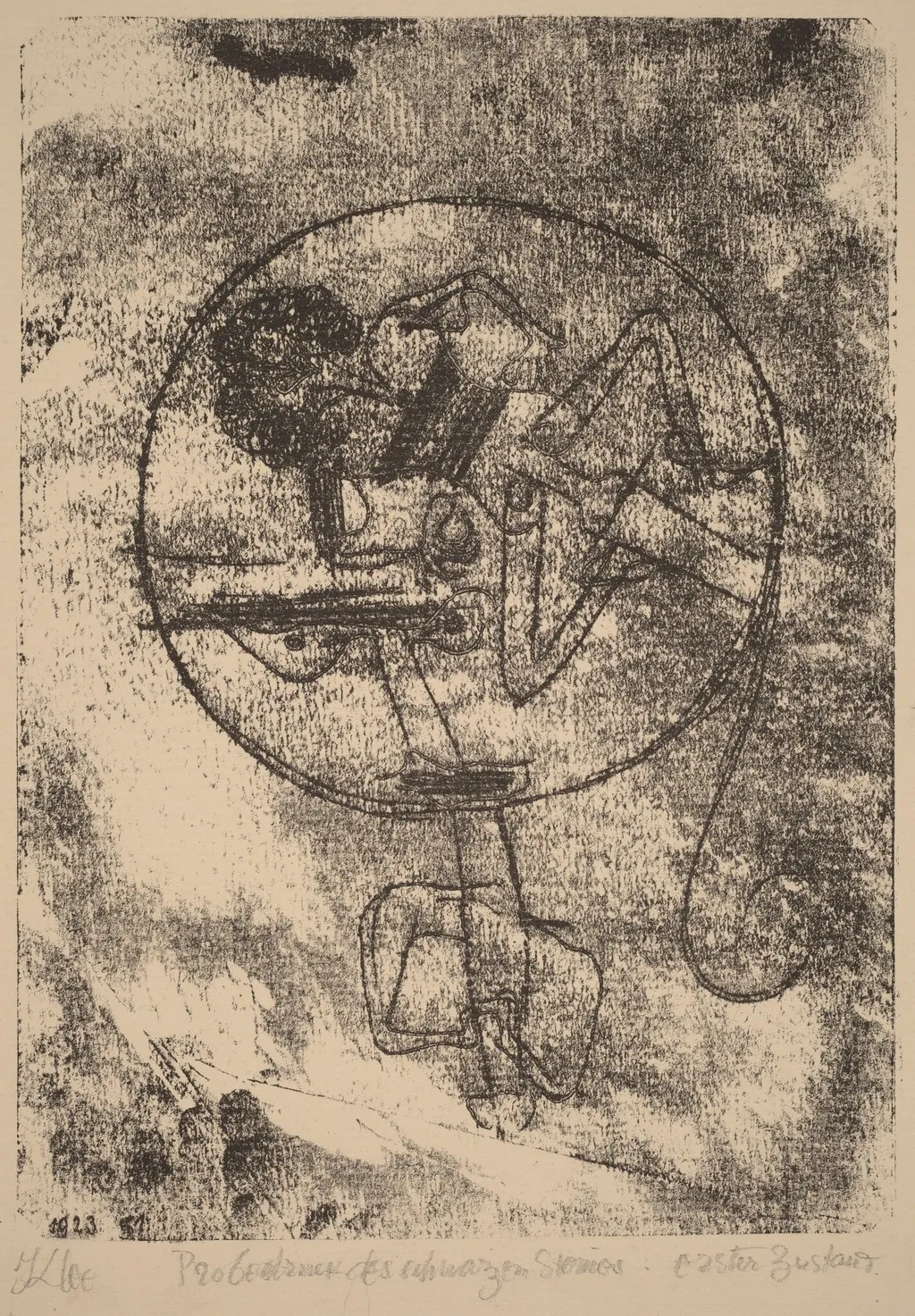
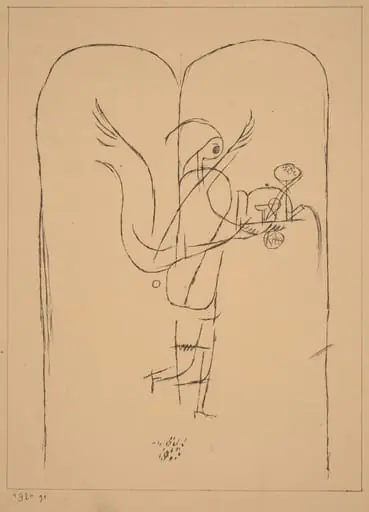
Der Verliebte (The Loved One) is an ink print by Paul Klee. It dates from 1923 and is held in the collection of the National Gallery of Art.
About this work
Overview
As a Swiss-born artist active in Germany, he engaged with multiple modernist currents while developing a personal visual language.
Paul Klee produced the lithograph Der Verliebte in 1923, during a period of intense experimentation with form and symbolism. As a Swiss-born artist active in Germany, he engaged with multiple modernist currents while developing a personal visual language. This print exemplifies his interest in reducing figures to essential lines and shapes, using the lithographic process to achieve subtle tonal variations and clean, deliberate contours.
Subject & Meaning
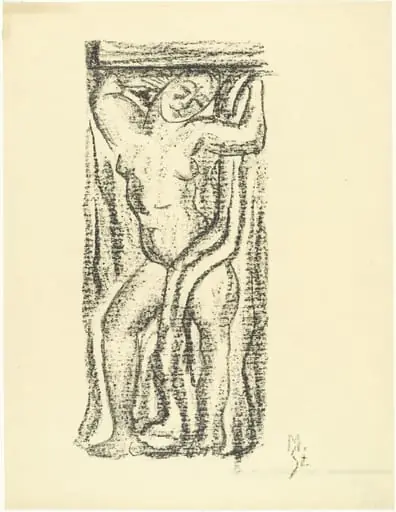
The figure in Der Verliebte is an abstracted human form, rendered with minimal features: two dots for eyes, a curved line for a mouth, and limbs arranged in a dynamic, upward-reaching posture. Its title suggests affection or ecstasy, though Klee avoids literal narrative. Instead, the pose evokes emotional states—joy, surrender, or motion—through gesture alone, inviting interpretation without anchoring it to a specific story.
Technique & Style
Klee employed lithography to exploit its capacity for fine gradations of tone and sharp linear precision. The image relies on stark contrasts between black ink and the paper’s white surface, with mottled gray textures created through stippling and washes. The figure’s bold outlines and simplified anatomy reflect his belief in drawing as the foundation of art, while the medium’s neutrality enhances the work’s quiet, meditative quality.
History & Provenance
Created in 1923, Der Verliebte emerged during Klee’s tenure at the Bauhaus, where he taught color theory and form. It was likely made as part of a series of small-scale prints exploring symbolic figures. The work entered public collections in the decades following its creation, preserved as an example of Klee’s printmaking innovation and his contribution to early 20th-century graphic art.
Context
In the early 1920s, Klee was synthesizing influences from Expressionism, Cubism, and emerging Surrealist ideas, while distancing himself from their more overt emotional or political agendas. Der Verliebte reflects this synthesis: its abstraction echoes the formal rigor of Cubism, its emotional resonance aligns with Expressionism, yet its ambiguity and poetic tone anticipate Surrealist interests in the subconscious and the symbolic.
Legacy
Der Verliebte exemplifies Klee’s enduring influence on postwar artists who valued abstraction as a vehicle for psychological and poetic expression. His integration of drawing, color, and printmaking techniques became a model for later generations. The work’s quiet complexity continues to be studied for its balance between simplicity and depth, reinforcing his reputation as a thinker-artist who expanded the possibilities of visual language.
Artist & collection
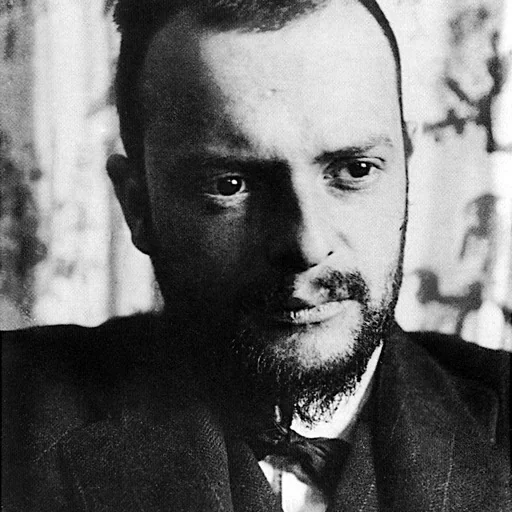
Artist
Paul Klee (German: ; 18 December 1879 – 29 June 1940) was a Swiss-born German artist.

![Oviri (The Savage) [recto], by Paul Gauguin](https://artifactworldgallery.com/img/paul-gauguin--oviri-the-savage-recto--026f405dcdd65283-w320.webp)