Artwork
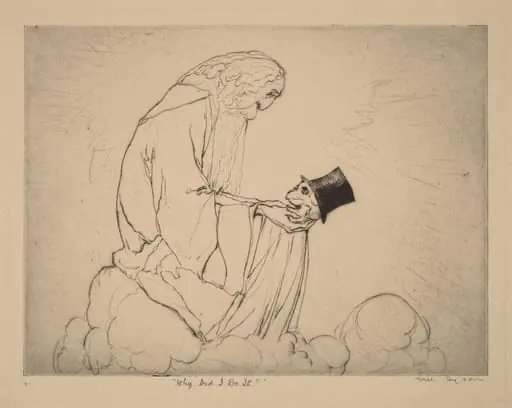
"Can you forgive me Father?" - "Can you forgive me daughter?"
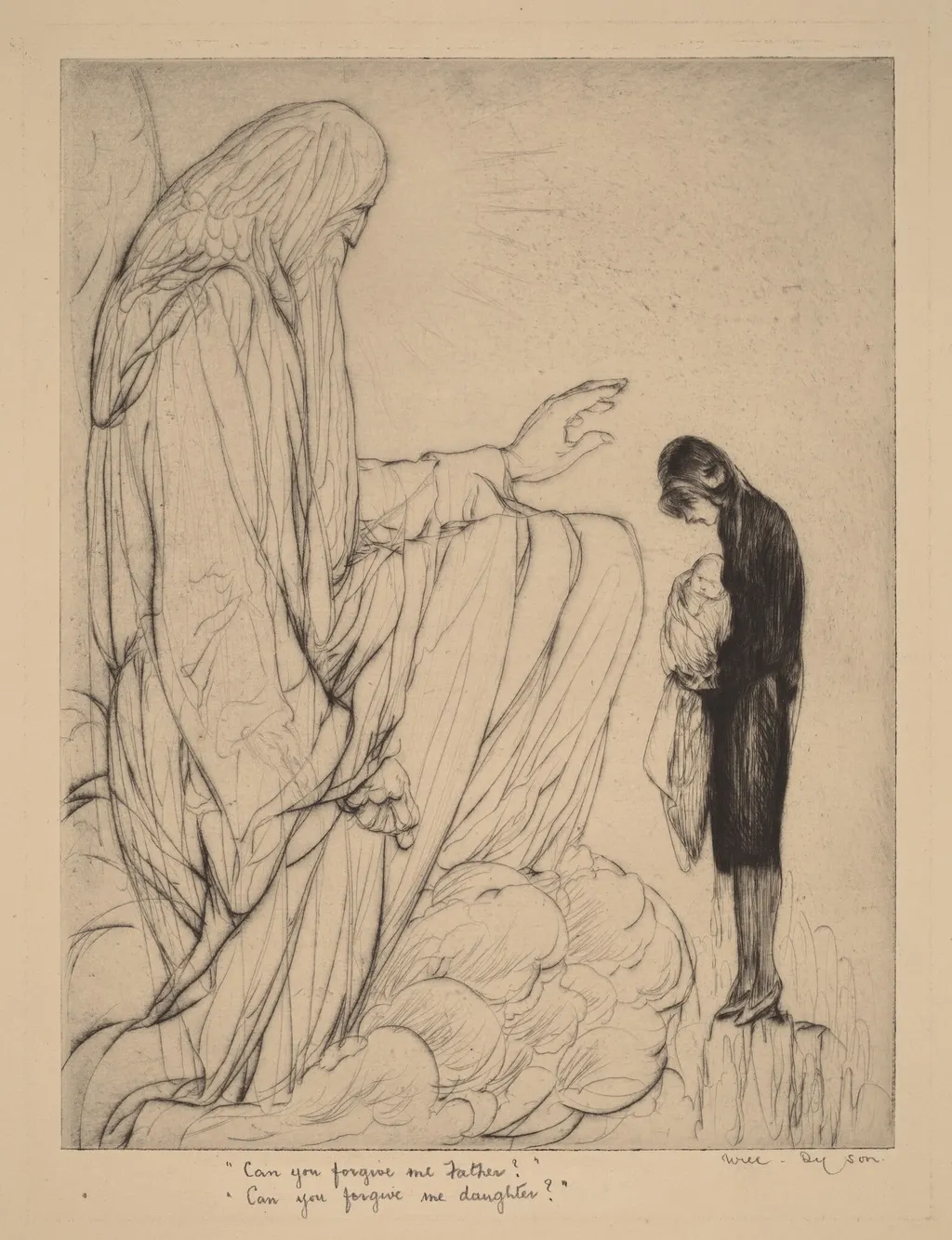
"Can you forgive me Father?" - "Can you forgive me daughter?" is an ink print by the Impressionist artist Will Dyson. It dates from 1909 and is held in the collection of the National Gallery of Art.
About this work
Overview
The title’s dual questions frame the scene as an appeal for absolution, leaving the nature of the transgression ambiguous yet deeply felt.
Created in 1909, this drypoint by Will Dyson captures a moment of profound emotional rupture within a domestic setting. The work is one of several intimate, psychologically charged prints Dyson produced during this period, using the medium’s capacity for raw, expressive line to convey inner turmoil. The title’s dual questions frame the scene as an appeal for absolution, leaving the nature of the transgression ambiguous yet deeply felt.
Subject & Meaning
Three figures inhabit a confined, shadowed space: one kneels with a child, another stands with arms raised as if in surrender or prayer, and a third lies prone on the floor. The composition suggests a family in crisis, possibly after violence or abandonment. The repeated plea for forgiveness—addressed to both a paternal and filial figure—implies a collapse of traditional roles, where guilt and responsibility are entangled across generations.
Technique & Style
Dyson employed drypoint to achieve a tactile, urgent quality, allowing the needle to scratch directly into the plate and retain rich, fuzzy ink lines. The rough, uneven strokes heighten the sense of emotional instability, while the absence of fine detail focuses attention on posture and gesture. The dark, compressed space amplifies the psychological weight, with minimal background to distract from the figures’ silent anguish.
History & Provenance
This print emerged during Dyson’s early career in London, when he was producing socially observant illustrations for radical publications. Though not widely exhibited at the time, it was included in private collections of modern British printmakers. Its survival reflects its resonance within circles interested in emotional realism, though its exact provenance before the mid-20th century remains undocumented.
Context
Dyson’s work in 1909 reflected broader cultural anxieties about family, morality, and class in Edwardian Britain. As industrialization strained traditional households, artists increasingly turned to intimate scenes to explore psychological strain. This print aligns with contemporaneous efforts by social realists to depict private suffering, moving beyond public spectacle to the quiet tragedies of domestic life.
Legacy
Though not among Dyson’s most reproduced works, this print is recognized for its unflinching emotional honesty. It anticipates later 20th-century explorations of familial trauma in printmaking and graphic narrative. Scholars cite it as an early example of how drypoint could convey psychological depth without narrative exposition, influencing artists seeking to express inner states through direct, unadorned mark-making.
Own this work as a print
Artist & collection

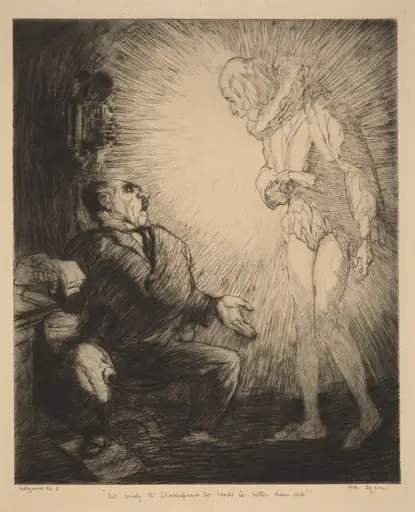
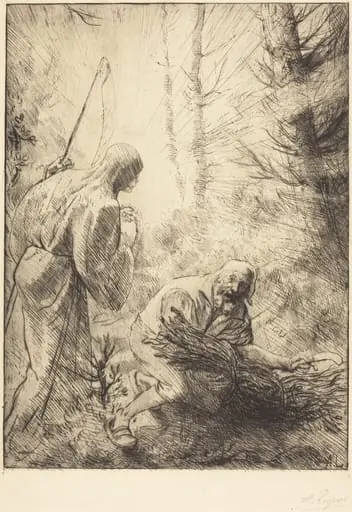 Death and the Woodcutter, 2nd plate (La mort et le bucheron)
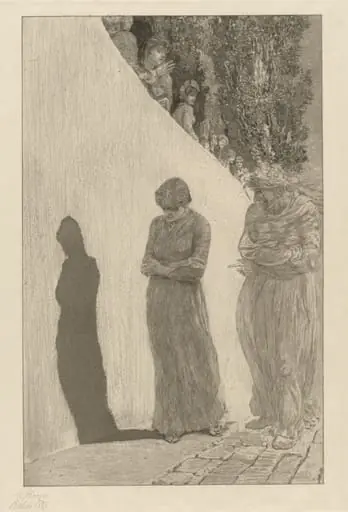 Disgrace (Schande): pl. 9
 Caresses
 Le retour de l'enfant prodigue (3e planche) (The Return of the Prodigal Son) (third plate)
 Fille-mère (1ère planche) (Unwed Mother) (first plate)
 Le Sphynx...mon regard que rien ne peut devier, demeure tendu a travers les choses sur un horizon inaccessible. La Chimere: Moi,Je suis legere et joyeuse (The Sphinx: "My gaze, which nothing can deflect, passes through the things and remains fixed on an inaccessible horizon." The Chimera: "I am weightless and joyful")
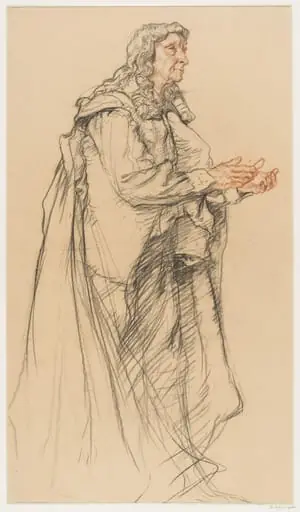 Prince Rupert receiving the Charter of the Hudson Bay Company from Charles II
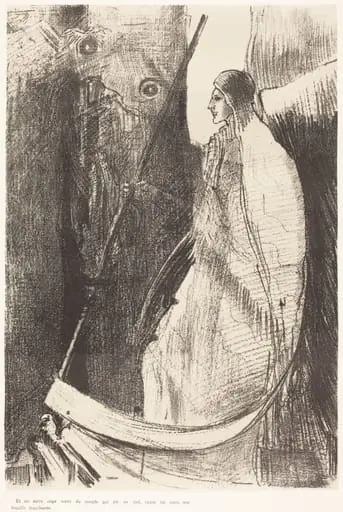 Et un autre ange sortit du temple qui est au ciel, ayant lui aussi une faucille tranchante (And another angel came out of the temple which is in heaven, and he also having a sharp sickle)
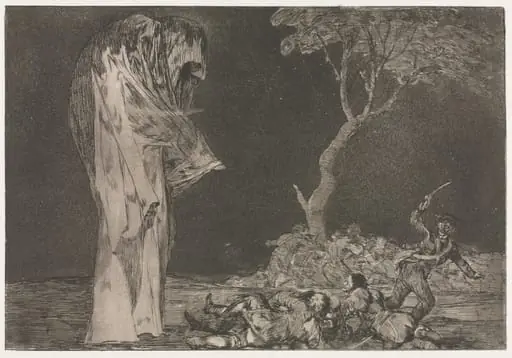 The Proverbs: Folly of Fear
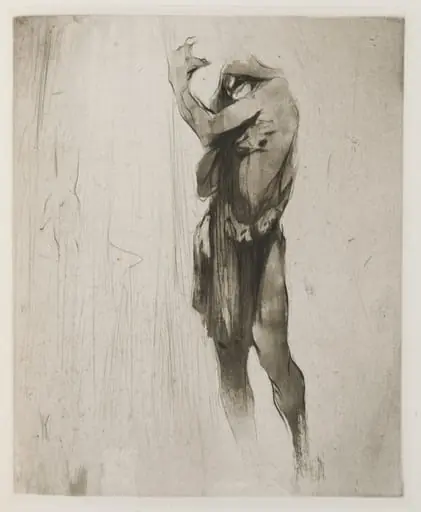 Herodias: Page 27, The voice rose: Woe to thee, Pharisees and Sadducees, race of vipers, bursting with pride!