Artwork
Revolt (Aufruhr)
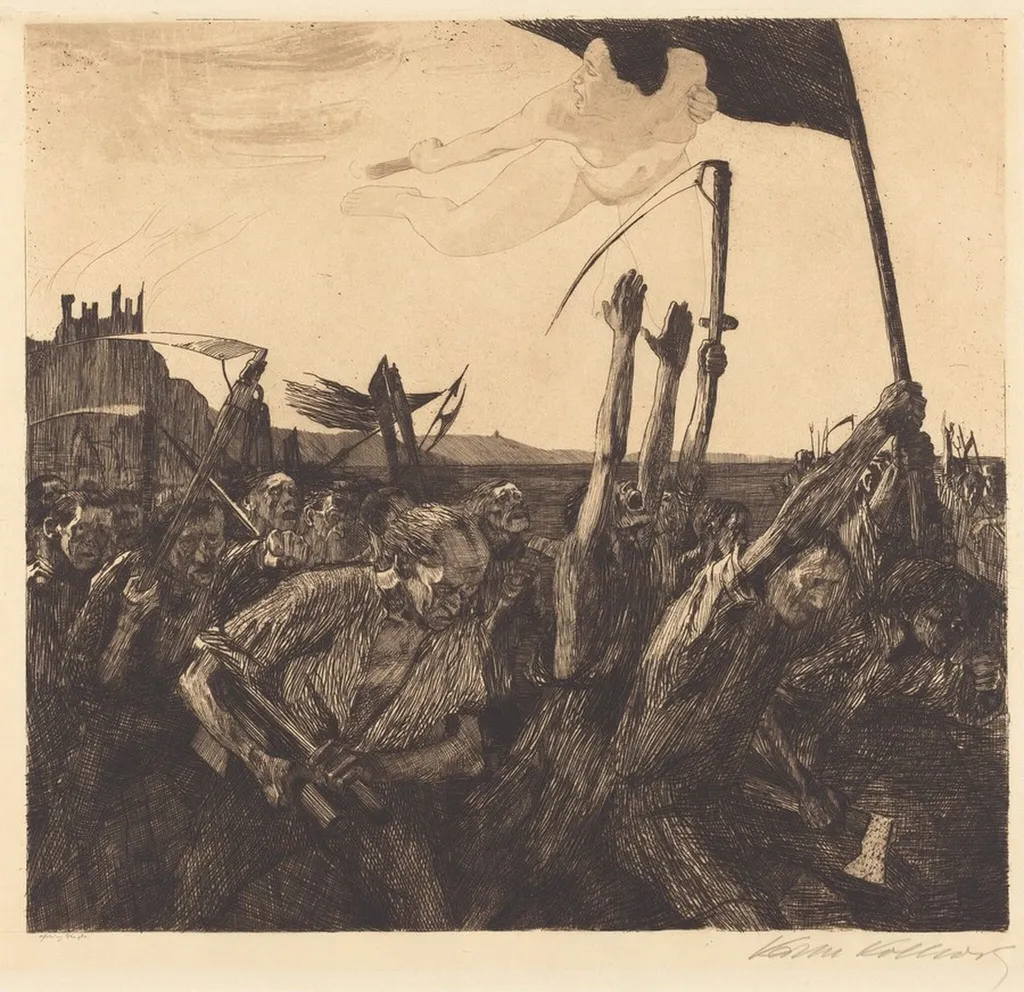
Revolt (Aufruhr) is an ink print by the Impressionist artist Käthe Kollwitz. It dates from 1899 and is held in the collection of the National Gallery of Art.
About this work
Overview
Unlike her later, more abstracted expressions, this piece retains a grounded realism while channeling raw emotional energy through its dense, incised lines.
Created in 1899, *Revolt (Aufruhr)* is an etching by Käthe Kollwitz that captures a moment of collective uprising. Part of her early printmaking series addressing social injustice, the work reflects her commitment to portraying the plight of the oppressed. Unlike her later, more abstracted expressions, this piece retains a grounded realism while channeling raw emotional energy through its dense, incised lines.
Subject & Meaning
The scene depicts a disordered crowd of laborers, some armed with spears, others collapsing or reaching upward in desperation. Above them, a shadowy, monumental figure looms—possibly symbolizing the state, feudal power, or an inescapable force of oppression. The castle in the background reinforces the imbalance of power, suggesting that rebellion is met with institutional resistance, not victory.
Technique & Style
Kollwitz employed etching to achieve sharp, jagged textures that convey urgency and turmoil. The lines are thick, overlapping, and deliberately rough, avoiding smooth finishes to heighten the sense of chaos. The contrast between the dark, agitated foreground and the faint, looming background creates depth without clarity, emphasizing the psychological weight of the moment over narrative detail.
History & Provenance
This print emerged during Kollwitz’s formative years as a social realist, preceding her involvement with Expressionism. It was produced alongside other works in her *Peasant War* series, which drew inspiration from 16th-century uprisings but resonated with late-19th-century labor struggles. The work was widely circulated in periodicals and exhibitions, helping establish her reputation as a voice for the marginalized.
Context
In late 19th-century Germany, industrialization intensified class divisions, and artists increasingly turned to printmaking to reach broader audiences. Kollwitz’s work aligned with socialist circles and reformist movements. *Revolt* reflects both the influence of contemporary political unrest and her personal empathy for the working poor, shaped by her husband’s medical practice among the urban underclass.
Legacy
Though not her most famous work, *Revolt* exemplifies Kollwitz’s early commitment to using art as a tool of social witness. Its raw aesthetic and unflinching subject matter influenced later generations of printmakers and political artists. Her career, marked by firsts for women in German art institutions, cemented her role as a pivotal figure in 20th-century graphic art.
Artist & collection
Artist
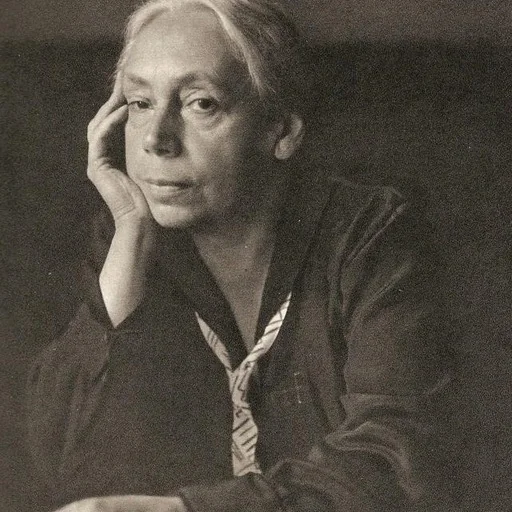
Käthe Kollwitz (German pronunciation: born Schmidt; 8 July 1867 – 22 April 1945) was a German artist who worked with painting, printmaking (including etching, lithography and woodcuts) and sculpture.

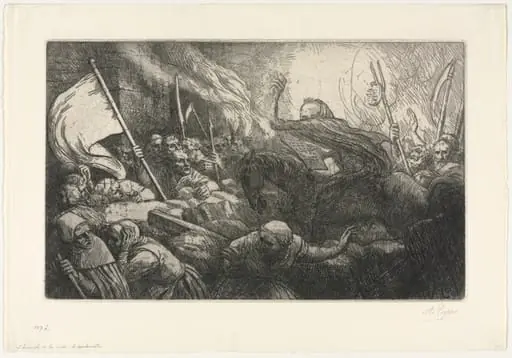 The Triumph of Death: The Proclamation
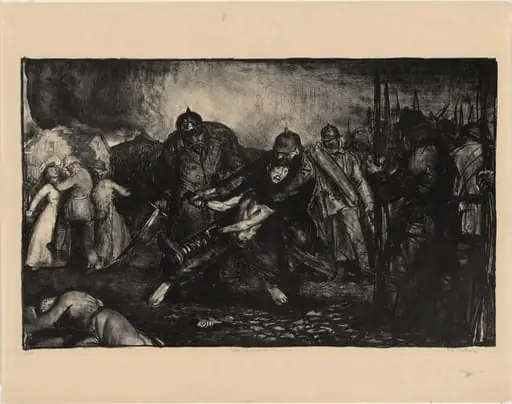 The Germans Arrive
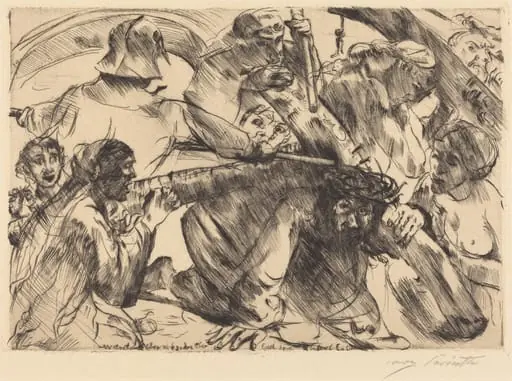 Christ Bearing the Cross (Kreuztragung)
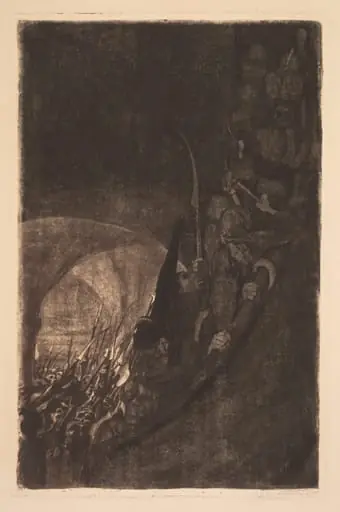 Peasants' War: Arming in a Vault
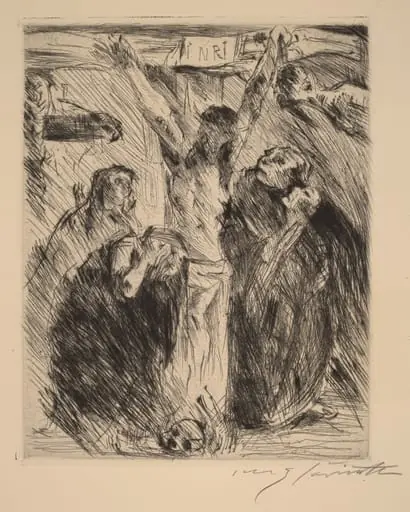 Kreuzigung, nach dem Altarbild in Tölz (Crucifixion, after the Altarpiece at Tölz)
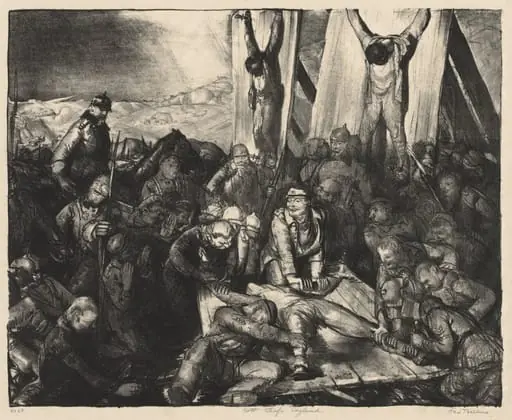 War Series: Gott Strafe, England
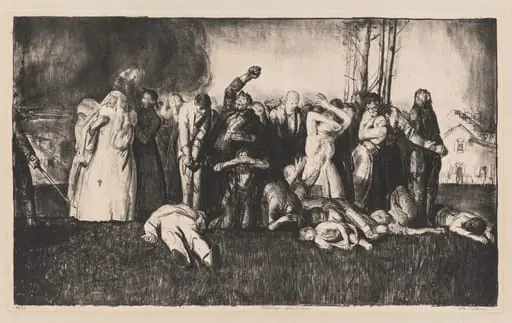 Massacre at Dinant
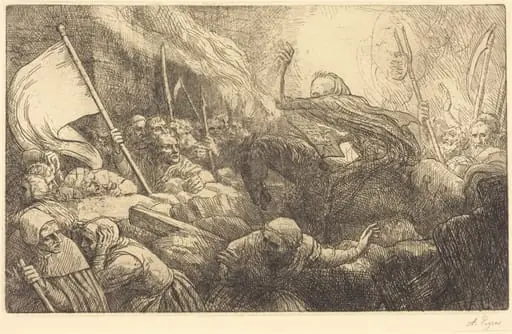 The Triumph of Death: Proclamation (Le triomphe de la mort: La proclamation)
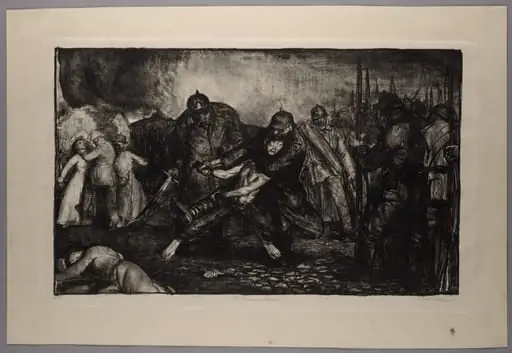 War Series: The Germans Arrive
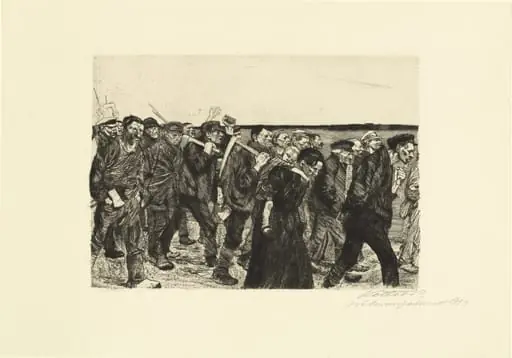 Untitled
 Untitled
 German Raid on a Village