Artwork
Naval battle at Lissa
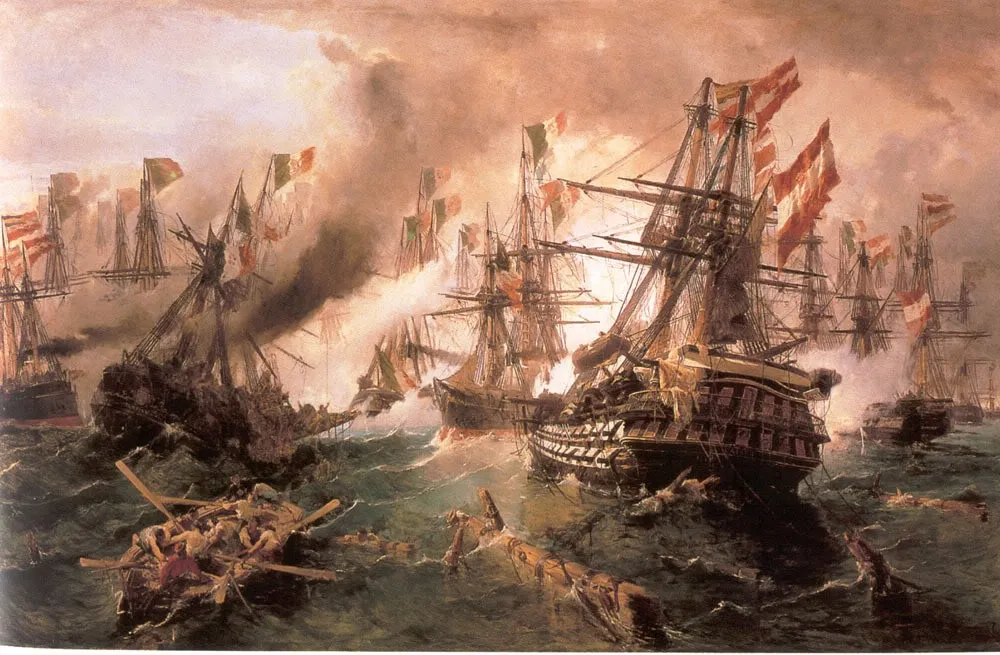
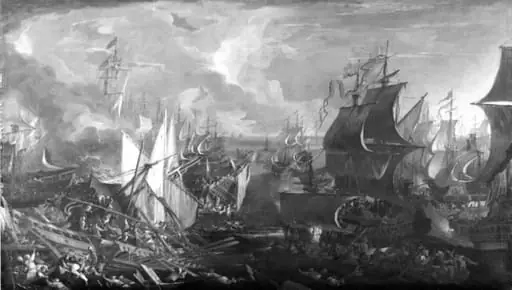
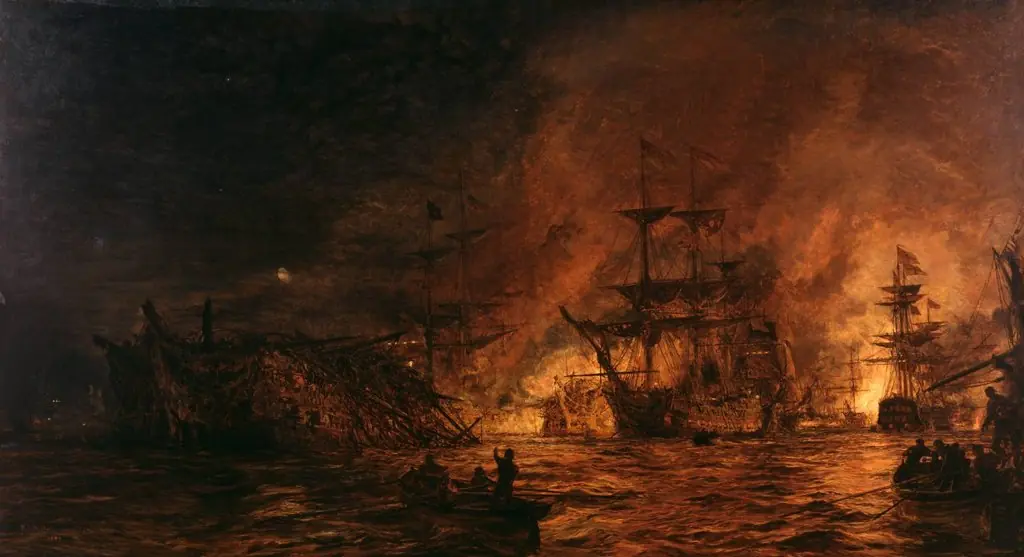
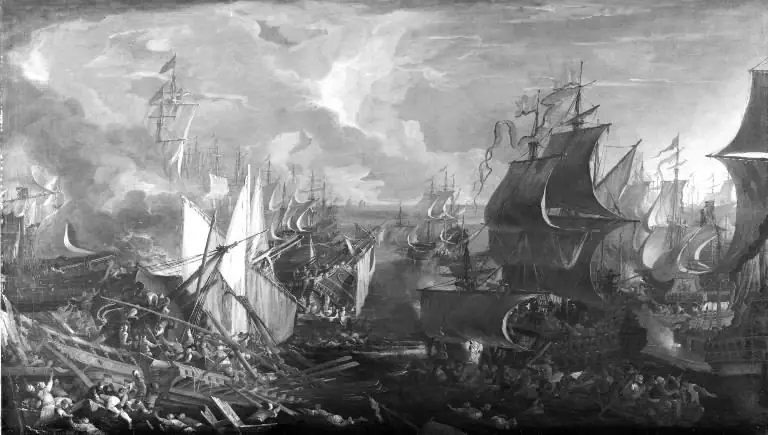
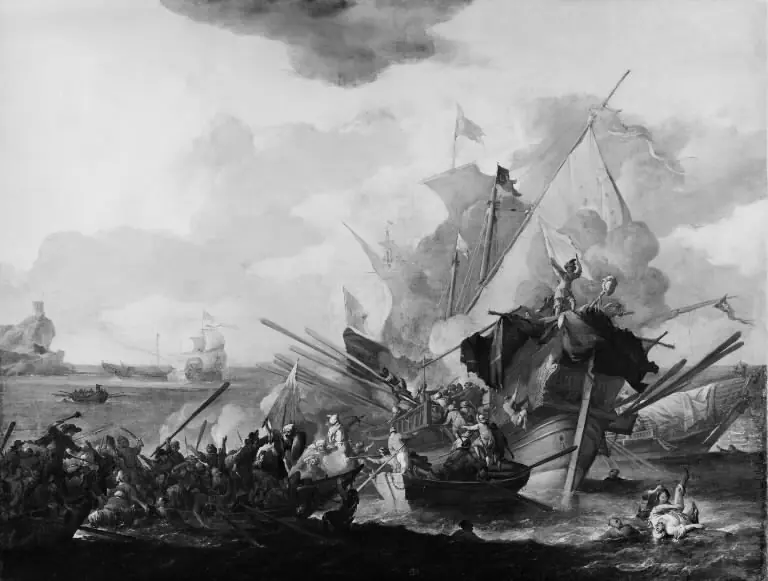
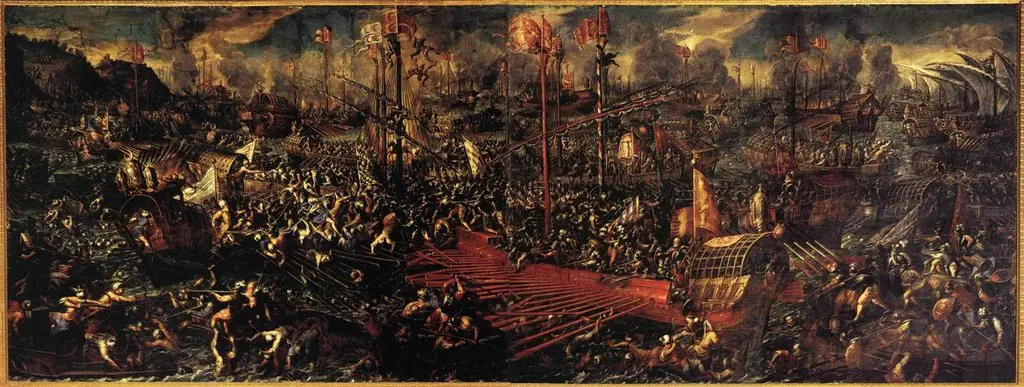
Naval battle at Lissa is an oil painting by Konstantinos Volanakis. It dates from 1869 and is held in the collection of the Museum of Fine Arts, Budapest.
About this work
Overview
Painted in 1869 by Greek artist Konstantinos Volanakis, this oil-on-canvas work captures a naval confrontation off the island of Lissa. As a maritime-focused painter, Volanakis turned to historical naval conflict as a subject, producing a large-scale composition that emphasizes the violence and disorder of sea warfare. The painting resides today in the Museum of Fine Arts, Budapest.
Subject & Meaning
The scene portrays the 1866 Battle of Lissa between the Austrian and Italian fleets, rendered not as a triumphal narrative but as a chaotic moment of destruction. Ships are shown crippled, ablaze, or sinking amid floating wreckage. The absence of clear heroes or victors shifts focus to the universal toll of naval combat, reflecting a sober, almost documentary impulse within a dramatic framework.
Technique & Style
The composition layers distant flames and sinking masts to deepen spatial tension without sacrificing clarity of action.
Volanakis employed chiaroscuro to heighten the contrast between smoke-choked skies and the dark hulls of ships, while impasto thickens the paint along wave crests and burning rigging. Brushwork is vigorous but controlled, conveying the turbulence of the sea and the instability of the vessels. The composition layers distant flames and sinking masts to deepen spatial tension without sacrificing clarity of action.
History & Provenance
Commissioned shortly after the actual battle, the painting was likely intended to commemorate Austrian naval success, though Volanakis’s emphasis on ruin over glory complicates any straightforward patriotic reading. It entered the Budapest collection in the late 19th century, possibly through diplomatic or acquisition channels common among Habsburg-era institutions.
Context
In the decades following Greek independence, Volanakis helped define a national tradition of marine painting, often drawing on contemporary conflicts. The Battle of Lissa, though fought between Austria and Italy, resonated in Greece due to regional naval rivalries and the broader European interest in modernizing fleets. Volanakis’s work aligns with a wider 19th-century trend of depicting recent warfare with visceral immediacy.
Legacy
Though less known outside Greece and Central Europe, the painting stands as a significant example of how 19th-century artists engaged with modern naval warfare beyond mythologized historical events. Its unromanticized portrayal of destruction influenced later maritime painters in the Balkans and contributed to a regional shift toward realism in naval subjects.
Artist & collection

Artist
Konstantinos Volanakis (Greek: Κωνσταντίνος Βολανάκης; c. 1837 - 29 June 1907) was a Greek painter. He is known as one of the greatest Greek seascape painters. Another notable seascape painter was Ioannis Altamouras.

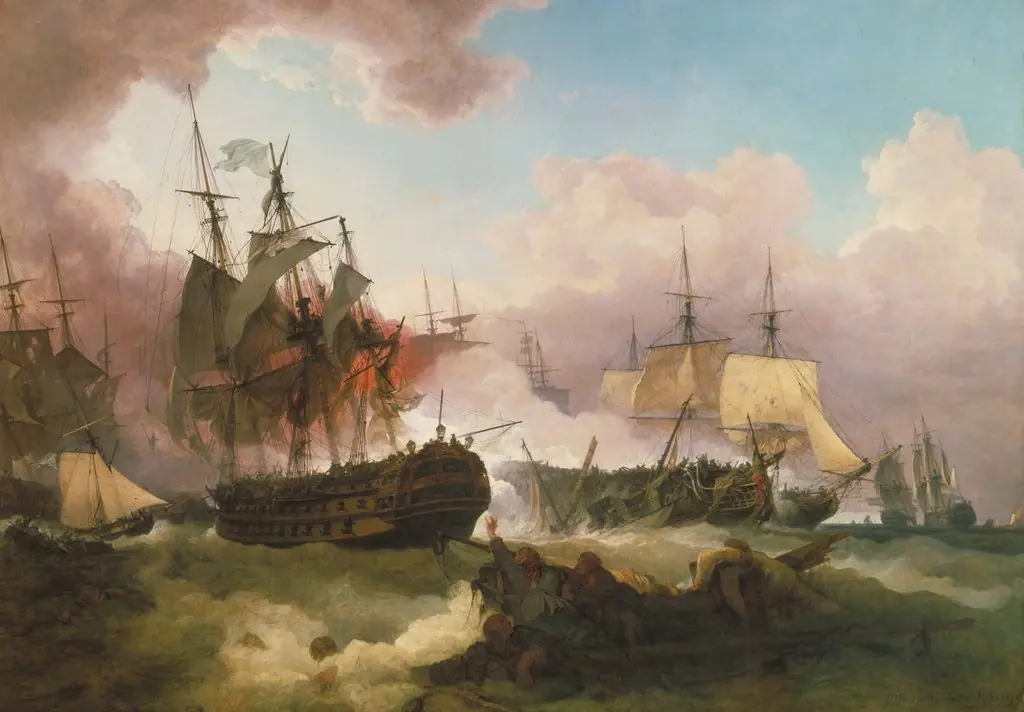 The Battle of Camperdown
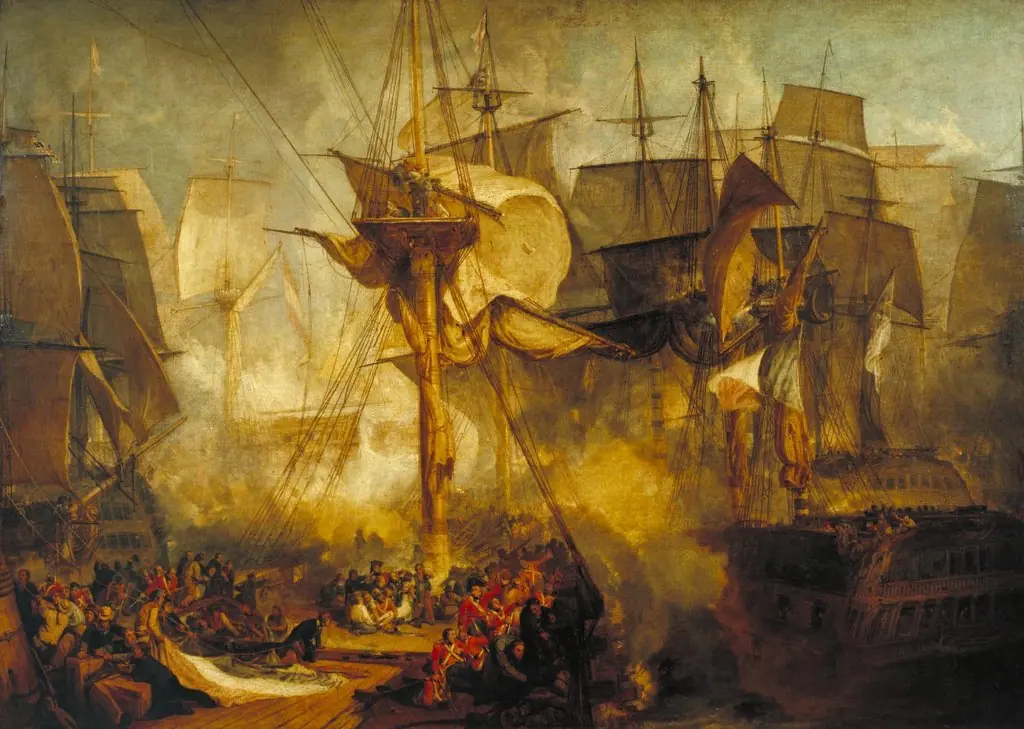 The Battle of Trafalgar (1806)
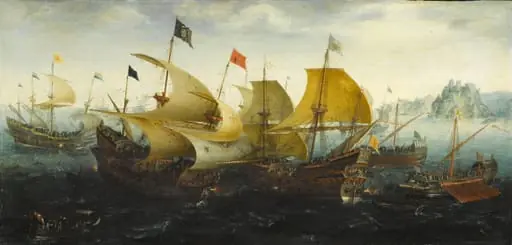 Untitled
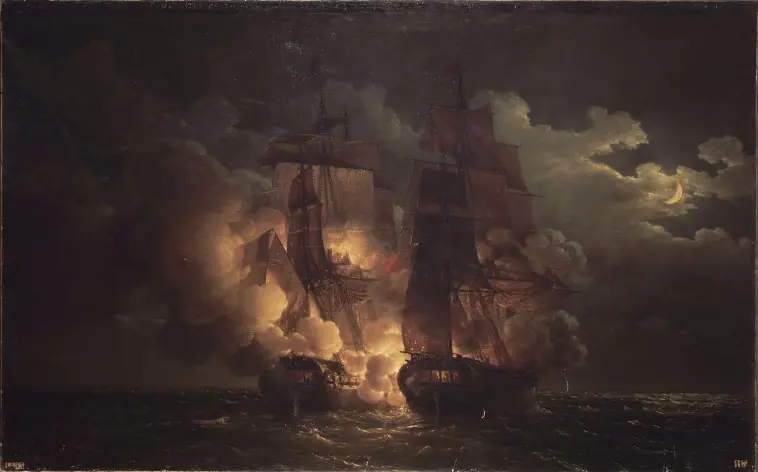 Naval Battle for the Islands of Loz, 7 February 1813.
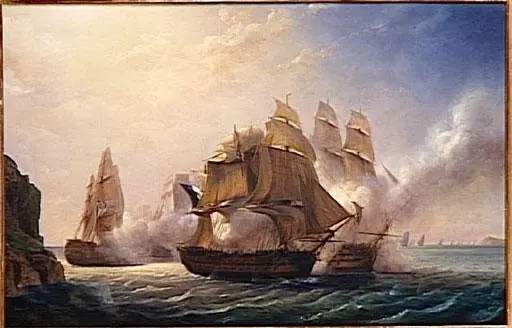 Combat du vaisseau francais le Romulus contre trois vaisseaux anglais à l'entrée de la rade de Toulon. 13 février 1814
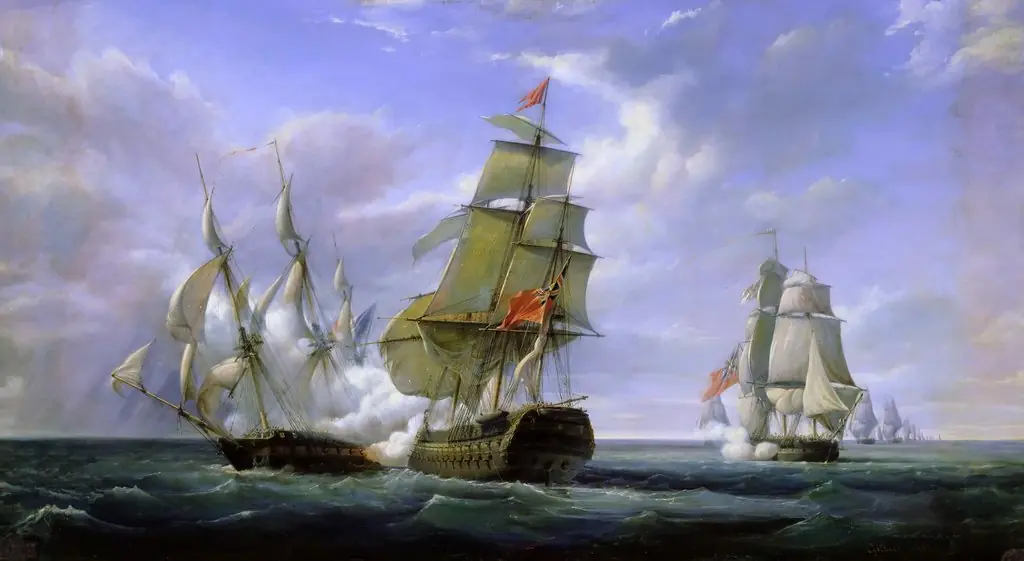 Fight of the British Third Rate 74-gun ship-of-the-line HMS Tremendous and HMS ''Hindostan against the French frigate Cannonière, 21 April 1806.
 Battle of Lepanto