Artwork
Triumphal Arch for Charles V
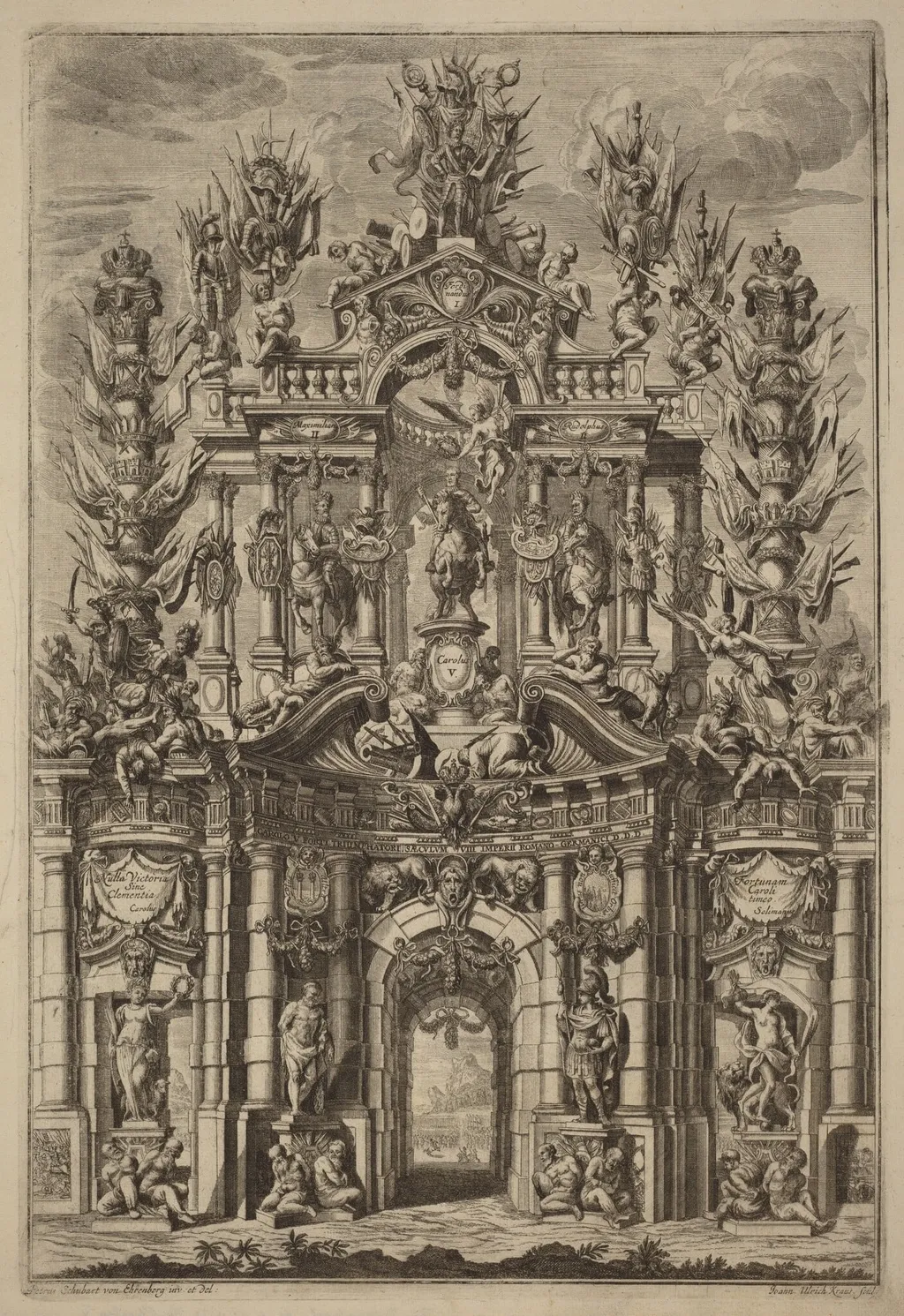
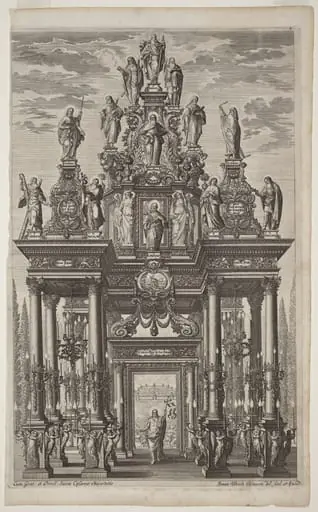
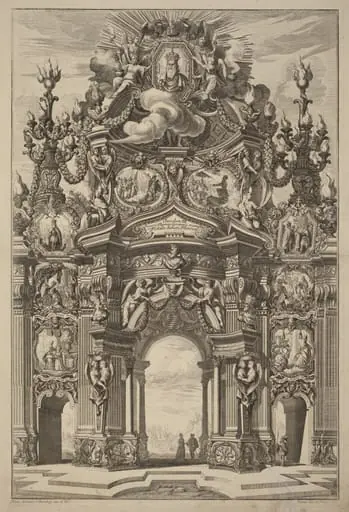
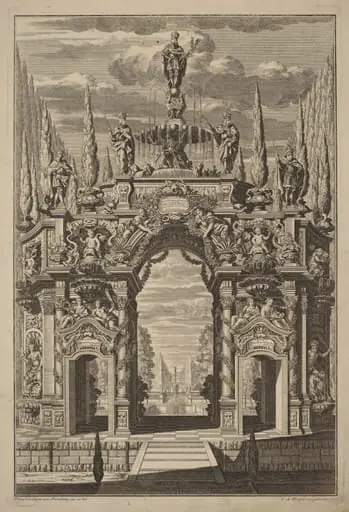
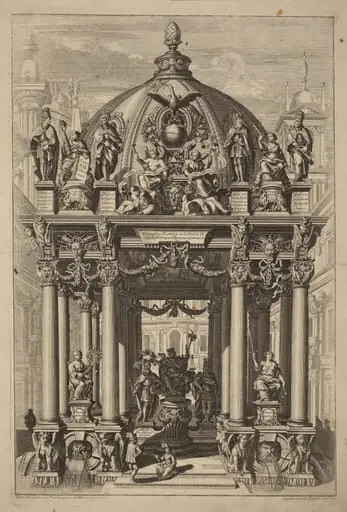
Triumphal Arch for Charles V is an ink print by the Baroque artist Johann Ulrich Kraus. It dates from 1725 and is held in the collection of the National Gallery of Art.
About this work
Kraus didn’t carve it himself; he used etching and drypoint to cut the lines into a metal plate.
This print shows a grand fake arch made of carved stone. It’s covered in statues, shields, and royal symbols like eagles and crowns. The shadows are deep, typical of the Baroque style.
Johann Ulrich Kraus made it for Emperor Charles V’s big win in 1547. Kraus didn’t carve it himself; he used etching and drypoint to cut the lines into a metal plate.
Look up etching or drypoint to see how this tool trick works.
Overview
Johann Ulrich Kraus’s print, titled *Triumphal Arch for Charles V*, is an early‑18th‑century work executed in 1725. Rendered on laid paper, the image presents a monumental, imagined stone arch festooned with statues, shields, eagles and crowns, all rendered in deep chiaroscuro typical of the Baroque aesthetic.
Subject & Meaning
The composition celebrates the 1547 triumph of Emperor Charles V, using the classical motif of a triumphal arch to symbolize imperial power and military success. The profusion of heraldic devices and regal iconography underscores the emperor’s authority and the celebratory nature of the event.
Technique & Style
Kraus employed a combination of etching and dry‑point to incise the design onto a metal plate, then transferred the image to paper by printing. The technique allows for fine line work and richly textured shadows, producing the dramatic depth and tonal variation characteristic of Baroque printmaking.
History & Provenance
Although the arch commemorates a mid‑16th‑century victory, Kraus’s print was produced nearly two centuries later, reflecting a continued interest in Habsburg propaganda. The work was likely circulated among collectors of historical prints, though specific ownership records remain limited.
Context
The print belongs to a broader tradition of commemorative prints that revived classical architectural forms to honor contemporary rulers. In the early 1700s, such works served both as historical documentation and as visual reinforcement of dynastic legitimacy.
Legacy
Kraus’s *Triumphal Arch for Charles V* exemplifies the enduring appeal of monumental allegory in print media, illustrating how artists of the Baroque period used technical innovation to re‑interpret earlier historical events for new audiences.
Artist & collection