Artwork
The Prima Macchina for the Chinea of 1751: Triumphal Arch for Roger I of Sicily
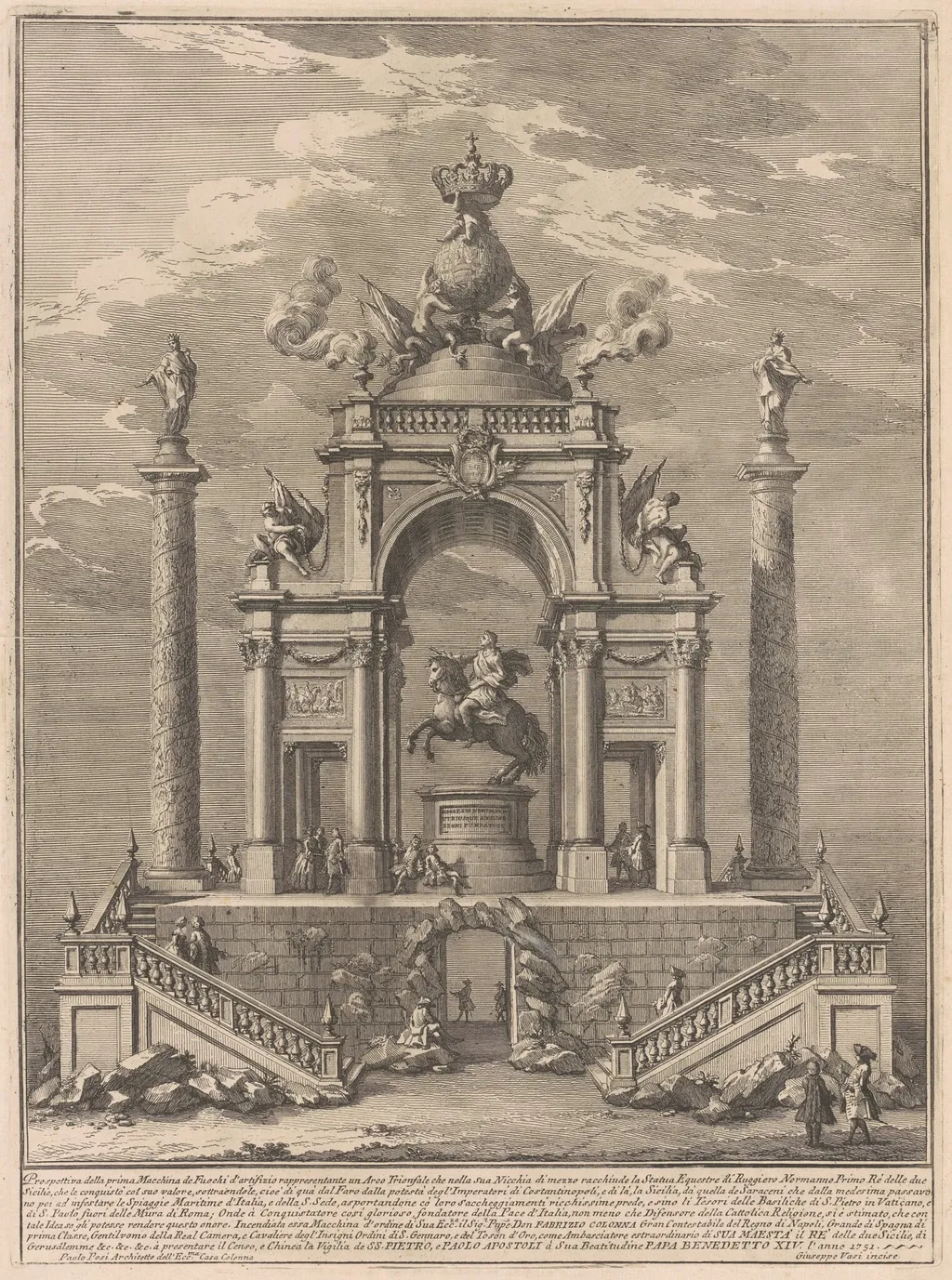
The Prima Macchina for the Chinea of 1751: Triumphal Arch for Roger I of Sicily is an ink print by the Romanticist artist Giuseppe Vasi. It dates from 1751 and is held in the collection of the National Gallery of Art.
About this work
Overview
Vasi rendered the elaborate composition in precise black-line etching, capturing the theatricality of ephemeral public events staged for the papal court.
Created in 1751 by Giuseppe Vasi, this etching documents a temporary architectural spectacle designed for the annual Chinea ceremony in Rome. Though presented as a triumphal arch honoring Roger I of Sicily, the structure was never built—it existed only as a conceptual design for a ceremonial procession. Vasi rendered the elaborate composition in precise black-line etching, capturing the theatricality of ephemeral public events staged for the papal court.
Subject & Meaning
The image depicts a fictional monument dedicated to Roger I, the 11th-century Norman ruler of Sicily, erected to commemorate the tribute paid to the Pope by the Kingdom of Sicily. Winged figures and a royal crown adorn the arch, evoking imperial authority and divine sanction. The surrounding crowd, laborers, and chariot suggest a live event in progress, blending historical reverence with the pageantry of contemporary Roman ritual.
Technique & Style
Vasi employed fine-line etching to achieve intricate detail and tonal contrast, characteristic of 18th-century topographical prints. The sharp, controlled lines define architectural elements, figures, and scaffolding with clarity, while the dense composition conveys movement and activity. The absence of color emphasizes structure and form, aligning with the print’s function as a precise record of a transient design.
History & Provenance
The print was produced as part of a series documenting Rome’s ceremonial architecture during the papal reign of Benedict XIV. It was likely distributed to nobility and foreign dignitaries as a keepsake of the Chinea procession, a tradition dating to the Middle Ages. Vasi’s prints were widely circulated, and this example survives in institutional collections as evidence of how historical myth was mobilized in public spectacle.
Context
The Chinea ceremony involved the symbolic delivery of a white horse and tribute from Sicily to the Pope, reinforcing papal sovereignty over the kingdom. Temporary triumphal arches were common in such processions, designed to glorify both religious and dynastic power. Vasi’s etching reflects the era’s fascination with reconstructing medieval history through elaborate, imagined monuments that served political and devotional ends.
Legacy
Vasi’s etchings of Rome’s ephemeral architecture remain valuable historical documents, preserving designs that vanished after their brief use. This print, in particular, illustrates how 18th-century artists mediated between historical narrative and contemporary spectacle. It continues to inform studies of ceremonial culture, print dissemination, and the use of architecture as political theater in early modern Europe.
Artist & collection

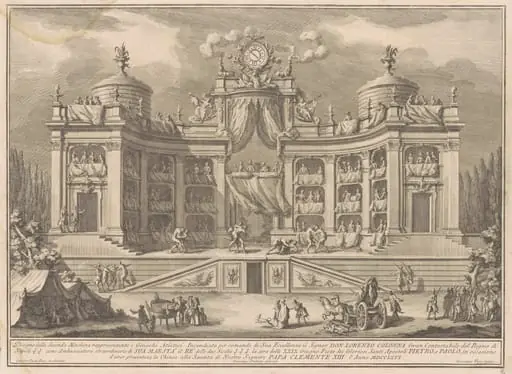 The Seconda Macchina for the Chinea of 1766: A Theater for Athletic Games
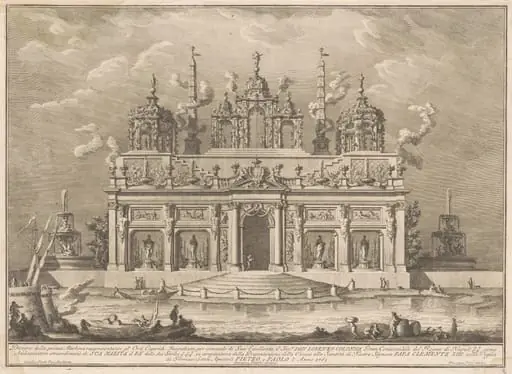 The Prima Macchina for the Chinea of 1765: The Garden of the Hesperides
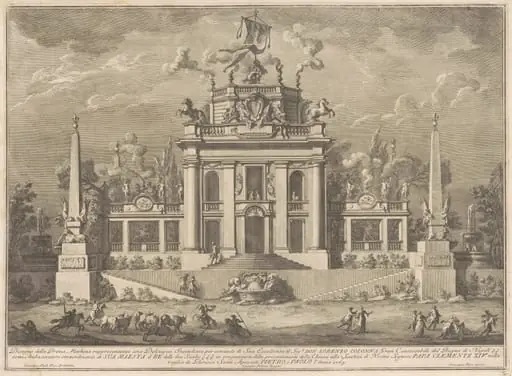 The Prima Macchina for the Chinea of 1769: A "Deliziosa"
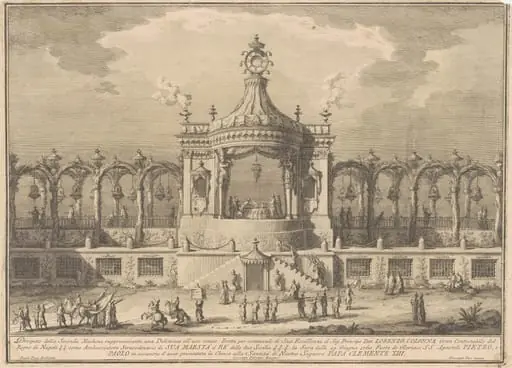 The Seconda Macchina for the Chinea of 1760: A Chinoiserie Pavilion
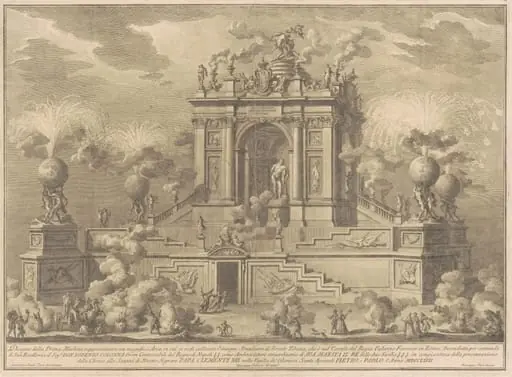 The Prima Macchina for the Chinea of 1767: A Triumphal Arch with the Farnese Hercules
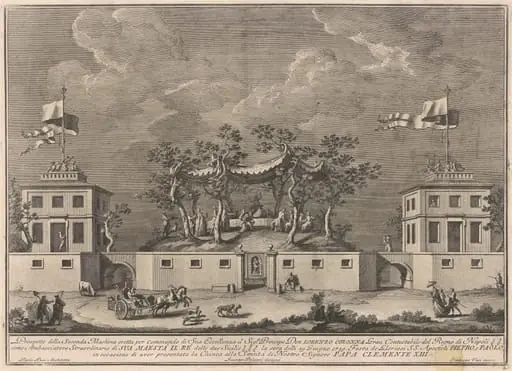 The Seconda Macchina for the Chinea of 1759: A "Deliziosa" with a Bacchanal
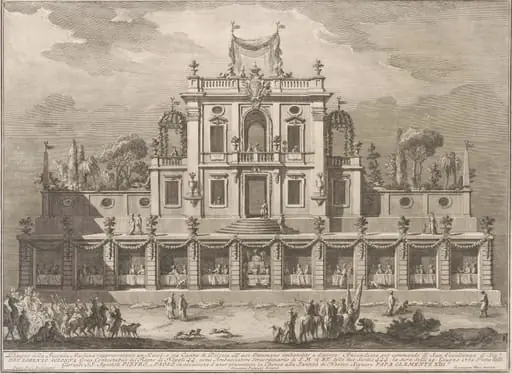 The Seconda Macchina for the Chinea of 1762: A Kiosk, or Pleasure-House in Ottoman Style
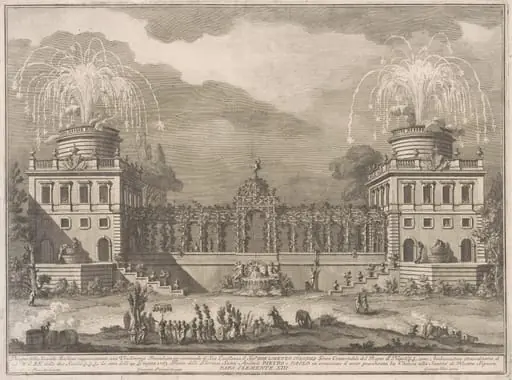 The Seconda Macchina for the Chinea of 1763: The Grape Harvest
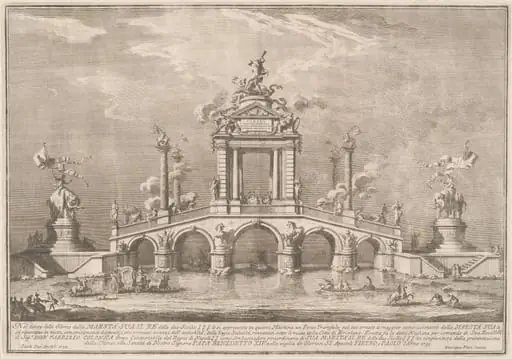 The Prima Macchina for the Chinea of 1755: A Triumphal Bridge with Antiquities from Herculaneum
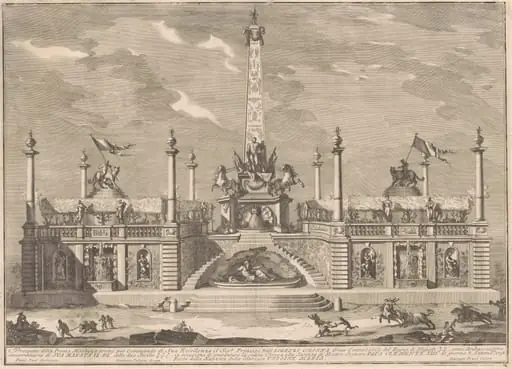 The Prima Macchina for the Chinea of 1758: A "Deliziosa" with Hanging Gardens
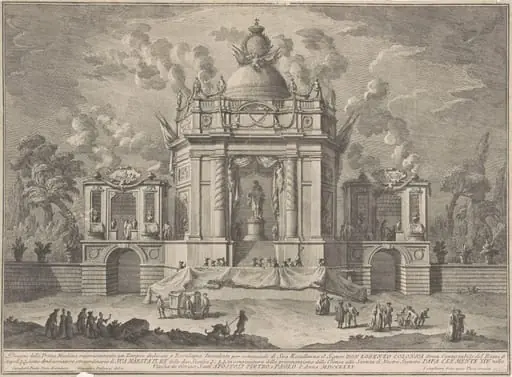 The Prima Macchina for the Chinea of 1771: The Temple of Asclepius
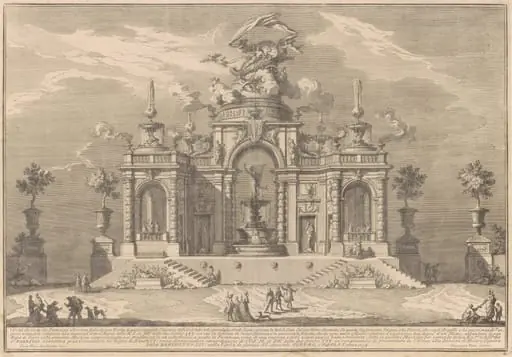 The Prima Macchina for the Chinea of 1754: The Palace of Venus in Cyprus
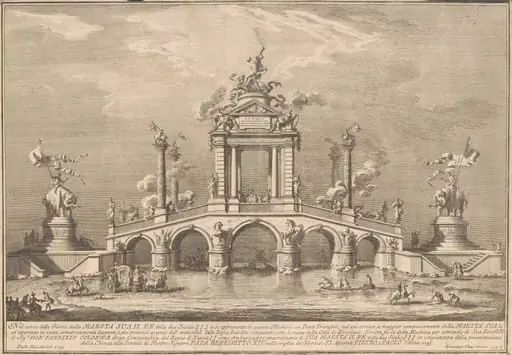 The Prima Macchina for the Chinea of 1755: A Triumphal Bridge with Antiquities from Herculaneum
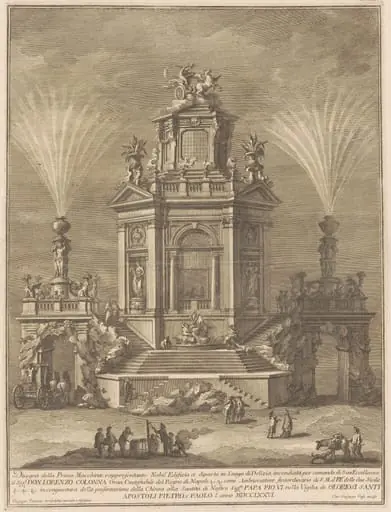 The Prima Macchina for the Chinea of 1776: A Pleasure Palace
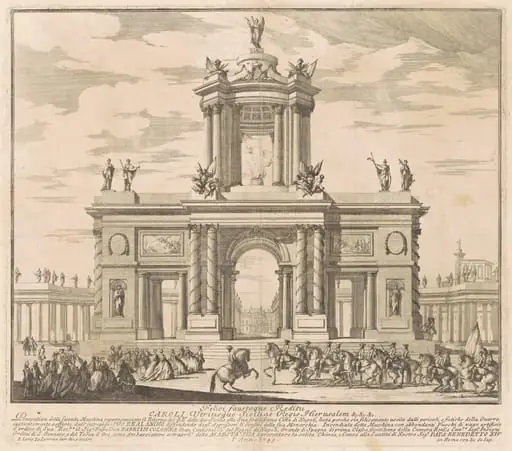 The Seconda Macchina for the Chinea of 1745: Triumphal Arch for the Return of King Charles of Bourbon to Naples
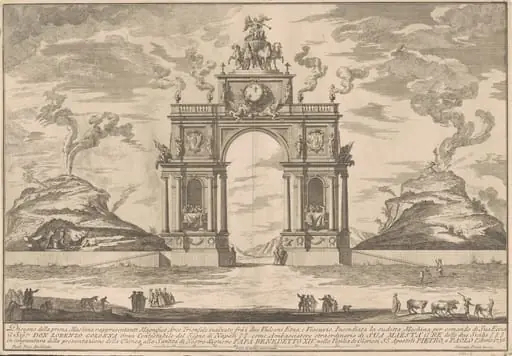 The Prima Macchina for the Chinea of 1756: A Triumphal Arch between Mount Etna and Mount Vesuvius
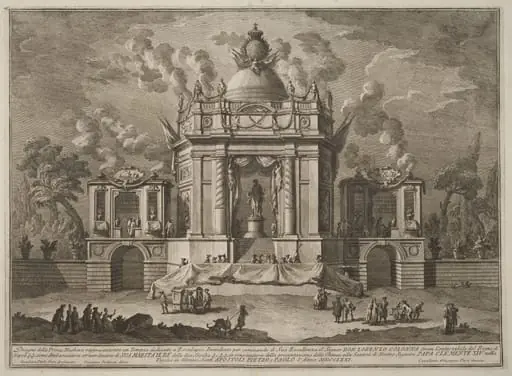 The Prima Macchina for the Chinea of 1771: The Temple of Asclepius
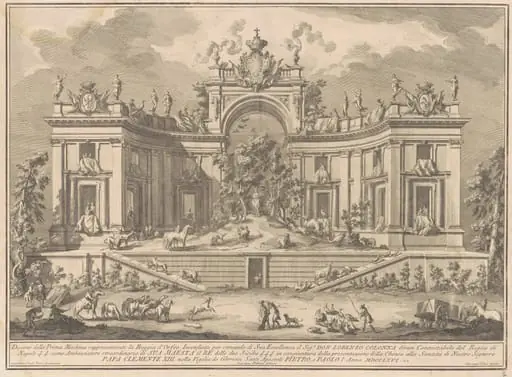 The Prima Macchina for the Chinea of 1766: The Palace of Orpheus
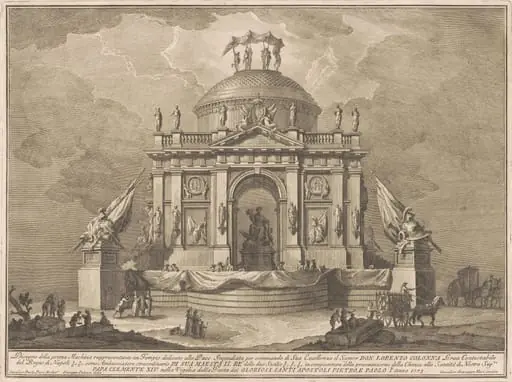 The Prima Macchina for the Chinea of 1773: The Temple of Peace